ORIGINAL LINKEDIN ARTICLE
Autonomous Preemptive Maintenance (APM) and the Zero-Lag Enterprise
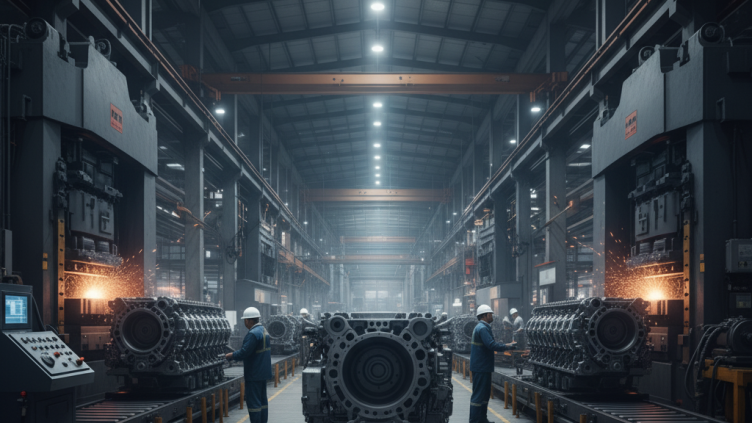
Stop Predicting, Start Prescribing: The Next Evolution of Maintenance
We’ve all celebrated the shift to Predictive Maintenance (PdM). Using sensors and AI, we can now foresee a machine failure weeks or months in advance. Great, right?
Not entirely.
The industry is facing a critical bottleneck: PdM only gives you a warning. The most critical and expensive part of the process-deciding who fixes it, when to shut down production, where to get the part, and how to budget for it-still relies on slow, manual, and disconnected human teams.
The future demands a closed-loop system. We need to move beyond simple prediction and into a methodology that not only anticipates the future but automatically executes the optimal business response.
This is the principle behind what I named: – Autonomous Preemptive Maintenance (APM).
What is Autonomous Preemptive Maintenance (APM)?
APM is a novel, AI-driven framework that treats maintenance not as an isolated engineering task, but as an integrated business optimization process. It’s the "PreCog" system of asset management, where AI doesn't just predict the future; it proactively shapes it across three critical business pillars:
1. The Autonomous Control Correction (ACC): The Self-Healing Asset
This is the truly preemptive core. When APM’s AI detects a degradation signature, its first action is not to create a work order. Instead, it interfaces directly with the machine’s operational software (OT Layer) to make tiny, real-time adjustments-a slight speed reduction, a temperature correction, or a flow adjustment.
The Impact: This action often mitigates the fault’s progression entirely, extending the asset’s life and delaying or even eliminating the need for a costly, disruptive shutdown. The machine heals itself, guided by the AI.
2. Autonomous Resource Orchestration (ARO): Zero-Lag Planning
If the ACC cannot fully resolve the issue, APM moves to strategic execution. The ARO module takes over the human function of planning.
It calculates the optimal, least disruptive maintenance window to minimize impact on the production schedule (OEE Maximization).
It automatically schedules the work in the CMMS and assigns the best-qualified technicians based on their current availability and skill set.
The final planned shutdown notification is then automatically sent to the Production Manager.
The Impact: No more urgent email chains, no more scheduling conflicts. The intervention is planned with maximum efficiency and minimum interruption.
3. Autonomous Supply Chain & Financial Forecasting (ASCF): Eliminating Budget Shocks
This is where APM delivers strategic financial value.
When the maintenance date and required parts are known, the ASCF module takes immediate action:
It checks real-time inventory and triggers an automatic purchase order if stock is low, based on optimized quantity calculations (EOQ).
It generates a detailed disbursement forecast for the Finance team, converting a potential emergency cost into a predictable, budgeted line item.
The Impact: Eliminates costly emergency procurement fees, prevents capital from being tied up in excessive spare parts inventory, and turns the maintenance budget into a predictable, strategic flow.
The Path to Full Autonomy: From Cognitive Brain to Physical Execution
While the core APM framework handles the cognitive and logistical complexity, achieving a truly full AI Autonomous solution requires integrating the final layers of physical execution and strategic oversight.
4. Physical Autonomy
For APM to close the loop entirely, the system must automate the physical work. This involves Robotics Integration and Deployment, where the APM system can instruct a collaborative robot (cobot) or an Unmanned Aerial Vehicle (UAV) to perform simple tasks like tightening a bolt, applying lubricant, or replacing small modular components. Furthermore, Autonomous Sensor Calibration is vital, allowing the system to remotely adjust or replace its own monitoring devices, guaranteeing the integrity of its data inputs without human touch.
5. Strategic Optimization and Continuous Improvement
A truly strategic tool must not only fix the current problem but prevent the next one by improving the fundamental processes.
Autonomous Root Cause Analysis and Process Feedback: After a fix, a Process & Design Improvement (PDI) Agent analyzes the event's data. If it detects a recurring fault pattern, the PDI agent autonomously flags the issue as a systemic "Design Flaw" or "Operational Stress Point" and sends a formal recommendation to the Engineering Department (e.g., "Recommend redesign of component X"). This elevates maintenance to a strategic contributor to product design.
Autonomous Knowledge Management: A Self-Learning Documentation System (SLDS) uses video and audio capture of human repairs to instantly generate and optimize standardized digital work instructions. This instantly scales the expertise of your best technician across the entire team and drastically reduces time spent on documentation.
External Vendor Optimization: An External Service Optimization (ESO) Module autonomously generates RFPs for specialized work, cross-referencing vendor bids against historical performance and fair market rates. This ensures the organization gets optimal value from every specialized external service, converting a complicated procurement process into an autonomous strategic negotiation.
APM: The Road to the Zero-Downtime Enterprise
APM represents the ultimate convergence of Maintenance 4.0, combining advanced prognostics with genuine operational and financial autonomy. It replaces human-dependent workflows with a self-aware, self-healing, and self-managing industrial ecosystem.
This framework is not just about extending asset lifespan; it’s about optimizing the Total Cost of Ownership (TCO) and ensuring that every dollar spent on maintenance is done so predictably, strategically, and at the optimal moment.
The era of waiting for a human to act on a prediction is over. The future is autonomous.
#AutonomousMaintenance #PrescriptiveMaintenance #Industry40 #AI #AssetManagement #MaintenanceTech
APPLY THE THINKING
Turn insight into an accountable operating decision.
Start with a focused diagnostic of the revenue, GTM, RevOps, forecast, or AI constraint.
Request an AI Revenue Diagnostic