
The Business We Had to Become
Watch the AGI Brazil leadership case
Read the complete video transcript · Read the illustrated case below

The factory was ready to grow. A customer could still wait six weeks for a quotation.
When I joined AGI’s Brazilian operation, those two realities existed inside the same business. The group had acquired a company in Brazil and invested in a new, modern industrial facility in the state of São Paulo. There was capacity available and a larger ambition to fulfill.
My responsibility was to help turn that capacity into business.
The commercial work would reach far beyond finding more customers. We had to develop the organization around the factory: its regional presence, leadership, technical response, pricing, partnerships, and ability to help a customer undertake an investment. We were also moving from the mindset of a smaller acquired business toward the operating culture and ambitions of a global multinational.
I served as National Sales Manager and General Manager. As General Manager, I reported to an Executive Vice President. My authority covered budgets, pricing, commercial policies, hiring, and team decisions, with responsibility for the revenue system and the post-sale lifecycle.
Looking back, I would describe my starting mindset as roughly 25% strategic and 75% operational. I was close to the immediate problem and the action required to move it forward. The assignment would teach me to see more of the business behind each problem, and to make choices that other people could carry into execution.
A Challenge With A Promise Attached
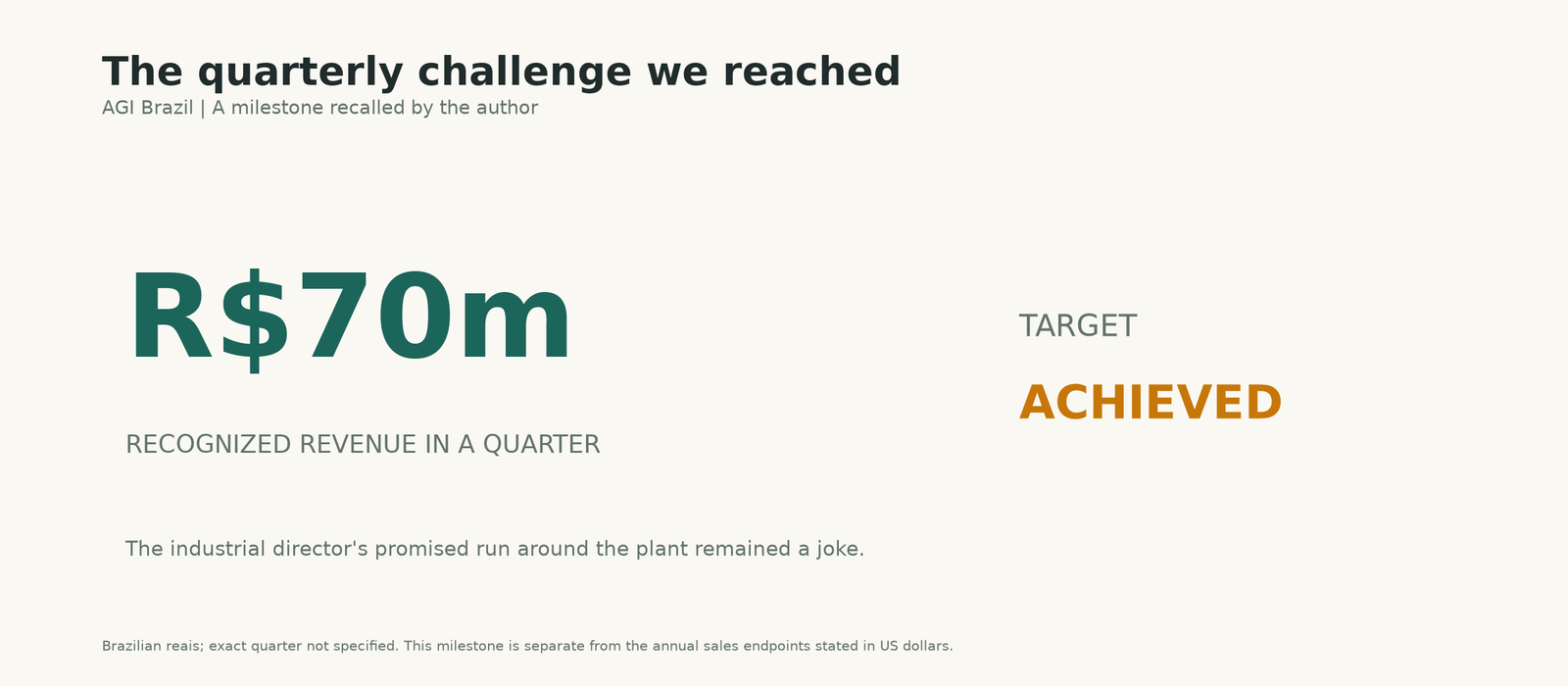
At one point, our industrial director challenged me to reach R$70 million in recognized revenue in a quarter.
He added a memorable promise: if we reached the target, he would run naked around the plant.
The challenge gave the ambition a number. The joke gave us another reason to remember it.
Reaching that level would require work across the business. We needed opportunities worth pursuing, a commercial team able to reach them, proposals that could move through procurement, and projects that the operation could supply competitively.
To understand the work behind that ambition, it helps to return to the first months of the assignment.
The First Months: Diagnosis, Evidence, And Support For Change
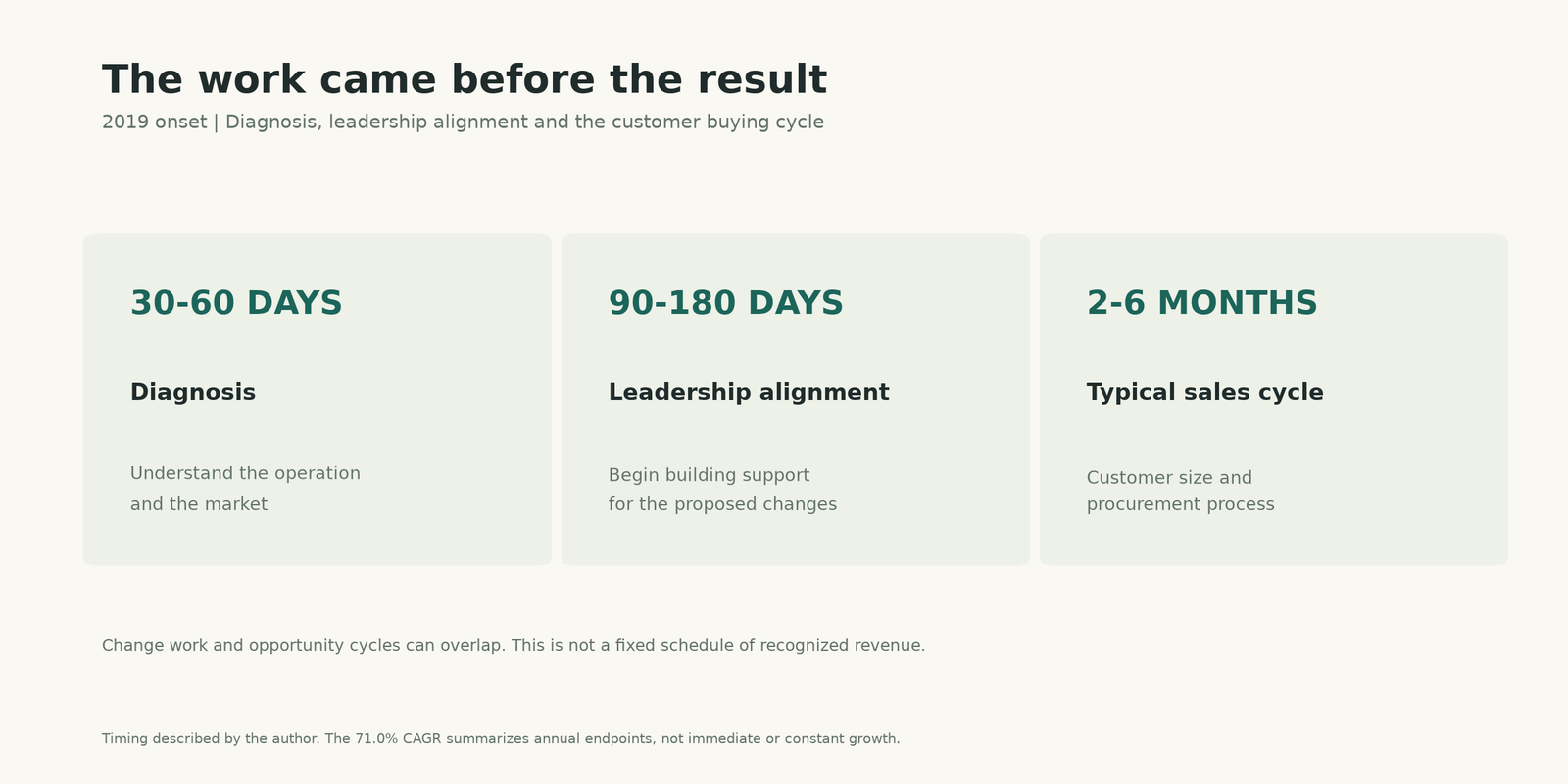
During the first 30 to 60 days in 2019, I worked on the diagnosis.
A larger group had invested in industrial capacity, but the organization still had to develop the commercial reach and working methods to use it. The diagnosis needed to lead into changes whose results the business could examine.
The buying cycle also required patience and preparation. In my experience, a grain-storage system sale typically took two to six months, depending on the size of the customer, the project, and the procurement process. Organizational change and individual opportunity cycles could overlap.
A decision made in one quarter could be preparing the business for a sale that would emerge later. I had to work with that horizon while the existing operation continued to serve the opportunities already in front of it.
I wanted the diagnosis to reach beyond the customers and projects our current relationships happened to reveal.
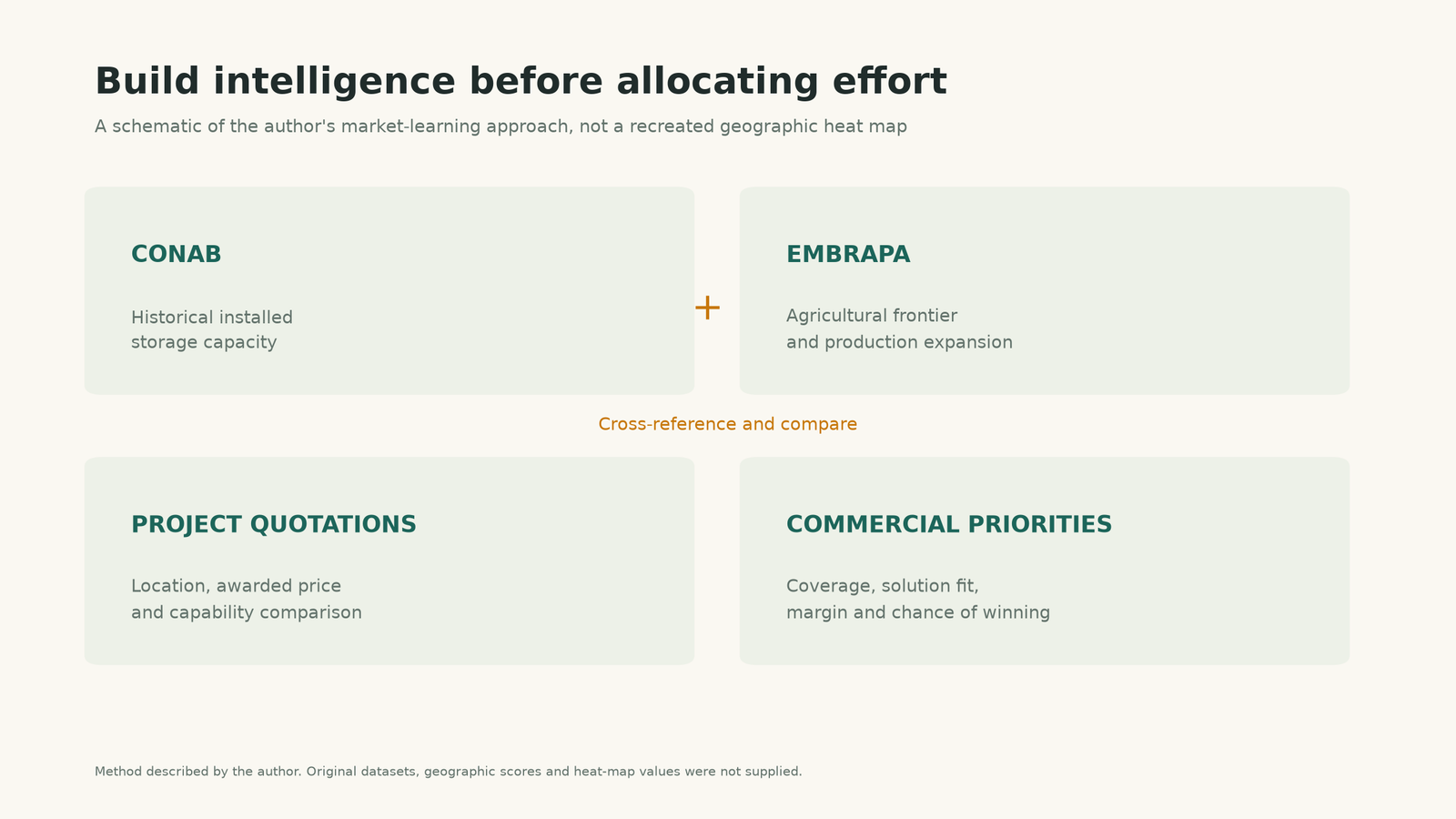
I worked hands-on with historical CONAB data on storage capacity already installed in Brazil. I cross-referenced that information with Embrapa material on the agricultural frontier and areas where production was expanding.
Installed storage showed one part of the market. Agricultural expansion and growing production showed another. Bringing them together helped me ask where the next storage opportunities might develop and where stronger commercial coverage could matter.
I built a heat map to help identify the more attractive areas for attention. It gave the national growth ambition a geographic basis and helped connect market evidence with decisions about where to place people and effort.
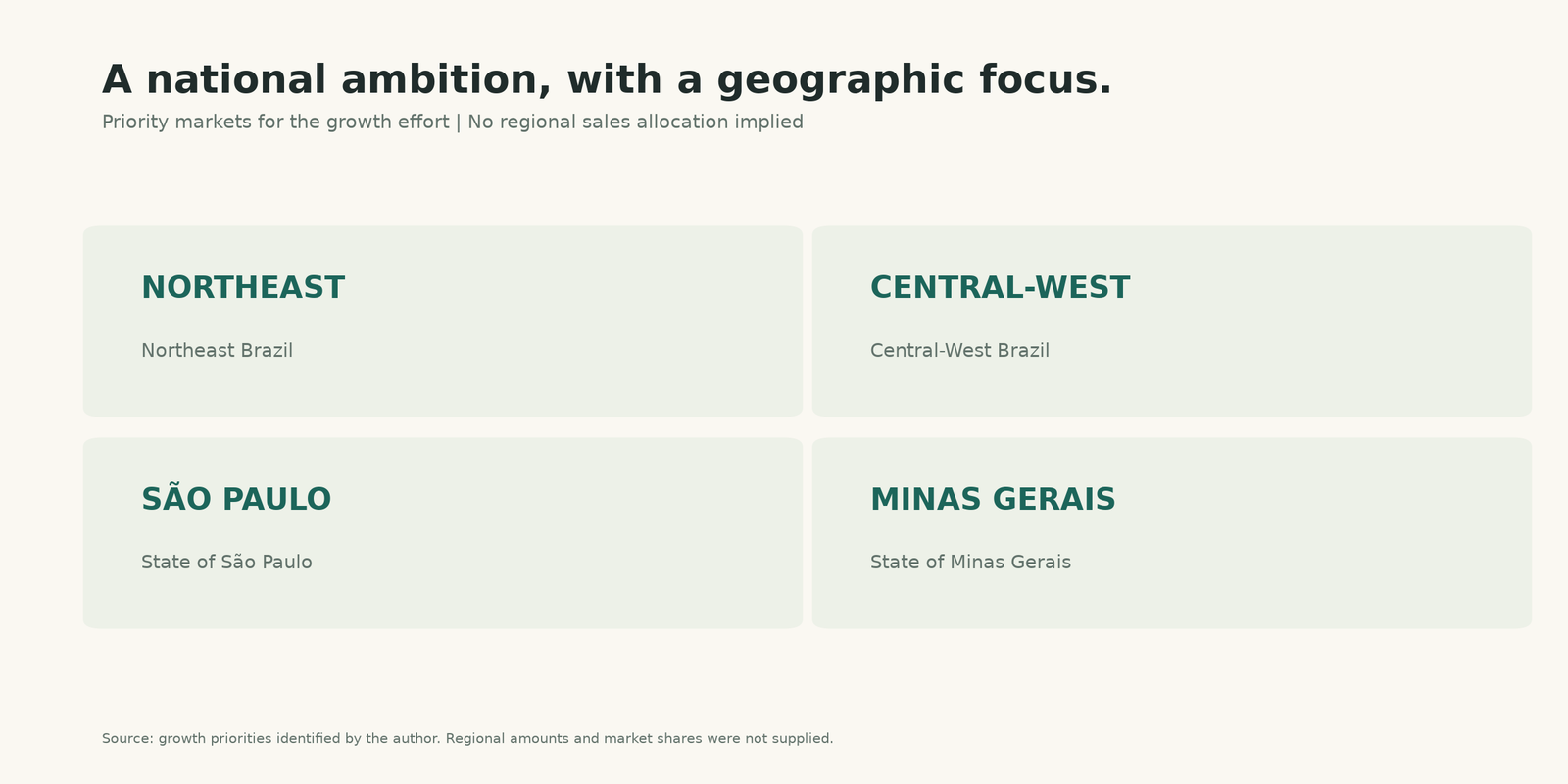
Our growth focus included the Northeast and Central-West, together with São Paulo and Minas Gerais. The research helped identify where to look. Actual project quotations could tell us more about what customers were buying there, what competitors were offering, and the prices we had to understand.
Learning From The Projects We Did Not Win
From the first day, I wanted us to participate in every grain-storage project quotation in the country.
Even a project we lost could teach us something important. Where was the storage being installed? What price had won? How did our capabilities compare with what the buyer selected?
Those questions could make a quotation useful beyond its immediate outcome. A loss might expose a price mismatch, a gap in the offer, or a requirement we needed to understand better. An opportunity outside our existing coverage could also show us where the market was moving.
The nationwide ambition was an objective for market participation and visibility. It also supported a more selective view of commercial effort. The more we understood about actual projects, the better we could judge which ones suited our capabilities, offered an attractive margin, and gave us a realistic chance of winning.
That became an important part of my developing judgment: learn broadly enough to choose carefully. Those choices also raised a question about commercial presence: who would develop the opportunities in each territory?
Starting In Goiás, And Using The Results To Build Support
I began with one region. I replaced a sales representative and put someone on the ground in Goiás.
While making that change in the field, I was also working on the commercial and operational structure around it. I hired someone to help with sales administration, adding support to the commercial organization while the regional work developed.
Between roughly day 90 and day 180, I began building support among the senior leadership team for the broader changes. As the regional numbers improved, I used them to argue that the approach could be replicated.
The case for expansion now included a regional example inside our own operation. The discussion could move from the broader ambition to the people and support required to take that approach into other territories.
I expanded from the initial regional effort. The challenge became carrying the approach into other territories while building the people, administrative support, and commercial capabilities it required.
Redesigning The Organization That Would Pursue The Opportunity
The original commercial structure was centered on a national manager, supervisors, and distributors. The reach we wanted required stronger regional leadership, more presence in the field, and faster access to technical support.
As the regional approach expanded, I established regional management roles and built a direct sales team. I mapped experienced professionals across the industry, including people working for competitors, to find the capabilities the new structure required.
This changed how the national commercial effort was organized. The regions needed leaders who could develop their market, make choices about opportunities, and help their teams act on them.
The commercial structure included approximately five account managers, an enterprise channel manager, and a marketing manager. The sales organization totaled around 70 people. At that scale, regional leadership, clear responsibilities, and coordination across the team became essential to carrying the growth ambition into daily work.
The route-to-market strategy gave the different channels distinct jobs. Representatives focused on opening new territories. Our direct salespeople concentrated on regions where we already had meaningful market participation. Dedicated channels served cooperatives and major accounts.
I also structured B2B and B2C fronts, adapting the approach to the buyer profile. The customer, the route to that customer, and the kind of commercial attention required all had to inform the coverage model.
This was how a national ambition began to turn into local responsibility. A market priority needed someone able to develop it. A regional role needed the authority, people, and technical resources to do the work.
The coverage model also needed correction as we learned. I replaced representatives and reduced the geographic areas assigned to them. Expanding our reach nationally still required territories that people could cover effectively. The regional structure had to reflect the work involved in developing each market.
Developing The Leaders The Next Stage Required
The initial improvement had given me a reason to advocate expansion. The broader coverage model now depended on what leaders in each region could do with the responsibility. Creating the positions also meant helping people make the transition into them.
Coaching supervisors toward regional sales management required a wider view of the business. A supervisor close to individual sales activity had to develop the judgment to manage a territory: where the team should concentrate its effort, which projects needed technical support, and how to develop the people responsible for the next customer conversation.
The region had to be understood as a business. Its leader needed to connect customers, channels, people, and the projects moving through the commercial process.
Building the high-performance team I wanted also involved decisions about fit. Two supervisors did not match the responsibilities the new structure required, and I decided to remove them from the team.
I learned that delegation requires capability as well as a reporting line. Regional leadership could create value when people had the judgment, tools, and support to use the responsibility they had been given.
Keeping The Team Moving While The Business Changed
The challenge was managing several fronts at once. I had to develop regional coverage, strengthen the commercial operation, work on competitiveness, and keep the team motivated with the structure we had. The current opportunities still needed attention while we were building the organization for the next stage.
I made practical changes step by step. I replaced road vehicles with off-road pickup trucks, changed the computers, and equipped the field team with software tools. The commercial strategy had to work on the roads our people actually traveled, during customer visits, and when they prepared a proposal.
These were visible improvements in the team’s working conditions. They gave people something concrete to experience while I was asking them to take on a larger ambition. Alongside the changes in structure, I worked with them toward monthly results and helped them close individual deals.
I treated each deal as if it were the only one. I got involved, examined the competitive benchmark, and tried to understand where we were well positioned and where we were falling short. The national growth ambition still had to become an agreement with one customer, on one project, with requirements we could meet.
That attention carried me into the factory and into discussions with finance. I worked closely with the sales, manufacturing, and finance teams to identify opportunities for improvement, find common ground, and close the business. When our offer was uncompetitive, the question became what we could improve together to make the project viable.
Keeping those fronts moving required sustained attention. A seller needed support on an immediate opportunity. The factory needed a clear understanding of what the market was asking for. I worked with finance on the commercial conditions needed to move the opportunity forward. I had to help those perspectives come together while continuing the wider changes.
This shaped how I understood engagement. I was asking people to believe in a different future for the business, and I was working beside them on the vehicles, tools, proposals, and negotiations through which they could begin to build it. Small improvements and monthly results were part of how I worked to keep the team moving.
The work also changed my understanding of strategic leadership. Being close to individual deals helped me see how decisions across the business affected the same customer. Over time, I learned to turn that experience into choices about the structure, capabilities, and collaboration the organization needed.
Moving The Technical Work Closer To The Sale
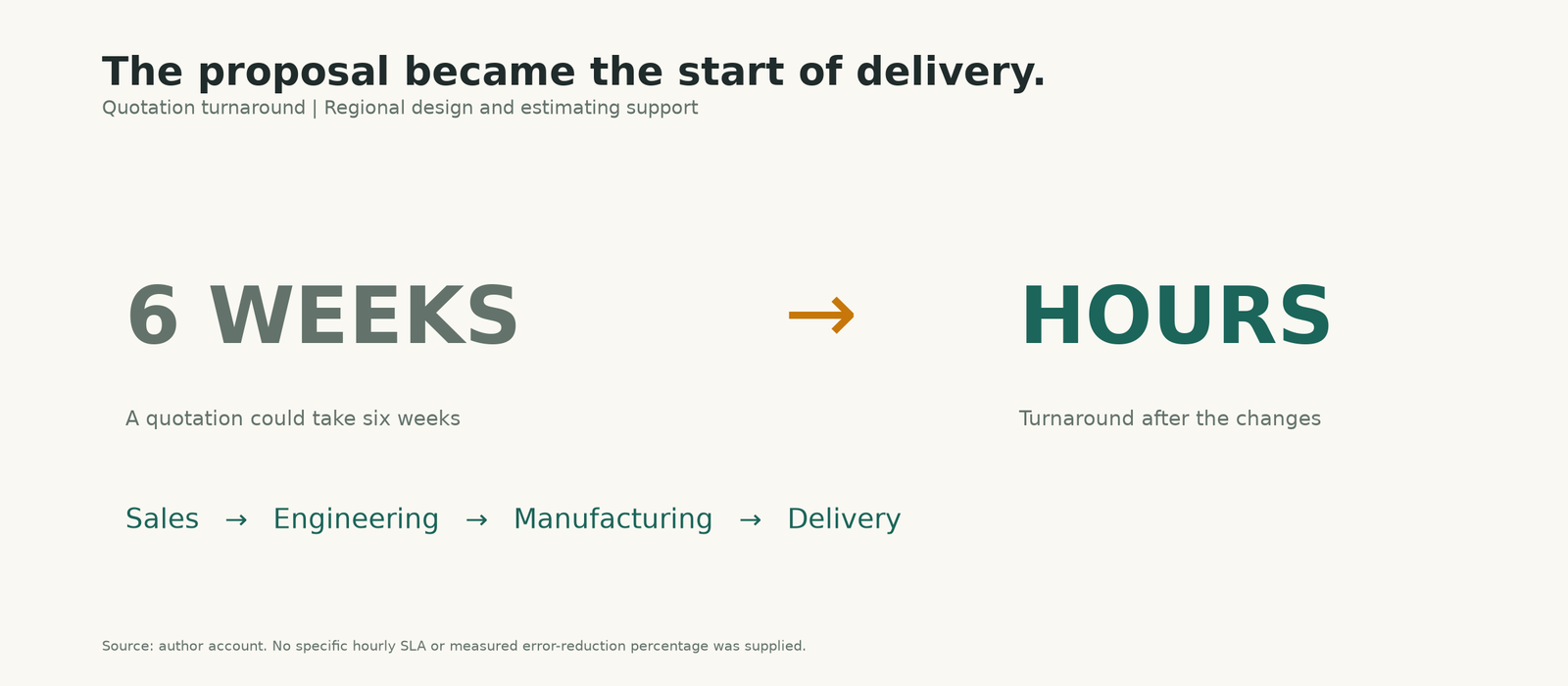
Regional leaders and salespeople also needed to be able to answer the customer. A territory could have coverage and an opportunity could have an owner, yet the quotation process could still hold it back. A customer could wait six weeks for a proposal while our new factory had capacity for more work.
I implemented a new quotation system and placed a design and estimating specialist in each regional office. The technical work moved closer to the opportunity, with participation from the beginning of the sales process.
Quotation turnaround moved from weeks to hours.
The immediate improvement was the response to the customer. The proposal could also do more work for the organization after the order.
The design prepared to sell the project gave the delivery team a more defined technical starting point. They had less need to reinterpret what had been negotiated. That helped reduce manufacturing errors that had previously recurred.
Sales, engineering, manufacturing, and delivery now had a stronger foundation for understanding the same project. The work that helped earn the order could help the next team fulfill it.
This made consultative selling and presales engineering more useful to the customer and to the people responsible for execution. A better understanding of the requirement could travel with the project, instead of being reconstructed after the sale.
From Personal Involvement To Regional Ownership
After about a year, the commercial operation no longer depended on my direct intervention in each deal. The team had been trained in the quotation tool, and I had trained the regional managers to bring the same sense of ownership to their regions that I had brought to the business.
The earlier work beside them now had a different purpose: they could carry that responsibility themselves. Their training connected the practical ability to prepare a quotation with the expectation that they would take ownership of the opportunity and its progress.
That changed the role I needed to play. My initial involvement in individual negotiations had helped me understand the obstacles and support the team. As the managers developed, I could rely on the capability we had built and give more attention to the wider business. The passage toward strategic leadership was becoming visible in what the organization could do without my direct intervention.
From The Price On The Proposal To The Economics Behind It
Speed addressed the time a customer waited for an answer. The answer itself still had to be competitive and economically sound. That brought the scope of the proposal, its price, and the incentives behind it into the same discussion.
Not every part of the industrial structure fitted the business equally well. Some machines remained underutilized because they had been intended for another use, including an automotive painting line. That was another reality behind the modern factory: installed equipment and capacity still had to be examined against the requirements of the business we were building.
The corrections included changes to representatives, smaller coverage areas, and a clearer understanding of where the industrial assets fitted our needs. Growth required continuing adjustments to the model as we learned more about the market and our own operation.
I created commercial policies, worked directly on pricing, and developed an aggressive sales compensation policy.
A separate sales campaign increased commissions on selected equipment. That gave the team an additional incentive to concentrate effort on those products. The broader compensation policy and the equipment-specific campaign were different levers, and both influenced where people directed their attention.
The market intelligence from quotations gave those decisions a practical reference. When our price was out of line with an opportunity, I worked directly with production to understand where the difference came from and to reduce cost of goods sold, or COGS, so that we could compete more effectively.
The price the customer saw had a production cost behind it. Comparing the offer with the market had to lead into an examination of what it would cost us to deliver the project.
In engineered-to-order and configured-to-order work, the commercial commitment is closely connected to the technical scope. The customer’s requirements, the configuration, the cost, and the competitive alternatives all affect the quality of the pricing decision.
I wanted to identify projects where our capabilities, price, margin opportunity, and chance of winning could fit together. This connected the intelligence gathered outside the factory with the economics inside it.
The selection criteria evolved as each region developed. In the beginning, I prioritized projects that could establish a commercial foothold in a region. As that presence became established, I put greater emphasis on the product mix and opportunities with better margins. The projects that helped us enter a market and the projects that best developed its profitability could serve different strategic purposes.
Choosing The Right Equipment For The Whole Project
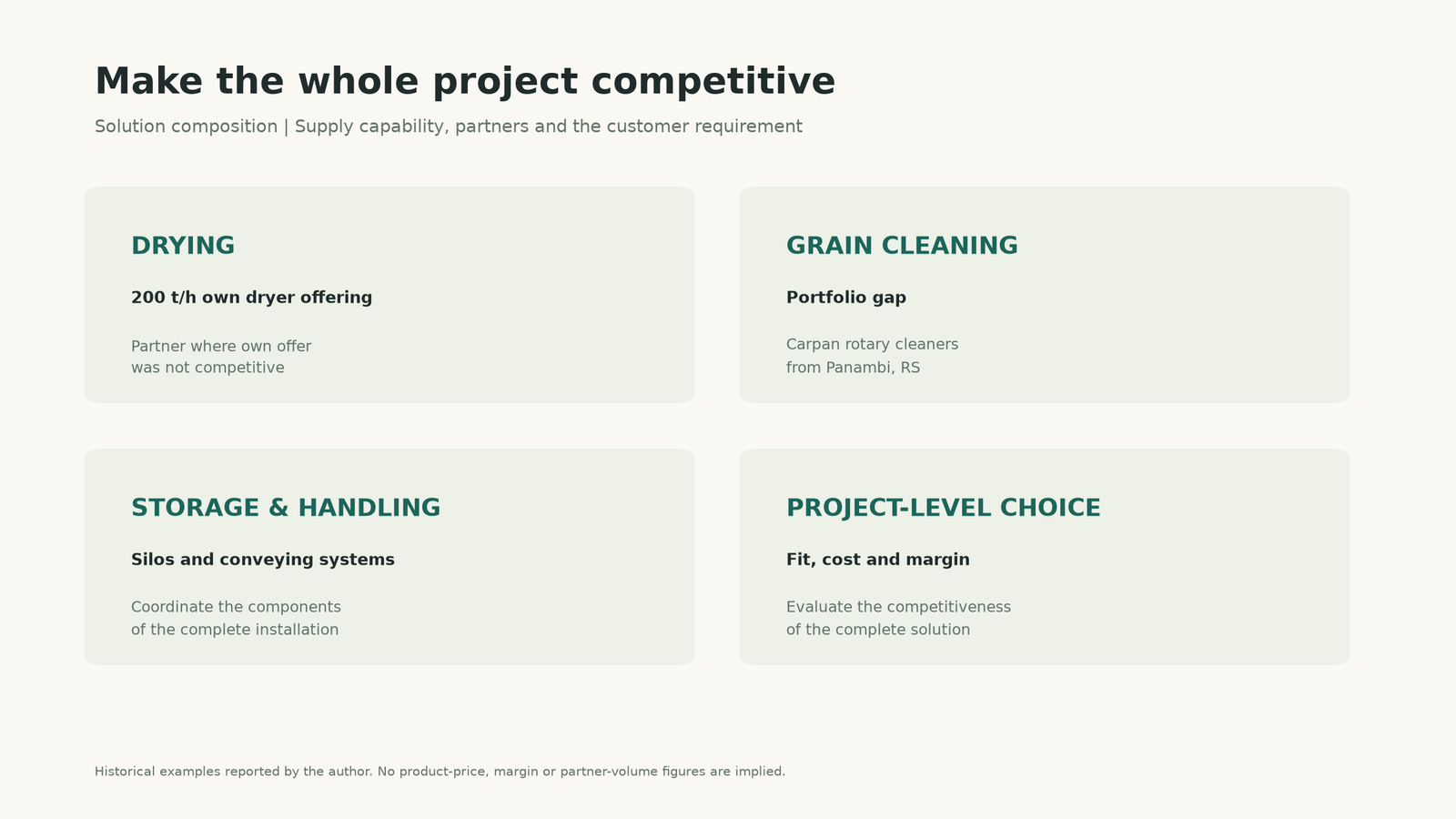
A grain-storage project could combine a dryer, cleaning equipment, silos, and the handling and conveying systems that connected them.
The competitiveness of the whole proposal depended on how those components came together. Working on our own production costs was one way to improve it. The composition of the solution offered another: an individual product in our own range could make a particular project harder to win, even when other parts of our offer were well suited to the customer.
At the time, our 200-tonne-per-hour grain dryer was not competitive for the opportunities in question. Where our own dryer made the proposal uncompetitive, I took it out and worked with a more competitive partner to make the complete solution viable.
That decision required looking at the customer’s project as a whole. The objective was to put together a competitive installation that we could coordinate and deliver, with a commercial outcome that made sense.
There were also gaps in the range. We did not have a complete grain-cleaning line. I established a partnership with Carpan, a manufacturer in Panambi, Rio Grande do Sul, to sell its rotary grain-cleaning machines as part of the solutions we could offer.
Partnerships with complementary suppliers, and in certain situations competitors, gave us ways to complete the project beyond our direct supply. They allowed the commercial conversation to remain centered on what the customer needed the installation to do.
For me, this was a practical lesson in portfolio strategy. The strongest answer to an opportunity could involve our own products, a partner’s equipment, and the work of coordinating them. Knowing where to use each mattered to the competitiveness of the complete offer.
Giving Marketing Distinct Jobs In The Buying Process
The regional structure gave us ways to reach customers, and the work on costs and partners strengthened what we could offer them. Marketing had to bring those capabilities into the buying conversation, giving people reasons to take a closer look at the company and its solutions.
I developed campaigns around trade shows and events. They created opportunities to bring the company and its solutions into direct contact with potential buyers.
Social media was another part of the marketing effort, extending the ways in which the market could encounter what we offered. It belonged alongside the field activity, rather than being the whole campaign by itself.
I created a business-referral campaign through which people could introduce opportunities and receive a commission. That gave introductions a defined place in the commercial model.
A member-get-member campaign added another initiative for encouraging introductions. It was part of the effort to create more routes into a commercial conversation.
These marketing initiatives sat alongside the sales team’s equipment-specific commission campaign. Creating an introduction, building visibility, and directing a salesperson’s attention toward selected products each addressed a different part of the growth effort.
At an agricultural trade show in Bahia, we installed a 22-meter grain storage silo.
The structure made the scale of our offer visible. A buyer could discuss an industrial investment with a physical reference in front of them.
Helping The Customer Examine The Promise
Visits offered another way for customers to examine what stood behind the proposal.
I took customers to other plants to see projects we had supplied. Those visits brought completed work into the evaluation of a new investment.
At our own factory, I created a product demonstration center. It gave the products a place in the customer’s assessment of our capabilities.
I also established a formal factory-visit program, inviting customers with their expenses covered. The invitation and the practical arrangements were part of making that evaluation possible.
Reference visits let a customer see work already supplied. The demonstration center brought products into view. The formal visit program brought customers closer to the operation that would be responsible for their project.
The factory now had another role. Alongside its manufacturing capacity, it had become a place where customers could evaluate us.
Making A Global Portfolio Relevant In Brazil
Another part of the assignment was introducing BinManager to Brazil. I acted as the bridge between the group’s technology portfolio and local commercial requirements.
I carried out market research, supervised the initiative, and defined the market-entry and commercialization strategy for Brazil.
The group had technology to offer. Building its relevance locally required an understanding of the buyer, the field conditions, the channels, and a value proposition that made sense in the customer’s operating environment.
This was one expression of the larger cultural transition. Being part of a multinational created access to capabilities beyond the acquired operation. Local leadership had to turn that access into an offer the market could understand and use.
Looking At The Next Opportunity Inside An Existing Customer
The group’s portfolio could broaden the opportunities we pursued. Existing installations gave us another place to look: customers who had already bought from us and whose operations could benefit from further improvements.
We visited existing customers to look at their installations, assess flow and sizing, and identify opportunities to propose improvements and retrofits.
That opened a more practical discussion of upsell and cross-sell. The installed system gave us a starting point for understanding what could be improved, upgraded, or complemented. The next commercial conversation could be grounded in the way the customer’s operation was working.
This was part of the forward-looking view I wanted the organization to develop. A manager needed to see both the project in front of the team and the possibilities that could emerge from a continuing customer relationship.
The work connected the original sale with the customer’s subsequent needs. Market development could include returning to an existing installation and understanding where a useful next investment might lie.
Helping The Producer Undertake The Investment
Across the opportunities we pursued, the customer’s ability to finance an investment also belonged in the commercial picture.
Together with the executive team, I co-created a direct producer-financing initiative using CPR, the Cédula de Produto Rural, a Brazilian agricultural financing instrument.
I also helped recruit the director responsible for that initiative. Building the commercial proposition included helping put the leadership in place to carry a new responsibility.
Alongside equipment, technical scope, and price, we were developing a financing pathway through which the producer could approach the investment.
I also created a leasing program for turnkey solutions. In Dourados, Mato Grosso do Sul, we brought that approach into a project I understood to be the first of its kind in Brazil’s grain-storage sector.
These initiatives operated within shared governance. We had credit and legal teams, and responsibility was shared with senior leadership through committees. The funding came from our headquarters in Canada, with direct involvement from the CEO.
That made the financing work a matter of coordination across commercial ambition, credit, legal considerations, and group leadership. I was helping develop a new route for the customer to invest within a structure of shared responsibility that reached the parent company.
This broadened what I understood a commercial leader could help build. The offer could include a solution, the partners needed to complete it, and a way for the customer to undertake the investment. Those decisions required work with other executives and people able to carry the responsibility forward.
The Responsibility Continued After The Order
By considering the equipment, its technical scope, the partners involved, and the financing pathway, we were shaping a commitment that other people would have to fulfill. My General Manager remit encompassed the revenue system and the post-sale lifecycle, so those consequences belonged within my responsibility.
A campaign could create an introduction. A regional leader could develop the opportunity. Engineering could help define the project. Pricing and financing could shape the commercial commitment. Delivery, installation, service, and support would shape the customer’s experience afterward.
Revenue governance meant considering those stages together and being accountable for the responsibilities created as a project moved between them.
The quotation changes made that continuity tangible. The same technical work that helped us sell could give manufacturing and delivery a clearer place to begin. The visits to existing customers extended the view further, into improvements and retrofits after the original installation.
The operating culture we were building needed to support that continuity. Each team had to understand what it was receiving, what it needed to deliver, and which decisions required another function’s involvement. The customer should be able to recognize the same project in the proposal and in the work that follows it.
The Results, And A Quarter We Would Remember
Projects I worked on included Lar’s development in Caarapó, Mato Grosso do Sul, and the supply of 24 silos to Albaruska in southern Brazil. Projects of that scale bring the commercial promise into physical form through the coordinated work of many people.
We also reached the R$70 million quarterly recognized-revenue target set by our industrial director.
He never made the promised run around the plant.
From 2019 to 2022, annual recognized revenue in the Brazilian operation grew from US$30 million to US$150 million. Across those three annual intervals, that represents a compound annual growth rate of approximately 71.0%. Margin improved by six percentage points over the three-year period.
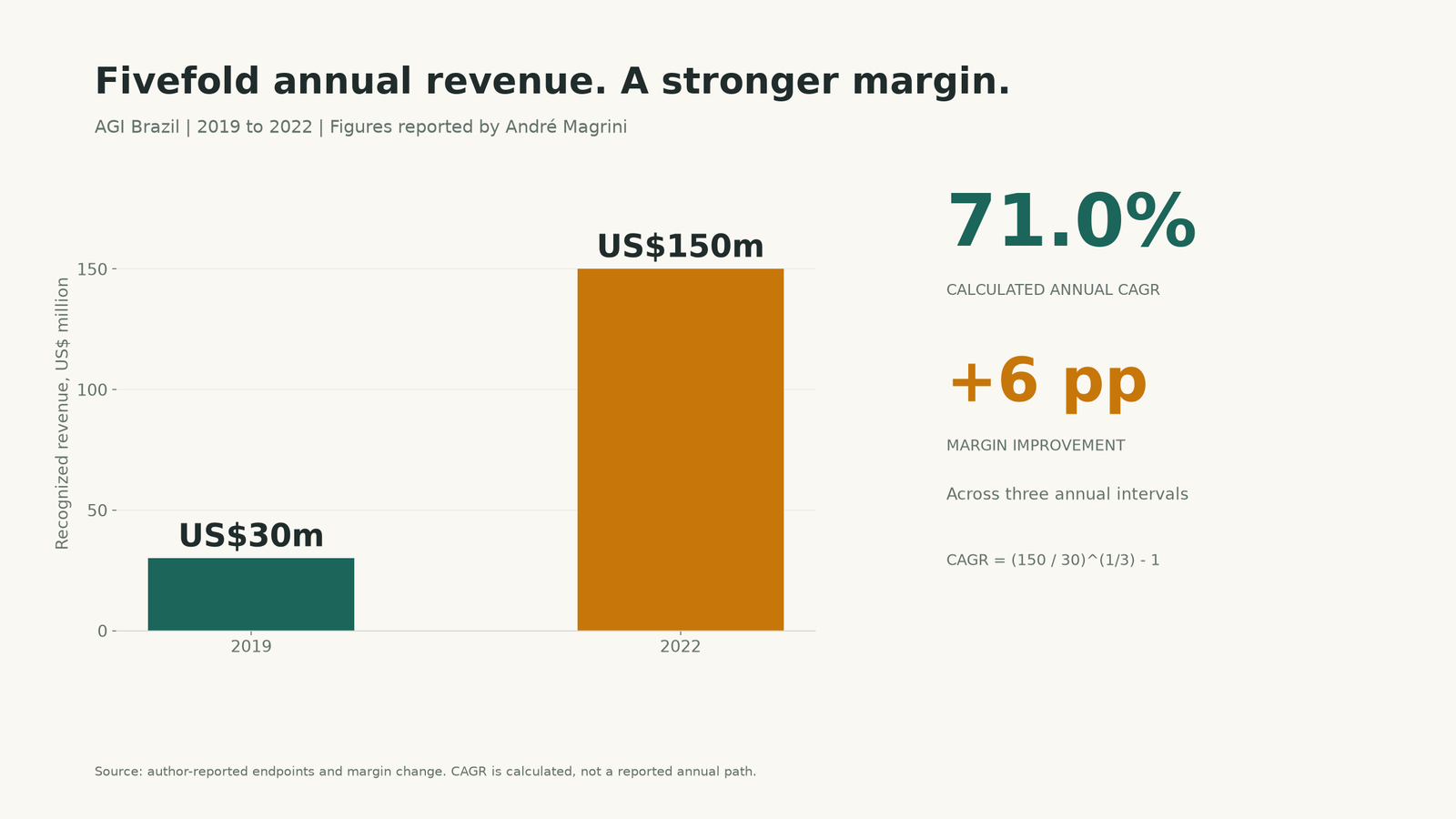
The growth was sustainable and accompanied by margin expansion. The progression from establishing regional footholds to improving the product mix and pursuing better-margin projects was part of how I approached that development.
The scale of the industrial operation grew alongside the business. The factory workforce increased from roughly 300 employees when I joined to around 1,000 by the time I left. That expansion gave the transformation another dimension: the organization supporting the commercial promise had become substantially larger as well.
Behind the results were regional managers, salespeople, representatives, sales administration, design and estimating specialists, engineers, manufacturing and finance teams, partners, and delivery teams. I led important changes. They made those changes work in the business every day.
The processes and culture also continued to function after I moved on. The operation kept flowing because the way of working had been implemented across the team. For me, that continuity mattered: the changes had become part of how the organization operated.
I was recognized as the company’s best executive and later moved to the United States to lead a Food and Feed business unit in North America.
The recognition mattered to me. So did the education behind it.
I subsequently applied the lessons from Brazil at AGI North America and at OGI. The experience gave me principles I could carry into other settings: connecting market evidence with operating capabilities, developing ownership in leaders, and bringing the relevant functions together around the business decision.
The Leader I Became Through The Work
By the end of that chapter, I felt prepared for fully strategic executive mandates: setting direction, designing the organization, and governing the business with accountability for the result.
The responsibility for execution remained. What had changed was my ability to carry it through trained leaders, shared processes, and an organization that could move opportunities forward without my intervention in each one. Strategic maturity meant deciding where to compete, developing the people who would lead, and remaining accountable for what the business delivered.
I had learned to bring market evidence, production economics, the composition of a solution, and the customer’s ability to invest into the same decision. A regional appointment, a price, a partner, or a financing initiative could change what other people were able to accomplish.
The cultural transformation and my own development had happened through that work. A smaller acquired operation was learning to pursue a larger ambition. I was learning to design and connect more of the conditions that ambition required.
The Leadership Style I Carried Forward
My leadership style combines humility and inclusion with clear direction and a strong drive to win. I want people involved in understanding the problem and building the answer. I also expect us to keep moving toward a result.
Training, repetition, and correction are central to how I lead. I work to make the expectation clear, help people practice it, and correct the approach as we learn. In Brazil, the quotation tool and the development of regional ownership gave that approach a practical expression. The team learned to carry work that had initially required my direct participation.
I bring constructive aggressiveness to the pursuit of opportunities: the energy to challenge a target, improve an offer, and keep looking for a workable solution with the team. Creativity matters in that process. A partner’s equipment, a different product mix, or a financing pathway could change what became possible for a customer.
My experience across different parts of the business helps me keep the big picture in view while staying hands-on when the situation requires it. A customer requirement can affect engineering, production costs, pricing, finance, and delivery. Seeing those connections is part of how I judge an opportunity and help people work through it.
I am comfortable communicating across organizational levels, from a shop-floor operator to a CEO. The discussion may concern a practical obstacle at a machine or a decision involving the parent company. I work to understand the perspective in front of me and explain what we are trying to accomplish in terms that are useful to that person.
For me, the experience became more than an MBA. The decisions involved customers making investments, people taking on responsibilities, and teams that would have to fulfill what we sold. The education came from making those choices and carrying responsibility for their consequences.
Before I ask a team for more growth today, I look at what kind of organization that growth will require. Where should we compete? Which capabilities should we build ourselves, and where can a partner strengthen the solution? Do our people have the judgment and resources to act? Do incentives support the priorities? Can the work done to win an order help the people who must fulfill it?
Those are questions the experience in Brazil taught me to hold together.
The factory was ready when I arrived. Building the business around it changed how I understood the work of leading.
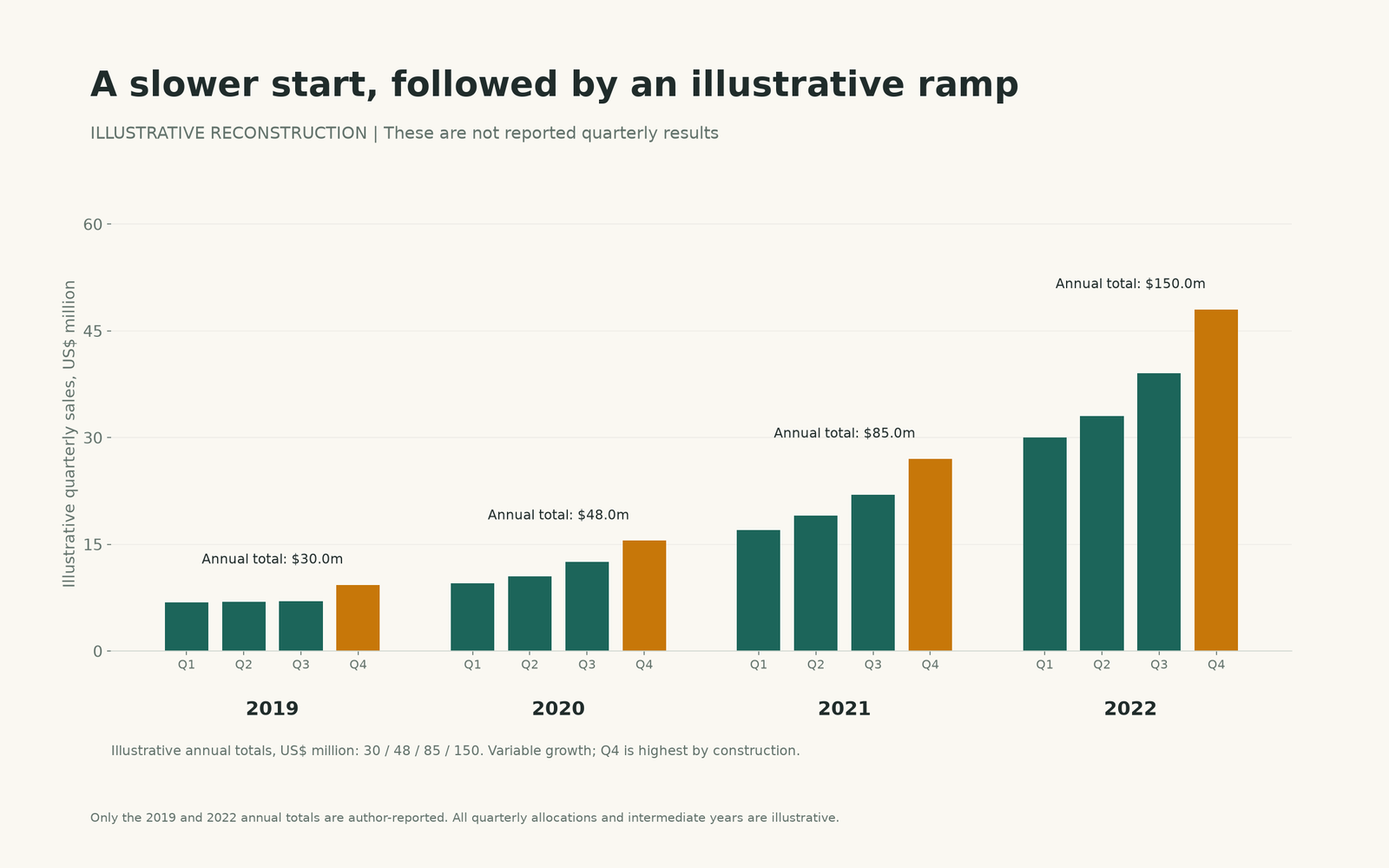
A ramp that allows time for diagnosis and conversion
The reported 2019 and 2022 annual endpoints still imply approximately 71.0% CAGR. That does not mean growth was constant or began immediately. This illustrative path has a flatter start in 2019 and variable growth afterward, with modeled annual totals of US$30m, US$48m, US$85m and US$150m. Diagnosis, leadership alignment and the two-to-six-month sales cycle inform the shape of the illustration, not its exact values. Q4 is the largest quarter by construction. No actual quarterly series, 2020/2021 totals or precise timing of sales recognition has been supplied.
Questions about the case and its evidence
Which figures are historical and which are illustrative?
The annual recognized-revenue endpoints, margin improvement and other historical business figures in the narrative are author-reported. The quarterly companion is a model: its quarterly values and 2020/2021 annual totals are illustrative. The reported endpoints support the displayed CAGR calculation, but they do not establish a constant annual growth path.
Can the company's growth be attributed entirely to Andre Magrini?
No. The account describes Andre's leadership responsibilities and decisions alongside the work of regional managers, salespeople, technical specialists, manufacturing, finance, partners and delivery teams. It is an account of a contribution within an organization. It does not isolate the causal effect of one executive from team performance, investment or market conditions.
How should a buyer use this case when evaluating an engagement?
Use it to examine the decisions, operating dependencies and leadership approach described. Compare the context with your own business, and ask what supporting evidence can be disclosed for any material historical claim. The case does not guarantee that the same actions will produce similar revenue or margin results in another company.
The CRO Club interview with Andre Magrini: Professional context: this interview discusses qualification, revenue forecasting and human oversight of AI. It is not independent verification of the AGI revenue, margin or workforce figures reported in this case.
Review Andre Magrini's professional background: Examine the public profile, research links and evidence boundaries alongside this operating account.
Evaluate the Fractional CRO leadership scope: Compare the case context with the responsibilities, decision rights and internal implementation capacity a new mandate would require.