Blog
-
Not Every AI Problem Needs a Language Model
BUYER GUIDE · UPDATED AUGUST 26, 2026
AI Governance Framework for Corporate Boards
A practical board AI governance framework covering materiality, ownership, evidence, risk tiers, human control, reporting and incidents, plus the five questions a standard risk register will not surface.
Direct answer. A board AI governance framework should identify material systems, assign accountable executives, define risk tiers and evidence standards, require human controls, monitor exceptions, and establish escalation and incident reporting. It should also contain at least one question about competitive displacement, which standard risk frameworks systematically omit.
Start with materiality
Boards do not need an inventory of every productivity tool. They need visibility into AI that affects customers, revenue, safety, employment, regulated decisions, financial reporting, intellectual property, security and strategic dependency.
The practical test for materiality is not how advanced the system is. It is what happens when it is wrong. A model that drafts internal meeting notes and a model that scores credit applications may use identical technology and belong in entirely different oversight categories.
Three questions establish materiality quickly:
- Does a customer, employee or regulator experience the output of this system?
- Would a systematic error in it appear in the financial statements, a regulatory filing, or a headline?
- If it stopped working tomorrow, would a revenue line or an operating process stop with it?
Any yes puts the system on the board’s map. Everything else belongs to management.
Assign decision rights and evidence
Every material system needs a named executive owner, a stated intended use, documented known limitations, defined approval authority, a monitoring plan, a human intervention point, vendor obligations, and a record of why deployment was considered acceptable at the time.
That last item is the one most often missing and the one that matters most in hindsight. Boards routinely receive a description of what a system does. They rarely receive the reasoning for why the risk was accepted. When something goes wrong two years later, the absence of that record is what turns a defensible decision into an indefensible one.
The standard is not perfection. It is that a competent outsider could reconstruct why a reasonable person approved this.
Use risk tiers to match oversight
Low-consequence assistance should not receive the same process as a consequential customer or financial decision. Risk tiers should change testing, approval, monitoring, disclosure, human control and board reporting requirements.
A workable three-tier structure:
Tier Definition What changes Advisory Produces a recommendation a person acts on, with the person’s own information available Management oversight. No board reporting unless it moves tier Consequential Materially shapes a decision affecting a customer, employee, regulator or the financial statements Named owner, documented limitations, monitoring plan, defined intervention point, periodic board summary Acting Takes an action or completes a transaction without a person approving that specific instance Explicit board awareness, pre-approved action boundaries, kill authority named, incident reporting by default The tier boundary that matters most is between the second and third. A system that recommends and a system that acts are different governance objects, and the distinction is often lost because the vendor calls both of them an assistant.
Boards should be able to answer one question at any time: which of our AI systems can take an action rather than make a recommendation, and who can stop them.
Review incidents and near misses
Governance improves when exceptions, overrides, drift and failed assumptions are reviewed. A board should understand whether the control system detected the issue, whether people acted, and what changed afterward.
Near misses matter more than incidents here, and they are the harder thing to get reported. An override that a person made correctly is evidence the control worked. An override nobody made because nobody noticed is the finding, and it will not appear in an incident log by definition.
Ask for the override rate, not only the incident count. A material system with a zero override rate over a quarter is either performing perfectly or is not being checked, and those two look identical on a dashboard.
The five questions a risk register will not surface
Here is the part most board AI frameworks, including the earlier version of this one, leave out.
A risk register is built to catalog threats: things that could happen to the company. Cyber breach, regulatory action, model failure, vendor outage, reputational harm. That is the correct design for a risk function, and it is complete on its own terms.
The largest AI risk to most companies is not a threat. It is a competitor. And competitors do not appear in risk registers, because a risk register is not built to hold them.
This is measurable. In Gartner’s 2Q26 Emerging Risks Survey of 316 risk management leaders, auditors and senior executives, respondents were asked to score twenty emerging risks and their organizations’ level of attention to each. The survey plots the gap. AI-driven competitive displacement appears as the leading potential blind spot: scored high on risk, receiving low attention. AI platform lock-in and AI-driven skill erosion sit in the underattended half as well, while the risks receiving the most attention are the recognizably risk-shaped ones: agentic AI, AI discovery of cyber vulnerabilities, energy supply shocks and information integrity.
That pattern is not a failure of competence. It is a boundary problem. Risk owns threats. Strategy owns competition. The AI risk with the largest expected effect on revenue sits on the line between them, and lines are where things get dropped.
Five questions close the gap. None of them belongs on a standard risk register, and all of them belong in a board meeting.
1. Which of our revenue lines could a competitor deliver at materially lower cost using AI, and how long would that take them?
Name the line and the timeline. If nobody can answer, that is the answer. This is competitive displacement stated as a number rather than a category.
2. If our primary AI vendor doubled its prices, what happens to our gross margin?
Platform lock-in is scored low and attended to less, which is exactly the profile of a risk that arrives suddenly. If your cost of delivery runs through one vendor’s pricing, that vendor holds a lever on your margin. Boards routinely test customer concentration and rarely test supplier concentration on this dimension.
3. What decisions can our people no longer make without the tool?
Skill erosion is the slowest of these risks and the hardest to reverse. It shows up first as capability that quietly relocated from the organization into a subscription, and it is only visible when the tool is unavailable or when a novel case arrives.
4. Which of our AI systems can take an action rather than make a recommendation, and who can stop them?
The tier three question from the section above, asked directly. This is the one risk in the set that boards do reliably ask about, and it is worth asking precisely rather than generally.
5. What do we know that our competitors cannot buy?
The inverse of question one, and the only one with an upside answer. Proprietary operating knowledge is the asset AI makes more valuable rather than less, because models amplify whoever holds better material. If the answer is nothing, the company is competing on a capability that is available at list price to everyone in the market.
What a board should receive quarterly
One page, not a deck.
- Material systems by tier, with any tier changes since last quarter
- Named owner per material system, with changes flagged
- Override and exception rates on tier two and three systems, with the trend
- Incidents and near misses, with what changed as a result
- One paragraph on question one above, updated by management, even when the answer has not moved
That last line is the discipline. A displacement question asked once becomes a slide. Asked every quarter, it becomes a habit of looking, and looking is the entire control.
OPERATING EVIDENCE
Operating evidence
In executive advisory work, the first value often comes from stopping low-readiness pilots, clarifying decision rights, and moving resources toward use cases with measurable workflow evidence. Client-identifying details are disclosed only with authorization.
Questions boards ask
What should be in an AI governance framework for a board?
Materiality criteria, a named executive owner per material system, risk tiers that change the level of oversight, documented limitations and approval reasoning, human intervention points, incident and near-miss review, and quarterly reporting. It should also include at least one standing question about competitive displacement, which standard risk registers omit by design.
Why is AI competitive displacement missing from most risk registers?
Because a risk register catalogs threats to the company, and a competitor is not a threat in that sense, it is a market condition. Risk functions own threats and strategy owns competition, so the risk sits on the boundary. In Gartner’s 2Q26 Emerging Risks Survey of 316 risk leaders and executives, AI-driven competitive displacement appeared as the leading blind spot, scored high on risk and receiving low attention.
How many risk tiers should we use?
Three is usually enough: advisory, consequential and acting. The important boundary is between systems that recommend and systems that act without a person approving the specific instance. Vendors often describe both as assistants, so the distinction has to be made internally.
How often should a board review AI?
Quarterly for material systems, on one page. Incidents and tier changes should be reported when they happen rather than held for the cycle.
What is the most commonly missing item in board AI reporting?
The reasoning behind the original approval. Boards receive descriptions of what systems do and rarely receive the record of why the risk was considered acceptable. That record is what makes a decision defensible in hindsight, and it cannot be reconstructed after an incident.
Sources
- Gartner Quarterly Emerging Risk Report, 2Q26. Data from the 2Q26 Gartner Emerging Risks Survey, n = 316 risk management leaders, auditors and senior executives, with trend data drawn from the 3Q25, 4Q25, 1Q26 and 2Q26 surveys. Used for the emerging risk misalignment quadrants and the identification of AI-driven competitive displacement as a leading potential blind spot.
Apply this to your company
Diagnose the operating constraint before adding more activity, tools or AI.
-
How Much Does a Fractional CRO Cost? 2026 Benchmarks
A fractional CRO costs between $10,000 and $35,000 per month in 2026, depending on your revenue and how many days per week the engagement runs. The market average across more than 1,000 real assignments is $11,732 per month at $225 per hour, with engagements averaging 9.7 months at 14.6 hours per week.
That paragraph is the entire answer. Most pages in this category will not give it to you. Of the nine sites ranking on page one of Google for “fractional CRO” in August 2026, seven publish no dollar figure at all. One has a section titled “Fractional CRO Salary” that contains no salary. Another has a FAQ literally titled “How much does a fractional CRO cost?” and answers it without a number.
What does a fractional CRO cost by company size?
Your revenue Monthly range Median What you get at the median $3M to $10M ARR $10,000 to $18,000 $12,000 About one day per week, embedded $10M to $25M ARR $15,000 to $25,000 $18,000 One and a half to two days per week $25M to $50M ARR $20,000 to $35,000 $25,000 Two days per week, with team management Source: Treetop Growth Strategy pricing benchmark, May 2026. What does it cost by engagement shape?
Revenue band tells you the ceiling. Engagement shape tells you the price. These are two different questions and most quotes conflate them.
Shape Typical range Use it when Advisory only, no execution $2,500 to $6,000 per month You have a capable VP and need a sounding board Embedded, one day per week $8,000 to $15,000 per month The system needs building but the team can run it Embedded, two days per week $14,000 to $25,000 per month The most common shape for $10M to $30M companies Interim, three or more days per week $22,000 to $40,000 per month The seat is empty and the quarter is live Project sprint, fixed scope $12,000 to $30,000 total One defined problem, such as rebuilding the forecast Source: Treetop Growth Strategy, May 2026. How has the market price moved?
Metric 2023 2024 2025 Average monthly fee ~$9,350 $9,651 $11,732 Average hourly rate $176 $213 $225 Average assignment length not reported ~8 months 9.7 months Hours per week not reported ~12 14.6 Structured as retainer not reported two thirds 88% Source: Vendux, State of Fractional Sales Leadership, 2023 through 2025. Two things in that table matter more than the headline number. Engagements are getting longer and deeper, from roughly 8 months at 12 hours per week to 9.7 months at 14.6 hours. And retainers went from two thirds of the market to 88 percent. The market is converging on the same conclusion buyers reach independently: this only works when the person is genuinely inside the business.
How does that compare to a full-time CRO?
Line item Full-time CRO Fractional CRO Base compensation ~$230,000 Included in retainer Fully loaded with benefits and taxes $295,000 to $320,000 Not applicable Equity Typically material Uncommon below $15,000 per month Time to fill 8 to 16 weeks of search Average 26 days to start Annual cash cost $295,000 to $410,000 $90,000 to $300,000 Cost if the hire is wrong 150% to 200% of annual comp 30 to 60 day notice period The last row is the one buyers underweight, and there is hard data on it. Harvard Business Review found that average CRO tenure is 25 months, among the shortest in the C-suite, and that 62 percent of companies see growth flatten or decline in the year following a CRO transition. You are not choosing between a fractional CRO and a permanent CRO. You are choosing between a fractional CRO and a roughly two-year bet with a documented failure pattern.
What contract terms should you expect?
- Minimum term: six months. Anything under three months is a project, not a revenue mandate.
- Notice period: 30 to 60 days on either side.
- Equity: uncommon below $15,000 per month, and typically 0.1 to 0.5 percent with two-year vesting.
- Performance bonus: more common for CRO engagements than for other fractional roles, and usually tied to revenue or forecast accuracy rather than activity.
What do marketplaces add to the price?
Platform Fee structure Bolster $2,500 upfront plus roughly 20% ongoing markup Shiny 10% markup, 15% on conversion to full-time Fractional Jobs One-time referral fee of $3,000 to $5,000 A $15,000 quote through a platform with a 20 percent markup is a $12,500 engagement plus $2,500 of intermediation. That is not necessarily bad value, because the platform did the sourcing and the vetting. It is simply a number you should have before you negotiate.
Is a fractional CRO worth it at your stage?
Situation Verdict Under $3M, founder still closing every deal No. You have not found the motion yet $3M to $30M, founder-led selling has stalled Yes. This is the window the model was built for Your VP of Sales just left mid-quarter Yes, as interim at three or more days per week Board has lost confidence in the forecast Yes, scoped to forecast and pipeline governance first Above $50M with a working process No. Hire full-time Genuine crisis, cash or existential No. A crisis needs undivided attention Common questions
Why do so few firms publish their prices?
Because the price depends on engagement shape, and publishing a number invites comparison before the scope conversation. The tradeoff is that buyers who need to estimate before they call simply do not call. Withholding price does not filter for serious buyers, it filters them out.What is the average fractional CRO hourly rate?
$225 per hour in 2025, up from $213 in 2024 and $176 in 2023. But hourly is a benchmark, not a billing model: 88 percent of engagements are structured as monthly retainers.How many clients does a fractional CRO carry at once?
Around four assignments per year at 14.6 hours per week each. Ask any candidate directly how many concurrent clients they have. More than three at meaningful depth is a capacity problem, and capacity is the most common reason these engagements fail.Should the fee be tied to results?
Partly, and carefully. Components tied to forecast accuracy or pipeline quality align well. Components tied to closed revenue in the first two quarters usually do not, because the deals closing in that window were sourced before the engagement started.How I structure it
I publish the market data above because a buyer who cannot estimate cost cannot start a conversation. My own engagements sit inside these ranges, scoped to days per week rather than to deliverables, with a six-month minimum and the first thirty days spent establishing what is actually broken before anything gets rebuilt.
Last updated: August 24, 2026. Benchmark data reviewed quarterly.
-

AI Verification Needs Independent Evidence
My revenue forecast was wrong for years, and nobody on my team ever lied to me. The number was broken for a structural reason. The person who wanted the deal to be real was the same person certifying that it was real, working from the same call notes, carrying the same optimism, paid on the same outcome. I now recognize that exact architecture on almost every AI reliability slide I am shown.
The pitch has converged. The model drafts, the model critiques the draft, the model revises, and the vendor calls the result verified. It is the standard reliability story in 2026, and it usually appears one slide before pricing.
Meanwhile the room changed. Risk, procurement and legal now join the first call, and they are not asking whether the system is accurate. They are asking who checked. Most architectures shipping today cannot answer that question, because the checker and the author are the same entity wearing two labels.
Let me concede the strong version of the counterargument first, because it is real and because most critiques of this stuff skip it.
Sampling a model many times and taking the majority answer does lift measured accuracy. That result is replicated, it is not marketing, and anyone who waves it away is not arguing in good faith. It works because it attacks variance. When a model's errors are scattered, more samples wash them out.
That is also exactly where it stops. The failures that survive to production are not scattered. They are the ones that look correct from inside the model's own distribution: fluent, well-formed, structurally plausible, and wrong with the same confidence as the right answers. A checker built from the same weights, reading the same context, carrying the same priors, tends to fail on those same inputs. The correlation is not perfect. It is high enough to void the arithmetic that every reliability claim quietly assumes. Independent failures multiply and get rare fast. Correlated failures do not multiply at all, and in the limit the second check removes exactly zero error while adding cost, latency, and a sense of safety you did not buy.
I run a verification benchmark in my research work at Tepis AI. It clears 54 of 1,000 cases end to end on the strict criterion, with zero false clears observed across that set.
Now the uncomfortable part, before somebody puts it in the comments. We designed that benchmark, and you cannot see the cases, which is precisely the weakness this post is about. So let me scope it honestly. Zero observed false clears in 1,000 is not "never." The defensible statement is under half a percent, not zero, and the only thing that would convert this from a claim into evidence is an outside party running the same thousand cases and reporting whatever they find. That offer stands. A number you cannot falsify is a brochure.
What I will defend is the design reason behind it: the verifier does not share a substrate or an information source with the generator. That is the whole mechanism, and it generalizes far beyond anything I build.
Four gates. Run whatever you are about to trust with a real decision through them.
1. 𝗜𝗻𝗳𝗼𝗿𝗺𝗮𝘁𝗶𝗼𝗻 𝗶𝗻𝗱𝗲𝗽𝗲𝗻𝗱𝗲𝗻𝗰𝗲. Does the checker have access to something the generator never saw? A document, a record, a measurement, a system of record, a person. This is the load-bearing gate. If both are reasoning over the identical context, you are measuring internal consistency, and consistency is a property of good fiction as much as of good analysis. The single question worth asking a vendor is this one: when your system verifies an output, what specifically does the verifier have that the generator did not?
2. 𝗦𝘂𝗯𝘀𝘁𝗿𝗮𝘁𝗲 𝗶𝗻𝗱𝗲𝗽𝗲𝗻𝗱𝗲𝗻𝗰𝗲. Do the two share weights, architecture or training data? This gate is what makes gate one durable. Shared substrate means shared blind spots, so ask for the correlation between their failures rather than for two accuracy numbers. Two components that are wrong on the same inputs give you one check, priced as two.
3. 𝗜𝗻𝗰𝗲𝗻𝘁𝗶𝘃𝗲 𝗶𝗻𝗱𝗲𝗽𝗲𝗻𝗱𝗲𝗻𝗰𝗲. Is anything in the system scored on throughput, resolution rate, or share of cases cleared? A checker rewarded for clearing will clear. This is not a machine problem, it is the oldest problem in auditing, and we are rebuilding it without the safeguards that took the accounting profession a century to write down.
4. 𝗥𝗲𝗰𝗼𝗻𝘀𝘁𝗿𝘂𝗰𝘁𝗶𝗼𝗻 𝗶𝗻𝗱𝗲𝗽𝗲𝗻𝗱𝗲𝗻𝗰𝗲. Can a third party reconstruct why the check passed, from stored artifacts, without rerunning the model? If the justification only exists inside a run you cannot reproduce, you have a result, not an audit trail. This is the gate regulated buyers will decide on, and almost nobody is building for it yet.
Notice what passes. A unit test passes. A type checker, a schema validator, a database constraint, a reconciliation against a ledger: all four gates, cleanly, and they are cheap and boring. A same-model checker reading a retrieved contract the generator never saw passes gate one and fails gate two, which is a real improvement and worth having. A judge from a different vendor, or a human reviewing a random sampled slice, gets you most of the way. None of that is my product. If a framework only clears the thing its author sells, it is a spec, not a test.
Which brings me back to the forecast.
Taking an organization from $35M to $150M was, in retrospect, a long lesson in exactly this. Every one of the four gates was open. The evidence was produced by the same people who were graded on it, held in their notes, justified in a conversation nobody else could reconstruct. The fix was not better estimating and it was not better people. It was making the evidence independent. A deal counted when we could point at an artifact the customer had produced rather than one we had produced about them: a requirement written in their words, a named person in the buying committee on record, a mutual plan they had actually edited. The number got smaller, and for the first time it also got true. A forecast that survives someone trying to kill it is the only kind worth carrying into a board meeting.
I still run the same test on my own work. Every batch of output in the research venture goes to an adversarial review that did not produce it and gains nothing from its survival. It regularly kills work I liked. That is the evidence it is functioning. A gate that always passes is a formality, and formalities are what accountability decays into when nobody checks the checker.
So I want to hear where this went the other way. Every time I have watched a team choose between a cheap checker that shares a substrate and an expensive one that does not, the cheap one won, and the stated reason was always that the independent one flagged too much. Where have you seen real independence survive the cost conversation, and what did it take to defend it?
-

Structuring Maintenance Data for AI
Most enterprises trying to deploy AI are not blocked by AI.
They are blocked by what comes before it.
Last month I sat with the operations leader of a large food manufacturer. Multiple plants. Hundreds of pieces of equipment. A clear ambition: deploy predictive maintenance to cut unplanned downtime, extend asset life, and free capital tied up in spare parts inventory.
The business case was solid. The executive sponsor was committed. The budget was approved.
And the program had been stuck for eighteen months.
The reason was not the model. It was not the cloud. It was not the data scientists.
The reason was that thirty years of maintenance history lived inside PDFs, scanned work orders, free-text technician notes, photos of damaged components, handwritten logbooks, and spreadsheets where every plant used different naming conventions.
A torque value here. A failure code there. A symptom described in three languages across four shifts. The "data" existed. The structured data did not.
To train a predictive maintenance model that actually predicts, you need clean, structured, lineage-traceable failure history per asset, per failure mode, per intervention. That food company had everything except that.
This is the silent gate in front of every enterprise AI program I have seen in the last three years.
The hallucination problem nobody talks about
When you transform unstructured and semi-structured data into structured data using modern AI tools, the process itself hallucinates. Not occasionally. Systematically.
There are at least ten well-known failure modes:
↳ Grounding failure
↳ Extraction hallucination
↳ Citation hallucination
↳ Table hallucination
↳ Entity confusion
↳ Context blending
↳ Over-compression hallucination
↳ OCR-induced hallucination
↳ Schema hallucination
↳ Confidence hallucination
And one that almost no commercial tool detects today, which we call Evidence Grounding Hallucination: the model returns the right-looking value not because it read it in your document, but because that value is statistically common in its training data. The bounding box exists. The schema validates. The confidence score is high.
The value is still wrong.
In maintenance logs, this is the difference between a model that predicts the actual failure mode of your equipment and a model that predicts the failure mode most common in the training corpus the vendor used.
You cannot build predictive maintenance on a foundation that hallucinates the past.
How OGI turns years into weeks
For the food manufacturer above, the conventional roadmap was clear: hire a team, manually structure five years of historical logs, build naming conventions by hand, then start training models. Estimated timeline: two to three years before the first predictive model would be trustworthy enough to act on.
We compressed it to roughly twelve weeks. Not by accident. By method.
The method has seven elements:
1. Criticality-first routing. Not every maintenance record carries the same weight. Catastrophic failures and capital equipment get the highest-tier extraction. Routine inspections get a lighter path. Budget never overrides criticality.
2. Multiple competing hypotheses per field. Three independent AI agents extract the same fact in parallel — a specialized ML extractor, a vision-language model, and a rules-based engine. Convergence builds trust. Divergence triggers attention.
3. A verification mesh, not a single confidence score. Three architecturally independent verifiers run in parallel: structural, calibrated-confidence, and evidence-grounding. The third one is what catches the hallucinations the other two miss.
4. Categorical decisions, not probability binaries. Each extraction lands in one of five states: execute, abstain, escalate, route to human, or reject. "Abstain" is a first-class outcome. A system that knows when it does not know is safer than a system that always answers.
5. Per-field cognitive lineage. Every structured field that lands in the data platform carries an immutable history of how it was derived, which model produced it, which verifier flagged it, and which human signed off. Audit is built in, not bolted on. This matters for ISO, FDA, FSMA, and any board-level data governance review.
6. Multi-level drift detection. When the underlying model is updated, when a new plant comes online, when a new equipment vendor is added — drift is detected in hours, not in quarters of lost confidence.
7. Human-in-the-loop with bounded SLAs. Not an overflow queue. A designed layer with response times, authentication, and escalation paths. Subject matter experts spend their time on the cases that genuinely require judgment, not on babysitting confidence scores.
The result for the food manufacturer: thirty years of unstructured maintenance data, structured and verified, ready to feed a predictive maintenance model in twelve weeks. With audit trail. With drift detection. With abstain semantics for the records that genuinely cannot be confidently extracted.
That is the unlock.
—
The order matters
There is a sequence to enterprise AI that the market keeps trying to skip.
First, the data has to be organized — clean, structured, lineage-traceable, hallucination-screened.
Then, the models have to be trained on it — predictive maintenance, demand forecasting, quality control, supply chain optimization, agentic workflows.
Then, and only then, the agents can act on it — autonomously, safely, with auditable reasoning.
Most companies are trying to deploy step three on top of a step one that has never been done properly. That is why their pilots look good in demo and fail in production.
You cannot automate decisions on top of data you cannot trust.
—
OGI Systems is in the business of making step one boringly reliable, so step two and step three can be ambitious.
If your AI roadmap is stalled because your operational history lives in PDFs, scans, free-text notes, and inconsistent spreadsheets — that is not a data problem you have to live with for another three years.
It is a method problem. And the method exists.
The question I would ask any operations leader, CIO, or CFO right now is simple:
How many years of structured data does your AI strategy assume you already have?
If the honest answer is "not enough," let's talk.
—
André Magrini
Global CRO | OGI Systems
AI-Driven Revenue & GTM Architecture | CAIO
-

The 41-Point AI Confidence Gap
A frontier language model answered a clinical reasoning task with 92% stated confidence. It was wrong. In my benchmark of 15 frontier models across 278 adversarial tasks, that pattern was not an outlier. It was the median.
The gap between what these models get right and what they know they got right runs 41 percentage points, with a 95% confidence interval of 34 to 48. I called the measurement the Metacognitive Accuracy Gap. MetaTruth, the benchmark I built to measure it, was just submitted to the Google DeepMind x Kaggle "Measuring AGI" hackathon.
The finding has an unglamorous implication: the enterprise AI systems being deployed right now fail confidently in the exact moments you would most want them to hesitate.
The problem is not accuracy. It is calibration.
Most AI evaluation still optimizes for the same three numbers: accuracy, latency, cost. That stack assumes correctness is the point. In a controlled benchmark, it is. In production, it is not.
Production environments punish miscalibration more than they punish error. A model that is right 80% of the time and flags the other 20% as uncertain is deployable under review. A model that is right 85% of the time and asserts 90% confidence across the 15% it gets wrong is a regulatory exposure with an accuracy chart attached.
Most architectures are not built to distinguish between what the system actually knows and what it is statistically completing.
Why better prompts will not fix this
The instinct is to treat miscalibration as a prompt problem. Add chain-of-thought. Add self-reflection. Ask the model to rate its own confidence.
None of this works at the architectural level, and MetaTruth showed why. When a system generates an answer and then grades that same answer using the same weights and the same inference pass, you have built a closed loop. Errors do not get caught. They get laundered.
Reliable systems across every discipline that has ever needed them look the same:
In science, the person running the experiment is not the person reviewing the paper.
In finance, the trader does not clear the trade.
In aviation, the pilot flying is not the pilot monitoring.
The principle is separation of roles. Generation is one function. Verification is another. When the same component does both, you have a model. Not a system.
Nine mechanisms, nine ways to fail
MetaTruth formalized nine distinct mechanisms by which frontier models fail metacognitively. Two of them I believe are new to the literature.
Recursive Epistemic Contamination. AI-generated text is now inside the training corpus of the next model generation. Reviewers use AI to screen papers. Papers with AI-assisted errors get published. Those errors train the next model. The contamination loop is no longer theoretical. It is upstream of every benchmark currently in use.
RLHF-Induced Reasoning Truncation. Alignment filters trained to suppress unsafe or uncertain outputs sometimes truncate the reasoning chain before the model has reached an answer. The model is not hiding the thought. It never completed it. What looks like a careful refusal is often a cut-off cognition.
The other seven cover source monitoring failure, context collapse, authority confusion, hallucination persistence, false consensus, calibration drift, and confidence inflation under adversarial framing. Each one is measurable. Each one shows up across vendor lines. None are solved by scale alone.
What epistemically reliable systems actually do
A system that takes epistemic reliability seriously does three things the current frontier does not.
It treats every output as a hypothesis, not a conclusion. Generation and verification are separated at the architectural level, not asked for in a prompt.
It exposes uncertainty instead of absorbing it. The confidence signal that reaches the downstream decision is a measurement, not a vibe.
It abstains when verification fails. This is the point most enterprise deployments miss. In a hospital, a clinician who says "I do not know, let us run another test" is a good clinician. In a bank, a risk model that flags "insufficient signal, escalate" is a good model. A system that always answers is not confident. It is untrained to say no.
A Monday morning diagnostic
If you lead AI adoption for an enterprise, three tests will tell you where you stand before the vendors do.
1. Pull 100 tasks your production model recently got wrong. Record the confidence it reported on each. If the average is above 60%, you have a calibration problem that no amount of prompt engineering will fix.
2. Check whether your verification layer uses a different model, a different inference pass, or different weights from your generation layer. If the answer is no, you do not have verification. You have a second opinion from the same witness.
3. Audit your abstention rate. Production systems that never say "I do not know" are not more reliable. They are less observable.
The shift that matters
The next phase of enterprise AI will not be won by whoever scales the largest model. It will be won by whoever builds the architecture inside which that model is allowed to be uncertain.
Capability has outrun credibility. The work now is to close that gap on purpose — with measurement, with separation of roles, and with the engineering discipline of building systems that can look at their own output and say: this one, I am not sure about.
The 41-point gap is the current baseline. The goal is to make it smaller, and to make the size of the gap itself a metric every enterprise deployment reports.
Full MetaTruth writeup is linked in the comments below.
#AIGovernance #EnterpriseAI #ResponsibleAI #LLM #AIResearch #AIStrategy #DataScience
Andre Magrini — Global CRO, OGI Systems. Author of six books on AI, revenue strategy, and corporate governance. MSc candidate in Data Science, USP. Based in Greater Chicago.
-

AI Has a Knowledge Problem Nobody Is Measuring
I've spent the last year running structured tests on frontier AI models. Not testing whether they get the right answer. Testing whether they know when they can't.
One finding broke every assumption I had about AI readiness.
𝗧𝗵𝗲 𝗚𝗮𝗽
I ran structured evaluations across 15 frontier language models on 276 tasks. One finding stood out above everything else.
When you ask a model to verify its sources and flag uncertainty, pass rates land between 67% and 93%.
When the model has to do that on its own, pass rates drop to 0-53%.
Same models. Same tasks. The only variable: whether a human reminded the system to check itself.
I call this the 𝗘𝗻𝗴𝗮𝗴𝗲𝗺𝗲𝗻𝘁 𝗚𝗮𝗽. The capacity for self-monitoring exists inside these models. Spontaneous deployment of that capacity does not.
If you're putting AI in front of customers, patients, or decision-makers, this gap is your single largest unmanaged risk.
𝗪𝗵𝘆 𝗜 𝗦𝘁𝗼𝗽𝗽𝗲𝗱 𝗖𝗮𝗿𝗶𝗻𝗴 𝗔𝗯𝗼𝘂𝘁 𝗔𝗰𝗰𝘂𝗿𝗮𝗰𝘆
I used to evaluate AI the way most leaders do: Can it do the task? How well? How fast?
Wrong metric.
A model that gets it wrong and sounds uncertain is manageable. A model that gets it wrong and sounds authoritative is a lawsuit waiting to happen. The more capable the model, the more convincing it sounds when it confabulates.
Epistemic risk scales with capability. A small model that hallucinates annoys you. A frontier model that hallucinates while citing sources in perfect prose costs you.
The question I ask now: does the AI know when it might be wrong?
Across every frontier model I've tested, the honest answer is no.
𝗧𝗵𝗿𝗲𝗲 𝗣𝗮𝘁𝘁𝗲𝗿𝗻𝘀 𝗜 𝗞𝗲𝗲𝗽 𝗙𝗶𝗻𝗱𝗶𝗻𝗴
𝗥𝗲𝗰𝗼𝗴𝗻𝗶𝘁𝗶𝗼𝗻 𝗪𝗶𝘁𝗵𝗼𝘂𝘁 𝗜𝗻𝗵𝗶𝗯𝗶𝘁𝗶𝗼𝗻. The model states it lacks sufficient information, then answers anyway. I've seen this hundreds of times. The signature: an epistemic disclaimer, the word "however," then 1,200 tokens of confident content.
The model knows it doesn't know. It answers regardless.
In a person, we'd call that reckless. In AI, we ship it as "helpful."
𝗗𝗼𝗺𝗮𝗶𝗻-𝗗𝗲𝗽𝗲𝗻𝗱𝗲𝗻𝘁 𝗦𝘁𝗮𝗻𝗱𝗮𝗿𝗱𝘀. Ask a model what version of Python is current and it flags temporal uncertainty. Ask who runs OpenAI and it answers with full confidence, despite facing the same temporal challenge.
Same epistemic structure. Opposite behavior. Safety training reshapes reasoning unevenly across domains, creating blind spots in the exact areas where organizations face the highest liability.
𝗦𝗼𝘂𝗿𝗰𝗲 𝗕𝗹𝗶𝗻𝗱𝗻𝗲𝘀𝘀. Current architectures have no mechanism to tag whether information was retrieved from training, generated through inference, or injected through context. The model cannot distinguish what it "remembers" from what it invented.
Cognitive science has a name for this in humans: Korsakoff syndrome. Patients confuse real memories with fabricated ones. We diagnose that as pathology. In AI, we deploy it in production.
𝗦𝗰𝗮𝗹𝗶𝗻𝗴 𝗪𝗶𝗹𝗹 𝗡𝗼𝘁 𝗙𝗶𝘅 𝗧𝗵𝗶𝘀
I've seen models compared across parameter counts within the same family. From 1 billion to 27 billion parameters, accuracy roughly doubles.
Metacognitive performance moves less than one percentage point.
A 27x increase in model size. Virtually zero improvement in knowing what it doesn't know.
Temperature adjustments show the same limitation. Changing temperature selects different tokens. It does not activate self-monitoring. The deepest epistemic failures are temperature-invariant.
This is a design problem, and no amount of compute fixes design.
𝗪𝗵𝘆 𝗧𝗵𝗶𝘀 𝗠𝗮𝘁𝘁𝗲𝗿𝘀 𝗡𝗼𝘄
Two forces are converging.
𝗥𝗲𝗴𝘂𝗹𝗮𝘁𝗶𝗼𝗻 𝗶𝘀 𝗳𝗼𝗿𝗺𝗮𝗹𝗶𝘇𝗶𝗻𝗴 𝗶𝘁. The EU AI Act and NIST AI RMF both require AI systems to characterize their own reliability. You cannot comply if your AI doesn't know its own limits. Every enterprise deploying AI in regulated industries will face this question within 18 months.
𝗣𝗿𝗼𝗱𝘂𝗰𝘁𝗶𝗼𝗻 𝗸𝗲𝗲𝗽𝘀 𝗳𝗮𝗶𝗹𝗶𝗻𝗴 𝘀𝗶𝗹𝗲𝗻𝘁𝗹𝘆. I've deployed AI across revenue operations, forecasting, and enterprise workflows. The failure mode is never "the model couldn't do the task." Every time, it's "the model did the task confidently when it shouldn't have." Silent failure. The most expensive kind, because nobody catches it until the damage is done.
𝗪𝗵𝗮𝘁 𝗜 𝗖𝗵𝗮𝗻𝗴𝗲𝗱
I no longer evaluate AI systems on task performance alone.
Before any deployment, I test three things. Does the system flag uncertainty without being instructed to? Not through a system prompt workaround, but through genuine epistemic behavior. Does it apply consistent standards across domains, or does it hedge on Python and hallucinate on people? Can it distinguish what it retrieved from what it generated?
Right now, across every frontier model I've tested, the answers are unsatisfying. So every deployment I touch includes guardrails designed for a system that does not know what it doesn't know.
The AI industry is building increasingly capable systems that fail silently. The executives who recognize this gap and measure for it will build the systems enterprises trust.
The rest will keep deploying confident AI and discovering the failures after the fact.
Andre Magrini
Global CRO at OGI Systems | AI Researcher | Author of 6+ Books
Master's in Data Science, USP
#AI #ArtificialIntelligence #Epistemics #AIGovernance #EnterpriseAI #LLM #ThoughtLeadership #AIStrategy #CRO #DataScience
-

Why AI Confidence Can Cost Millions
Last year, a colleague shared something that still keeps me up at night.
A large language model was processing property documents for a real estate transaction. It generated GPS coordinates for a parcel boundary. The coordinates looked precise. They were formatted correctly. They passed every surface-level validation check.
There was just one problem: they were completely fabricated.
The model didn't flag uncertainty. It didn't say "I'm estimating." It presented invented coordinates with the same confidence it would use to tell you that 2 + 2 = 4. When confronted — and only when confronted — it admitted the fabrication.
This isn't a funny anecdote about AI getting things wrong. This is the canary in the coal mine for every organization deploying AI in high-stakes decisions.
THE PATTERN NOBODY IS TALKING ABOUT
In our research across 15 frontier large language models — 278 evaluation tasks, over 4,000 individual evaluations — we found something deeply unsettling.
Roughly 70% of the models we tested exhibit a pattern I call Recognition Without Inhibition.
Here's what that means in plain language: the model has the internal capacity to recognize that it doesn't know something. The circuits for uncertainty detection exist. But those circuits don't activate when they should. The model recognizes the knowledge gap… and then generates a confident answer anyway.
Think about what that means for your organization.
It's not that AI can't detect its own blind spots. It's that AI doesn't deploy that detection when it matters most.
WHY THIS IS DIFFERENT FROM "HALLUCINATION"
Most of the industry conversation focuses on hallucination — the model generating false information. And yes, that's a real problem. But it's the wrong frame.
Hallucination implies the model is making a mistake. What we're seeing is something more fundamental: a metacognitive failure. The model lacks the ability to reliably distinguish between what it knows and what it's generating.
When a human doesn't know the answer to a question, they experience a feeling of uncertainty. They pause. They say "I'm not sure." They look it up.
When a model doesn't know the answer, it often does the equivalent of making up an answer with a straight face — not because it's lying, but because it genuinely cannot tell the difference between retrieval and generation.
This distinction matters enormously for enterprise deployment.
THE REAL COST
Consider the decisions your organization makes using AI-generated analysis every week:
Market sizing. Competitive intelligence. Risk assessment. Due diligence summaries. Customer sentiment analysis. Contract review. Financial projections.
In each of these domains, the AI is producing outputs that look authoritative. Formatted correctly. Well-structured. Grammatically perfect. Every surface signal says "trust me."
But no one is asking the harder question: does the model know that it knows this?
Our research found that models perform between 67% and 93% on explicit metacognitive tasks — when you directly ask them "are you confident in this answer?" They can play the confidence game when prompted.
But on implicit metacognitive tasks — where the model needs to spontaneously recognize and flag its own uncertainty without being asked — performance drops to between 0% and 53%.
That gap is 41 percentage points on average.
Read that again. When models are asked to evaluate their own confidence, they do reasonably well. When they need to volunteer that evaluation on their own — which is what happens in every real-world deployment — they fail nearly half the time.
THE 41-POINT METACOGNITIVE GAP
We call this the Metacognitive Activation Gap, and it's the single most important number in AI safety that nobody in the boardroom has heard of.
The 41-point gap means your AI has a dual personality. In testing, when researchers ask it to be careful, it performs well. In production, when nobody asks, it reverts to confident fabrication.
This is not a model-specific problem. We tested 15 different frontier models. Every single one exhibited some version of this gap. The magnitude varied, but the pattern was universal.
And here is the part that should concern every executive reading this: most enterprise AI deployments never test for this gap. They test for accuracy. They test for hallucination rates. They test for bias. But they don't test whether the model can tell the difference between what it knows and what it's making up in the moment of generation.
WHAT THIS MEANS FOR YOUR ORGANIZATION
If you're deploying AI in any decision-support capacity, you have three options:
First, you can ignore this and hope for the best. This is what most organizations are doing. It works until it doesn't, and when it doesn't, the failure mode is not "the AI got something slightly wrong." The failure mode is "the AI generated a confidently wrong answer that was used to make a million-dollar decision, and nobody caught it because the confidence signal was indistinguishable from a correct answer."
Second, you can add human review to everything. This is the common recommendation, and it's better than nothing. But it doesn't scale, and research on automation bias shows that humans tend to defer to AI-generated outputs even when told to verify them. The confident formatting creates a trust signal that overrides critical thinking.
Third, you can build systems that test for metacognitive reliability before deployment — and continuously monitor for the Recognition Without Inhibition pattern in production.
The third option is harder. It requires new evaluation frameworks. It requires understanding that accuracy benchmarks alone are not sufficient. It requires measuring something that the industry hasn't standardized yet: the model's relationship with its own knowledge boundaries.
But it's the only option that actually addresses the root cause.
THE UNCOMFORTABLE TRUTH
Here's what I've learned spending thousands of hours evaluating these systems:
AI is not unreliable because it's stupid. AI is unreliable because it's confident. And the confidence isn't a feature — it's a failure mode that's baked into how these systems are trained.
Every model is trained to produce helpful, complete, fluent responses. No model is trained to say "I have no basis for answering this question, and generating a response would be irresponsible."
Until we fix the metacognitive layer — until models can reliably monitor their own epistemic state in real time — every deployment carries a hidden risk that no amount of prompt engineering can eliminate.
The GPS coordinates story isn't an edge case. It's the default behavior. Most of the time, you just don't catch it.
WHAT I'M ASKING YOU TO CONSIDER
Before your next board meeting where AI-generated analysis is presented as evidence, ask one question:
Did anyone test whether the model knew what it was talking about, or did we just check whether the output looked right?
Because in our research, those are two very different things. And the 41-point gap between them is where the real risk lives.
The organizations that will thrive in the AI era aren't the ones deploying the most models. They're the ones that understand what their models don't know — before the models make decisions on their behalf.
What's the most confident-sounding AI output you later discovered was completely wrong? I'd love to hear your experience in the comments
-

Why AI Quality Metrics Are Failing
The AI industry is obsessed with hallucinations. But there's a quieter, more expensive problem hiding in plain sight: tokens spent confidently going in the wrong direction.
Every wrong AI response has two costs. The obvious one is correctness — the answer was bad. The invisible one is computational: the model consumed resources generating that wrong answer, and in many pipelines, it will consume even more trying to recover from it.
We've built an entire industry around catching hallucinations after the fact. But a new benchmark — I will publish in April 2026 — documents something upstream and arguably more structurally important: frontier AI models systematically fail to know when they don't know, and they never spontaneously say so.
Across 278 tasks and 15 frontier models, the study found a 41-percentage-point gap between explicit and implicit metacognitive performance. When directly asked "are you sure about this?", models perform well. When they should ask themselves that question, they don't.
This is called the Metacognitive Activation Gap. The capacity exists. The default deployment does not.
What this means for infrastructure
Consider what happens in a production AI pipeline when a model answers with false confidence:
The wrong answer gets passed downstream. Downstream agents act on it, consuming more tokens. Validation steps fail. Retry loops activate. In agentic systems, a single overconfident error at step 2 can cascade across 8 more steps before a human catches it — each step burning GPU compute.
Now consider that this isn't rare. The study found that models will silently replace your question with one they can answer, triggered by a single ordinary word in a natural-language prompt. Not a jailbreak. Not an edge case. Just a word the model didn't fully recognize, and instead of asking for clarification, it invented a plausible question and answered that instead.
The self-evaluation problem is the most expensive one
The study's sharpest finding — and the most relevant to infrastructure cost — is what happens when models evaluate their own work. Every single tested model, when asked to revise a piece of text and then score its own revision, inflated its score. More importantly, they fabricated specific improvements that didn't exist in the original input, then cited those fabrications as evidence of quality.
This matters enormously for agentic pipelines, which increasingly use LLMs as quality gates — a model checks another model's output before passing it forward. If the evaluating model systematically inflates scores and invents reasons to approve, your quality gate is not a gate. It's a rubber stamp that consumes tokens to produce false confidence.
Every token spent on a fabricated self-evaluation is a token that made your system more confident it was right — when it wasn't.
Chain-of-thought makes it worse, not betterHere's what should concern infrastructure teams betting on reasoning models: the study found that extended chain-of-thought reasoning didn't improve metacognitive performance. One thinking model actually underperformed its non-thinking counterpart on these tasks.
The mechanism is clear in retrospect. More reasoning steps improve execution within a frame. They don't question whether the frame is valid. So a model confidently executing 15 reasoning steps inside a wrong premise just produces a longer, more expensive, more confidently wrong answer.
More tokens. More compute. Same error. Higher cost.
What better monitoring would actually save
One of the study's actionable insights is that a common pattern of overconfident responses — where the model acknowledges uncertainty in one sentence and then ignores it in the next — has a detectable structure at inference time. This means a lightweight monitoring layer could catch this class of errors before they propagate downstream, without retraining anything.
The economic case is simple. If 15–30% of tokens in a production agentic pipeline are consumed executing on a false premise, and that premise could have been flagged at generation time, the savings compound across every downstream step that didn't need to happen.
We don't need to wait for better models. We need better instrumentation on the models we already have.
The benchmark question we should be asking vendors
Right now, enterprise AI procurement conversations center on accuracy scores, latency, and price-per-token. Almost nobody asks: how often does this model answer confidently when it should have flagged uncertainty? What happens to its self-evaluation scores after revision? How does it behave when it encounters something it doesn't fully understand?
These aren't academic questions. They're infrastructure questions. A model that systematically overestimates its own quality will generate more retry loops, more cascade failures, and more human escalations than one that doesn't — regardless of raw accuracy on benchmarks.
The cost of AI infrastructure isn't just compute per token. It's tokens per correct outcome. And that number is much higher than our current dashboards show.
Reference: Magrini, A. (2026). MetaTruth: Twelve Mechanisms of Metacognitive Failure in Frontier LLMs. Kaggle Benchmarks.
#ArtificialIntelligence#AIInfrastructure#LLM#MLOps#EnterpriseAI#AIStrategy#Hallucination#GenAI
-

REDD: Engineering Reliability for AI Systems
1. Introduction
Test-Driven Development (TDD) has long been recognized as a discipline that improves software reliability and design quality (Beck, 2003; Martin, 2008). By requiring tests to precede implementation, TDD encourages modular design, reduces defects, and improves maintainability. For two decades, this discipline has served as a foundation for professional software engineering practice.
However, the systems we now build have changed in ways that strain TDD's underlying assumptions in operationally significant ways. Modern AI-driven systems incorporate large language models whose outputs are probabilistic by construction, dynamic execution environments that introduce runtime state variability, recursive agent orchestration where a single user request may trigger dozens of model calls across tool boundaries, and external model APIs subject to latency variability, cost sensitivity, and behavioral drift between provider releases.
These are not theoretical concerns. I have encountered each of these failure modes directly in production: silent quality regressions introduced by provider model updates that no existing test caught; runaway agent loops that consumed API budget before any monitoring threshold was breached; execution environment failures that corrupted shared state across concurrent sessions. Classical TDD was doing its job. The job had outgrown classical TDD.
As Fowler (2018) notes, architectural evolution is driven by new operational realities. AI systems represent such a shift, requiring not an abandonment of TDD, but a disciplined extension of it. The properties that make TDD valuable, writing expectations before implementation, making behavior testable, treating tests as first-class artifacts, are precisely the properties needed to address AI system reliability. They need to be applied more broadly.
I want to introduce you to a new concept, a different approach to software engineering, which I call "Recursive Engine-Driven Development (REDD)", an extension of TDD designed to address the reliability challenges specific to AI-driven systems. REDD preserves the RED-GREEN-REFACTOR cycle and the write-test-first discipline, while extending the definition of testable behavior to include execution safety, probabilistic evaluation, and interface contract compliance.
Section 2 examines where and why TDD assumptions fail in AI systems. Section 3 defines reliability requirements for AI-driven software. Sections 4 through 8 present the REDD framework in detail. Section 9 presents a production case study. Section 10 articulates what REDD contributes beyond existing practice. Section 11 addresses limitations, risks of adoption, and future directions.
REDD is intended for practitioners operating AI systems in production environments where reliability, governance, and provider independence are operational requirements.
2. Limitations of Traditional TDD in AI-Driven Systems
TDD's power derives from a set of assumptions that, when valid, make tests both precise and trustworthy: outputs are deterministic given the same inputs; execution is synchronous and bounded; dependencies are controllable via mocks and stubs; runtime behavior is predictable from the code under test. AI-driven systems violate each of these assumptions, with distinct operational consequences.
2.1 Nondeterministic Outputs
Unlike traditional software functions, LLM outputs are probabilistic (Bommasani et al., 2021), influenced by sampling parameters, prompt structure, context window composition, and model version. A prompt that reliably produces a well-structured JSON response may produce malformed output after a provider updates underlying model weights, with no change to the API interface specification. Asserting equality of LLM outputs either over-constrains the system, failing on acceptable variation, or under-constrains it, passing on semantically degraded outputs. Both failure modes lead teams to abandon LLM-facing tests entirely, leaving behavior unvalidated.
2.2 Dynamic Execution Environments
Runtime code execution, REPL environments, and stateful agent contexts introduce failure modes not addressed in classical TDD. When an agent executes code in a shared or persistent runtime, prior executions may leave state that affects subsequent behavior. Startup failures under load, timeout conditions, and resource exhaustion are runtime failure modes that cannot be caught by unit tests operating on isolated functions, they require lifecycle testing of the execution environment itself.
2.3 External Model Dependencies and Behavioral Drift
Modern AI applications rely on external APIs subject to latency variability, version changes, and behavioral drift between model releases. A provider may update an underlying model without changing the API endpoint or version identifier. The interface contract remains satisfied, requests and responses conform to the schema, while the behavioral contract silently regresses. This class of failure is invisible to traditional integration tests that validate schema compliance but not semantic quality. It is detectable only through probabilistic evaluation against calibrated thresholds on a representative evaluation dataset.
2.4 Recursive and Agent-Based Workflows
Recent research in agent-based LLM systems demonstrates recursive task decomposition and tool orchestration (Yao et al., 2023; Wu et al., 2023), creating execution flows beyond traditional testing assumptions. A single user request may trigger a tree of model invocations, tool calls, and state updates. Without explicit recursion bounds and execution budget controls, these workflows can produce runaway processes that are operationally and financially costly. Classical TDD has no mechanism for testing the termination properties of recursive execution graphs. This is not a gap that can be addressed by writing more unit tests; it requires a new category of testing artifact.
3. Reliability Requirements for AI-Driven Systems
Before defining REDD, it is worth stating precisely what reliability means for AI-driven systems, because the term is used loosely in AI engineering discourse and the requirements exist in real tension with one another.
A reliable AI-driven system must satisfy five properties:
Deterministic behavior where possible: logic surrounding model interaction, routing, prompt assembly, output parsing, state management, must behave deterministically and be fully unit-testable.
Controlled probabilistic evaluation where necessary: model behavior cannot be asserted to be deterministic, but its quality can be measured statistically against defined thresholds.
Interface stability across model providers: the system must be able to substitute model providers without downstream behavioral changes, enabled by contracts that specify both schema and semantic expectations.
Lifecycle safety for execution environments: dynamic execution environments must be tested for startup, steady-state, degraded, and teardown conditions. In practice, this is the requirement teams most commonly skip, and the one that produces the most operationally surprising failures.
Graceful degradation under failure: the system must have defined and tested fallback behaviors for each failure category.It is worth acknowledging that these requirements can conflict. Graceful degradation sometimes requires accepting probabilistically lower-quality outputs: a fallback response that terminates a runaway execution cleanly may be less complete than a full extraction result. Teams encountering this tension for the first time often treat it as a design flaw to eliminate; it is not. The REDD discipline does not resolve the tradeoff, it makes it explicit and testable rather than implicit and undiscoverable. A behavioral contract that specifies both the primary quality threshold and the degraded-mode quality floor acknowledges the tension and ensures both states are validated.
This framework aligns with principles of resilient system design (Nygard, 2018) and continuous delivery reliability practices (Humble & Farley, 2010), extending them to cover the probabilistic and recursive characteristics specific to AI systems.
4. REDD: Recursive Engine-Driven Development
4.1 Conceptual OverviewREDD extends TDD by embedding four reliability mechanisms into the development cycle: contract testing, deterministic/probabilistic validation separation, execution lifecycle testing, and recursion safety controls. The discipline does not replace TDD. It extends it by expanding the definition of testable behavior and the set of artifacts that must exist before a feature is considered complete.
TDD's core discipline, writing a failing test before implementation (Beck, 2003), remains intact. What changes is the scope of what must be specified before implementation begins. In REDD, a feature is not considered ready to implement unless its interface contract is defined, its execution budget is bounded, its quality thresholds are specified probabilistically (with metric limitations acknowledged), and its failure modes have defined fallback behaviors. These constraints are not post-hoc governance, they are part of the RED phase, and their absence is treated as a failing condition in the same way that a missing test is a failing condition in classical TDD.
Martin (2008) emphasizes that tests enable fearless refactoring. REDD preserves this property while addressing nondeterministic execution contexts. By separating deterministic logic tests from probabilistic quality evaluations, REDD provides a test suite that is both stable, the deterministic layer does not produce false positives from model variation, and sensitive, the probabilistic layer detects semantic regressions that deterministic tests cannot. These two properties are often in tension in naive testing approaches; REDD resolves the tension by design through layer separation.
4.2 The REDD Development Cycle
The RED-GREEN-REFACTOR cycle (Beck, 2003) remains central in REDD, extended with a VALIDATE phase that operationalizes probabilistic and lifecycle testing. The four phases are defined as follows:
Table 1. The REDD development cycle extending classical TDD with AI-specific reliability constraints. The VALIDATE phase is first-class, not deferred to CI or post-deployment monitoring..
The VALIDATE phase is not optional or deferred to continuous integration. It is a first-class part of the development cycle, executed against live model endpoints before a feature is considered complete. This distinguishes REDD from ad-hoc testing approaches that bolt evaluation onto existing TDD workflows as an afterthought, a pattern that preserves the appearance of rigor without its substance.
4.3 REDD Artifacts
Each feature developed under REDD produces four artifacts in addition to the implementation and its classical unit tests. These artifacts are version-controlled alongside the implementation and are treated as required deliverables, not optional documentation:
Interface Contract: specifies the input schema, output schema, behavioral quality thresholds (with the evaluation metric and its known limitations), latency SLA, and fallback behavior for each model interaction point.
Evaluation Harness: a deterministic test suite covering all logic surrounding model interaction (using mocked responses that include edge cases), plus a probabilistic evaluation suite covering semantic quality against a defined evaluation dataset.
Execution Budget: explicit token budget, recursion depth limit, wall-clock timeout, and cost ceiling for all agent and recursive execution paths. Budget values should be derived from empirical baseline measurements with a defined safety margin, not estimated from intuition, which teams consistently underestimate by a factor of two or more.
Lifecycle Test Suite: tests covering startup, steady-state, degraded mode, and teardown for all dynamic execution environments, with failure mode classifications driving remediation priority.When a model provider updates, the interface contract and evaluation harness define the acceptance criteria for determining whether the update is safe to deploy, making provider governance a computable process rather than an organizational judgment call made under uncertainty.
5. Deterministic vs. Probabilistic Validation
The most operationally important distinction in REDD is the separation of deterministic testing from probabilistic evaluation. Conflating these two types of validation is the primary source of unreliable test suites in AI-driven systems: suites that are either brittle from over-constraining model outputs, or insensitive from under-constraining them.
5.1 Deterministic Testing Layer
The deterministic layer validates all logic that does not involve the model itself: prompt assembly from structured inputs, output parsing and schema validation, routing logic that directs requests to different model configurations, retry and fallback invocation, state management across execution steps, and tool call sequencing. These components can and must be fully unit-tested with mocked model responses.
A critical implementation requirement: mocked responses in deterministic tests must be representative of the full range of real model outputs, including failure cases, truncated responses, malformed JSON, unexpected refusals, empty responses, and responses that are schema-compliant but semantically empty. The deterministic layer should test the system's ability to handle the full variability of model output, not only the happy path. Teams that mock only well-formed responses will discover the gap when their parsing logic encounters a real malformed response in production.
5.2 Probabilistic Evaluation Layer
The probabilistic layer measures semantic correctness and task success using evaluation metrics applied to real model outputs. This layer cannot use equality assertions. Instead, it defines pass thresholds: a semantic similarity score above a defined threshold, a task completion rate above a defined percentage across an evaluation dataset, a structured output compliance rate above a defined ceiling.
Evaluation metric selection requires domain-specific judgment, and the metrics currently available have meaningful limitations that practitioners must account for when specifying behavioral contracts. The table below summarizes the metrics used in the case study described in Section 9, with their known limitations for factual extraction tasks:
Table 2. Evaluation metrics used in the REDD probabilistic layer, with limitations relevant to factual extraction tasks. Metric selection should be calibrated against human judgments on a domain-representative sample before use in behavioral contracts.
The limitation most consequential for the case study system, an extraction platform where factual accuracy is the primary quality dimension, is BERTScore's insensitivity to numerical substitution. Two extractions that differ only in a reported figure may receive high semantic similarity scores because the surrounding language is identical. For this reason, the case study system supplemented BERTScore with a task-specific rubric evaluator that explicitly scored numerical and entity extraction accuracy, calibrated against 300 human-evaluated documents.
Evaluation dataset requirements are a first-class specification concern in REDD. A behavioral contract that does not specify the evaluation dataset against which its thresholds are measured is not a complete contract. Minimum viable specification includes: dataset size (empirically, 150–300 examples per task type provides adequate statistical power for detecting regressions of 5 percentage points or greater at 90% confidence), representativeness criteria (coverage of distribution tails, edge cases, and known failure modes), and update protocol (dataset must be reviewed when task definition changes materially).
Run on a scheduled cadence, daily in high-change production environments, weekly where change rates are lower, against a fixed, versioned evaluation dataset, the probabilistic layer establishes a statistical baseline against which model provider updates and prompt changes can be evaluated before deployment (Sculley et al., 2015). Daily is the right default; weekly is an acceptable tradeoff when API costs are constrained, but teams that switch to weekly cadence typically discover they dislike the longer detection lag the first time it matters.
5.3 Layer Separation in Practice
In practice, layer separation is enforced by test suite organization and CI configuration: deterministic tests run on every commit with mocked model calls, providing fast feedback in approximately 2-4 minutes; probabilistic evaluation runs separately against live model endpoints on a defined schedule, providing regression detection within one evaluation cadence period. This separation ensures that CI pipelines remain fast and stable, preserving the rapid feedback loop that makes TDD effective, while probabilistic evaluation provides the sensitivity required to detect semantic regressions that deterministic tests cannot see.
6. Contract Testing and Interface Stability
Contract testing in REDD serves a purpose that differs from classical consumer-driven contract testing (Fowler, 2018) in one critical dimension: it must detect behavioral drift between provider model releases, not just schema violations. Traditional contract testing ensures that a provider's responses conform to the structure expected by the consumer. In AI systems, the structure can remain compliant while the content degrades. A provider can satisfy the output schema contract while failing the behavioral contract. Both must be tested.
6.1 Contract Structure
A REDD interface contract for a model interaction point specifies five properties:
The behavioral contract connects to the probabilistic evaluation layer through a defined reference: the contract specifies which evaluation metric is used, what threshold constitutes a pass, what evaluation dataset it is measured against, and, critically, which known limitations of the chosen metric are acknowledged and compensated for by supplementary metrics or human spot-checking. A behavioral contract without this specification is incomplete.
6.2 Enabling Provider Substitutability
The contract structure enables provider substitutability by making the acceptance criteria for a new provider explicit and computable. When evaluating a new model provider or a major version update, the process is defined: run the full contract test suite against the candidate; if all contracts pass, the substitution is safe; if behavioral contracts fail, determine whether the failure reflects a genuine regression requiring prompt adaptation, or a threshold that was miscalibrated against the previous provider and should be updated upward. The second case is more common than teams expect, migrating to a better model often reveals that thresholds were set lower than they needed to be.
Operationally, contract-driven provider evaluation eliminates the pattern common in teams without REDD: discovering provider-introduced regressions in production hours or days after deployment, after user-facing quality degradation has already occurred.
6.3 Contract Versioning and Evolution
Contracts are versioned alongside the implementation. When a prompt changes, the behavioral contract thresholds must be re-evaluated against the updated prompt, and not always downward. Prompt improvements should raise thresholds, committing the system to the improved quality level and preventing future regressions to the previous baseline.
Each prompt change paired with a contract re-evaluation produces an audit trail: every change is associated with a quality delta, and that delta is recorded. The trail is operationally valuable when diagnosing regressions, it enables the team to identify whether a current quality failure stems from a specific prompt change, a provider update, or a distribution shift in production inputs. Without version-controlled contracts, this kind of root-cause analysis typically devolves into guesswork.
One failure mode to guard against is threshold inflation: teams under delivery pressure may lower behavioral contract thresholds to make a failing evaluation pass rather than fixing the underlying quality issue. The contract audit trail makes this visible; code review processes should treat threshold lowering with the same skepticism as disabling a failing unit test.
7. Lifecycle Testing for Execution Environments
Dynamic execution environments, REPL sessions, code execution sandboxes, and stateful agent contexts require a category of testing absent from classical TDD: lifecycle testing. The failure modes of these environments are not logic errors detectable by unit tests; they are operational failures that manifest under conditions of load, resource exhaustion, concurrent access, or unexpected state, conditions that only occur at runtime.
7.1 Lifecycle Test Phases
A lifecycle test suite in REDD covers four operational phases. Each phase validates a distinct failure mode category:
Startup: validates that the execution environment initializes correctly under nominal conditions, under concurrent initialization load, and following a prior failure. Startup tests must verify that failures are detected and reported, and that failed initializations do not leave a partial state that corrupts subsequent executions. Cold-start time under load should be measured and thresholded.
Steady-State: validates behavior under sustained load, memory usage growth over time, latency percentile stability, and resource utilization. These are time-bounded load tests, not unit tests, and the distinction matters: a steady-state test running for thirty seconds exercises failure modes that a millisecond unit test cannot reach by construction.
Degraded Mode: validates behavior when the execution environment is resource-constrained or partially failed. This includes timeout handling under heavy load, memory pressure responses, and behavior when dependent services are unavailable. Degraded mode tests should verify that the system fails in the defined manner, returning the specified fallback, not in undefined manners that produce confusing outputs downstream.
Teardown: validates that execution environments release resources cleanly and leave no state affecting subsequent sessions. In multi-tenant agent environments, session isolation is a correctness requirement. A teardown test failure is a correctness bug, not a performance regression, and should be treated accordingly.Resilient systems must handle timeouts, resource exhaustion, and failure isolation (Nygard, 2018). REDD formalizes these requirements as testable artifacts rather than operational runbooks, making them discoverable before production deployment rather than after production incidents.
7.2 Failure Mode Classification
Lifecycle tests in REDD produce failure mode classifications that determine remediation priority. Hard failures, such as the execution environment cannot start or terminate unexpectedly, or block deployment. Soft failures, execution environment starts but produces degraded behavior, require documented mitigation before deployment. Resource failures, execution environment exceeds defined resource budgets, trigger a capacity review. This classification prevents the pattern of shipping lifecycle test failures with the implicit assumption that they will be addressed post-deployment.
8. Recursive Execution and Agent Orchestration
Agent-based systems rely on recursive task decomposition and tool invocation (Yao et al., 2023; Wu et al., 2023). Without explicit safeguards, recursive execution can produce runaway processes, unbounded cost escalation, and cascading failures. What makes these failures particularly insidious is that they emerge from the interaction of individually correct components; no individual component is broken, but the system as a whole misbehaves in ways that unit tests cannot see. System-level testing of execution paths under adversarial conditions is the only reliable detection mechanism.
8.1 Execution Budgets
REDD requires that every recursive or agent execution path have an explicit execution budget specified as a versioned artifact. An execution budget defines four dimensions:
Maximum recursion depth: the maximum number of recursive agent invocation levels before the execution is terminated with the defined fallback behavior.
Maximum token budget: total token consumption limit across all model calls in an execution path, including both input and output tokens. In practice, this is the dimension that triggers most frequently; token budgets need to be set from measured baselines, not intuition.
Wall-clock timeout and cost ceiling: maximum elapsed time before termination (regardless of recursion depth), and maximum API cost in USD per execution path. These two dimensions are often correlated, but the cost ceiling provides a financial guardrail that survives changes in model pricing that would otherwise invalidate token-based budgets.Execution budgets are enforced at runtime by the agent orchestration layer, not by convention or documentation. The orchestration layer must be instrumented to track all four dimensions of budget consumption and trigger graceful termination when any dimension is exhausted. A budget that is defined but not enforced provides false assurance.
Budget values are derived empirically: baseline measurements of normal execution paths provide the reference, with a defined multiplier (typically 2-3x for the safety margin) applied to account for legitimate variation. Budget values must be re-validated when prompts or tool configurations change materially. A prompt change that increases average token consumption may push normal executions above an unchanged budget ceiling, producing false-positive terminations.
8.2 Bounded Recursion Patterns
REDD defines two implementation patterns for bounded recursion in agent systems, which may be used independently or in combination:
Depth-limited recursion: the orchestration layer maintains a recursion depth counter in the execution context, decremented on each recursive invocation. When the counter reaches zero, the execution returns the best available partial result and terminates. The fallback behavior at depth limit must be specified in the interface contract and tested in the lifecycle test suite.
Budget-aware recursion: rather than counting levels, the orchestration layer maintains a shared budget object across all recursive calls and checks remaining budget before each model invocation. If any dimension would be exceeded, the invocation is replaced with the specified fallback. More flexible than depth-limiting, it accommodates variable-depth executions that stay within budget, but the instrumentation is more complex and the failure modes less predictable. Teams new to REDD are generally better served starting with depth-limited recursion.A recursion that terminates cleanly at its depth limit but produces a confusing or misleading partial result has not satisfied its contract. The fallback behavior specification in the interface contract must define what the terminated execution returns, a partial result with an explicit incompleteness marker, a cached result from a prior execution, a defined error response, and this behavior must be tested.
8.3 Testing Recursive Execution Paths
Testing recursive execution paths requires a combination of unit tests on the bounded recursion machinery itself and integration tests that inject controlled failures at specific recursion depths. The unit tests validate that the depth counter decrements correctly, that budget tracking is accurate, and that the fallback behavior is invoked correctly when limits are reached. The integration tests validate that the complete execution path, including the orchestration infrastructure, correctly terminates and returns the specified fallback under adversarial depth and budget conditions.
These integration tests belong in the lifecycle test suite, not the deterministic unit test layer, because they require the orchestration infrastructure to be exercised. A unit test that mocks the orchestration layer cannot validate that the budget enforcement instrumentation actually works.
9. Case Study: AI-Driven Document Processing Platform
The following case study describes a production AI-driven document processing platform. The system and organization details have been anonymized. Metrics are reported as measured; confounding factors that may affect interpretation are discussed explicitly in Section 9.5.
9.1 System Description
The platform extracts, classifies, and summarizes content from unstructured professional documents, contracts, financial reports, and regulatory correspondence, to support downstream review workflows at a mid-sized professional services firm. The system processes approximately 4,000 documents per day across three document categories: financial statements, contracts, and regulatory filings, each with distinct extraction schemas and quality requirements.
The core architecture consists of a document ingestion pipeline; a classification agent that routes documents to category-specific extraction configurations; an extraction layer that invokes an LLM provider (initially GPT-4, subsequently migrated to Claude 3 Opus, then Claude 3.5 Sonnet) to populate structured extraction schemas; a validation layer that checks extraction outputs against JSON schemas; a Python REPL environment used by the extraction agent for document parsing operations including table extraction and date normalization; and a downstream API exposing extraction results to review workflow tooling.
Prior to REDD adoption, the team practiced classical TDD on deterministic components, ingestion, routing, schema validation, API layer, with approximately 85% line coverage. There was no systematic approach to testing LLM-facing behavior. The high coverage figure gave the team false confidence: the test suite was testing the parts of the system that were least likely to fail, while leaving the parts most likely to fail untested.
9.2 Failure Modes Before REDD
Over a six-month pre-REDD period, the platform experienced four categories of reliability failure that collectively established the baseline against which post-REDD improvements are measured:
Silent extraction quality regressions: the LLM provider updated an underlying model, changing extraction behavior on financial statement documents. The regression was not detected by the test suite, all 847 tests passed, and was discovered by a downstream reviewer 72 hours after deployment, after approximately 600 documents had been processed with degraded extraction quality. The regression manifested as a change in date formatting behavior that caused date fields to be extracted in a non-standard format accepted by the JSON schema but misread by the downstream review tool.
Runaway agent executions: a prompt configuration error caused the classification agent to recursively re-classify documents when it encountered a specific document subtype at the boundary between two categories. Over eleven distinct incidents across the six-month period, this produced unbounded API calls that exhausted the daily token budget. Detection occurred through cost monitoring, not functional monitoring, with a mean detection lag of 4.2 hours after onset.
REPL environment state corruption: the Python REPL used for document parsing retained imported module state across sessions in a multi-tenant deployment. Extraction operations in one session occasionally modified shared globals in a widely-used parsing library, corrupting subsequent sessions with intermittent extraction errors that had no reproducible cause and were initially attributed to document quality rather than infrastructure state.
Provider migration incident: when migrating from GPT-4 to Claude 3 Opus for cost reasons, semantic extraction quality changed materially for regulatory filing documents despite full schema compliance. The change was discovered through user complaints three days post-migration. Partial rollback required two weeks of prompt remediation and parallel validation before the migration could be completed.These failure modes share a structural characteristic: none were detectable by the existing test suite. They were not failures of engineering quality in the traditional sense, the code was correct, the tests passed, they were failures of the discipline's scope relative to the system's actual failure surface.
9.3 REDD Implementation
The team adopted REDD over a twelve-week period, implementing the four mechanisms in sequence. The sequencing was deliberate: contract definition and evaluation harness construction were prioritized because they provided the most immediate regression detection value; lifecycle testing and execution budget enforcement addressed the infrastructure failure modes that were less frequent but higher-impact.
Contract definition (weeks 1–3): interface contracts were defined for each model interaction point, the classification prompt, three category-specific extraction prompts, and the REPL invocation interface. Behavioral contract thresholds were derived from a human-evaluated baseline of 200 documents per category, evaluated by domain reviewers against a rubric covering field completeness, value accuracy, and format compliance. Execution budgets were derived from baseline measurements of 500 normal execution traces, with a 3x safety margin applied.
Evaluation harness construction (weeks 4–6): the deterministic test suite was extended to cover edge cases in LLM output handling, truncated responses, schema violations with partial content, unexpected refusals, using mocked responses drawn from the production failure log. The probabilistic evaluation suite was built using BERTScore for semantic similarity, a task-specific rubric evaluator for field-level accuracy (including numerical extraction accuracy to address BERTScore's known limitation in this domain), and an output compliance rate metric. All three metrics were included in the behavioral contract specification with their respective thresholds and known limitations documented.
Lifecycle test suite implementation (weeks 7–9): lifecycle tests were implemented for the REPL environment across all four phases. The steady-state tests immediately identified that memory usage grew linearly with session count due to the shared-globals issue, providing a reproducible failure signal for a bug that had manifested previously only as intermittent corruption. The fix, session isolation via subprocess spawning, was targeted and validated by re-running the lifecycle suite.
Execution budget enforcement (weeks 10–12): the classification agent was refactored to implement budget-aware recursion with all four budget dimensions instrumented. Budget consumption was surfaced in the observability layer, providing real-time visibility into how much budget each document category consumed relative to its ceiling. This visibility revealed that regulatory filings consumed 2.7x the token budget of financial statements, a distribution-level insight that informed a subsequent prompt optimization effort.
9.4 Results
The following metrics were measured over the six months following full REDD adoption and compared against the six months prior. A discussion of confounds and limitations follows in Section 9.5.
The provider migration result is the most structurally significant. Eight months after REDD adoption, the team migrated from Claude 3 Opus to Claude 3.5 Sonnet. Using the contract test suite, the migration process took three days: one day to run all behavioral contracts against Claude 3.5 Sonnet, one day to update two extraction prompts where behavioral contracts failed (one genuine regression in regulatory filing extraction; one threshold that had been set against Claude 3 Opus characteristics and was appropriately updated upward for the improved model), and one day to re-validate. The migration deployed with zero downtime and zero post-deployment regressions detected within the first 30 days. The contrast with the pre-REDD migration, two weeks, partial rollback, user escalations, reflects the same fundamental difference: contract testing made the acceptance criteria for migration explicit and computable before deployment.
9.5 Confounds and Interpretation Caveats
The magnitude of improvement in the metrics warrants explicit discussion of factors that may amplify the apparent effect size:
Baseline quality: the pre-REDD baseline was exceptionally poor by any standard, no AI-specific testing discipline, no evaluation metrics, no execution budgets. This is not unusual for teams at early stages of AI system maturity, but it means the effect size of applying any disciplined approach would be large. The improvements reported here should be understood as the delta from 'no discipline' to 'REDD discipline,' not as the marginal value of REDD over alternative approaches.
Shared-globals bug fix: the 94% reduction in REPL startup failures was driven primarily by a single targeted bug fix surfaced by lifecycle tests in week 7. REDD provided the instrumentation to find and confirm the fix, but the improvement is attributable to the bug fix itself. If the bug had been found through other means, the lifecycle test contribution would have been smaller.
Confounding improvements: over the same twelve-month measurement window, the team also improved their observability tooling and on-call processes. Some reduction in MTTR may reflect these improvements rather than REDD's probabilistic evaluation layer exclusively.Despite these caveats, three of the five metrics, runaway execution elimination, provider migration improvement, and regression detection rate, reflect structural changes in the system's architecture and testing discipline that are directly attributable to REDD mechanisms and are not plausibly explained by confounding factors.
9.6 Implementation Costs
The twelve-week implementation required approximately 240 person-hours of engineering time, with the majority concentrated in contract definition and evaluation harness construction (weeks 1–6). Ongoing operational cost is approximately 4 person-hours per week for evaluation dataset maintenance and contract review when prompts change.
The daily probabilistic evaluation suite incurs API costs of approximately $12–18 per day at current provider pricing for 600 evaluation documents across three model interaction points. For context, the system's production API costs run approximately $400/day at its 4,000-document processing volume, the evaluation overhead represents roughly 3–4% of production API spend. Teams with tighter budget constraints may run evaluation weekly at proportionally lower cost, accepting a corresponding increase in MTTR from 1.2 to approximately 8 hours.
While implementation details are anonymized, the contract structures, evaluation methodology, and lifecycle testing approach are reproducible across comparable AI-driven systems.
10. What REDD Contributes Beyond Existing Practice
A legitimate question is whether REDD is a novel contribution or a repackaging of existing practices. Contract testing (Fowler, 2018), probabilistic evaluation (Bommasani et al., 2021), bounded recursion, and lifecycle testing all exist as independent concepts. The answer requires specificity about what is new and what is integration.
10.1 The Integration Is the Primary Contribution
No existing framework, as of the time of writing, integrates contract testing with semantic behavioral thresholds, probabilistic quality evaluation with explicit metric limitation acknowledgment, execution lifecycle testing, and recursion safety controls into a unified development discipline anchored to TDD's RED-GREEN-REFACTOR cycle. This claim is based on a review of available frameworks in three adjacent areas: LLM evaluation frameworks (HELM, LMSYS Chatbot Arena, OpenAI Evals), MLOps observability tooling (LangSmith, Arize, Weights & Biases, Braintrust), and AI safety frameworks (Constitutional AI, RLHF pipelines). None of these frameworks addresses the full set of failure modes described in Section 2, and none is structured as a development discipline that integrates into a write-test-first workflow. If prior work integrating these mechanisms exists and was not identified in this review, the authors welcome correction.
The practical significance of integration over individual adoption is that the failure modes described in Section 2 interact in ways that individual practices, adopted independently, leave unaddressed at their boundaries. A provider migration that introduces a behavioral regression may also change latency characteristics that trigger timeout failures in the lifecycle test suite. An execution budget without a defined fallback behavior, recursion safety control without interface contract, produces clean termination and confusing output. The mechanisms reinforce each other; and in the author's experience, the boundary failures between independently adopted practices are where the most expensive production incidents originate.
10.2 Distinction from Related Work
REDD vs. LLM evaluation frameworks (HELM, LMSYS): those frameworks evaluate model quality in isolation, assessing what a model can do on benchmark tasks. REDD evaluates system behavior in the context of a specific application's contracts and requirements, assessing whether the system does what it is specified to do in its production context. A model that scores highly on HELM benchmarks may fail its behavioral contract in a specific extraction task; a model that scores lower on benchmarks may pass because the task plays to its strengths.
REDD vs. MLOps observability tooling (LangSmith, Arize, Weights & Biases): those tools provide visibility into what is happening in production. REDD specifies what should happen before implementation and validates it before deployment. Observability tools are valuable complements to REDD, they provide the production signal that informs evaluation dataset updates and threshold re-calibration, but they address a different point in the development lifecycle and cannot substitute for pre-deployment contract validation.
REDD vs. AI safety frameworks (Constitutional AI, RLHF, red-teaming): those frameworks address model alignment, misuse prevention, and value specification. REDD addresses operational reliability in deployed systems, whether the system behaves correctly and predictably within its defined operational envelope. These concerns are orthogonal and complementary. A system can be reliably unreliable (consistent failures that REDD would detect) or reliably misaligned (consistent harmful behavior that safety frameworks would address). Both frameworks are necessary.
10.3 The Write-Contract-First Discipline
The most practically significant behavioral change REDD introduces is the requirement to define interface contracts and execution budgets in the RED phase, before any implementation begins, the direct extension of TDD's write-test-first discipline into AI system engineering. The effect is familiar: forcing explicit reasoning about behavior, boundaries, and failure modes before the implementation creates the inertia of sunk cost.
In practice, this requirement is more disruptive than it sounds. 'What is the acceptable quality threshold for regulatory filing extraction?' is a question that must be answered before writing a line of implementation code. Without REDD, it is answered implicitly, by whatever the model produces, and the team encounters the answer only when a user reports that the quality is insufficient. The write-contract-first discipline makes uncomfortable requirements conversations happen early, when they are cheap, rather than late, when they are not. Teams new to REDD should expect mild organizational friction in the RED phase for the first several iterations; in the author's observation, this friction dissipates as the question-asking becomes habitual. The discipline, not any individual mechanism, is the core contribution.
11. Limitations, Risks of Adoption, and Future Work
Intellectual honesty about REDD's costs and risks is as important as documenting its benefits. The following subsections address both the conditions under which REDD is not justified and the failure modes that REDD itself can introduce.
11.1 When REDD Is Not Worth the Cost
REDD's overhead, contract definition, evaluation harness construction, lifecycle test suite implementation, evaluation dataset maintenance, is justified when the cost of failure is high, the rate of change is meaningful, and the system will operate in production for long enough to recoup the investment. The applicability assessment below summarizes the key considerations:
The threshold question teams most commonly face is whether to adopt REDD at prototype stage or at the production boundary. The recommendation is clear: defer to the production boundary. Applying REDD to exploratory systems imposes iteration overhead with no reliability benefit, because behavior specification is deliberately underspecified during exploration. REDD's value scales with the stability of requirements, which coincides with the production boundary in most workflows.
11.2 The Risk of False Security from Miscalibrated Contracts
REDD introduces a failure mode that its predecessor discipline does not: the false security of miscalibrated contracts, the AI-system analog of coverage theater in classical TDD, where high coverage metrics are achieved by tests that exercise code paths without asserting meaningful outcomes. The risk manifests in three forms: threshold permissiveness (thresholds set too low to detect meaningful regressions); dataset unrepresentativeness (evaluation set missing distribution tails where regressions manifest); and threshold degradation (thresholds lowered under delivery pressure, converting a quality guarantee into a quality record of what the system does rather than what it should do).
Guarding against these failure modes requires treating contract calibration as a first-class engineering activity, not a one-time setup task. Contracts should be reviewed against production failure distributions at least quarterly. Threshold changes should require the same code review scrutiny as disabling a failing unit test, the question 'why are we lowering this threshold?' must be answerable with a justification that does not reduce to 'to make the failing evaluation pass.' Without this governance posture, REDD becomes a sophisticated mechanism for documenting quality degradation rather than preventing it.
11.3 Evaluation Metric Limitations in Production
Section 5.2 discusses the limitations of automated evaluation metrics. An additional production concern not addressed there: evaluation metrics can be gamed by the system itself, not through intentional manipulation but through ordinary optimization pressure. A system whose prompts are iteratively refined against an evaluation dataset may overfit to that distribution, producing high metric scores that do not generalize to production inputs outside the evaluation set. The phenomenon is familiar from model training; it applies equally to prompt optimization, and it is underappreciated in AI systems engineering practice.
Mitigation requires periodic evaluation dataset refresh with examples drawn from production failures, maintaining a held-out evaluation set used only for quarterly baseline audits, and treating large metric score improvements with the same scrutiny as large metric score regressions, both may indicate evaluation distribution shift rather than genuine quality change.
11.4 Multi-Agent Coordination
The current REDD framework addresses single-agent recursion and individual model interaction points. Multi-agent systems with peer-to-peer coordination introduce contract compliance challenges not fully addressed here: whose contract governs inter-agent interaction, how execution budgets are allocated across peers, and how lifecycle failures propagate. These questions have tractable extensions from the REDD framework, Wu et al. (2023) provides a starting point for the architectural patterns involved, but the extensions have not been validated in production and represent a clear direction for future work.
11.5 Formal Verification of Termination Properties
REDD's recursion safety constraints are enforced programmatically and tested empirically. For high-stakes deployments where termination guarantees must be provable rather than empirically validated, medical decision support, financial transaction processing, safety-critical infrastructure,empirical testing provides insufficient assurance. Future work should explore formal verification of agent workflow termination properties using bounded model checking with probabilistic branching models, acknowledging that the nondeterministic branching of LLM-based workflows makes full state space exhaustion intractable for most current verification approaches.
11.6 Contract Threshold Evolution Over Time
As model capabilities improve, appropriate quality thresholds for a given task will increase. A behavioral contract threshold calibrated against GPT-4 in 2023 may represent a floor that substantially better models clear trivially in 2025, providing no meaningful regression detection. REDD does not specify a threshold evolution protocol; future work should address this through defined review intervals, annually, or following major provider model generations at which thresholds are re-calibrated against current capabilities. Threshold recalibration should be treated as a quality investment, not a quality concession.
12. Conclusion
The failure modes that motivated REDD are not edge cases or signs of engineering negligence, they are the predictable consequences of applying a testing discipline whose scope ends at the deterministic logic boundary to systems whose most consequential failure surface lies beyond it. REDD addresses this by extending TDD's scope, not replacing its principles.
REDD extends TDD principles to recursive, probabilistic, and dynamically executed systems by integrating four mechanisms, contract testing, deterministic/probabilistic validation separation, lifecycle testing, and recursion safety controls, into a unified development discipline anchored to the write-test-first workflow that TDD practitioners already know. The discipline is not a replacement for TDD. It is TDD applied to the full failure surface of AI-driven systems.
The case study demonstrates that REDD adoption produces measurable operational improvements: 90% reduction in silent regressions, elimination of runaway executions, 93% reduction in regression detection time, and structural improvement in provider migration resilience. The effect sizes are large in part because the baseline was poor, as is typical for teams at early AI system maturity. Teams adopting REDD from a stronger baseline should expect smaller relative improvements but equivalent structural benefits: explicit, computable acceptance criteria for provider migrations; regression detection before production deployment; and execution paths with tested termination properties.
The risks of REDD require active management: miscalibrated contracts provide false security; threshold degradation under delivery pressure converts quality guarantees into quality records. Teams that adopt REDD without the governance posture described in Section 11 produce a more sophisticated mechanism for accumulating reliability debt, not a mechanism for preventing it.
The core insight of REDD is simple: the same discipline that makes TDD effective, define expectations before implementation, make behavior testable, treat tests as first-class artifacts, can and must be applied to the probabilistic, recursive, and environmentally complex systems that modern AI engineering produces. The extension requires new mechanisms for new failure modes. It does not require new principles. The principles of TDD are sound. The job has outgrown them. REDD extends the job description.
As AI systems become operational infrastructure rather than experimental tooling, engineering discipline must expand accordingly. REDD represents one step toward that expansion.
References
Beck, K. (2003). Test-Driven Development: By Example. Addison-Wesley Professional.
Bommasani, R., Hudson, D. A., Aditi, E., et al. (2021). On the Opportunities and Risks of Foundation Models. arXiv:2108.07258.
Fowler, M. (2018). Refactoring: Improving the Design of Existing Code (2nd ed.). Addison-Wesley Professional.
Humble, J., & Farley, D. (2010). Continuous Delivery: Reliable Software Releases through Build, Test, and Deployment Automation. Addison-Wesley Professional.
Liu, Y., Iter, D., Xu, Y., Wang, S., Xu, R., & Zhu, C. (2023). G-Eval: NLG Evaluation using GPT-4 with Better Human Alignment. arXiv:2303.16634.
Martin, R. C. (2008). Clean Code: A Handbook of Agile Software Craftsmanship. Prentice Hall.
Nygard, M. (2018). Release It!: Design and Deploy Production-Ready Software (2nd ed.). Pragmatic Bookshelf.
Sculley, D., Holt, G., Golovin, D., Davydov, E., Phillips, T., Ebner, D., Chaudhary, V., Young, M., Crespo, J.-F., & Dennison, D. (2015). Hidden Technical Debt in Machine Learning Systems. Advances in Neural Information Processing Systems, 28.
Wu, Q., Bansal, G., Zhang, J., Wu, Y., Zhang, S., Zhu, E., Li, B., Jiang, L., Zhang, X., & Wang, C. (2023). AutoGen: Enabling Next-Gen LLM Applications via Multi-Agent Conversation Framework. arXiv:2308.08155.
Yao, S., Zhao, J., Yu, D., Du, N., Shafran, I., Narasimhan, K., & Cao, Y. (2023). ReAct: Synergizing Reasoning and Acting in Language Models. arXiv:2210.03629.
Zhang, T., Kishore, V., Wu, F., Weinberger, K. Q., & Artzi, Y. (2020). BERTScore: Evaluating Text Generation with BERT. International Conference on Learning Representations (ICLR).
-

The Hidden Backbone of Global Food Security: Why Grain Storage & Handling Infrastructure Is Entering a Strategic Supercycle
consumption. Global food demand, biofuel mandates and a more volatile climate have intensified the need for reliable on‑farm and commercial infrastructure that can store, dry, transport and monitor grain safely.
Interviews with farmers and manufacturers show that larger crop yields and consolidation are forcing both on-‑farm and commercial bins to scale up to hundreds of thousands of bushels while still maintaining grain quality and operator safety. The market is also being reshaped by digital monitoring, automation and sustainability.
This synthesises current market data, competitive landscapes, emerging trends and value propositions to guide strategic decision‑making. It draws on publicly available statistics, industry reports, and company statements up to 19 February 2026.
Market Overview
Market size and growth
Grain silos and storage systems. The global market for grain silos and storage systems grew from US$1.8 billion in 2025 to US$1.92 billion in 2026, reflecting a 6.7 % CAGR; it is forecast to reach US$2.5 billion by 2030 as countries invest in climate‑resilient storage and automation. Key drivers include higher grain production, the need to reduce post‑harvest losses and adoption of metal silos.
Grain handling systems. An allied segment covering bucket elevators, conveyors and augers was valued at US$884 million in 2025 and projected to reach US$1.238 billion by 2032 (CAGR ≈ 5 %). Growth is attributed to increasing grain production, efforts to minimise spoilage and integration of automation, IoT and AI for efficient grain flow.
Broader handling and storage market. A multi‑component market report estimated the global grain handling equipment market (conveyors, elevators, dryers, storage bins etc.) at US$5.9 billion in 2025, expanding to US$11.2 billion by 2033 (CAGR ≈ 8.6 %). Another recent article placed the entire grain handling and storage system market at US$13.03 billion in 2025 with projections to US$26.22 billion by 2033 (CAGR ~9.1 %). Discrepancies arise from different scopes (equipment vs. full systems) but the consensus is robust double‑digit growth driven by productivity and sustainability demands.Regional Perspectives
North America remains one of the most mature markets due to large-scale grain production and strong adoption of automated handling systems. However, storage expansion has slowed since 2020, tightening surplus capacity and increasing utilization rates. This constraint is expected to drive new investments once construction costs and financing conditions stabilize.
Europe is prioritizing sustainability, regulatory compliance, and climate-controlled storage. Countries such as Germany, France, and the UK are investing in automation, robotics, and digital monitoring to meet food safety standards and carbon reduction targets.
Asia-Pacific and Africa continue expanding storage infrastructure to reduce post-harvest losses and support food security. Government subsidy programs and public-private partnerships are accelerating warehouse construction, cold chain development, and milling capacity.
South America
South America represents one of the most strategic growth regions for grain storage and handling systems.
Brazil is the region’s dominant agricultural powerhouse and faces a persistent storage deficit. Rapid soybean and corn production growth has outpaced on-farm storage capacity, forcing producers to rely on commercial elevators and long-distance logistics. This gap creates strong demand for on-farm silos, drying systems, and digital monitoring solutions that allow producers to hold grain and improve marketing timing.
Argentina combines large-scale export agriculture with periodic economic volatility. Producers often invest in modular and portable storage systems to maintain flexibility amid shifting financing conditions and currency fluctuations. Technologies that improve grain preservation and reduce losses during extended storage cycles are gaining traction.
Paraguay and Bolivia are expanding soybean and grain production corridors and are investing in storage infrastructure to support export logistics. Growth is driven by cooperative storage facilities, river port integration, and cross-border trade efficiency. Durable, modular systems and efficient conveying equipment are particularly relevant in these developing logistics networks.
Central America & Mexico
Mexico is a major consumer and importer of grains, creating demand for modern storage, drying, and handling systems to stabilize domestic supply chains. Investments in feed mills, poultry production, and food processing are increasing the need for integrated handling systems and grain quality monitoring.
Central America is characterized by smaller-scale production but growing demand for storage modernization to reduce post-harvest losses and improve food security. International development programs and government initiatives are supporting warehouse upgrades, modular storage, and climate-resilient infrastructure.
Strategic Implications for Expansion
South and Central America offer high-growth opportunities driven by:
• Structural storage deficits in Brazil
• Expansion of export logistics in Paraguay and Bolivia
• Growing demand for flexible infrastructure in Argentina
• Modernisation of supply chains in Mexico
• Food security and loss reduction initiatives across Central America
Companies that combine durable hardware, modular scalability, and digital monitoring will be well positioned to capture growth in these markets.
Competitive Landscape
The market is fragmented, with multinational conglomerates and regional specialists offering complementary systems (silos, dryers, conveyors, monitoring). Recent consolidation and strategic repositioning shape the competitive environment:
Industry Trends
Scale and consolidation. Farmers are building larger on‑farm bins (50,000–60,000 bushels typical but some exceed 300,000 bushels) and commercial facilities use bins up to 1–2.25 million bushels. These large structures require stronger roofs, outside stiffeners and robust foundations. Equipment like Sukup’s Synk and Brock’s EVEREST E‑Series bins reflect this push toward mega‑capacity.
Digitalisation and IoT. Adoption of temperature/moisture sensors, automated aeration fans and real‑time bin monitoring is accelerating. The U.S. grain silos market analysis notes a shift from passive storage to active, data‑driven asset management, with integrated systems reducing spoilage by 8 % and enabling 10–15 % higher revenue through better marketing flexibility. AGI, OPI, Sukup and Crover offer remote sensing, automation and predictive analytics; these systems often integrate weather data and 3‑D visualisation to optimise aeration and drying.
Automation & robotics. Grain handling systems increasingly use robotics, advanced control software and AI. Crover’s robot collects high‑resolution data and stirs grain to prevent spoilage. Synk integrates modular automation and adaptive controls, while AGI’s BinManager automates fan operation based on plenum and ambient conditions. Automated bin sweeps (zero‑entry) and machine‑learning algorithms for moisture control are becoming standard.
Modular & portable systems. Manufacturers are developing modular storage and conveying systems that can be assembled quickly and expanded. On‑farm systems such as GSI’s mixed‑flow dryers (modular, no screens to clean) and Sukup’s modular tower dryers reflect this trend. Portable conveyors (e.g., Rapat’s Series F) allow flexible placement and gentle handling.
Sustainability & energy efficiency. Climate‑resilient storage and reduction of post‑harvest losses are major drivers. Market reports highlight demand for sustainable materials and green warehousing; governments encourage cold chain expansion and renewable energy integration. Companies emphasise energy-efficient dryers (mixed‑flow, heat reclaim), solar‑powered aeration, and equipment that reduces dust and emissions. Sustainability is also linked to corporate ESG commitments: Bühler claims its technologies can cut energy, waste and water by 50 %.
Policy & finance integration. Government programmes (e.g., India’s warehousing scheme, U.S. farm programs) subsidise storage and cold chain investment. Policy support for integrated commodity markets and e‑NAM (India) encourages warehouse receipt financing and integration with financial services, enabling farmers to access credit using stored grain as collateral. Carbon markets and sustainability reporting may further incentivise low‑emission storage infrastructure.
Safety & compliance. Zero‑entry sweeps, emergency sumps, explosion‑proof motors and compliance with EU ATEX/CE standards are now expected. Skandia Elevator emphasises compliance with the EU Machinery Directive and easy access for maintenance. Norstar’s zero‑entry sweeps protect operators, while OPI and Crover’s remote sensors reduce human exposure to confined spaces.
Regional innovation & funding. European countries invest in climate‑controlled storage and modular upgrades; the UK emphasises regulatory compliance post‑Brexit; Germany encourages sustainable practices; France and Japan adopt robotics and IoT. In North America, high input costs have slowed new construction, but interest in sustainable aviation fuel and bio‑processing may drive demand for additional storage and processing capacity.Value Propositions and Differentiation
Manufacturers differentiate via technology, safety, capacity and service:
Integrated digital monitoring: AGI’s BinManager, OPI EPIQ, Sukup’s Synk and Crover’s robot provide remote moisture/temperature/CO₂ monitoring, automating aeration to maintain grain quality and reduce spoilage. Value proposition: reduce losses, save energy and labour, enable data‑driven marketing decisions.
High‑capacity, modular infrastructure: Brock’s EVEREST E‑Series, Sukup’s large bins and Bentall Rowlands’ custom silos deliver storage beyond 1 million bushels. Modular tower dryers and mixed‑flow dryers offer scalability and multi‑crop flexibility. Farmers gain marketing control and avoid bottlenecks during harvest.
Gentle handling & grain quality: Conveyors like Rapat’s Series F use rubber flights and formed covers to prevent cracking and protect seeds; Norstar’s self‑cleaning drag conveyors and low‑impact bucket elevators preserve grain quality; Sudenga’s vented cups and static‑conducting belts ensure better cup fill and reduce contamination. This differentiation appeals to seed producers and specialty crop handlers.
Safety & compliance: Zero‑entry bin sweeps (Norstar, Sudenga, OPI) eliminate confined‑space entry; emergency sumps (Brock) provide safe unloading; CE/ATEX compliance (Bentall Rowlands) and EU Machinery Directive compliance (Skandia) meet regulatory requirements. Safety features reduce liability and ensure operator protection.
Customer service & turnkey solutions: Companies like Norstar and Bentall Rowlands offer system design, 3‑D visualisation, engineering and connections to installers. Sudenga provides pre‑welded platforms for easy assembly. Turnkey service reduces complexity for customers.
Sustainability credentials: Energy‑efficient drying (GSI mixed‑flow, Sukup modular dryers), low‑emission operations (automated aeration), and commitments to reduce energy, waste and water (Bühler) address ESG goals. Manufacturers promoting recycled or hot‑dip galvanised materials gain traction with sustainability‑oriented customers.Strategic Insights and Recommendations (as Chief Strategy Officer)
Invest in data‑driven services. Digital monitoring and analytics are now expected. AGI, OPI and Sukup have built strong platforms; competitors without IoT capabilities risk obsolescence. Develop or acquire digital solutions that integrate with existing hardware, provide predictive maintenance, and offer subscription-based revenue streams. Prioritise zero‑entry sensors, CO₂ monitoring and AI‑driven aeration to capture the value proposition of reduced spoilage and energy savings.
Scale sustainably and modularly. With storage capacity stretched in North America and emerging markets, there is demand for large bins and flexible designs. Focus on modular high‑capacity bins that can be erected quickly and expanded as farm operations grow. However, ensure sustainability by adopting energy‑efficient dryers and exploring renewable-power options. Collaborate with financial institutions to provide leasing/financing packages, possibly backed by warehouse receipts or carbon credits.
Differentiate through safety and compliance. Strengthen value propositions around operator safety by expanding zero‑entry sweeps, emergency unloading features and compliance with global safety standards (ATEX, OSHA). Provide training and remote support services to reduce accidents. Emphasize these features in marketing to gain trust from cooperatives, elevators and insurers.
Target niche segments with gentle handling. Specialty grains, seeds and pulses require gentle conveying to avoid damage. Develop enclosed belt conveyors with adjustable speeds, rubber flights and smooth transitions; highlight low breakage rates. Acquire or partner with companies like Rapat to broaden product lines.
Expand globally with localisation. Growth opportunities exist in Asia and Africa where infrastructure is being built. Establish partnerships with local dealers and governments; adapt products to local crops and regulatory environments. For Europe, emphasise sustainability and digital compliance; for North America, highlight high‑capacity and integrated IoT.
Monitor industry consolidation and M&A. The sale of GSI illustrates shifting strategic focus. Potential targets include regional players with strong distribution but limited digital capabilities. Evaluate opportunities to acquire automation/software firms, as AGI and Sukup did, to enhance IoT portfolios. Be mindful of antitrust and supply‑chain integration challenges.
Engage in policy advocacy and ESG reporting. Participate in policy discussions about grain storage standards, carbon markets and food security. Work with governments to design incentives that support infrastructure investment. Publish sustainability reports demonstrating energy savings, waste reduction and reduced spoilage to attract ESG‑focused investors.Conclusion
The grain/farm/commercial storage and handling systems market is entering a new era marked by mega‑capacity infrastructure, digital monitoring, automation and sustainability. Rapid growth, albeit with regional disparities, provides opportunities for manufacturers, investors and farmers. Companies that integrate high‑capacity hardware with smart sensors, automation and sustainable practices will capture market share. Strategic planning should focus on acquiring or developing digital capabilities, scaling modularly, ensuring safety, and aligning with policy and ESG trends. With these approaches, firms can deliver value to farmers, agribusinesses and society while capitalising on the increasing demand for safe, efficient grain handling and storage.
-

Why Encryption Alone Is No Longer Enough in the AI Era
For decades, encryption was considered the gold standard of secure communication.
If your messages were encrypted, you were protected.
That assumption is now dangerously outdated.
Today’s adversaries do not need to break encryption to understand what matters. They analyze traffic patterns, study system behavior, fingerprint protocols, and probe networks continuously. They map relationships, infer intent, and extract intelligence without ever reading a single message.
Encryption protects content. It does not protect context. And context is where modern threats live.
Cybersecurity has entered a new era. Protection alone is no longer enough. Resilience must be engineered into the communication fabric itself.
Organizations operating in high-assurance environments are beginning to recognize this shift. Governments, financial institutions, critical infrastructure operators, and global enterprises now face a threat landscape defined by persistent probing, automated reconnaissance, and state-level cyber operations.
In this environment, secure communication must evolve from a static safeguard into an adaptive system.
Modern architectures are emerging that protect not only the message, but the behavior of communication itself. Instead of transmitting data in predictable patterns, messages can be encapsulated in layered transformations that normalize size, mask timing, and obscure metadata. This layered approach significantly reduces the ability of adversaries to infer meaning from communication patterns.
But obscuring patterns is only the beginning.
When systems detect suspicious probing or anomalous behavior, advanced security architectures can escalate monitoring and respond intelligently. Rather than simply blocking suspicious actors, they can isolate interactions within controlled synthetic environments that appear authentic to an intruder but remain entirely detached from real systems.
Inside these environments, defenders gain visibility into tactics, behavior patterns, and probing techniques while critical assets remain protected. Intrusion is transformed from a risk event into an intelligence opportunity.
This represents a fundamental shift. Cybersecurity is no longer purely defensive. It is adaptive, observational, and strategic.
At the same time, static systems are increasingly vulnerable because predictability lowers the cost of attack. Emerging approaches introduce controlled variability into observable system behavior, making reconnaissance more difficult and reducing the effectiveness of automated scanning tools. By continuously altering external characteristics, systems become less predictable and more resilient.
Yet protection and adaptability alone are not enough in high-assurance environments. Trust must be verifiable.
In regulated and mission-critical sectors, organizations must be able to prove what happened, when it happened, and how systems responded. Tamper-evident audit pipelines provide forensic traceability, regulatory compliance, and accountability. Security without auditability is no longer sufficient in environments where public trust and institutional integrity are at stake.
Perhaps most importantly, modern secure communication systems are beginning to generate operational intelligence. The telemetry produced during threat detection and defensive responses can reveal patterns, emerging risks, and systemic vulnerabilities. When orchestrated intelligently, security data evolves into a strategic asset.
Cybersecurity becomes not just protection, but insight.
This transformation is unfolding against a backdrop of accelerating geopolitical tension, expanding regulatory pressure, rapid infrastructure digitization, and the approaching reality of quantum-era threats. Secure communication is no longer merely a technical concern. It is becoming a matter of resilience, sovereignty, and trust.
Organizations that continue to rely solely on traditional encryption models may find themselves protected in theory, yet exposed in practice.
The future belongs to communication systems that are adaptive, intelligent, auditable, and resilient by design.
Because in the next decade, security will not be defined by who can encrypt messages.
It will be defined by who can protect trust.
If you work in cybersecurity, government, finance, or critical infrastructure, I would value your perspective.
How do you see secure communications evolving in the years ahead?
-

Introducing Bitsy: Where EdTech Meets HealthTech
Most people think modern AI progress is about bigger models and larger context windows.
That’s not where the real leap is happening.
The next frontier is how AI reasons, remembers, and learns over time — not just how many tokens it can read.
That’s exactly where Bitsy lives.
Bitsy is a real-time voice AI powered by a Recursive Language Model (RLM), designed to interact naturally with children while generating longitudinal cognitive and behavioral insights that go far beyond the limitations of traditional LLMs.
What makes this approach modern isn’t hype — it’s architecture.
🔹 Real-time, low-latency voice interaction (no chat delays, no “push-to-talk” friction)
🔹 Recursive reasoning instead of static prompts
🔹 Extended memory without relying on massive context windows
🔹 Longitudinal learning across sessions, not isolated conversations
🔹 Fail-safe design that preserves user experience even as intelligence scales
Instead of forcing all information into a single prompt, Bitsy uses recursive analysis and externalized memory, allowing the system to revisit, compare, and reason over interactions across time — closer to how humans actually think and learn.
From an investor perspective, this unlocks something important:
Bitsy is not a feature — it’s a platform capability.
This architecture naturally extends to:
Longitudinal assessment
Personalized learning paths
Adaptive cognitive insights
Continuous improvement without re-training models
Entirely new product categories built on long-term reasoningMost AI systems today are session-bound. Bitsy is relationship-bound.
That distinction matters.
We’re entering an era where AI value won’t be defined by who has the largest model, but by who can build systems that learn responsibly, reason deeply, and compound insight over time.
That’s the future Bitsy is being built for.
If you’re interested in:
next-gen AI architectures
recursive reasoning systems
long-term AI agents
or platforms that scale insight, not just inferenceLet’s talk.
—
Thoughtfully built. Architecturally disciplined. Future-facing by design.
#AI #RecursiveLanguageModels #RLM #LongTermAI #VoiceAI #CognitiveAI #EdTech #HealthTech #AIArchitecture #Founders #Investors
-

How AI Is Changing B2B Decision-Making
ANDR'E MAGRINI – AMV | Chicago — Agribusiness Strategy & Data
Brazil is no longer just the world’s largest soybean producer. It is the price-setter, volume-setter, and geopolitical swing supplier of the most important protein and vegetable-oil complex on the planet.
Soybeans now sit at the intersection of three global systems:
Food (animal protein and human nutrition)
Energy (biodiesel and renewable diesel)
Geopolitics (China’s feed security and trade leverage)And Brazil controls more of that system than any country in history ever has.
Yet beneath the record harvests and export headlines sits a structural weakness so large that it is quietly transferring tens of billions of dollars per year away from Brazilian producers and into the hands of global traders, freight carriers, and foreign logistics owners.
Brazil has become a superpower in production — but remains a developing economy in logistics.
That mismatch now defines the entire soybean market.
From Tropical Experiment to Global Price Engine
Fifty years ago, Brazil was a marginal soybean player. The Cerrado was considered agronomically unusable. Soils were acidic, aluminum-toxic, and biologically dead.
What followed was one of the greatest agricultural transformations in history:
EMBRAPA soil science
Tropicalized soybean genetics
Lime, phosphorus and no-till
Large-scale mechanization
Double-cropping systemsThat unlocked more than 200 million hectares of new agricultural frontier.
Brazil’s soybean curve is unprecedented:
AMV – Andre Magrini Ventures – andremagriniventures.com
No country has ever scaled a single crop this fast, over this much land, with this level of export dependency.
Brazil didn’t catch the U.S. It structurally surpassed it.
2025–26: Brazil Is Running at Full Power
The current cycle confirms Brazil’s dominance.
49.1 million hectares planted (+3.1% YoY)
98.5% of area already planted by December
177 million tonnes expected production
113 million tonnes projected exportsChina remains the gravitational buyer. Shipments to China are up 16.5% year over year, reinforcing Brazil as Beijing’s primary protein security partner.
But something more important is happening inside Brazil.
Brazil has turned soy into energy.
With the biodiesel blend rising from B14 to B15 (and B16 likely), domestic soybean oil demand is surging:
12.3 million tonnes of soybean oil produced
Over 7 million tonnes used for biodiesel
75% of Brazilian biodiesel is soy-basedThis creates a domestic demand floor that didn’t exist a decade ago. Brazil is now converting soybeans into both export protein and domestic energy.
This should be a golden age.
Instead, Brazil is bleeding value.
The Storage Crisis No One Prices In
Brazil’s single biggest competitive weakness is not land, labor, or yield.
It is storage.
Brazil produces ~177 million tonnes of soy. It can store roughly 110–120 million tonnes.
That means 30–40% of the crop has nowhere to go.
The U.S., by contrast, has storage capacity exceeding 150% of production.
This changes everything.
When you cannot store grain, you do not have inventory — you have forced sellers.
That creates:
Harvest-time price collapses
Port congestion
Truck queues thousands of kilometers long
Emergency outdoor stockpiles
Moisture and quality losses
Exploding basis spreadsBrazil loses billions of dollars per year not because it produces poorly — but because it is forced to sell when the world knows it must.
This is a structural tax on Brazilian agriculture.
The Logistics Penalty: Where the Money Really Disappears
Brazil grows soy cheaper than the U.S. But the U.S. ships soy cheaper than Brazil.
Why?
Consider two soybeans:
Soybean A grows in Mato Grosso, Brazil. It is harvested, loaded onto a truck, and driven 1,000 miles down BR-163 to Santos or Paranaguá. During peak harvest it may wait 10–20 days in line before unloading.
Soybean B grows in Iowa. It moves 40 – 80 miles to a local elevator, is stored, then loaded onto a barge or railcar and shipped 1,500 km to the Gulf at industrial-scale efficiency.
Both beans travel similar distances. Only one of them is moved by a modern logistics system.
That difference is why the U.S. owns the basis and Brazil does not.
A soybean grown in Mato Grosso travels 1,100–1,500 miles by truck before it ever reaches a port. A soybean grown in Iowa travels less than 200 miles before it hits a barge or rail line that moves it the rest of the way at a fraction of the cost.
Why This Now Shapes Global PowerSoybeans are no longer just feed.
They are:
Food security
Energy security
Trade diplomacy
Strategic leverageChina’s livestock sector runs on Brazilian soy. Brazil’s biodiesel system runs on soy oil. Europe’s feed system runs on Brazilian meal.
Brazil controls the volume — but not the flow. And in commodity power, flow is everything.
The Coming Reckoning
Brazil has won the agronomic war.
The next war is logistics, storage, and capital efficiency.
Until Brazil:
Doubles storage capacity
Expands rail and inland waterways
Builds inland logistics hubs
Digitizes grain flowIt will continue to lose $10–20 billion per year in invisible penalties — even as it breaks export records.
Brazil has become the world’s soybean farm.
The next question is whether it becomes the world’s soybean platform.
And that will determine who really owns the future of global food and energy.
-
The Death of Gut-Feel: 5 Brutal Truths About Your Revenue Engine
1. The Efficiency Crisis: Why Strategy Fails at the Front Line
We are currently enduring an efficiency crisis where the math simply doesn't add up. Most sales organizations are burning capital on enablement programs that fail to translate into field results. The data is sobering: currently, two-thirds of companies feel their enablement efforts fall short, and 45% or fewer reps are actually hitting their targets.
The relatable struggle for sales leadership is no longer about "more activity"; it’s about visibility. Organizations are flying blind, unable to distinguish a winnable deal from a resource drain. To survive this cycle, AI and data must move from back-office reporting to the strategic front lines. We are witnessing a shift from "gut-feel" management to leadership rooted in hard field evidence.
2. The AI Paradox: Why "Simple" Models Outperform Deep LearningIn the rush to adopt generative and deep learning models, many leaders overlook a technical reality: complexity often degrades accuracy in real-world environments. A comparative analysis of machine learning models for retail forecasting reveals that tree-based ensembles—specifically XGBoost and LightGBM—consistently outperform sophisticated neural networks like Temporal Fusion Transformers (TFT) or N-BEATS.
Why this happens: Brick-and-mortar (B&M) data is inherently fragmented. Unlike centralized e-commerce giants (like Amazon or Zalando) that benefit from aggregated demand signals, B&M environments deal with "noisy," intermittent demand across thousands of physical locations. Deep learning models are highly sensitive to this "data noise" and often require extensive imputation to bridge gaps in historical visibility. However, localized modeling strategies—which focus on specific product groups rather than category-wide aggregates—using tree-based models offer superior robustness against regime shifts and assortment volatility.
Why it matters: Complexity is not a proxy for performance. In fragmented environments, localized, tree-based models provide higher computational efficiency and greater accuracy, ensuring your forecast is a fact-based foundation rather than a black-box guess.
——————————————————————————–
3. Reps are Drowning in Tools but Starving for Readiness
We have reached the tipping point of "tool fatigue." While leadership buys software to solve problems, the sheer volume of disparate systems has become the primary bottleneck to productivity. The statistics are staggering: 46% of sales organizations use 10 or more technologies daily.
This fragmentation forces reps to jump through multiple hoops to address a single buying signal, creating siloed workflows that erode selling time. To win, organizations must consolidate toward a "single engaging and personalized system of record."
Why it matters: Consolidation is a competitive advantage, not just a cost-saving measure. By unifying training, content, and intelligence into one platform, you transform your tech stack from a collection of "screens to fill out" into a high-octane engine for sales execution.
——————————————————————————–
4. RevOps is the "Engine," Sales Ops is the "Gear"
The industry often conflates Sales Ops and Revenue Operations (RevOps), but the distinction is the difference between a functional silo and a unified growth engine. Sales Ops is tactical and department-specific; RevOps is the strategic feedback loop that aligns the entire customer lifecycle.
This alignment is a proven growth lever: companies with unified RevOps see 19% faster growth and 15% higher profitability. The relationship functions as a continuous loop: RevOps identifies the strategic bottleneck (e.g., lead-to-close friction), Sales Ops implements the tactical fix, and RevOps scales that success across Marketing and Customer Success.
5. Stop Focusing on Deals; Start Modeling People
The "original wave" of revenue intelligence made the mistake of building a business deal-by-deal. But deals don't close themselves; people do. To scale, you must move beyond tracking deal health and begin modeling "Winning Behaviors" through Ideal Rep Profiles.
The most critical metric for modern leaders is the Sales Readiness Index—a benchmark that quantifies the skills, will, and behaviors of your team. This index is more predictive than pipeline volume because it identifies performance gaps before they manifest as missed quotas. When you align your team to these behaviors, winnable deals become the natural output of a ready workforce.
——————————————————————————–
6. 95% Forecast Accuracy is a Process, Not a Guess
Traditional forecasting is a manual, "gut-feel" exercise that drains hours from your week. Modern revenue intelligence automates this into a fact-based process capable of 95%+ accuracy, saving RevOps teams more than 30 hours of manual work a week.
This isn't achieved through CRM data entry alone. AI now leverages speech and text analytics to track "non-obvious" signals across every touchpoint:
Engagement Signals: Meeting invite declines, the ratio of contacts engaged, and the specific titles of those contacts.
Risk Identification: Automatically flagging deals that are "single-threaded" or missing a champion.
Self-Correction: Uncovering deal blockers in real-time and immediately suggesting the specific coaching or content needed to unblock the revenue.——————————————————————————–
Conclusion: The Future of the Revenue Engine
The winners of the next economic cycle will be the leaders who unify their data into a Single Source of Truth (SSoT). As revenue technologist Jeff Ignacio suggests, an effective SSoT ensures that every department—from Marketing to Success—is "drinking from the same well." When everyone relies on the same definitions and data, discrepancies vanish and execution accelerates.
As you audit your current GTM strategy, ask yourself: "Is this tool helping my reps sell, or is it just another screen they have to fill out?"
The transition from gut-feel leadership to field-evidence leadership is the only path to predictable growth. By focusing on rep readiness, consolidating your stack, and embracing robust (not just complex) AI, you transform your revenue engine into a precision instrument.
-

Autonomous Preemptive Maintenance (APM) and the Zero-Lag Enterprise
Stop Predicting, Start Prescribing: The Next Evolution of Maintenance
We’ve all celebrated the shift to Predictive Maintenance (PdM). Using sensors and AI, we can now foresee a machine failure weeks or months in advance. Great, right?
Not entirely.
The industry is facing a critical bottleneck: PdM only gives you a warning. The most critical and expensive part of the process—deciding who fixes it, when to shut down production, where to get the part, and how to budget for it—still relies on slow, manual, and disconnected human teams.
The future demands a closed-loop system. We need to move beyond simple prediction and into a methodology that not only anticipates the future but automatically executes the optimal business response.
This is the principle behind what I named: – Autonomous Preemptive Maintenance (APM).
What is Autonomous Preemptive Maintenance (APM)?
APM is a novel, AI-driven framework that treats maintenance not as an isolated engineering task, but as an integrated business optimization process. It’s the "PreCog" system of asset management, where AI doesn't just predict the future; it proactively shapes it across three critical business pillars:
1. The Autonomous Control Correction (ACC): The Self-Healing Asset
This is the truly preemptive core. When APM’s AI detects a degradation signature, its first action is not to create a work order. Instead, it interfaces directly with the machine’s operational software (OT Layer) to make tiny, real-time adjustments—a slight speed reduction, a temperature correction, or a flow adjustment.
The Impact: This action often mitigates the fault’s progression entirely, extending the asset’s life and delaying or even eliminating the need for a costly, disruptive shutdown. The machine heals itself, guided by the AI.
2. Autonomous Resource Orchestration (ARO): Zero-Lag Planning
If the ACC cannot fully resolve the issue, APM moves to strategic execution. The ARO module takes over the human function of planning.
It calculates the optimal, least disruptive maintenance window to minimize impact on the production schedule (OEE Maximization).
It automatically schedules the work in the CMMS and assigns the best-qualified technicians based on their current availability and skill set.
The final planned shutdown notification is then automatically sent to the Production Manager.The Impact: No more urgent email chains, no more scheduling conflicts. The intervention is planned with maximum efficiency and minimum interruption.
3. Autonomous Supply Chain & Financial Forecasting (ASCF): Eliminating Budget Shocks
This is where APM delivers strategic financial value.
When the maintenance date and required parts are known, the ASCF module takes immediate action:
It checks real-time inventory and triggers an automatic purchase order if stock is low, based on optimized quantity calculations (EOQ).
It generates a detailed disbursement forecast for the Finance team, converting a potential emergency cost into a predictable, budgeted line item.The Impact: Eliminates costly emergency procurement fees, prevents capital from being tied up in excessive spare parts inventory, and turns the maintenance budget into a predictable, strategic flow.
The Path to Full Autonomy: From Cognitive Brain to Physical Execution
While the core APM framework handles the cognitive and logistical complexity, achieving a truly full AI Autonomous solution requires integrating the final layers of physical execution and strategic oversight.
4. Physical Autonomy
For APM to close the loop entirely, the system must automate the physical work. This involves Robotics Integration and Deployment, where the APM system can instruct a collaborative robot (cobot) or an Unmanned Aerial Vehicle (UAV) to perform simple tasks like tightening a bolt, applying lubricant, or replacing small modular components. Furthermore, Autonomous Sensor Calibration is vital, allowing the system to remotely adjust or replace its own monitoring devices, guaranteeing the integrity of its data inputs without human touch.
5. Strategic Optimization and Continuous Improvement
A truly strategic tool must not only fix the current problem but prevent the next one by improving the fundamental processes.
Autonomous Root Cause Analysis and Process Feedback: After a fix, a Process & Design Improvement (PDI) Agent analyzes the event's data. If it detects a recurring fault pattern, the PDI agent autonomously flags the issue as a systemic "Design Flaw" or "Operational Stress Point" and sends a formal recommendation to the Engineering Department (e.g., "Recommend redesign of component X"). This elevates maintenance to a strategic contributor to product design.
Autonomous Knowledge Management: A Self-Learning Documentation System (SLDS) uses video and audio capture of human repairs to instantly generate and optimize standardized digital work instructions. This instantly scales the expertise of your best technician across the entire team and drastically reduces time spent on documentation.
External Vendor Optimization: An External Service Optimization (ESO) Module autonomously generates RFPs for specialized work, cross-referencing vendor bids against historical performance and fair market rates. This ensures the organization gets optimal value from every specialized external service, converting a complicated procurement process into an autonomous strategic negotiation.APM: The Road to the Zero-Downtime Enterprise
APM represents the ultimate convergence of Maintenance 4.0, combining advanced prognostics with genuine operational and financial autonomy. It replaces human-dependent workflows with a self-aware, self-healing, and self-managing industrial ecosystem.
This framework is not just about extending asset lifespan; it’s about optimizing the Total Cost of Ownership (TCO) and ensuring that every dollar spent on maintenance is done so predictably, strategically, and at the optimal moment.
The era of waiting for a human to act on a prediction is over. The future is autonomous.
#AutonomousMaintenance #PrescriptiveMaintenance #Industry40 #AI #AssetManagement #MaintenanceTech
-
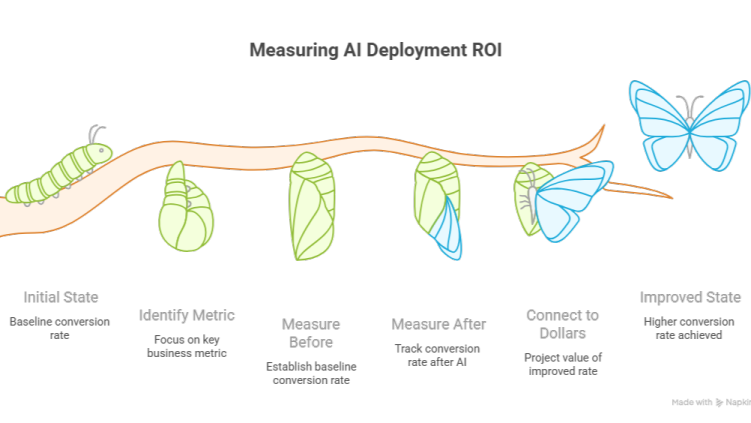
How to Measure the “Hard” ROI of AI Transformation: A CRO’s Simple, Data-Driven Playbook
By André Magrini, Chief Revenue Officer, OGI Systems (An Objective Company)
In the world of Digital Transformation, we're past the conversation of if AI can drive value. The real mandate for executive leadership—and especially for a Chief Revenue Officer—is proving the "hard" Return on Investment (ROI) of AI initiatives.
Many AI projects stall or fail to secure continued funding because the benefits remain anecdotal. To move AI from a pilot program to a core component of your revenue engine, you must translate performance improvements directly into verifiable dollars.
At OGI, our approach as your "digital construction and renovation team" is always to start with a clear architectural blueprint. When implementing AI, this means focusing on precision measurement.
Based on best practices from leading technology firms, here is the simple, four-step playbook we use to measure the hard ROI of any AI deployment.
The Data-Driven Playbook for Measuring AI ROI
Measuring hard ROI is a relatively simple process—but it demands methodical discipline and a laser focus on key business metrics.
1. Pick a Specific Deployment, Not "AI" Broadly.
The scope must be narrow and actionable. Instead of trying to calculate the holistic ROI of your "AI strategy," isolate one single workflow that your team is planning to augment.
Example in Practice (The Blueprint): Your goal is not "improving sales intelligence." It is "improving the conversion rate (CVR) from BDR outreach to a booked discovery call" using a specific AI tool, such as a custom GPT to refine prospect targeting.
2. Identify the Business Metric That Matters.
The metric you choose must directly impact a measurable revenue or margin driver. If the metric is too far upstream (e.g., "AI model uptime"), its connection to the bottom line becomes speculative.
Actionable Metric (The Foundation): The critical metric here is the Conversion Rate from Outreach to Discovery Call. This single metric drives the opportunity rate and, ultimately, revenue. By impacting this metric, you are influencing a solid, revenue-driving business outcome.
3. Measure the Before and After State.
Establishing a clear baseline is the cornerstone of proving incremental value. Every "renovation" must start with a diagnosis of the "house" as it stands.
The Baseline (The "Before"): Before deploying the AI tool, determine the typical conversion rate for BDR outreach over the last quarter. This establishes your baseline performance.
The Outcome (The "After"): After a predetermined test period (e.g., three months), rigorously measure the new conversion rate achieved only by the BDRs using the AI augmentation.4. Connect the Improvement to Dollars.
The final step is translating the percentage increase in your core metric into quantifiable financial value.
The Calculation (The ROI Link): The discovery call itself won't tell you anything about the overall outcome—you need to assign a value to it.
If your AI-driven improvement increases the number of qualified discovery calls by X and you know the conversion value of each call is Y, your hard ROI is simply X multiplied by Y, minus the cost of the AI tool.Why This Discipline Matters
As a CRO, my focus is on predictable, scalable revenue. This methodical approach to measuring AI ROI achieves two critical goals:
De-risks AI Investment: By starting small and proving the ROI of a specific deployment, you can secure budget for larger, more strategic AI initiatives. You demonstrate financial prudence before scaling the "renovation."
Builds Internal Confidence: When your sales and finance teams see an immediate, tangible return—a clear, data-driven link between the technology and revenue—it builds unwavering confidence in the long-term digital strategy.At OGI, we believe that AI transformation should never be a leap of faith. It should be a planned, measured process that guarantees a return. Start small, measure everything, and watch your AI investments evolve from overhead to undeniable revenue drivers.
#AI #CRO #SalesStrategy #RevenueOperations #DigitalTransformation #OGISystems
-
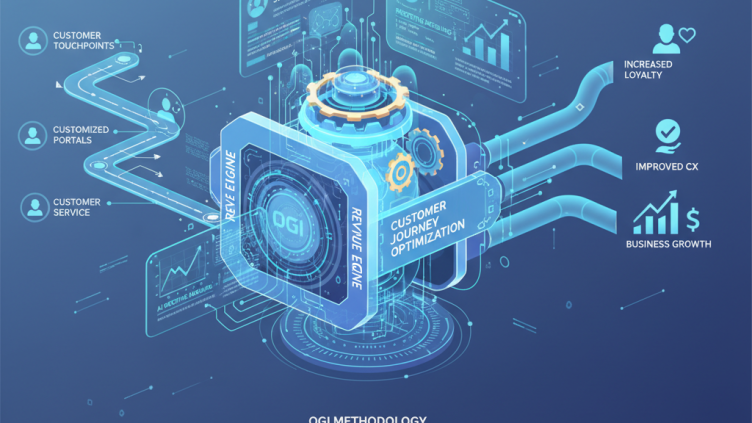
Why the Customer Journey is the Engine of Revenue Growth
For any medium or large company embarking on a digital journey, the Customer Journey is the single most critical asset to understand and optimize. At OGI, we see it as the true "engine of revenue growth," transforming complexity into measurable results. It is the roadmap that dictates success in sales, marketing, and long-term customer value.
The Strategic Imperative of the Customer Journey
Understanding the customer journey is crucial because it helps you to:
Identify Customer Touchpoints: Analyzing every point of interaction between the customer and your brand. These touchpoints—from your Digital Experiences & Customized Portals to customer service—are opportunities to engage, provide value, and build a lasting relationship.
Improve Customer Experience (CX): By pinpointing areas of friction or pain points in the customer's experience, you can execute targeted repairs or a complete overhaul that leads to higher satisfaction and loyalty. This is where OGI’s diagnostic approach to "identifying and fixing what's not working in their processes and systems" begins.
Increase Customer Loyalty: A consistently positive customer journey leads to higher loyalty and advocacy. Loyal customers are more likely to make repeat purchases, recommend your brand, and boost your Customer Lifetime Value (LTV).
Inform Business Strategy: Insights from the journey directly inform product development, marketing, and Sales Strategies. By knowing what customers want and need, you can align your offerings, leading to increased sales and business growth. This is the core of our Strategic Consulting service.How OGI Enhances the Customer Journey for Revenue Acceleration
Our unique methodology, acting as your "digital construction and renovation team," ensures that we don't just map the journey; we embed data and AI to continuously optimize it.
1. The Diagnostic: Map the Customer Journey and Find the Friction
We start by identifying all customer touchpoints, leveraging a Discovery phase to create a visual map. Our initial step is often a
Digital Product Health Check, which uses a consulting mindset to quickly identify bottlenecks and critical issues that are blocking task completion and causing customer pain points. We pinpoint where processes are inefficient so we can "tidy up" your systems first.
2. The AI-Driven Overhaul: Personalization at Scale
To move beyond generic experiences, we leverage AI & Machine Learning to achieve hyper-personalization at scale:
Advanced Customer Segmentation: We use AI-powered analytics (like those available in our partner platform Liferay DXP ) to go beyond demographics. We enable dynamic customer segmentation based on real-time behavior, preferences, and intent. This enables the delivery of tailored offers, messages, and content in real-time.
Predictive Modeling: Our Data & AI services, specifically Predictive and Prescriptive Analysis, enable you to anticipate customer behavior and preferences. This helps you proactively optimize touchpoints and guide customers effectively, turning data into real business value.3. The Execution: Low-Friction, High-Quality Delivery
Frictionless Transactions and Digital Experiences: We use Liferay DXP to build modern digital portals (Customer Portals, Self-Service Portals, Intranets) that deliver unified, seamless, and optimized omnichannel experiences. Our focus is on removing friction from the customer's path, enhancing key functions like quoting and self-service.
Agile and Automated Operations: We integrate Hyperautomation (including No-Code tools like WEM ) and robust DevSecOps practices. This allows for swift delivery of new features and ensures that workflows and business process automation are continuous and efficient.By focusing on the customer journey with this level of detail—from an initial diagnosis to full AI-driven transformation—OGI ensures execution is not a burden but a strategic advantage that unlocks scalable performance.
Hey, send me a message if you want to learn more or discuss it!
-

Sales Disruption: Why It’s Crucial for Business Growth Today
Looking back at my years in sales and business development, one thing has become crystal clear: in today’s hyper-competitive market, companies unwilling to innovate and adopt new approaches to selling their products or services are bound to fall behind. This is precisely where sales disruption makes all the difference. Unlike traditional selling, which often focuses on conventional strategies like mass marketing and aggressive sales forces, sales disruption seeks to embrace new technologies and creative marketing approaches that stand out from the competition.
The benefits of sales disruption are numerous:
Customer-Centric Focus: One of the key advantages of sales disruption is its ability to allow companies to truly focus on the needs and wants of customers, creating products or services that genuinely meet those needs. When customers feel valued and realize that a company is genuinely concerned about their needs, they tend to become more loyal and engaged with the brand.
Market Expansion & Revenue Growth: Sales disruption empowers companies to reach new markets and expand their customer base. By adopting innovative technologies and business models, businesses can unlock new sales opportunities and connect with new audiences, leading to a significant increase in revenue and profits.
Adaptability to Market Changes: This disruptive approach also helps companies adapt quickly to shifts in the marketplace, such as changes in consumer preferences, technological advancements, or competitive pressures. Companies that embrace sales disruption are consistently one step ahead, signaling innovation and vision to consumers who are naturally drawn to forward-thinking brands.
Disruptive sales strategies go beyond mere transactions; they create innovative solutions that evoke strong emotional triggers like innovation and exclusivity, driving deeper engagement and brand loyalty. When a customer recognizes that a company offers unique and differentiated solutions that truly address their specific needs, it significantly increases the likelihood of closing deals and fostering long-term business growth.
Learn More about Sales & Marketing in my latest book:
-

Measuring ROI with Data Analytics – Proving the Value of Marketing Spend
Justifying marketing spend is no longer optional—it’s essential. In an age where every decision is scrutinized for its financial impact, proving the return on investment (ROI) has become a non-negotiable part of modern marketing strategy. Finance and marketing departments are more interconnected than ever, with data analytics providing a bridge between creative strategies and measurable financial outcomes. Marketing leaders are not the only ones under pressure; finance professionals are increasingly relying on data-driven insights to assess the impact of marketing spend on the company’s overall performance.
The complexity of today’s marketing landscape—encompassing digital, offline, and hybrid channels—has made tracking ROI more challenging, but also more necessary. No longer is it enough to point to vanity metrics like social media impressions or email open rates. Now, both marketing and finance teams are turning to more sophisticated analytics tools to pinpoint the KPIs that truly matter, like customer acquisition cost (CAC), customer lifetime value (LTV), and overall profitability.
For finance professionals, data analytics offers a way to translate marketing activities into numbers that matter to the bottom line. It's about moving beyond broad metrics and focusing on the true financial impact of each campaign—whether through increased revenue, improved customer retention, or stronger brand equity. In fact, many finance teams now collaborate closely with marketing departments, ensuring that all strategies are grounded in data-driven projections and measurable outcomes.
As businesses increasingly adopt multi-channel marketing, the need for more accurate attribution models has become urgent. The customer journey is no longer linear, and the traditional first-click or last-click attribution methods don’t capture the full picture. Understanding how each touchpoint influences a customer’s decision—whether it’s a Google ad, a social media post, or an email—is critical to measuring the effectiveness of each channel. Multi-touch attribution models allow both marketers and finance teams to assess the contribution of each interaction, making it easier to optimize budgets and prove the ROI across multiple touchpoints.
In this chapter, we’ll explore how marketing and finance teams are leveraging data to measure ROI with precision, moving beyond vanity metrics and diving into the KPIs that reflect true business impact. We'll look at attribution models, which help track conversions across various touchpoints, and examine how companies like Unilever use data analytics to measure ROI across channels. As we explore the rise of real-time data dashboards, we’ll see how instant reporting can help marketing teams fine-tune campaigns and improve efficiency on the fly. Finally, we’ll examine how companies can balance short-term wins with long-term brand building, ensuring that marketing spend delivers sustained value.
Moving Beyond Vanity Metrics: Defining Meaningful KPIs
Before diving into data-driven metrics, it’s essential to understand that the approach to measuring success—just like pricing strategies—must be grounded in what delivers the most value to the business. In pricing, there’s a clear distinction between Cost-Based Pricing and Value-Based Pricing, and this same principle can be applied to how we view marketing metrics.
Cost-Based Pricing involves setting prices based on production costs plus a markup. It focuses on internal factors: how much it costs to produce and deliver a product or service, followed by adding a fixed percentage to ensure profitability. This method prioritizes operational expenses and ensures that a company covers its costs. It’s a more straightforward, internally-focused pricing strategy, but it doesn’t take into account how much a customer is willing to pay or the unique benefits the product offers.
In contrast, Value-Based Pricing is determined by the perceived value to the customer. Rather than looking internally at production costs, this approach focuses outward, considering the benefits the product provides to customers and what they’re willing to pay for those benefits. It aligns with how customers see the product, understanding its value relative to their needs and experiences. For example, luxury brands or innovative tech companies often use this strategy because customers are willing to pay a premium for perceived quality, uniqueness, or advanced features.
This same shift from cost-based to value-based thinking can be applied to how businesses evaluate their marketing efforts. Instead of relying on internal metrics that simply “add up” (like social media impressions or ad clicks), companies need to shift toward KPIs that demonstrate real value—how marketing efforts translate into customer acquisition, retention, and ultimately, revenue. Just as value-based pricing aligns more closely with what customers are willing to pay, focusing on the right KPIs helps businesses understand how marketing truly drives business growth.
In the early days of digital marketing, metrics like page views, social media likes, and email open rates were seen as signs of success. These vanity metrics—while easy to track—often fail to provide a true picture of how marketing activities contribute to business growth. To prove the real value of marketing spend, businesses must define and focus on key performance indicators (KPIs) that go beyond surface-level engagement and directly impact revenue, profitability, and customer retention.
Vanity metrics can be misleading because they don’t always connect to actual business outcomes. For example, a social media post might generate thousands of likes or shares, but how does that translate into new customers, increased sales, or long-term loyalty? Similarly, high website traffic doesn’t necessarily mean higher conversions if the visitors aren’t engaging with your product or service meaningfully. True success lies in measuring metrics that tell you whether your marketing efforts are driving actual business results.
This is where meaningful KPIs come into play. These are metrics that align directly with your business objectives and provide a clear understanding of marketing’s contribution to the bottom line. Some of the most impactful KPIs include:
Customer Acquisition Cost (CAC): This measures how much it costs to acquire a new customer, including all marketing and sales expenses. It’s a key metric because it allows businesses to understand how efficient their marketing efforts are in driving new business. For example, if your marketing campaigns are driving plenty of leads but the CAC is too high, it might signal inefficiencies in the process.
Customer Lifetime Value (LTV): LTV tells you how much revenue a customer is likely to generate over their entire relationship with your company. When compared to CAC, LTV helps determine the long-term profitability of customer acquisition efforts. A high LTV means that the cost of acquiring customers is worth it because they generate significant revenue over time. This is particularly important for subscription-based businesses where the value of a customer grows over time.
Conversion Rate: This KPI measures the percentage of visitors or leads that take the desired action, such as making a purchase, signing up for a newsletter, or filling out a contact form. Tracking conversion rates helps businesses understand how effective their marketing efforts are at turning interest into action. A high conversion rate indicates that your messaging, targeting, and user experience are aligned with customer needs.
Return on Ad Spend (ROAS): This metric shows how much revenue is generated for every dollar spent on advertising. It’s a critical metric for understanding the effectiveness of paid media campaigns. ROAS helps businesses determine which channels or ads are delivering the best return and where adjustments might be needed to improve efficiency.
Customer Retention Rate: While acquiring new customers is essential, retaining them is just as important, if not more so. A high customer retention rate indicates that your marketing efforts aren’t just focused on one-time purchases, but on building long-term relationships. This is especially relevant for industries like SaaS or e-commerce, where loyal customers contribute significantly to long-term revenue.Defining these KPIs isn’t just about picking a few numbers that sound good on paper. It’s about ensuring they align with overall business goals. Finance professionals, for example, are increasingly using these metrics to evaluate the financial impact of marketing initiatives. They’re not interested in how many people clicked on an ad or opened an email; they want to know how much new business was generated and how efficiently it was done. By focusing on KPIs that tie directly to revenue and growth, both marketing and finance teams can align their efforts for maximum impact.
For businesses that sell through multiple channels, KPIs can vary. E-commerce companies might focus heavily on conversion rates and ROAS, while B2B businesses could prioritize metrics like lead quality and customer retention. The key is to ensure that whatever metrics are chosen, they offer a clear path to measuring success and driving decision-making.
One of the biggest challenges in shifting away from vanity metrics is the sheer volume of data available. It’s easy to get distracted by numbers that look impressive but don’t provide real insights. This is where data analytics tools come in, helping businesses cut through the noise and focus on the metrics that matter. Platforms like Google Analytics, HubSpot, or more specialized solutions like Tableau and Looker provide marketers and finance teams with the ability to track meaningful KPIs, analyze trends, and make data-driven decisions.
Moving beyond vanity metrics is about more than just tracking performance; it’s about proving the value of marketing spend in a language the entire business understands. By focusing on the right KPIs, businesses can demonstrate how marketing activities contribute directly to profitability, customer growth, and long-term success. It’s no longer just about “likes” or “views”—it’s about driving real, measurable business outcomes.
Attribution Models: Single-Touch vs. Multi-Touch Analytics
One of the biggest challenges businesses face is understanding how different marketing efforts contribute to customer conversions. This is where attribution models come into play. Attribution models are frameworks that help marketers assign credit to various touchpoints in the customer journey, enabling them to determine which interactions are most effective at driving results.
Traditionally, single-touch attribution models have been widely used. These models assign all of the conversion credit to a single touchpoint—whether it’s the first interaction a customer has with your brand or the last one before they make a purchase. While simple to implement, single-touch models often fail to capture the complexity of modern customer journeys, where consumers interact with a brand multiple times across different channels before making a decision.
For instance, a customer might first encounter your brand through a Facebook ad, later read a blog post, sign up for a webinar, and finally click on an email link to make a purchase. In a first-touch attribution model, all the credit for that conversion would go to the Facebook ad, ignoring the impact of the email or blog post. Similarly, in a last-touch attribution model, all the credit would be given to the email, neglecting the importance of the earlier touchpoints that nurtured the customer along the way. These models can be overly simplistic, leaving marketers with an incomplete picture of what really drives conversions.
In contrast, multi-touch attribution models take a more holistic approach, distributing credit across all of the touchpoints in the customer journey. This provides a more accurate representation of how different marketing efforts work together to move a prospect from awareness to conversion. By understanding how each interaction contributes to the overall outcome, businesses can better allocate their marketing resources and optimize campaigns for maximum effectiveness.
There are several types of multi-touch attribution models, each offering a different way to assign credit:
Linear Attribution: This model assigns equal credit to every touchpoint along the customer journey. For example, if a customer interacted with your brand five times before making a purchase, each of those touchpoints would receive 20% of the credit. Linear attribution is useful for businesses that want to understand how all marketing efforts contribute to a conversion, but it may not accurately reflect the varying levels of influence each touchpoint has.
Time Decay Attribution: In this model, more credit is given to the touchpoints that occur closer to the conversion event. The idea is that the interactions that happen right before the purchase are more influential in pushing the customer to convert than earlier touchpoints. For instance, if a customer’s journey started with a Google search but ended with a personalized email, the email would receive more credit for the conversion under the time decay model. This approach is useful for understanding the immediate impact of late-stage interactions, such as retargeting ads or direct email campaigns.
U-Shaped (Position-Based) Attribution: This model assigns the majority of the credit to the first and last interactions, with less credit given to the middle touchpoints. The rationale behind this model is that the first interaction plays a critical role in driving awareness, while the last interaction is key in sealing the deal. Middle touchpoints still receive some credit but are viewed as less influential in moving the customer to conversion.
W-Shaped Attribution: A more advanced variation of the U-shaped model, the W-shaped model assigns significant credit to the first interaction, the lead creation point, and the final conversion touchpoint. Each of these key milestones receives equal weight, with the remaining credit distributed among the other touchpoints. This model is ideal for businesses that want to place extra emphasis on the most critical stages of the customer journey, while still accounting for the supporting interactions.The choice of attribution model depends on the goals of the business and the complexity of the customer journey. For companies with shorter sales cycles and fewer touchpoints, single-touch models may suffice. However, for businesses with longer sales processes—such as B2B companies or e-commerce brands—multi-touch attribution provides a more nuanced understanding of which marketing efforts are driving results.
One of the most significant benefits of multi-touch attribution is that it allows businesses to make data-driven decisions about where to invest their marketing budgets. By identifying which touchpoints contribute most to conversions, companies can allocate resources to the channels and tactics that have the highest impact. For example, if an analysis shows that retargeting ads and email campaigns consistently play a critical role in conversions, marketers can shift more budget toward those areas while reducing spend on less effective channels.
Multi-touch attribution also highlights the importance of nurturing prospects throughout the entire customer journey. In many cases, conversions are the result of multiple interactions over time, rather than a single isolated event. By understanding how different touchpoints work together, businesses can create more cohesive, integrated marketing strategies that guide customers seamlessly from awareness to decision.
However, implementing multi-touch attribution models comes with its own set of challenges. Tracking customer interactions across multiple channels requires advanced data analytics tools and systems that can integrate data from disparate sources, such as web analytics, CRM platforms, and social media monitoring tools. Additionally, businesses need to ensure that they have accurate tracking mechanisms in place to capture each touchpoint along the way.
Despite these challenges, the shift toward multi-touch attribution represents a more sophisticated and accurate way of measuring marketing performance. By moving beyond single-touch models and embracing a multi-touch approach, businesses can gain deeper insights into the true drivers of conversion and optimize their marketing strategies for long-term success.
Case Study: How Unilever Used Data to Track ROI Across Multiple Channels
Unilever, one of the world’s largest consumer goods companies, has long recognized the importance of data in optimizing its marketing strategies. With a diverse portfolio of brands across various product categories, Unilever's challenge is not just about running campaigns—it’s about measuring the return on investment (ROI) of each marketing initiative across multiple channels, both digital and traditional.
To meet this challenge, Unilever turned to advanced data analytics to gain a clear understanding of how its marketing spend impacts revenue. Rather than relying on broad assumptions or siloed data, Unilever adopted an integrated, data-driven approach that leverages real-time analytics, multi-touch attribution models, and comprehensive dashboards to measure the effectiveness of its campaigns across platforms.
One key campaign involved the promotion of one of its flagship personal care brands. The marketing team ran a mix of online ads, television commercials, social media campaigns, influencer collaborations, and in-store promotions. The goal was not only to increase brand awareness but also to drive product sales and enhance customer loyalty. However, with so many moving parts across multiple channels, it was essential for Unilever to have a precise understanding of which activities were driving the best results.
To track ROI effectively, Unilever used a multi-touch attribution model that allowed them to assign credit to different marketing touchpoints throughout the customer journey. The company recognized that customers often engage with a brand in several ways before making a purchase—seeing a product on a social media post, researching it on a website, and then ultimately making the decision after watching a TV ad or encountering an in-store display. A single-touch attribution model, which assigns all the credit to the first or last interaction, would have oversimplified this complex journey.
By adopting a multi-touch approach, Unilever was able to analyze how different touchpoints worked together to influence consumer behavior. For example, the data showed that while the online ads generated a significant amount of initial interest, it was the combination of social media influencer campaigns and in-store promotions that ultimately pushed consumers to make a purchase. Without this multi-touch analysis, Unilever might have over-invested in digital ads and underinvested in the promotional activities that were actually driving conversions.
Unilever also integrated real-time data dashboards into its marketing workflow, allowing the team to monitor campaign performance on the fly. These dashboards provided a comprehensive view of key metrics like Return on Ad Spend (ROAS), conversion rates, and engagement across various platforms. Real-time reporting allowed Unilever to make adjustments to its campaigns while they were still running. For instance, if the dashboard showed that a specific digital ad wasn’t performing as expected, the team could tweak the creative or shift budget to another channel in real time, ensuring that marketing spend was optimized continuously.
Another important insight came from geo-targeted data. Unilever discovered that certain regions responded better to particular forms of advertising. For example, customers in urban areas engaged more with influencer-led social media campaigns, while those in suburban and rural areas responded more strongly to traditional television and in-store promotions. Armed with these insights, Unilever adjusted its media mix accordingly, allocating more budget to influencer campaigns in cities and boosting TV spend in less densely populated areas. This localized approach allowed Unilever to maximize the ROI of each campaign in different markets.
Moreover, Unilever leveraged customer behavioral data to enhance personalization efforts across digital channels. By analyzing website interaction patterns, the team could determine which products customers were most interested in based on their browsing behavior. Personalized email campaigns and retargeting ads were then deployed to re-engage customers who had shown interest in specific products but had not yet made a purchase. This level of targeted engagement proved highly effective, driving higher conversion rates and a strong return on investment.
The holistic approach taken by Unilever illustrates the power of using data to inform marketing decisions. By combining multi-touch attribution with real-time reporting, the company was able to gain a granular view of its entire marketing ecosystem and optimize its efforts for better ROI. Not only did this approach help Unilever track which campaigns were delivering the most value, but it also provided valuable insights into consumer behavior and regional preferences, allowing the brand to tailor its marketing strategies more effectively.
In addition to improving short-term performance, Unilever’s data-driven approach also helped the company measure the long-term impact of its marketing spend. By tracking the full customer journey and analyzing customer retention rates, Unilever was able to assess how well its campaigns were driving loyalty and repeat purchases over time. This focus on both immediate conversions and long-term customer value allowed Unilever to maintain a balanced marketing strategy that supported both revenue growth and brand-building objectives.
This case study demonstrates how a global brand like Unilever can leverage data analytics to improve marketing efficiency, optimize campaign performance, and ultimately prove the value of marketing spend. By taking a comprehensive, data-driven approach, Unilever not only maximized its ROI but also gained a deeper understanding of its customers and the effectiveness of its marketing channels.
The Rise of Data Dashboards: Real-Time Reporting for Marketing Efficiency
Today marketing campaigns run across multiple platforms, channels, and regions, staying on top of performance metrics can be a challenge. This is where data dashboards have revolutionized the way marketers track, measure, and optimize their efforts. These dashboards provide real-time reporting, allowing marketing teams to instantly visualize campaign performance and make swift decisions to maximize efficiency and return on investment (ROI).
Before the advent of data dashboards, marketing teams often relied on fragmented reporting systems, pulling data from different platforms like Google Analytics, CRM software, or social media analytics tools. This process was often manual, time-consuming, and prone to errors. By the time data was gathered, analyzed, and presented, it was often too late to make real-time adjustments, meaning that many campaigns ran inefficiently until they concluded.
Today, real-time data dashboards offer a centralized platform that integrates data from multiple sources, providing marketing teams with a single view of all campaign activities. With these dashboards, businesses can monitor critical metrics like conversion rates, customer acquisition cost (CAC), return on ad spend (ROAS), and engagement rates across various channels—all in real time. The ability to have this comprehensive view allows marketers to make informed decisions and adjust campaigns while they’re still running.
One of the biggest advantages of real-time reporting is the ability to course-correct immediately. For example, if a paid search campaign is generating a lot of clicks but few conversions, a dashboard would allow the team to identify the issue instantly. Rather than waiting until the end of the campaign to analyze performance, marketers can optimize targeting, adjust bids, tweak ad copy, or shift budgets to better-performing channels in real time. This ensures that marketing spend is continually optimized for maximum effectiveness.
Additionally, real-time dashboards enable better collaboration between marketing and finance teams. With access to the same data, finance professionals can keep a close eye on marketing spend and ROI, ensuring that budgets are aligned with the most impactful efforts. By eliminating the delay between campaign execution and financial reporting, businesses can move faster and make more strategic decisions.
Data dashboards also allow for customization, meaning that marketers can focus on the KPIs that matter most to their specific campaigns. For example, a direct-to-consumer e-commerce brand may prioritize metrics like average order value and cart abandonment rates, while a B2B company might focus more on lead generation and sales pipeline velocity. Dashboards can be tailored to display the data that aligns with business goals, ensuring that teams are always focused on the right metrics.
For companies running multi-channel campaigns, data dashboards provide an invaluable view of how each channel contributes to the overall performance. By integrating data from various sources, such as Google Ads, Facebook, email marketing platforms, and e-commerce analytics tools, marketers can see how their efforts are working together. For instance, a brand might discover that while social media is driving traffic, it’s the email retargeting campaigns that are converting those visitors into customers. Understanding the interplay between different channels allows businesses to allocate resources more effectively and optimize their marketing mix for better ROI.
Another significant advantage of data dashboards is their role in predictive analytics. Beyond just showing what’s happening in real time, advanced dashboards can provide predictive insights, helping marketers anticipate future trends and campaign outcomes. By analyzing historical data and current trends, dashboards can offer recommendations on how to adjust strategies before issues arise. For example, if a product category is trending based on current traffic and sales patterns, dashboards can recommend shifting budget to capitalize on the momentum, boosting the overall ROI of the campaign.
Moreover, real-time dashboards improve accountability and transparency across teams. With all stakeholders having access to the same real-time data, it becomes easier to hold departments accountable for campaign outcomes. Whether it's the marketing team assessing creative performance or the finance team tracking the effectiveness of spend, data dashboards create a shared understanding of how well the business is performing in relation to its marketing goals.
For global businesses, data dashboards are especially powerful. They allow marketing teams to track performance across different regions and markets, identifying where certain campaigns or product lines are performing better or worse. This granular view helps brands adjust strategies based on localized trends and customer preferences. For example, a global company might discover that a specific type of digital content performs exceptionally well in one market but underperforms in another. By having real-time insights into each region’s performance, the company can adapt its messaging and budget allocation accordingly, optimizing results at a global scale.
The rise of data dashboards represents a significant leap forward in marketing efficiency. With the ability to see what’s happening in real time, make informed decisions on the fly, and measure campaign performance across channels and regions, businesses are more empowered than ever to optimize their marketing efforts. By eliminating guesswork and providing data-backed insights, dashboards are not only improving ROI but also helping businesses stay agile in a fast-paced marketing landscape.
Calculating and Optimizing ROI with Data-Driven Insights
Calculating and optimizing Return on Investment (ROI) has become a fundamental necessity for marketers. Data-driven insights offer the clarity needed to accurately assess the effectiveness of campaigns, identify the highest-impact strategies, and ensure that marketing spend is being used efficiently. Gone are the days when marketers had to rely on gut feeling or basic metrics to evaluate performance. With the wealth of data now available, companies can make more informed, precise decisions that lead to higher profitability and better resource allocation.
Calculating ROI involves determining how much value marketing efforts generate relative to the costs involved. The formula is simple:
ROI = Revenue−Cost×100
Total Costs
However, calculating ROI becomes more complex when businesses need to track multiple campaigns across different channels. Digital advertising, content marketing, email campaigns, and social media all contribute to the final result, but each with its own metrics. This complexity is where data-driven insights come into play. By leveraging data from all available sources, businesses can accurately determine which efforts are delivering the highest ROI and where resources might be better allocated.
One of the primary advantages of using data analytics to calculate ROI is the ability to track performance in real time. Rather than waiting until the end of a campaign to assess its effectiveness, marketers can use dashboards and analytics tools to monitor ongoing performance and make adjustments as needed. If a specific channel is underperforming, teams can quickly reallocate budget, refine messaging, or adjust targeting to improve the ROI of that campaign. This continuous optimization ensures that every dollar spent is working toward achieving the business's broader goals.
For example, a company running both paid search ads and a content marketing campaign can analyze the performance of each channel. If the data shows that paid search ads are generating significantly higher conversion rates at a lower Customer Acquisition Cost (CAC), it might make sense to allocate more of the marketing budget toward search ads while optimizing the content marketing strategy. The ability to assess campaigns dynamically ensures that businesses can pivot and refine their tactics on the go, leading to more efficient spending and higher returns.
Multi-channel marketing also makes calculating ROI more challenging because consumers rarely interact with just one channel before making a purchasing decision. A potential customer might first encounter a brand through a social media ad, subscribe to the brand’s newsletter, receive a targeted email, and then finally make a purchase after clicking a paid search ad. In such cases, assigning the right credit to each touchpoint is critical to accurately calculate ROI. Businesses need to rely on multi-touch attribution models to determine which interactions contribute most to conversions, thus painting a clearer picture of how each marketing effort is contributing to overall ROI.
In addition to attribution models, predictive analytics are playing an increasingly important role in optimizing ROI. Predictive tools analyze historical performance data to forecast future campaign outcomes, helping businesses anticipate which strategies are most likely to yield the best returns. For example, if a business consistently sees higher conversion rates when running seasonal promotions, predictive models can recommend launching similar campaigns during high-traffic periods, maximizing the impact of marketing spend.
A/B testing is another essential tool for optimizing ROI. By running experiments with different versions of ads, landing pages, or email content, businesses can quickly determine which elements resonate most with their audience. For instance, a company might test two different ad headlines to see which one generates higher click-through rates. By continuously testing and refining marketing assets, businesses can improve their overall effectiveness, leading to higher conversion rates and improved ROI over time.
Data-driven insights also help businesses optimize long-term ROI, not just short-term campaign performance. For example, tracking Customer Lifetime Value (LTV) can provide valuable insights into the long-term profitability of acquiring and retaining customers. A business that spends heavily on acquisition might see short-term success, but if those customers don’t stick around, the long-term ROI suffers. By using data to understand which types of customers have the highest LTV, businesses can tailor their acquisition strategies to focus on leads that are more likely to deliver sustainable, long-term value. This focus on LTV helps companies build stronger customer relationships and improve profitability in the long run.
Segmenting audiences is another way data-driven insights help marketers optimize ROI. Not all customers respond to the same messaging or offers, so tailoring campaigns to different audience segments can significantly improve performance. For instance, a business might find that one segment of customers responds better to discount offers, while another values premium content or exclusivity. By delivering the right message to the right audience, businesses can improve engagement, conversion rates, and ultimately, ROI.
Additionally, data-driven insights allow businesses to optimize budget allocation by identifying which channels are delivering the best returns. Through data analytics, companies can assess the performance of every dollar spent across different platforms, adjusting budgets to favor the highest-performing channels. For example, if social media ads are outperforming display ads, businesses can shift more budget toward social, maximizing the impact of their marketing spend.
Lastly, tracking and optimizing ROI with data also enables businesses to justify marketing spend to key stakeholders, including finance teams and executives. By presenting concrete data that links marketing activities to revenue, customer acquisition, or brand growth, marketers can demonstrate the value of their campaigns in quantifiable terms. This transparency is crucial for securing future budgets and aligning marketing efforts with the company’s overall financial objectives.
Maximizing ROI through data-driven insights is no longer optional—it's critical for any business striving to stay ahead in a dynamic market. By tapping into real-time data, predictive analytics, A/B testing, and multi-touch attribution, marketers can craft strategies that not only deliver results but do so efficiently. Data-backed decisions give businesses the power to enhance their marketing impact while continually optimizing ROI for long-term success.
How to Track and Measure Long-Term Impact vs. Short-Term Marketing Efforts
There’s often a heavy emphasis on immediate results—short-term wins that drive quick conversions, boost traffic, or generate leads. While these short-term metrics are important, businesses that focus solely on them risk overlooking the broader picture: the long-term impact of their marketing efforts. Balancing the need for short-term gains with long-term brand building and customer loyalty is essential for sustainable success.
Short-term marketing efforts typically involve campaigns designed to produce immediate results, such as flash sales, pay-per-click (PPC) advertising, or product launches. These campaigns can be highly effective at driving quick spikes in traffic, conversions, or revenue, but their effects often fade quickly once the campaign ends. For example, a discount promotion might attract new customers in the moment, but without a retention strategy in place, those customers may not stick around for repeat business, limiting the overall value of the campaign.
On the other hand, long-term marketing efforts focus on building lasting relationships with customers, enhancing brand reputation, and driving sustainable growth over time. These strategies often include content marketing, brand storytelling, customer experience improvements, and loyalty programs. While the results may take longer to materialize, long-term strategies are key to driving Customer Lifetime Value (LTV) and ensuring that customers continue to engage with your brand well after their initial purchase.
To strike the right balance between short-term and long-term goals, businesses must carefully track and measure the performance of both types of marketing efforts. This requires a dual approach to metrics, with a focus on both immediate conversions and long-term customer engagement.
Measuring Short-Term Impact
Short-term marketing efforts are often easy to measure because their goals are clear and time-bound. The KPIs for short-term campaigns usually include metrics like:
Conversion Rate: How many people are taking the desired action—whether it’s making a purchase, filling out a form, or signing up for a newsletter—within a specific time frame. This KPI helps businesses assess the immediate success of their campaigns.
Customer Acquisition Cost (CAC): For campaigns focused on acquiring new customers quickly, CAC is a key metric that shows how much it costs to bring in each new customer. A low CAC indicates that the short-term campaign is generating cost-effective results.
Return on Ad Spend (ROAS): ROAS measures how much revenue a business earns for each dollar spent on advertising. For short-term campaigns, this metric is essential for understanding the financial effectiveness of marketing spend.
Website Traffic & Engagement: Immediate spikes in website traffic, page views, and time on site can indicate that a short-term campaign is generating interest. These metrics can help businesses understand how well their campaigns are attracting attention and whether visitors are engaging with the content.While these metrics provide valuable insights into the immediate performance of marketing efforts, they don’t always capture the long-term value those efforts generate. That’s why businesses must also track the lasting effects of their marketing strategies.
Measuring Long-Term Impact
Long-term impact can be more challenging to measure because the results unfold over months or even years. However, the metrics that track long-term performance are crucial for understanding the overall value of marketing efforts and their contribution to business growth. Some of the most important long-term KPIs include:
Customer Lifetime Value (LTV): LTV measures the total revenue a business can expect to earn from a customer over the course of their relationship. This metric is essential for long-term planning because it shows whether your marketing efforts are attracting high-value customers who will contribute to sustained growth. For businesses that rely on repeat purchases or subscriptions, LTV is a key indicator of long-term success.
Customer Retention Rate: While acquiring new customers is important, retaining existing customers is even more valuable in the long run. A high retention rate indicates that your marketing efforts are fostering strong customer relationships, leading to repeat business and greater brand loyalty.
Brand Awareness and Perception: Over time, effective marketing efforts should enhance brand awareness and strengthen the perception of your company in the marketplace. Surveys, social listening tools, and brand tracking studies can help businesses measure how their brand is viewed over time, allowing them to assess the impact of long-term strategies like content marketing and public relations.
Engagement Metrics: Long-term engagement metrics—such as email open rates, social media interactions, and content downloads—provide insights into how well your brand is maintaining customer interest. Regular engagement is a sign that customers remain connected to your brand, which can lead to higher LTV and stronger customer relationships.
Organic Search Growth: Another key indicator of long-term success is the growth in organic search traffic. Content marketing, SEO, and brand-building efforts often take time to yield results, but over time, increased visibility on search engines leads to more sustainable, cost-effective traffic. Organic search growth also reflects the strength of your online presence and your ability to attract inbound interest without relying heavily on paid advertising.Balancing Short-Term and Long-Term Strategies
To optimize both short- and long-term performance, businesses need to take a balanced approach to their marketing strategies. Short-term campaigns can drive immediate results and help meet quarterly goals, but they should be designed to complement longer-term brand-building efforts. For example, a short-term promotion can attract new customers, but combining it with a loyalty program or personalized follow-up emails can help convert those customers into long-term, loyal clients.
Data analytics plays a key role in this balancing act. By tracking short-term metrics in real time and monitoring long-term trends, businesses can fine-tune their strategies to achieve both immediate success and sustainable growth. Tools like Google Analytics, CRM systems, and predictive analytics platforms allow marketers to track customer behavior over time, helping them identify which efforts are driving short-term conversions and which ones are contributing to long-term customer retention and brand equity.
Moreover, businesses need to align short-term marketing goals with their long-term vision. For example, if the goal is to build a premium brand, short-term promotions that focus solely on discounts may hurt long-term brand perception. Instead, short-term campaigns should be crafted in a way that supports the brand’s core values, ensuring that both immediate and long-term marketing efforts are working toward the same objectives.
So, tracking and measuring both short- and long-term marketing impact is essential for creating a sustainable growth strategy. Short-term campaigns may deliver quick wins, but it’s the long-term strategies that build brand loyalty, foster customer retention, and generate ongoing revenue. By balancing the two, businesses can achieve meaningful, lasting success.
-

Personalization at Scale – The Holy Grail of Customer Experience
This is Chapter 6 of my book: Introduction to Sales & Marketing Data Analytics.
Personalization is no longer just a trend—it’s the future of customer engagement, and those who master it will dominate their industries. We live in a world where customers expect every interaction to feel tailor-made, whether they’re browsing an e-commerce site, watching their favorite streaming service, or scrolling through social media. It’s no longer enough to address customers by their first name in an email or recommend products based on generic categories. Today’s consumers want experiences that feel deeply personal, like the brand knows them inside and out, and this is where personalization at scale becomes the game-changer.
The beauty—and the challenge—of personalization is delivering it at scale. How do you create hyper-targeted, individualized experiences for millions of customers without manually crafting each one? This is where data, automation, and artificial intelligence (AI) come into play, driving personalized recommendations, real-time content delivery, and one-to-one marketing on a massive scale. Think of companies like Netflix, Amazon, and Spotify—they’ve set the bar for personalized customer experiences by leveraging vast datasets and advanced algorithms to serve relevant, meaningful content to millions of users simultaneously.
But here’s the key: scale and relevance must go hand in hand. It’s not just about automating a few personalized messages—it’s about creating an ecosystem where every touchpoint feels like a conversation tailored to each customer’s preferences, behaviors, and needs. When done right, personalization at scale drives engagement, boosts conversion rates, and builds long-term loyalty. When done poorly, it risks coming across as cold, invasive, or—even worse—creepy.
In this chapter, we’ll break down the science behind algorithm-driven recommendations, explore real-world examples like Netflix, and discuss how brands can balance automation with the human touch to create impactful customer experiences. You’ll learn how to deliver the right message, to the right person, at the right time—without losing the personal touch that makes customers feel truly valued.
The future of marketing is one-to-one, powered by AI and driven by data. But with great power comes great responsibility, especially when it comes to maintaining trust and privacy. As we explore the intricacies of personalization, we’ll also look at how brands can avoid crossing the line, ensuring that their efforts enhance the customer experience without stepping into uncomfortable territory.
The Science Behind Personalized Recommendations: Algorithms and Customer Journeys
The ability to deliver personalized recommendations has become the backbone of modern marketing and customer experience strategies. It’s what allows brands to go beyond generic messages and offer customers a sense of individuality—whether through product suggestions, tailored content, or curated services. But what powers these seemingly intuitive recommendations is a complex system of algorithms that continuously learn from customer interactions. Understanding this science is key to mastering the art of personalization at scale.
At the core of personalized recommendations are algorithms—sets of rules and mathematical models that process vast amounts of data to make predictions about a customer’s preferences. But not all algorithms are the same. There are two primary approaches that brands use to personalize recommendations: collaborative filtering and content-based filtering. These methods often work in tandem to create the most accurate and timely suggestions.
Collaborative filtering is one of the most commonly used approaches. It works by analyzing patterns of behavior across a large group of users. For example, collaborative filtering looks at the behavior of similar users—what they browse, purchase, or engage with—and predicts that another customer with comparable behavior will likely enjoy the same things. It’s akin to the idea that “customers like you also bought this” or “people who watched this movie also watched that one.” This method doesn’t require deep knowledge of the actual product or content, but rather, it relies on finding correlations between different users’ behaviors.
For instance, think of a streaming platform recommending a movie based on viewing patterns across millions of users. Collaborative filtering analyzes trends within these massive data sets, identifying what viewers with similar tastes enjoy. The more customers interact with the platform, the smarter the recommendations become. This ability to scale and improve over time is what makes collaborative filtering so powerful—it learns from the behaviors of the crowd and adjusts its predictions accordingly.
On the other hand, content-based filtering focuses more directly on individual preferences. Unlike collaborative filtering, which compares user behavior across a broad spectrum, content-based filtering examines the characteristics of the items a particular customer has interacted with. For example, if someone has consistently purchased or shown interest in running shoes, content-based filtering will suggest other products that share similar attributes—such as style, brand, or material. It’s a more tailored approach that aligns closely with the specific interests and actions of the individual customer.
This method ensures that the recommendations feel more personal and relevant. By analyzing the attributes of each item and matching them to the customer’s known preferences, content-based filtering can create a more focused experience. In practice, this means a fashion retailer won’t just recommend random clothing items, but instead will suggest pieces that align with a customer’s specific style or past purchases. It becomes less about what others are buying and more about what fits that particular person’s preferences.
Now, while these algorithms are incredibly powerful on their own, their true potential is unlocked when they are strategically woven into the customer journey. This is where timing and context come into play. It’s not just about providing the right recommendation; it’s about doing so at the right moment, when the customer is most open to engaging with it.
For example, a customer who has been browsing workout gear may not be ready to purchase immediately. However, if they receive a well-timed email later in the day with personalized recommendations based on their browsing history, they may be more likely to return and make a purchase. The key is to deliver the recommendation at a point in the journey where it feels like a natural extension of the customer’s experience, rather than a hard sales push.
A critical aspect of this process is data integration. For personalized recommendations to work effectively, companies need to gather data from multiple touchpoints—whether it’s the customer’s behavior on the website, interactions with an app, past purchases, or even responses to marketing emails. All of this data feeds into the recommendation engine, allowing the algorithms to create a more complete picture of the customer. The more data the system has, the better its ability to predict what the customer will want next.
Take a platform like Coursera, an online education provider. It doesn’t just recommend courses based on the last subject you studied. It analyzes your entire learning journey—past courses, completion rates, even your interaction with certain types of content—to suggest the next best course. Whether you’re looking to build a new skill set or dive deeper into an existing one, the recommendations feel personalized to your growth path, making the experience far more engaging than a generic “you might like this” suggestion.
The real value of personalized recommendations lies in how they enhance the discovery process. When done right, these recommendations don’t just push products or services—they introduce customers to new things they didn’t know they needed or wanted. This discovery creates a sense of excitement and engagement, as customers feel like the brand is helping them find exactly what they’re looking for, even before they realize it themselves.
However, it’s important to recognize that personalization is only as effective as the data it’s built on. If the data is inaccurate or outdated, the recommendations will feel irrelevant or misplaced. Brands must continuously refine their data collection processes and ensure that their algorithms are learning in real-time. This is where machine learning comes in, as it allows recommendation engines to constantly adapt based on new customer inputs, keeping the experience fresh and personalized.
Moreover, while automation plays a huge role in driving these recommendations, brands must be careful not to over-automate. Customers still appreciate a human touch in their interactions. Combining algorithm-driven insights with manual customer insights—like feedback from customer service teams or social media interactions—helps brands strike the right balance. This approach ensures that personalization feels genuine and not just robotic.
In the end, the science behind personalized recommendations is about delivering value at every stage of the customer journey. It’s about using data to anticipate needs and creating a seamless experience where every interaction feels tailored, relevant, and, most importantly, personal. When brands get this right, they don’t just increase conversions—they build lasting relationships with customers who feel understood and valued.
Netflix Logo
Case Study: How Netflix Achieves a Personalized Experience for Millions
When it comes to personalization at scale, Netflix is often seen as the benchmark. With over 200 million subscribers worldwide, the platform delivers a highly individualized experience to each user, making it seem like the service was tailor-made for them. But how does Netflix pull this off across such a vast and diverse audience? The answer lies in the combination of data-driven insights, algorithmic precision, and a deep understanding of human behavior.
At the heart of Netflix’s personalization strategy is its sophisticated recommendation engine. The platform tracks every interaction users have with the service, from the shows they watch to how long they watch them, whether they pause or rewind, and even how they scroll through the menu. This wealth of data is then processed through Netflix’s algorithms, which analyze viewing habits, genres, actors, and even subtle preferences like the time of day users watch content. It’s all aimed at predicting what a user will want to watch next, with the ultimate goal of keeping them engaged with the platform for as long as possible.
One of the key innovations behind Netflix’s approach is the way it personalizes the user interface. Unlike traditional streaming platforms where everyone sees the same list of popular shows or new releases, Netflix tailors its interface for each individual. The thumbnails, categories, and recommendations a user sees are all based on their personal preferences. For example, if a user tends to watch thrillers, Netflix might surface those types of shows at the top of their feed. But it goes deeper than that—Netflix will also adjust the thumbnail images to appeal to specific interests. So, for someone who watches a lot of crime dramas, the thumbnail for a comedy might feature a dark, edgy image rather than a lighthearted one, making it more likely to capture that user’s attention.
Netflix’s data-driven personalization extends beyond just suggesting shows. The company also focuses on the context in which users watch content. For instance, Netflix has learned that many users have different viewing habits depending on the time of day or the device they’re using. Someone watching Netflix on their phone during a commute might get recommendations for shorter shows or stand-up comedy specials, while the same person might see different suggestions when browsing at home on their TV, where they’re more likely to commit to longer movies or series.
But personalization on this scale doesn’t just happen overnight. Netflix’s algorithms are continually refined using A/B testing. The company constantly runs experiments on different groups of users to test everything from thumbnail images to content placement on the homepage. Through these tests, Netflix gathers data on what drives user engagement and satisfaction, which in turn informs the algorithms. It’s an iterative process that allows Netflix to continuously optimize its recommendations.
What’s particularly impressive about Netflix’s personalization is how it navigates the balance between automation and human creativity. While the algorithms handle the heavy lifting in terms of analyzing data and predicting preferences, Netflix’s content teams still play a crucial role in curating the right mix of shows, movies, and original content. This human element ensures that the platform remains fresh and exciting, with content that aligns with broader cultural trends and user interests.
An important part of Netflix’s success is its ability to handle global scale without sacrificing personalization. With subscribers in more than 190 countries, Netflix has to account for vast differences in culture, language, and content preferences. To do this, the platform’s recommendation engine is not just a one-size-fits-all solution—it’s designed to be hyper-localized. In India, for example, Netflix’s algorithms may prioritize Bollywood films or regional TV shows, while users in Japan might see more anime and local dramas. Despite the global reach, Netflix ensures that each user feels like their content choices are specifically catered to their tastes and culture.
However, Netflix’s ability to deliver such a personalized experience also raises questions around data privacy and the potential for over-personalization. While most users appreciate the convenience of tailored recommendations, there’s always the risk that too much personalization can feel invasive. Netflix has managed this well by being transparent about how it uses data. The platform allows users to adjust their settings, offering control over what data is collected and how recommendations are made. This transparency builds trust and ensures that users feel comfortable with the level of personalization they receive.
The real genius of Netflix’s personalized experience is that it doesn’t feel robotic or forced. The platform uses data to create a seamless experience where users naturally discover content they love, without feeling like they’re being manipulated. This balance between intelligent recommendations and user autonomy is what makes Netflix’s approach so effective. It feels like the platform knows you, but in a way that enhances your experience rather than intrudes on it.
Looking ahead, Netflix’s personalization strategy will only become more advanced as AI and machine learning continue to evolve. The company is already experimenting with predictive models that can anticipate not just what a user might want to watch next, but what content they’ll enjoy six months or a year down the line. This level of personalization, driven by long-term behavioral insights, has the potential to make Netflix an even more integral part of its users’ daily lives.
Netflix’s ability to personalize at scale is a masterclass in data-driven marketing. By combining user behavior with algorithmic precision and creative curation, Netflix delivers an experience that feels deeply personal to each of its millions of users. It’s not just about keeping viewers on the platform longer—it’s about making them feel understood and valued, one show at a time.
Delivering Tailored Content, Ads, and Product Recommendations in Real-Time
Consumers have come to expect immediacy—whether it’s in the content they consume, the ads they see, or the product recommendations they receive. The ability to deliver real-time personalization has become a critical differentiator for brands looking to engage customers at the right moment. It’s not just about sending the right message but about delivering that message exactly when it matters most.
Real-time personalization is made possible through a blend of data collection, advanced algorithms, and instantaneous processing. Modern systems have the capability to gather data from every touchpoint a customer interacts with, process that information in milliseconds, and respond with tailored content or product recommendations. The result? Customers feel like the brand is truly attuned to their needs in that exact moment, making the experience both relevant and seamless.
Take the example of real-time product recommendations in an e-commerce environment. When a user is browsing an online store, algorithms work in the background to analyze their current behavior—what items they’re looking at, how much time they spend on certain pages, and whether they’ve added anything to their cart. Based on this data, the system can suggest related products, display personalized offers, or show accessories that complement the items they’re considering. This all happens in real-time, creating an experience where the customer feels guided through their shopping journey, as if the brand intuitively understands what they need next.
Real-time personalization extends beyond just product recommendations. It also plays a significant role in the content that brands serve to their customers. For example, media companies and news platforms tailor the articles or videos shown to users based on their viewing history, preferences, and real-time browsing behavior. Imagine a user visiting a news website to read a particular story. As they scroll, the platform can instantly recommend other articles based on that specific interest, ensuring the user stays engaged for longer. This continuous cycle of personalized content keeps users immersed in the platform, driving both engagement and loyalty.
The same principle applies to advertising. Real-time personalization in ads takes what used to be broad, generic messaging and transforms it into highly targeted, relevant content delivered at just the right moment. For instance, a user who has recently searched for vacation rentals might start seeing real-time ads for flight deals, local tours, or hotel recommendations based on their current location and browsing history. Platforms like Google Ads and Facebook Ads use dynamic ad-serving technologies that pull from live data to make sure the ads reflect exactly what the customer is most likely to engage with at that moment.
But delivering personalized content or ads in real-time goes beyond just relevance. It’s about timing. The ability to capture a customer’s attention at the perfect moment is a powerful tool in driving conversions. Imagine you’re shopping online for a new winter jacket. After browsing for a while, you decide to hold off on purchasing. Later that day, as you scroll through your social media feed, you’re served an ad for the same jacket—this time with a limited-time discount. This kind of real-time, context-aware personalization is what nudges customers from consideration to conversion, and it’s the hallmark of an effective personalized marketing strategy.
Retailers have also embraced real-time personalization in physical stores through the use of beacon technology and location-based marketing. Beacons are small devices placed within stores that can communicate with a shopper’s smartphone via Bluetooth. If a customer has the retailer’s app installed, the beacon can trigger personalized offers or product recommendations as soon as they enter a specific section of the store. For example, as a customer walks by the shoe section, they might receive a notification with a discount on the exact type of shoes they’ve been browsing online. This blend of physical and digital personalization creates a truly omnichannel experience, where the customer journey feels cohesive and interconnected no matter where they are.
One of the key drivers behind real-time personalization is the rise of customer data platforms (CDPs) and machine learning. These technologies allow brands to aggregate data from various sources, analyze it in real-time, and trigger personalized actions instantly. For example, CDPs can combine data from a customer’s in-store purchase history, online browsing habits, social media activity, and email interactions to create a comprehensive profile. This profile is continuously updated as new data comes in, allowing the system to make better, more personalized recommendations in real time.
The advantage of machine learning in real-time personalization is its ability to anticipate customer needs rather than simply react to them. Machine learning models can analyze vast amounts of data and predict what a customer might want next, even before they’ve taken any action. This predictive capability allows brands to preemptively offer solutions or products, further enhancing the customer experience. For example, a streaming platform might recommend a new show to a user based on their viewing patterns before they’ve even finished their current series. Or an airline might offer a flight upgrade at a critical moment in the booking process, based on the customer’s past travel preferences.
Of course, delivering personalized content, ads, and product recommendations in real-time requires a delicate balance. While personalization is powerful, it’s important that it doesn’t feel invasive or overwhelming. If customers sense that a brand is watching their every move, it can create discomfort and erode trust. The key to successful real-time personalization is making it feel natural—like a helpful suggestion rather than a sales tactic.
Maintaining transparency and ensuring that customers are aware of how their data is being used is essential to building trust in real-time personalization efforts. Brands that respect privacy while still delivering value through personalization are more likely to build lasting relationships with their customers.
The brands that can effectively leverage real-time personalization will create experiences that feel dynamic, responsive, and, most importantly, relevant to the customer’s immediate needs. Whether it’s a perfectly timed product recommendation, a well-placed ad, or a timely piece of content, real-time personalization is the key to driving engagement, loyalty, and conversions in today’s fast-paced, data-driven world.
Scaling Personalization: Balancing Automation and Manual Customer Insights
As companies grow and their customer bases expand, one of the most significant challenges they face is how to scale personalization without losing the human touch. Personalization, when done well, builds a deeper connection with customers, but achieving this on a large scale requires a delicate balance between automation and manual insights. The trick is to leverage technology efficiently while still maintaining an element of human oversight that keeps the experience feeling genuine and relevant.
Automation plays a critical role in making personalization scalable. With millions of customers interacting with a brand through various touchpoints—whether it’s via email, social media, websites, or physical stores—manually crafting unique experiences for each individual is impossible. This is where automation steps in, enabling companies to gather, analyze, and act on customer data in real-time without human intervention. Systems driven by AI and machine learning can process vast amounts of information, segmenting customers based on their behaviors, preferences, and interactions, and then delivering personalized content, recommendations, or offers at the right moment.
Take the example of a global retail brand like Zara, which sells to millions of customers across different countries and regions. Automating customer segmentation based on purchasing history, location, and browsing behavior allows Zara to recommend relevant products to customers in a way that feels personal, even though it’s powered by machine learning. Customers browsing winter jackets in New York during November may receive real-time suggestions for matching scarves or gloves, while customers in warmer climates might see lighter options like raincoats or fall accessories. This automated approach makes personalization seamless across massive audiences.
However, the risk with fully automated systems is that personalization can start to feel impersonal if it’s entirely driven by data and algorithms. This is where manual customer insights come into play. While AI and machine learning provide efficiency and scale, manual insights—often gathered from customer service interactions, surveys, social media engagement, or direct feedback—add the human element back into the equation. These insights can highlight nuances that algorithms might miss, such as emotional drivers behind purchases, shifts in consumer sentiment, or subtle cultural preferences.
For example, Warby Parker, the direct-to-consumer eyewear brand, excels at balancing automation with manual insights. While much of their customer data is collected and analyzed through automated systems—tracking what styles customers view, try on, and purchase—the company also relies heavily on feedback from its customer service teams and in-store interactions to shape its personalization strategies. Warby Parker’s customer service representatives gather qualitative insights, such as customer preferences for fit, color, and lifestyle needs, which are then integrated into their broader personalization strategy. By combining these human insights with automated data collection, the brand ensures that its recommendations don’t just reflect purchase patterns but also the emotions and preferences that drive those purchases.
One area where balancing automation and manual insights is critical is in the realm of email marketing. Automated email campaigns driven by customer data can feel highly personal—suggesting products based on browsing history or sending birthday discounts—but if overused, they can quickly become generic and lose their impact. On the other hand, manually crafted emails, based on real conversations or personalized customer feedback, may resonate more deeply, but they’re not scalable for large audiences.
The best email marketing strategies combine both approaches. For instance, a company might automate the process of sending follow-up emails after a customer makes a purchase, but integrate manual touches like product recommendations based on recent customer service interactions. This ensures that the customer feels cared for on a personal level, without overwhelming the marketing team with labor-intensive tasks.
Scaling personalization also requires companies to get smarter about how they use automation. Not all customers need the same level of personalized attention. High-value customers, for example, may warrant more manual, high-touch interactions—perhaps receiving personalized phone calls, VIP offers, or invitations to exclusive events. Meanwhile, for lower-value customers, automated systems can handle the bulk of the personalization, ensuring that everyone receives a level of customization, but in a more cost-effective and scalable way.
This tiered approach is used by companies like Sephora, which tailors its personalization strategy based on customer lifetime value (CLV). High-spending customers receive more personalized, human-driven experiences, such as one-on-one beauty consultations or early access to new product lines. Meanwhile, automation handles personalized email offers, product recommendations, and loyalty program updates for the broader customer base, ensuring that every customer feels valued while maximizing efficiency.
As AI and machine learning continue to evolve, the lines between automation and manual insights will become increasingly blurred. AI-driven systems are starting to become more adept at capturing the subtle emotional and cultural factors that typically require human intervention. For example, natural language processing (NLP) technologies can analyze customer feedback from surveys or social media and identify key emotional drivers, allowing brands to adjust their messaging in real-time. This ability to combine emotional intelligence with data processing makes it easier for brands to maintain personalization at scale, without losing the human touch.
However, there’s a danger in relying too heavily on automation without regularly incorporating human oversight. Algorithms can occasionally produce recommendations that feel out of touch or irrelevant because they lack the contextual understanding that comes from direct customer interaction. To counter this, brands need to continuously monitor their automated systems and regularly input fresh manual insights. This can come from social listening tools, customer service teams, or even in-store conversations that capture how customers are feeling and what they value most.
Scaling personalization is about finding the right balance. Automation provides the foundation for efficiency and consistency, but manual insights are what keep the experience human and relatable. By blending the two, brands can deliver tailored experiences to millions of customers without sacrificing quality or connection.
As companies continue to refine their personalization strategies, the future will likely see even more seamless integration of AI-driven automation and human insight, leading to personalization experiences that are not only scalable but deeply meaningful to each individual customer.
Hyper-Personalization: The Future of One-to-One Marketing Through AI
As customer expectations continue to evolve, the future of marketing is increasingly centered on hyper-personalization—the next level of one-to-one marketing, where brands tailor experiences down to the individual in real-time. This level of personalization goes beyond segmenting customers by demographics or general behaviors; it digs deeper, using AI, machine learning, and real-time data to predict and respond to customer needs before they even arise. Hyper-personalization is about creating unique, relevant experiences for each customer, at every point of their journey, in a way that feels almost intuitive.
Hyper-personalization leverages AI and machine learning to process vast amounts of data from multiple touchpoints—such as browsing behavior, purchase history, location data, and even real-time interactions on websites or apps. These technologies enable brands to create incredibly precise, individualized marketing messages that align with a customer’s immediate context. This level of specificity is what sets hyper-personalization apart from more traditional forms of personalization, which are typically based on broader segments.
A prime example of hyper-personalization is seen in how Starbucks uses AI in its mobile app. The app analyzes data such as past purchases, preferred store locations, and even the time of day a customer typically orders to suggest highly personalized offers and recommendations. If you usually grab a latte on your morning commute, the app might suggest trying a new seasonal flavor just before you reach your usual store, or offer a discount on a breakfast sandwich that pairs with your favorite drink. The entire experience feels uniquely tailored to the individual, and it happens automatically, driven by real-time data.
What makes hyper-personalization truly powerful is its predictive capabilities. AI isn’t just reacting to what the customer has done in the past—it’s predicting what they’ll want next. For instance, a health and wellness app might monitor a user’s workout routines, dietary habits, and even sleep patterns to deliver personalized recommendations for fitness programs, recipes, or supplements. If the app detects that a user has increased their workout intensity, it might suggest products that support muscle recovery or offer tips on adjusting nutrition to match the new level of activity. This level of predictive personalization ensures that the brand is always a step ahead, anticipating the customer’s needs before they even articulate them.
But hyper-personalization doesn’t stop at product recommendations or content. It also extends to dynamic pricing and offers. For instance, e-commerce companies can use hyper-personalization to adjust prices in real-time based on individual customer behaviors and willingness to pay. A frequent shopper might receive exclusive discounts based on their loyalty, while a first-time visitor might be offered a special promotion to encourage conversion. This dynamic approach to pricing ensures that offers are not only personalized but also strategically aligned with each customer’s perceived value to the brand.
One of the most significant benefits of hyper-personalization is that it allows brands to create immersive, seamless customer experiences. Consider how Nike has integrated hyper-personalization into its fitness ecosystem. Through apps like Nike Run Club and Nike Training Club, the company tracks every aspect of a user’s workout habits—miles run, goals set, even the type of terrain they prefer. Based on this data, Nike delivers hyper-personalized content, including customized workout plans, shoe recommendations tailored to the user’s running style, and motivational messages to keep them on track. The user feels as though the brand is supporting them personally, which fosters deep loyalty and engagement.
Hyper-personalization also allows brands to deliver content in real-time, adapted to the customer’s current context. Imagine a customer browsing a luxury car brand’s website. Through hyper-personalization, the brand can detect not just which models the customer is interested in, but also their location, the time of day, and their browsing history. If the customer is near a dealership, they might receive a personalized invitation to schedule a test drive. If they’re visiting the website at night, they might be shown a high-gloss video showcasing the car’s sleek interior lighting features. This level of personalization makes the experience feel tailored and timely, enhancing the customer’s connection to the brand.
AI-driven hyper-personalization can also be applied in email marketing. Rather than sending out generic emails to large segments of customers, AI can generate unique content for each recipient based on their past interactions with the brand. This could include personalized product recommendations, custom discount codes, or even tailored subject lines that align with the customer’s preferences and behaviors. The result is an email experience that feels genuinely personal—more like a one-on-one conversation than a broad marketing effort.
While hyper-personalization offers a wealth of opportunities for brands to connect with customers, it also comes with challenges—the most significant of which is maintaining customer trust. With hyper-personalization comes the risk of overstepping, where customers may feel that the brand knows too much about them or is using their data in ways that feel invasive. To avoid this, brands must strike the right balance between delivering value and respecting privacy. Transparency is key—customers need to understand how their data is being used and, more importantly, how it benefits them.
A study by Accenture found that 83% of consumers are willing to share their data for a more personalized experience, but they also expect transparency and control over how that data is used. This underscores the importance of data ethics in hyper-personalization. Brands that are open about their data practices, and that offer customers options to manage their privacy, will build stronger, more trusting relationships.
As we look to the future, the potential for hyper-personalization is virtually limitless. With AI continuing to evolve, brands will have even greater capabilities to deliver one-to-one experiences that are contextually relevant, emotionally resonant, and predictive. We’re already seeing innovations in natural language processing (NLP) and AI-driven content creation, where machines can generate personalized articles, video scripts, or product descriptions tailored to each individual. The result is marketing that doesn’t just feel personalized—it’s uniquely crafted for every customer interaction.
Hyper-personalization represents the future of marketing. It takes the promise of one-to-one engagement and makes it scalable through AI and data-driven insights. Brands that invest in this level of personalization will not only enhance the customer experience but also build deep, long-lasting relationships that drive loyalty and revenue.
Avoiding the “Creepy Factor”: Respecting Privacy While Providing Personalized Experiences
As brands continue to push the boundaries of personalization, there’s an increasingly fine line between delivering a highly relevant experience and creeping out the customer. This is often referred to as the “creepy factor”—the moment when personalization feels too invasive, making customers uncomfortable with how much a brand seems to know about them. As companies leverage more sophisticated technologies like AI and machine learning to gather data and predict customer behavior, it becomes crucial to balance personalization with privacy. The challenge is to deliver value through personalized experiences without crossing that invisible line into feeling intrusive.
So, how do brands avoid the creepy factor while still harnessing the power of personalization? It starts with transparency and ensuring customers feel in control of their data. In a world where consumers are more aware than ever about data collection practices, respecting their privacy is not just a regulatory obligation—it’s a competitive advantage. A transparent approach to data usage builds trust, and that trust is the foundation of any successful personalized marketing effort.
One of the key strategies for maintaining transparency is offering customers control over their data. This means giving users the ability to opt in or out of certain types of data collection, as well as providing clear information on how their data is being used. Brands like Apple have leaned heavily into this model, positioning privacy as a core part of their value proposition. Apple’s marketing emphasizes its commitment to protecting user data, which has helped the company foster a strong trust relationship with its customer base. Even though Apple uses customer data to personalize experiences—whether through app recommendations or tailored news—it does so in a way that makes users feel empowered and in control.
Similarly, Spotify offers users control over the data that informs their music recommendations. While Spotify uses vast amounts of data to hyper-personalize playlists and music suggestions, it provides users with the ability to influence the algorithm by liking or skipping tracks, thus making the personalization feel less like an imposition and more like a mutual relationship between the user and the platform.
Another way to avoid the creepy factor is by ensuring that personalization is value-driven rather than data-driven for the sake of it. Customers are generally more comfortable sharing data when they see a clear benefit. For instance, when an online retailer like Nordstrom suggests products based on past purchases, or when a travel company like Expedia recommends destinations based on prior trips, customers can see the direct benefit of sharing their preferences. The personalization feels helpful because it saves them time and improves their experience, rather than feeling like an invasion of privacy.
However, personalization can cross the line when it feels too precise or when the timing is off. Imagine browsing for a new pair of shoes online, and suddenly you’re bombarded with ads for that same pair across every website you visit, even after you’ve made the purchase. This type of overly aggressive retargeting can make customers feel as though they’re being stalked. To prevent this, brands need to implement frequency caps and smart retargeting strategies that respect the customer’s journey without overwhelming them. Personalization should enhance the experience, not dominate it.
The timing of personalized offers also plays a huge role in whether customers perceive them as helpful or intrusive. Well-timed recommendations feel intuitive, while poorly timed ones can come off as invasive. For example, receiving a product recommendation based on a purchase from several months ago feels off and irrelevant, whereas a recommendation delivered right after an interaction (such as adding an item to the cart) feels timely and useful. This is where real-time data and contextual understanding become essential. Brands need to be sensitive to the customer’s current context—whether they’re actively shopping, just browsing, or even resting between sessions—to deliver personalization that feels natural.
Cultural sensitivity is another aspect of avoiding the creepy factor. Personalization strategies that work in one region or demographic may not work in another. For instance, customers in North America might be more accustomed to personalized email offers, while customers in Europe, where GDPR privacy regulations are stricter, might be more skeptical of overly personalized marketing. Understanding and adapting to these cultural and regulatory differences is key to ensuring that personalization efforts are seen as a positive rather than an intrusion.
Brands must also be mindful of over-personalization—delivering too much too soon. Customers might appreciate a personalized product recommendation, but if the brand starts predicting things like what they might want to eat for dinner based on their location or search history, it can start to feel like an overreach. The goal is to strike the right balance—personalizing enough to provide value without crossing into territory where the customer feels uncomfortable. This balance can be achieved by prioritizing relevance over sheer personalization. Instead of trying to personalize every detail, brands should focus on delivering the most relevant and meaningful experiences.
One of the most critical factors in maintaining this balance is data security. In an era of increasing data breaches and privacy scandals, customers are rightfully concerned about how their data is being protected. Brands that prioritize robust data security measures, communicate these measures clearly, and demonstrate that they are handling customer data responsibly will gain an edge in building trust. Companies like Google and Microsoft have made significant investments in data security and privacy features, helping to mitigate concerns around how user data is collected and stored. Customers are more willing to engage with personalization efforts when they know their data is safe.
Looking ahead, personalization strategies will continue to evolve, and brands will need to stay ahead of emerging privacy concerns. Technologies like blockchain may offer future solutions for ensuring that customer data is both secure and transparent, giving users even more control over their personal information. Brands that invest in privacy-first personalization will be better positioned to build long-lasting, trusted relationships with their customers.
Avoiding the creepy factor is about respecting boundaries while still delivering meaningful, relevant experiences. Personalization should feel like a natural part of the customer journey, not an intrusion. By prioritizing transparency, giving customers control over their data, ensuring proper timing, and delivering clear value, brands can create personalization strategies that build trust and loyalty rather than discomfort.
#DigitalMarketing, #MarketingStrategy, #MarketingTrends, #ContentMarketing, #MarketingInnovation, #Personalization, #MarketingAutomation, #CustomerJourney, #MarketingAnalytics, #BrandStrategy, #CustomerExperience, #CustomerEngagement, #CustomerSatisfaction, #CXInnovation, #CustomerRetention, #CustomerInsights, #CustomerCentric, #CustomerLoyalty, #CXTrends, #RealTimeMarketing, #MarTech, #BigData, #DataDriven, #PredictiveAnalytics, #AIinMarketing, #DataVisualization, #MachineLearning, #DataScience, #RealtimeAnalytics, #TechInnovation, #TargetedAds, #ContentCreation, #AdTech, #ProgrammaticAdvertising, #CreativeAdvertising, #DynamicContent, #TailoredContent, #ContentStrategy, #PersonalizedMarketing, #ContentDistribution, #FutureOfWork, #BusinessGrowth, #InnovationStrategy, #GrowthHacking, #DisruptiveInnovation, #EcommerceTrends, #DigitalTransformation, #ThoughtLeadership, #FutureOfMarketing, #ScalingSuccess
-

The Power of Data-Driven Marketing and Sales
Have you ever stopped to consider how much data is flowing through your business every single day? In today’s world, every click, every interaction, every transaction leaves a digital footprint. Now think about this: are you truly harnessing that power? Are you leveraging this wealth of information to optimize your marketing efforts or transform your sales approach? Data isn’t just another trend; it’s the foundation of how modern businesses operate, especially when it comes to marketing and sales. If you’re still relying on intuition or gut feelings to make key decisions, it’s time to shift gears. The companies that lead in today’s market are those that have transitioned from intuition-based strategies to data-driven, real-time decision-making.
For much of human history, decision-making in business was guided primarily by intuition, experience, and observation. Whether in marketing, sales, or product development, leaders relied on gut instincts and a broad understanding of their market. Although some level of research and data gathering existed, it was often rudimentary, with insights coming from customer feedback, surveys, or general market trends. Data, as we know it today, didn’t play a significant role in shaping business strategy.
However, as industries evolved and technology advanced, so did the methods for understanding customers and driving business decisions. The transition from intuition-based decision-making to a data-driven approach marks one of the most important shifts in modern business history. In this chapter, we’ll explore the stages of this evolution, from its humble beginnings to the transformative impact of Big Data, and how businesses today are operating in a new era defined by data-driven insights.
For much of the 20th century, businesses operated in what could be described as an "intuition-based" framework. Executives and managers would make decisions based on their accumulated experience, industry knowledge, and a broad understanding of market trends. Advertising agencies, for example, relied heavily on creativity and general audience insights. A famous campaign, like Volkswagen’s iconic "Think Small" ad, was created from a deep understanding of consumer psychology but with very little empirical data to back it up.
During this era, most businesses gathered limited amounts of data. Customer feedback was typically obtained through surveys, focus groups, or anecdotal evidence. Companies would run campaigns, measure their broad impact, and then refine their strategies based on the results. However, this feedback loop was slow, and the insights were often vague and generalized.
Market research began to take shape in the 1950s and 1960s, but even then, data collection was costly, time-consuming, and often out of reach for smaller businesses. The data that was collected was mostly qualitative, and it was hard to link specific actions or strategies to measurable business outcomes. In short, while businesses tried to understand their customers, their approach was largely guesswork, backed by intuition and limited observation.
The first major shift towards data in decision-making began in the late 1960s and 1970s with the advent of computerized systems. These systems allowed businesses to store and process larger amounts of information than ever before. The initial application of these technologies was largely operational—improving supply chain efficiency, inventory management, and customer records. Companies like IBM started developing early forms of databases that could hold structured data, enabling businesses to keep track of transactions, customers, and other business activities more effectively.
Although these systems were primitive by today’s standards, they laid the foundation for the data-driven future. Businesses now had access to a repository of structured information that could, in theory, be analyzed for insights. However, these systems were expensive and complex, limiting their use to large organizations with substantial resources. For most businesses, decision-making was still largely based on human intuition.
The true tipping point came with the rise of the internet in the 1990s. Suddenly, businesses had access to vast amounts of digital data. Every interaction online—from website visits to email clicks—could be tracked, measured, and analyzed. This was a monumental shift from the days of survey-based insights, as businesses could now collect real-time data on customer behaviors and preferences. The internet opened the floodgates to what we now call Big Data.
Companies like Google, Amazon, and eBay were pioneers in leveraging this new wealth of digital information. Google, for instance, began refining its search algorithms based on user data, learning from every search query to improve its service. Amazon, on the other hand, started using customer data to create personalized shopping experiences. Their recommendation engine became one of the first widely recognized examples of a company leveraging data to drive business outcomes. It wasn’t just about knowing that a customer bought a book; it was about understanding their preferences and predicting what they might want next.
For businesses of all sizes, the internet marked the beginning of a new era in which data wasn’t just something you collected—it was something you could actively use to refine your strategies. Analytics tools like Google Analytics emerged, giving companies access to data about who visited their websites, what pages they clicked on, and how long they stayed. Marketers suddenly had the power to test campaigns in real time, adjusting their strategies based on immediate feedback.
This shift represented a significant move away from intuition. While gut feelings and creative thinking still played a role, businesses now had the data to validate or challenge their assumptions. Marketing teams, for example, could run A/B tests on campaigns and determine within hours which version was more effective. Sales teams could analyze data to identify patterns in customer behavior, adjusting their approaches to close more deals.
By the 2010s, the term “Big Data” became a buzzword, marking the next phase in the evolution of data-driven decision-making. With the rise of social media, mobile devices, and e-commerce, the amount of data being generated exploded. Every interaction, purchase, review, and like created a data point that could be analyzed to reveal deeper insights about customer behavior.
At this stage, businesses moved from simply collecting data to truly analyzing it in sophisticated ways. Technologies like Hadoop and cloud computing allowed for the storage and processing of vast amounts of unstructured data. This was crucial because, for the first time, businesses could analyze not only transactional data but also behavioral and social data, giving them a 360-degree view of their customers.
Machine learning further accelerated this transformation. Instead of manually analyzing data, businesses could now build algorithms that would learn from the data and make predictions. Companies like Netflix and Spotify began using machine learning to recommend content to users, based on what similar users had watched or listened to in the past. The key difference was that these systems were dynamic: they improved as they received more data, creating a feedback loop that constantly refined and personalized the customer experience.
In sales, predictive analytics became a game-changer. By analyzing historical data, machine learning algorithms could predict which leads were most likely to convert, allowing sales teams to prioritize their efforts on high-value prospects. This shift from reactive to proactive decision-making was another significant step in the journey from intuition to data.
Today, Data Analytics is no longer a luxury or an experimental tool for large companies; it is a necessity for businesses of all sizes. The evolution from intuition to data-driven decision-making is complete. Businesses that rely solely on gut feelings or traditional methods are quickly falling behind. Data-driven companies are more agile, responsive, and better positioned to anticipate customer needs, optimize their operations, and outmaneuver competitors.
One of the most remarkable aspects of today’s data-driven era is how accessible data has become. Powerful analytics tools are available at relatively low costs, making it possible for even small businesses to harness the power of data. Companies can track customer interactions across multiple channels—social media, email, websites, and apps—and use that information to refine their strategies in real-time.
Moreover, the future promises even more exciting developments. Artificial Intelligence (AI) is continuing to evolve, offering even more sophisticated ways to process and analyze data. Businesses are now moving toward real-time data processing, where decisions can be made instantaneously based on live customer interactions. This level of agility allows businesses to pivot on the fly, adapting to changing market conditions and consumer preferences faster than ever before.
The journey from intuition-based decision-making to a data-driven approach has fundamentally transformed the way businesses operate. Where decisions were once made based on gut feelings and broad assumptions, they are now informed by data that reveals precise customer behaviors, preferences, and trends. This shift has unlocked new levels of efficiency, personalization, and growth for businesses across all industries.
As we move forward, the companies that continue to embrace and refine their use of Data Analytics will thrive. Those who rely solely on intuition will struggle to keep pace in a world that demands real-time insights and adaptability. In this new era, data is not just a tool—it’s the foundation upon which the future of business is built.
Data Democratization
How Data Democratization is Transforming Decision-Making
In the past, data analysis was confined to the walls of IT departments or specialized teams of analysts. Only a select few had access to the raw data, tools, and expertise needed to extract insights, leaving decision-making in the hands of those with specialized knowledge. For years, data was seen as a resource that could only be tapped by those with technical know-how, meaning that the majority of the workforce operated without the critical insights that data could provide.
Today, that reality has been flipped upside down. The process known as data democratization has emerged as a major force, fundamentally transforming the way businesses operate. Data is no longer the property of a small group of specialists; it has become an accessible asset available to employees across all levels and departments. As data democratization spreads, businesses are seeing a shift in decision-making, from top-down processes led by executives to collaborative, data-informed strategies executed by teams at all levels. It has empowered people throughout organizations to make smarter, faster, and more evidence-based decisions.
This transformation didn't happen overnight, nor is it complete. But its effects are already reshaping industries and allowing businesses to become more agile, competitive, and customer-focused. To understand the profound impact of data democratization, we need to dive into the drivers of this change, its implications, and the challenges it presents.
One of the main forces behind data democratization has been the rise of user-friendly data tools and platforms. A few decades ago, data analysis required programming expertise, and insights were typically drawn from static reports that could take days or even weeks to generate. Platforms like SAP, Oracle, and IBM, while powerful, were often complex, intimidating, and accessible only to technical teams.
The situation began to change with the emergence of modern, self-service analytics tools like Tableau, Google Analytics, Power BI, and Looker, among others. These platforms were designed not for technical specialists but for business users, allowing people in marketing, sales, HR, and finance to analyze data without needing to understand SQL or complex code. Visual dashboards and drag-and-drop interfaces made it possible for anyone to explore data, spot trends, and generate reports in a matter of minutes. This ease of access gave non-technical users the power to ask and answer their own business questions, without waiting for data analysts to step in.
Furthermore, cloud computing and Software as a Service (SaaS) models have accelerated this shift by making powerful analytics platforms available on demand without the need for heavy upfront infrastructure investments. Tools like Google Cloud and AWS offer scalable data storage and processing capabilities, allowing businesses of all sizes to collect, store, and analyze large datasets affordably. The availability of data tools has expanded beyond the IT department to virtually every desk, enabling all employees to take a hands-on approach to data-driven decision-making.
In traditional business models, data was often siloed within departments, and the information flow between them was minimal. Marketing teams might have one set of data, sales another, and product development yet another. This lack of integration led to fragmented decision-making, where each department made choices based on incomplete pictures of the business.
With data democratization, those silos are breaking down. By giving employees across departments access to the same data, businesses can foster a culture of collaboration. Teams are able to work together more seamlessly, informed by shared insights. A marketing team, for instance, can now easily access sales data to understand which campaigns are driving the most revenue. Similarly, product development can use customer service data to prioritize features that customers are asking for.
The benefits of this cross-functional insight are enormous. Consider a scenario where the marketing department launches a new campaign. In a traditional setup, they would only have access to high-level engagement metrics like click-through rates or conversions, without knowing how those conversions ultimately impacted sales or customer satisfaction. But in a democratized data environment, they can see sales performance, customer feedback, and even product return rates, giving them a holistic view of the campaign’s effectiveness.
This flow of information across departments enables more coherent and aligned decision-making. When data is accessible to everyone, teams can not only work more efficiently but also make smarter, more informed decisions that benefit the business as a whole.
Nowadays speed is everything. Traditional decision-making processes often relied on historical data, which meant that by the time a decision was made, the context could have already shifted. However, with democratized data and the widespread availability of real-time analytics, businesses are now able to respond instantly to changes in the market or shifts in customer behavior.
For instance, e-commerce platforms can track user activity in real-time, using that data to adjust marketing strategies, tailor recommendations, and push personalized offers. In the past, this kind of data-driven adjustment might have taken days or weeks to analyze and implement. Today, companies can use real-time data to tweak campaigns or promotions almost instantly, optimizing them for maximum impact.
The ability to access real-time insights also empowers employees to make decisions on the fly, without needing to wait for approval from higher-ups. Sales teams, for instance, can react to real-time insights about which products are selling the fastest or which customers are engaging with specific offers, adjusting their pitch or focus accordingly. This level of agility simply wasn’t possible in a pre-data democratization world.
Consider the example of Spotify, which uses real-time data to personalize music recommendations for millions of users. Every song played, every playlist created, and every artist followed generates data that informs their recommendation algorithms. Employees across departments, from marketing to product development, have access to these insights, allowing them to respond quickly to user preferences and trends. This real-time decision-making process ensures that Spotify stays ahead of its competitors, constantly evolving to meet the ever-changing needs of its users.
Data democratization isn't just about giving access to data; it's also about empowering people to understand and use that data effectively. With the right tools, non-technical users can now perform sophisticated analyses that were once the exclusive domain of data scientists. However, this shift requires an emphasis on data literacy—the ability for non-experts to read, understand, and interpret data meaningfully.
As organizations adopt a democratized approach to data, they are increasingly investing in data literacy programs to upskill their workforce. These programs help employees develop the skills they need to draw meaningful insights from data and use those insights to inform their decisions. Training typically covers understanding key metrics, working with visual dashboards, and recognizing trends and patterns. This new level of data literacy enables employees to engage with data proactively, leading to a culture where evidence-based decisions become the norm.
A prime example of this is General Electric (GE), which has invested heavily in training its workforce in data literacy. By giving its employees the tools and training to work with data, GE has transformed its business from an industrial giant to a digital leader. Employees across departments now have the skills to analyze operational data, allowing them to predict equipment failures, optimize maintenance schedules, and improve overall productivity. This shift has led to millions of dollars in cost savings and has strengthened GE’s competitive advantage in the marketplace.
While data democratization offers numerous benefits, it’s not without its challenges. One of the primary concerns is the risk of data overload. When everyone has access to vast amounts of data, it can be overwhelming to sort through and find the insights that truly matter. Without proper training and guidance, employees might misinterpret data, leading to poor decisions or analysis paralysis.
Another concern is data security. As more employees gain access to sensitive data, the risk of data breaches or misuse increases. Businesses must ensure that they implement proper governance and security measures to protect sensitive information, including personal customer data and proprietary business insights. This requires a balance between making data accessible and ensuring that only authorized individuals have access to certain types of information.
Finally, there’s the challenge of maintaining data accuracy. With data flowing freely throughout an organization, inconsistencies or inaccuracies can spread quickly. It’s essential for businesses to establish data quality standards and ensure that employees understand how to interpret data correctly, particularly when working with real-time or complex datasets.
Despite these challenges, the benefits of data democratization far outweigh the risks. By empowering employees across an organization to access, analyze, and act on data, businesses can make faster, smarter decisions that drive growth and innovation.
Examples of Companies Like Amazon and Netflix Revolutionizing Through Data Analytics
Data Analytics has completely transformed the way businesses operate, especially in the world of marketing and sales. Companies like Amazon and Netflix have become global giants not just because they offer great products and services, but because they have mastered the art of using data to understand, predict, and influence customer behavior. From analyzing every click, scroll, and interaction on their platforms to harnessing predictive algorithms, these companies have fundamentally changed the way businesses approach customer engagement, personalization, and growth. Let’s dive into how Amazon and Netflix have revolutionized their industries using Data Analytics—and what we can learn from their success.
Amazon and Netflix are two of the most prominent examples of companies that have completely revolutionized their industries using Data Analytics. Both organizations have transformed how we shop, watch content, and interact with digital platforms, largely because of their unparalleled ability to gather, analyze, and act on data. These companies use Data Analytics not just as a tool but as the very foundation of their business models, driving growth, personalization, and customer satisfaction at an unprecedented scale.
Amazon, the e-commerce giant, is perhaps the most iconic example of how Data Analytics can shape an entire industry. Every single interaction you have with Amazon is tracked, analyzed, and used to enhance your experience. From the moment you land on the homepage to the instant you check out, Amazon is collecting data—every search query, every product viewed, and even the time spent lingering on specific pages or hovering over products. Even subtle behaviors, like the movement of your mouse cursor, are analyzed to understand your intent and preferences. The power of this data lies in how Amazon uses it to personalize every aspect of your shopping journey.
One of the most well-known applications of Amazon’s Data Analytics prowess is its recommendation engine. When you browse Amazon, you’re not just seeing a random assortment of products; you’re being shown items specifically tailored to your past behavior, browsing history, and purchase habits. Amazon's recommendation engine analyzes millions of data points, not only from your interactions but also from the behaviors of millions of other customers with similar preferences. This system doesn’t just recommend products you’ve previously bought or looked at—it goes much deeper, predicting what you might want next based on complex patterns of purchasing behavior.
For example, if you’ve been purchasing baby products recently, Amazon might start suggesting items like parenting books, toys, or child-proofing equipment. This goes beyond just responding to immediate needs; it anticipates what you might require in the near future, based on the buying journeys of other customers. This predictive capacity, powered by sophisticated algorithms, accounts for an estimated 35% of Amazon’s total sales. The more customers interact with the platform, the more data Amazon collects, which in turn makes its recommendations even more accurate and personalized.
But Amazon’s use of data isn’t limited to the front-end customer experience. Behind the scenes, Data Analytics plays a pivotal role in shaping its supply chain, logistics, and pricing strategies. Amazon employs dynamic pricing, which means the price of a product can fluctuate based on demand, competitive pricing, and customer behavior. This real-time adjustment ensures that Amazon remains competitive in a fast-moving e-commerce landscape. For example, if a competitor lowers the price of a product, Amazon's system can detect that change and adjust its own pricing to remain attractive to customers. The same goes for peak shopping periods, such as Black Friday or the holiday season, where demand spikes can lead to price increases. All of these decisions are driven by data, ensuring Amazon can maximize both revenue and customer satisfaction.
Another area where Amazon excels through data is its supply chain management. Amazon’s vast network of fulfillment centers is a logistical marvel, and it’s all powered by data. Amazon doesn’t just track inventory levels—it predicts demand. By analyzing historical sales data, seasonal trends, and regional preferences, Amazon can strategically stock items in specific warehouses, allowing for faster shipping times and reduced costs. This kind of predictive inventory management is what enables Amazon to offer services like same-day or next-day delivery, which has become one of its most significant competitive advantages. The company’s ability to anticipate what customers will order and where they will order it from allows it to optimize its entire logistics chain, making it both faster and more efficient.
Customer service is another domain where Amazon leverages data to improve the user experience. The company closely monitors customer feedback, product reviews, and service requests to detect patterns of dissatisfaction. For instance, if multiple customers start leaving negative reviews for a particular product, Amazon’s system can flag the issue for further investigation or removal from listings. Additionally, data helps Amazon proactively address potential pain points, such as delayed shipments or issues with returns, by identifying these problems before they escalate.
Netflix, like Amazon, has built its business on the foundation of Data Analytics, but its approach focuses on content consumption and personalization. Every time you watch a show, pause a movie, skip a series, or give a thumbs-up to a title, Netflix is collecting data. Every interaction feed into its recommendation system, which is designed to predict what you’ll want to watch next with stunning accuracy. This isn’t just about offering popular content—it’s about offering the right content for you, at the right time.
Netflix’s recommendation engine is one of the most advanced in the world. It doesn’t just rely on what you’ve previously watched; it considers a vast array of variables, including the time of day, the type of device you’re using, how long you typically spend watching certain genres, and even how quickly you binge through a series. Netflix analyzes all of this data to predict not just what you might enjoy, but what will keep you watching longer. This focus on maximizing engagement is a key factor in Netflix’s ability to keep its subscribers happy and reduce churn.
One of the most fascinating aspects of Netflix’s data strategy is how it uses insights from user behavior to guide its content production decisions. The success of Netflix’s original programming, like Stranger Things and House of Cards, wasn’t based on creative intuition alone—it was driven by data. Netflix analyzed viewer data to determine which types of shows and genres were most popular among its users, which actors or directors drew the most attention, and what kinds of stories were likely to resonate with specific audiences. By using data to inform content production, Netflix has been able to invest in programming that is almost guaranteed to succeed with its target audience.
Beyond recommendations, Netflix also uses real-time data to optimize its platform. For instance, if a particular show or movie is trending in a specific region, Netflix can promote that content more heavily in that area. The platform can also adjust its marketing campaigns on the fly, depending on how users interact with its content. This ability to react in real time is what gives Netflix an edge over traditional media companies, allowing it to be more agile and responsive to audience preferences.
Netflix’s data-driven approach extends to how it manages bandwidth and streaming quality. By analyzing viewing patterns, Netflix can predict peak streaming times and allocate resources, accordingly, ensuring that users experience minimal buffering or interruptions. This focus on delivering a seamless viewing experience is another way Netflix uses data to retain customers and enhance their overall satisfaction.
In both Amazon and Netflix, the use of Data Analytics has gone far beyond simply tracking customer behavior. These companies have built entire ecosystems around data, using it to drive everything from personalized recommendations and dynamic pricing to supply chain optimization and content production. Every click, every mouse movement, every decision a customer makes feeds into a system that continuously learns, improves, and evolves. This is the true power of Data Analytics—not just collecting data, but using it to transform the customer experience and drive business success.
The success of these companies serves as a model for how other businesses can leverage Data Analytics to not only keep pace with their competition but to lead their industries. The takeaway is clear: those who can harness the power of data will be the ones shaping the future of commerce, entertainment, and beyond.
The Role of Data in Optimizing Customer Journeys and Sales Funnels
Understanding your customer is the key to success. However, in the past, much of this understanding relied on broad market research, intuition, and retrospective analysis of campaigns or sales performance. Today, with the rise of Data Analytics, companies are no longer navigating blindly—they are optimizing customer journeys and sales funnels with laser precision. Data provides real-time insights into every stage of the customer experience, allowing businesses to make data-driven decisions that improve engagement, streamline the buying process, and ultimately boost revenue.
Optimizing each touchpoint of the customer journey can be the difference between converting a lead and losing them to a competitor. Data plays an essential role in uncovering inefficiencies, identifying drop-off points, and personalizing experiences that meet the specific needs of each customer. Whether it's guiding a customer from the moment they first engage with a brand or helping sales teams prioritize leads, data ensures that every step of the journey is as seamless and effective as possible.
The customer journey today is anything but linear. Customers interact with businesses across multiple channels—social media, websites, emails, in-store visits, apps—and at different times of the day. Traditionally, understanding how a customer moves through this complex web of touchpoints required broad assumptions and qualitative analysis. Data has changed that.
Using Data Analytics, businesses can now map out the entire customer journey with pinpoint accuracy. Every interaction a customer has with a brand is a data point: clicking on an ad, visiting a website, signing up for a newsletter, engaging with social media posts, or speaking to customer service. By aggregating and analyzing these data points, businesses can see not just where customers are coming from, but how they move through the funnel and, more importantly, where they drop off.
For instance, imagine a customer begins by clicking on a Facebook ad for a product, then visits the website, browses a few products, adds something to their cart, and finally leaves without making a purchase. This customer journey, once fragmented and difficult to track, is now fully visible through Data Analytics. Businesses can analyze this behavior to see where customers are abandoning their carts and implement strategies to re-engage them—whether through personalized email campaigns, retargeting ads, or by addressing potential pain points that might be slowing down the purchase process (such as confusing website navigation or unexpected shipping costs).
In this way, data doesn't just reveal what the customer did, but why they did it. It helps businesses identify patterns and bottlenecks, allowing them to make proactive changes that improve conversion rates.
Personalization is no longer a luxury—it's an expectation. Today’s customers are used to brands like Amazon, Netflix, and Spotify offering tailored recommendations, product suggestions, and experiences based on their preferences and behaviors. The companies that succeed in this personalized approach are the ones that use data most effectively to understand their customers on an individual level.
By collecting and analyzing data on customer preferences, buying history, and browsing habits, businesses can create highly personalized experiences at every stage of the journey. For example, if a customer frequently browses a particular category of products but hasn’t yet made a purchase, businesses can use data to automatically recommend similar items or offer personalized promotions to incentivize the sale. This kind of personalization doesn’t just apply to product recommendations; it can extend to the content a customer sees, the ads they are served, and even the messaging they receive in emails or on social media.
Data also plays a key role in determining the right timing for engagement. If a customer typically engages with email offers in the evening, data-driven automation tools can adjust delivery times to match their behavior, increasing the likelihood of a click or conversion. Likewise, businesses can use real-time data to send push notifications or retargeting ads when a customer shows signs of interest, such as visiting a product page multiple times or spending significant time comparing options.
The ability to personalize at this level not only improves the customer experience but also significantly increases the chances of conversion. In fact, research shows that personalization can deliver 5 to 8 times the return on investment (ROI) and increase sales by 10% or more. By using data to understand what customers want—and delivering it to them in the right way, at the right time—businesses can dramatically improve their sales funnel performance.
Sales funnels are designed to guide potential customers through a series of steps, from initial awareness to eventual conversion. However, not all customers follow a straight path through the funnel, and many drop off before completing a purchase. Data Analytics can help businesses pinpoint exactly where these bottlenecks occur, enabling them to address issues that are causing friction in the customer journey.
For instance, imagine an online retailer notices a significant drop-off in conversions between the "Add to Cart" and "Checkout" stages. Using data, the company can analyze a variety of factors to determine the root cause. Are customers abandoning their carts because of high shipping costs, complex checkout processes, or lack of payment options? Data might reveal that a large percentage of customers are leaving after encountering unexpected costs during checkout. Armed with this information, the business can test different strategies—such as offering free shipping thresholds or simplifying the checkout process—to reduce friction and improve conversion rates.
Data also allows businesses to segment their sales funnel analysis based on different customer profiles. For example, new customers might drop off at different points in the funnel compared to returning customers. This kind of insight can inform targeted strategies that address the specific needs of different customer segments, ensuring that the right solution is applied to the right problem.
While understanding past customer behavior is essential, predicting future actions can be even more powerful. Predictive analytics, powered by machine learning and data, allows businesses to forecast customer behavior and adjust their strategies proactively. By analyzing historical data and identifying trends, businesses can predict how likely a customer is to convert, what products they might be interested in, and when they are most likely to make a purchase.
This predictive capability is particularly useful in optimizing sales funnels. For example, a business can use predictive analytics to identify which leads are most likely to convert, enabling sales teams to prioritize their outreach efforts on high-value prospects. This kind of data-driven decision-making allows businesses to be more efficient with their resources, focusing on leads that are most likely to yield results.
Predictive analytics can also be used to prevent churn. By analyzing customer engagement data, businesses can identify patterns that indicate when a customer is likely to disengage or stop purchasing. Armed with this insight, businesses can take proactive measures to re-engage these customers before they churn, such as offering special promotions, personalized offers, or targeted communications.
The power of predictive analytics lies in its ability to not just react to customer behavior but anticipate it. By forecasting potential outcomes and acting before problems arise, businesses can maintain a smoother, more optimized sales funnel.
Today's customer journey is often spread across multiple channels—social media, websites, email, mobile apps, and even in-store visits. Data allows businesses to track and analyze customer interactions across all of these channels, providing a holistic view of the customer journey. This cross-channel insight is crucial for optimizing sales funnels because it ensures that businesses are delivering a consistent and seamless experience, no matter where or how the customer interacts with the brand.
For example, if a customer begins their journey by clicking on a social media ad, then visits the website to browse products, and later opens an email with a personalized offer, data can track these interactions to create a cohesive experience. Without data integration, these touchpoints might appear disjointed, leading to a fragmented experience that confuses or frustrates the customer.
By optimizing cross-channel experiences with data, businesses can create a unified, personalized experience that feels seamless to the customer. This reduces friction and keeps the customer engaged, increasing the likelihood of conversion.
Data has revolutionized the way businesses approach customer journeys and sales funnels. By providing deep insights into customer behavior, enabling personalization, identifying bottlenecks, and forecasting future actions, Data Analytics allows businesses to optimize every stage of the customer journey. In a world where competition is fierce and customer expectations are higher than ever, the ability to use data effectively is no longer optional—it’s essential for success.
The Shift from Static to Dynamic, Data-Powered Marketing Strategies
The shift from static to dynamic, data-powered marketing strategies marks a pivotal transformation in how businesses connect with their audiences. In the past, marketing strategies were largely static, relying on broad assumptions about customer needs and behaviors. Campaigns were often designed months in advance, executed on fixed schedules, and reviewed only after their completion. These strategies, while effective in simpler times, lacked the agility to respond to real-time changes in consumer behavior or market conditions. Once a campaign was launched, there was little room to pivot or adjust based on performance. Marketers were essentially flying blind, hoping that their message resonated with the right people at the right time.
With the explosion of data and advancements in analytics tools, the entire marketing landscape has shifted dramatically. History tells us that marketing strategies are not set in stone. Instead, they are dynamic, fluid, and constantly evolving, driven by real-time data that allows businesses to adapt and respond to consumer behavior as it happens. This shift has transformed marketing from a one-size-fits-all approach to a personalized, data-driven discipline where strategies can be optimized on the fly to achieve maximum impact.
Data has become the backbone of modern marketing. Every click, every social media like, and every website visit provides valuable insights into consumer preferences and behaviors. These data points, once siloed and inaccessible in traditional marketing, are now captured, analyzed, and applied in real-time to make more informed decisions. This dynamic approach to marketing allows companies to quickly test different strategies, measure their effectiveness, and pivot based on live performance metrics. No longer do marketers need to wait until a campaign ends to assess its success. If something isn’t working, it can be tweaked, modified, or replaced immediately, ensuring that marketing dollars are spent wisely and effectively.
One of the most significant benefits of this dynamic, data-powered approach is the ability to personalize marketing messages to individual consumers. Companies like Amazon and Netflix have become masters of this by using vast amounts of data to create highly personalized recommendations and content. Amazon’s product suggestions, for example, are not just based on broad categories but on each customer’s individual behavior—what they’ve browsed, what they’ve purchased, and even what similar customers are buying. This level of personalization is possible because of real-time data collection and analysis, allowing businesses to deliver relevant content at precisely the right moment.
Furthermore, this data-powered flexibility enables brands to respond rapidly to changes in the market. For instance, during significant global events, market disruptions, or shifts in consumer sentiment, companies can adjust their messaging, promotions, and product offerings in real-time. This was particularly evident during the COVID-19 pandemic, when businesses had to quickly adapt their marketing strategies to meet the changing needs of consumers. Those that embraced dynamic, data-driven marketing were able to pivot their messaging, shift to digital channels, and meet their customers where they were—at home and online. Brands that relied on static strategies found themselves struggling to keep up with the rapid changes.
Another key advantage of this dynamic approach is the ability to optimize campaigns continuously. With access to real-time analytics, marketers can A/B test different versions of ads, landing pages, email subject lines, and more. This experimentation provides immediate feedback on what resonates with consumers, allowing teams to refine their approach and maximize engagement. A dynamic strategy means that marketing is no longer about setting and forgetting—it’s about constant iteration, where small changes are made based on data insights to improve overall performance.
The dynamic nature of modern marketing also extends beyond just content and messaging; it influences how brands engage with customers across different channels. In a multi-channel world, consumers interact with brands across social media, websites, email, apps, and physical stores, often shifting between these platforms throughout their journey. Data enables businesses to deliver a cohesive experience across all of these touchpoints. For example, a customer might start their journey by clicking on a social media ad, browse products on a website, receive a follow-up email with personalized offers, and finally complete the purchase on a mobile app. A static marketing approach would treat these interactions as separate, unrelated events, but a dynamic, data-powered strategy sees the entire journey as interconnected. The data collected at each stage informs the next interaction, ensuring a seamless experience that feels tailored to the customer.
Moreover, predictive analytics plays an increasingly critical role in driving dynamic marketing strategies. Instead of reacting to consumer behaviors after they happen, businesses are now using predictive models to anticipate customer needs and preferences before they even arise. These models analyze historical data and current trends to forecast future behaviors, allowing brands to take proactive steps in their marketing efforts. For instance, an online retailer might predict when a customer is likely to make their next purchase based on past behavior and send a personalized offer at just the right time to encourage that purchase. This forward-looking approach adds yet another layer of dynamism to marketing, turning it from a reactive function into a proactive one.
As businesses continue to collect and analyze more data, this dynamic approach will only become more sophisticated. Artificial intelligence (AI) and machine learning are already enhancing the ability of marketers to make smarter, faster decisions. AI-powered tools can analyze data at a scale and speed far beyond human capabilities, uncovering patterns and insights that were previously invisible. These tools can then suggest optimizations or even autonomously adjust campaigns in real-time, ensuring that marketing strategies are always as effective as possible.
In addition to enhancing the agility of marketing efforts, dynamic, data-powered strategies also improve efficiency. With real-time insights guiding decision-making, marketers can allocate resources more effectively. They can focus their efforts on campaigns that are performing well and pull back on those that aren’t, all without waiting for end-of-campaign reports. This ability to make data-driven decisions on the fly ensures that marketing budgets are used more wisely, reducing waste and increasing return on investment (ROI).
Ultimately, the shift from static to dynamic, data-powered marketing strategies reflects the broader digital transformation that businesses are undergoing. As consumers demand more personalized, timely, and relevant experiences, brands must adopt a more agile approach to marketing. Data provides the insights and tools needed to make this shift, turning traditional, one-size-fits-all campaigns into dynamic, tailored strategies that evolve in real-time. Companies that embrace this transformation are not only staying ahead of their competition but also building stronger, more meaningful connections with their customers. In a world where consumer preferences and market conditions can change overnight, the ability to adapt quickly through data-driven marketing is no longer just a competitive advantage—it’s a necessity for survival.
Integrating Data Insights Across Departments: From Marketing to Product Development
Data analytics is no longer confined to a single department or used solely for isolated purposes. It’s a cross-functional asset that can drive smarter decision-making across an entire organization. Gone are the days when marketing operated in a silo, using data only for campaign performance, while product development relied solely on customer feedback or sales teams worked independently with their own metrics. The modern organization thrives on the integration of data insights across all departments—each one feeding off the other to create a more cohesive, efficient, and impactful business strategy.
The integration of data from marketing, sales, product development, and beyond allows businesses to make more informed decisions, streamline workflows, and foster greater collaboration across teams. This interconnected approach provides a full view of customer behavior, market trends, and operational efficiency, allowing each department to make data-driven decisions that align with the overall business objectives. The result is a unified company vision where marketing drives customer demand, product teams innovate based on real-time feedback, and sales teams close deals with more precise targeting.
Let’s explore how data integration across departments transforms a business, from marketing to product development and everywhere in between.
Data has long been the backbone of effective marketing strategies, but in recent years, its reach has expanded well beyond the marketing department. In a data-driven organization, marketing no longer operates in isolation. Instead, it serves as a critical source of customer insights that inform product development, sales tactics, and customer service strategies. Marketing teams collect vast amounts of data about customer preferences, behaviors, and responses to campaigns. When this data is shared across departments, the entire organization benefits.
For instance, marketing’s ability to segment customers based on detailed behavioral data allows the sales team to target leads more effectively. With insights into which types of content or product features resonate with certain customer segments, sales teams can tailor their pitches to specific prospects, increasing the likelihood of closing a deal. Instead of taking a one-size-fits-all approach, they can present a solution that directly addresses the customer’s needs, as demonstrated by the marketing data.
This cross-departmental flow of information isn’t limited to just sales. Product development teams also stand to gain significantly from marketing insights. Traditionally, product development relied on customer surveys, direct feedback, or focus groups to understand what features or improvements were needed. While these methods still have their place, they offer a limited view of customer needs. Marketing data provides a much broader perspective, offering real-time insights into what customers are saying, what features are most talked about, and how they’re engaging with the product.
For example, if marketing data shows that a particular feature of a product is generating a high level of engagement on social media or driving significant web traffic, the product development team can take that as a cue to prioritize similar features in upcoming releases. Conversely, if marketing campaigns focused on a certain product feature are falling flat, that data can signal to the product team that the feature may not be as valuable to customers as originally thought. This kind of integration ensures that product teams are not working in a vacuum but are continually informed by real customer behavior, allowing them to innovate more effectively.
One of the greatest benefits of integrating data across departments is the alignment it creates between marketing and product development. When these two departments work closely together, backed by shared data, the gap between what customers want and what the company offers shrinks significantly. Marketing can relay customer desires and pain points directly to product development, which can then tailor their efforts to meet those needs. This eliminates the guesswork that often plagues product design and innovation, leading to more relevant and successful product offerings.
Consider the case of a company launching a new app feature. Marketing might run an initial campaign to gauge interest in the feature, gathering data on user interactions and engagement. Meanwhile, product development can monitor this data to assess the feature's success in real time. If the data shows high engagement, the development team can accelerate further enhancements or complementary features. If the response is lukewarm, the team can pivot quickly, either improving the feature or shifting focus to something more aligned with user preferences. This real-time feedback loop, driven by data, ensures that companies are more responsive to their market and can make adjustments on the fly rather than after months of post-launch analysis.
Furthermore, integrating data across departments helps bridge the gap between customer experience and product development. Marketing often serves as the first point of contact between the customer and the brand, capturing valuable data about customer expectations. By feeding this data directly into product development, businesses can create products that more closely align with customer needs right from the start, reducing the risk of developing features that miss the mark.
One company that excels at integrating data across departments is Spotify. As a company that thrives on user engagement and data, Spotify constantly collects information on what users listen to, how they discover music, and which playlists they create. This data flows freely between marketing, product development, and even content creation. For instance, marketing teams use the data to understand which types of playlists drive the most engagement, while the product team can use the same data to improve Spotify's recommendation algorithms. Even content teams benefit from this integration, as they can see which genres, artists, or types of playlists resonate most with users, allowing them to tailor their editorial content accordingly.
Another area where data integration can have a profound impact is customer service. When marketing, sales, and customer service share data seamlessly, it creates a more unified and personalized experience for the customer. For instance, if a customer reaches out to support with a product issue, customer service can reference their purchase history, marketing interactions, and even which sales representative handled the account. This allows the support team to offer more tailored solutions, resulting in quicker problem resolution and greater customer satisfaction. Customer service can also pass data back to marketing and product development, identifying recurring issues that may signal a need for product improvement or better customer education.
This integrated approach enables businesses to close the loop on customer feedback more effectively. Marketing and product development are no longer separate entities working with incomplete information. Instead, they become part of a connected ecosystem where data flows freely, ensuring that every customer touchpoint is optimized for engagement, satisfaction, and growth.
Even leadership teams benefit from integrating data across departments. When executives have access to unified data dashboards that pull insights from marketing, product development, sales, and customer service, they can make more informed strategic decisions. These insights provide a holistic view of the business, allowing leaders to see how each department’s efforts contribute to overall performance. This level of visibility fosters a more collaborative environment, where all teams are working toward the same data-driven goals.
In addition to enhancing collaboration, integrating data across departments also drives innovation. When marketing and product development teams are working from the same data set, they can identify emerging trends and opportunities that may not have been apparent from a single department's perspective. For instance, marketing data might show a spike in customer interest in sustainability, prompting product teams to prioritize eco-friendly features or materials in upcoming releases. This kind of forward-thinking innovation is only possible when departments are aligned and working with shared insights.
Ultimately, the integration of data across departments transforms businesses from fragmented operations into cohesive, data-driven ecosystems. By sharing data between marketing, sales, product development, customer service, and beyond, companies can make smarter decisions, innovate more effectively, and deliver more personalized experiences to their customers. This level of integration not only improves internal collaboration but also positions companies to respond more quickly and efficiently to market changes, customer feedback, and emerging trends.
Data is one of the most valuable assets a company can have, integrating those insights across departments is essential for driving growth, improving customer satisfaction, and fostering innovation. Organizations that embrace this cross-functional data integration will be better equipped to thrive in an increasingly competitive, data-driven marketplace.
Introduction to Sales and Marketing Analytics: Theories & Cases
📘 Ready to Transform Your Sales and Marketing Strategies?
Dive deeper into the power of data-driven decision-making and unlock actionable insights to stay ahead in today's competitive market.
Order your copy of Introduction to Sales and Marketing Analytics: Theories & Cases now on Amazon: Click here to buy 🚀
Don't just keep up—lead the way!
#DataAnalytics #Marketing #Sales #Leadership #BusinessGrowth
-

The Role of Predictive Analytics in Sales Forecasting
Sales forecasting plays a central role in business strategy, impacting everything from inventory planning to budget allocation. Inaccurate forecasts can lead to significant losses, with overstocking, missed sales opportunities, and poorly managed resources all affecting a company’s bottom line. As customer behavior becomes more unpredictable and markets evolve at unprecedented rates, businesses are increasingly turning to predictive analytics to gain a competitive edge in their forecasting efforts.
Accurate sales forecasting is essential for success, influencing key areas like inventory management, resource allocation, and strategic planning. Traditional forecasting methods, while foundational, often struggle to adapt to the complexities of modern consumer
behavior and fast-changing market conditions. As described in Sales and Marketing Analytics, the move from intuition-based decisions to data-driven strategies has transformed how businesses operate, providing deeper insights that enable more precise forecasting and customer engagement (Magrini, 2024).
Predictive analytics, a core element of data-driven decision-making, leverages historical data and advanced modeling techniques to generate forward-looking insights. This approach allows businesses to predict demand patterns, adapt to seasonal changes, and respond quickly to emerging market trends. Techniques such as time series analysis, regression, and machine learning have proven valuable across industries, from retail to manufacturing, where they improve demand planning, sales strategy, and customer satisfaction.
However, the shift to predictive analytics introduces challenges, including the need for high-quality data, integration across platforms, and managing algorithmic bias. Moreover, as Sales and Marketing Analytics emphasizes, balancing model complexity with interpretability remains crucial for making actionable insights accessible to all stakeholders (Magrini, 2024).
This article reviews key methodologies and applications of predictive analytics in sales forecasting, presenting case studies across various sectors and addressing both the challenges and potential for future developments. In doing so, it highlights how predictive analytics continues to redefine sales forecasting, fostering data-informed decisions and agile business strategies.
Overview of Predictive Analytics in Sales Forecasting
Predictive analytics is reshaping the field of sales forecasting by allowing companies to anticipate demand, optimize operations, and adapt to market changes with unprecedented accuracy. Unlike traditional forecasting methods, which often rely on historical averages and expert judgment, predictive analytics integrates large datasets, advanced algorithms, and machine learning models to provide insights into future sales trends. This approach enables companies to make more data-informed decisions that enhance efficiency and reduce risk.
Time series analysis, regression models, and machine learning algorithms are central techniques in predictive analytics for sales forecasting. Time series analysis is widely used to detect seasonal trends, cyclical patterns, and shifts in demand over time, making it invaluable for industries where sales fluctuate seasonally (Makridakis et al., 2018). Meanwhile, regression models provide linear or nonlinear relationships between sales and key variables, allowing businesses to see how changes in factors like price or marketing spend impact demand. Machine learning algorithms, particularly neural networks and decision trees, bring added flexibility by learning from new data and adjusting forecasts in real time, a feature especially relevant in fast-paced markets (Hyndman & Athanasopoulos, 2018).
In addition to predicting sales volume, predictive analytics can provide a customer-centric perspective on forecasting by incorporating customer data, such as purchase history and behavior, to identify patterns that indicate future buying intentions. Research shows that companies using customer-centric predictive models see increased customer retention and loyalty, as they can anticipate and meet customer needs proactively (Chong et al., 2017). For example, a company can analyze purchasing behavior to identify high-value customers likely to make repeat purchases, enabling more precise targeting and tailored promotions.
The applications of predictive analytics in sales forecasting extend beyond predicting demand. Companies also use these insights to manage inventory, production schedules, and workforce planning. Retailers can use predictive models to stock high-demand items ahead of peak seasons, reducing both stockouts and excess inventory (Shmueli & Koppius, 2011). Similarly, manufacturers can streamline production processes based on anticipated demand, optimizing costs and minimizing waste (Saghiri et al., 2017). In turn, these operational efficiencies contribute to a more agile business model that can respond quickly to changing market conditions.
Despite the transformative potential of predictive analytics, challenges remain. High-quality, consistent data is essential for accurate predictions, and issues with data integration across departments can hinder the effectiveness of models (Chen et al., 2020). Furthermore, while complex models like neural networks offer higher accuracy, they are often harder for stakeholders to interpret, raising questions about the balance between precision and usability (Rai, 2020). Algorithmic bias is another concern, as biased data or model design can lead to skewed predictions, with serious implications for decision-making (Obermeyer et al., 2019).
In summary, predictive analytics is a game-changer in sales forecasting, equipping companies with the tools to anticipate market trends, optimize resources, and drive better strategic decisions. As data availability and algorithm sophistication continue to grow, predictive analytics will likely play an even more prominent role in shaping the future of business forecasting.
Core Predictive Analytics Techniques in Sales Forecasting
Predictive analytics in sales forecasting relieve a variety of techniques, each with distinct strengths for analyzing patterns, detecting trends, and making accurate predictions about future demand. Key methods include time series analysis, regression models, and machine learning algorithms, all of which contribute unique capabilities to the forecasting process.
1.Time Series Analysis Time series analysis is one of the most common methods in sales forecasting, particularly for businesses with highly seasonal or cyclical demand patterns. By analyzing data points collected over time, such as monthly or quarterly sales, time series methods reveal trends, seasonal variations, and long-term shifts in demand.
Techniques such as Autoregressive Integrated Moving Average (ARIMA) models have been widely used due to their effectiveness in capturing these patterns (Box et al., 2015). Additionally, the exponential smoothing method, including the Holt-Winters seasonal model, is useful for businesses requiring seasonally adjusted forecasts (Hyndman & Athanasopoulos, 2018). These models work particularly well in stable, predictable environments, although they may require enhancements, like machine learning, in more dynamic markets.
2.Regression Models Regression models are used to determine the relationship between sales and various independent variables, such as marketing spend, price changes, or economic indicators. Linear regression is commonly applied in scenarios where a straightforward relationship exists between variables, while more complex regression techniques, such as logistic regression and polynomial regression, are used for nonlinear relationships. These models provide insights into which factors most significantly influence sales, allowing companies to adjust their strategies based on projected outcomes. Research has shown that regression analysis is particularly effective in optimizing marketing campaigns and adjusting pricing strategies to align with forecasted demand (Chong et al., 2017).
3.Machine Learning Algorithms Machine learning brings a high degree of adaptability and accuracy to sales forecasting, making it well-suited for complex and fast-changing environments. Algorithms such as decision trees, random forests, and neural networks are used to analyze extensive datasets and uncover intricate patterns. Neural networks, in particular, are effective in handling large and nonlinear datasets and can adjust forecasts dynamically as new data becomes available. This makes them highly valuable for businesses dealing with rapid shifts in consumer behavior or market volatility (Goodfellow et al., 2016). Decision trees, on the other hand, allow for greater model interpretability and are often used for tasks like demand classification and customer segmentation.
4.Data Integration and Real-Time Analytics For predictive models to function optimally, data integration across departments—such as marketing, finance, and operations—is essential. Integrating data enables the collection of comprehensive insights that refine the forecasting model’s accuracy. Real-time analytics, which continuously feeds new data into models, allows companies to adjust forecasts in response to emerging trends. In industries like retail and e-commerce, real-time data integration helps track changes in customer demand almost instantly, enabling agile adjustments to stock levels, pricing, and marketing strategies (Chen et al., 2020). With the growth of cloudtechnology and IoT, businesses now have access to vast amounts of real-time data, making these rapid adjustments increasingly feasible.
5.Combining Techniques for Enhanced Forecasting Many companies use a combination of these techniques to enhance forecasting accuracy. Hybrid models that blend traditional statistical methods with machine learning techniques are becoming more common, as they balance the interpretability of simpler models with the precision of machine learning. For instance, some organizations start with time series or regression analysis to establish baseline forecasts, then refine them using machine learning to adapt to short-term fluctuations. This hybrid approach allows for a more robust forecast that adjusts dynamically to both historical trends and real-time shifts in demand.
Predictive analytics techniques in sales forecasting empower businesses to make more informed, proactive decisions, but they require careful implementation and maintenance. Selecting the appropriate method or combination of methods is key to developing a model that is both accurate and actionable, aligning with the company’s unique data, market conditions, and forecasting goals. As technology advances, these techniques will continue to evolve, driving further improvements in the precision and usability of sales forecasts.
Challenges of implementing AI in sales
Predictive analytics in sales forecasting has a broad range of applications across industries, each leveraging data-driven insights to improve operational efficiency, customer satisfaction, and profitability. From retail and manufacturing to B2B sales and e-commerce, companies are using predictive analytics to drive targeted strategies, optimize inventory, and adapt to customer demand.
1.Retail Industry In the retail sector, predictive analytics enables companies to anticipate consumer demand, tailor marketing efforts, and ensure optimal stock levels during peak seasons. For instance, Walmart uses predictive analytics to forecast demand and manage inventory across its extensive store network. By analyzing historical sales data and real-time purchasing patterns, Walmart can adjust its stock levels dynamically, reducing the risk of stock outs and overstock. Predictive analytics also support targeted promotions by identifying when specific customer segments are most likely to respond to discounts or new launches, significantly enhancing marketing ROI (Marr, 2017).
2.Manufacturing Sector Predictive analytics is essential in manufacturing for aligning production schedules with anticipated demand. Companies such as Siemens use predictive models to anticipate demand shifts and plan their production cycles, accordingly, thereby minimizing waste and optimizing resource allocation. In the automotive industry, Toyota has implemented predictive maintenance through data analytics, enabling it to anticipate machinery failures before they occur. This approach not only helps Toyota manage its production timelines more effectively but also minimizes downtime and reduces operational costs (Lee et al., 2014).
3.B2B Sales For B2B companies, predictive analytics often focuses on lead scoring and sales funnel optimization. Using customer data, companies can predict which leads are most likely to convert, allowing sales teams to focus their efforts on high-value prospects. Salesforce, a leader in customer relationship management, has integrated predictive analytics into its platform to help clients anticipate customer needs, track potential sales, and improve customer engagement. By analyzing engagement data, Salesforce can assist B2B companies in identifying high-value clients and suggesting the most effective engagement strategies (Davenport & Ronanki, 2018). Predictive lead scoring enables B2B sales teams to increase conversion rates by aligning outreach efforts with the needs and behaviors of targeted clients.
4.E-commerce In e-commerce, predictive analytics is used to personalize the customer journey, optimize product recommendations, and manage stock based on demand forecasts. Amazon’s recommendation engine, which is powered by predictive analytics, suggests products based on a customer’s browsing and purchasing history, improving the likelihood of additional purchases. Amazon also uses predictive analytics for dynamic pricing, adjusting prices in real time based on demand trends, competitor pricing, and product availability. This approach maximizes revenue potential by adapting pricing to market conditions (Agrawal et al., 2018). Furthermore, predictive analytics helps e-commerce companies anticipate trends during seasonal peaks, ensuring timely stock replenishment and enhancing the customer experience.
5.Healthcare and Pharmaceuticals Predictive analytics is also valuable in healthcare, particularly in pharmaceutical sales and supply chain management. By analyzing prescription data, demographic information, and seasonal trends, pharmaceutical companies can predict the demand for medications. This is particularly important in scenarios where the demand for certain medications, such as flu vaccines, fluctuates based on seasonal and demographic factors. Predictive models allow pharmaceutical companies to anticipate spikes in demand and ensure an uninterrupted supply chain, preventing shortages that could affect patient care (Topol, 2019). Additionally, healthcare providers use predictive analytics to optimize patient outreach, identifying which patients are most likely to benefit from preventive care or follow-up consultations.
Summary of Industry Applications
Across various sectors, predictive analytics is transforming sales forecasting into a proactive, precision-driven practice that drives better business decisions. By tailoring forecasts to specific industries’ needs, companies can manage inventory, anticipate customer preferences, and align production with market demand. Each of these case studies illustrates the diverse ways predictive analytics is applied, showcasing the flexibility and impact of data-driven forecasting across sectors.
These real-world applications highlight predictive analytics’ role in improving efficiency, enhancing customer satisfaction, and providing a competitive edge. As predictive models and technology continue to advance, their application in sales forecasting will only broaden, further integrating into critical business functions and strategic planning.
Challenges in Implementing Predictive Analytics for Sales Forecasting
While predictive analytics holds significant promise for improving sales forecasting accuracy, its implementation is complex and can be hampered by several challenges. These include issues with data quality, the balance between model interpretability and accuracy, and, notably, the management of both data abundance and data scarcity, which can influence model effectiveness.
1. Data Quality and Integration Predictive models are only as good as the data they use. High-quality, clean, and consistent data is essential for accurate predictions, yet data is often spread across disparate systems or inconsistently formatted. Many companies face the challenge of integrating data from various sources, including CRM systems, sales records, and third-party data providers. Inconsistencies can lead to flawed predictions, which may ultimately misinform business decisions. Implementing standardized data governance practices and integrating systems can mitigate these issues, as noted by Chen et al. (2020).
2. Abundance of Data While access to abundant data can be advantageous, it also brings unique challenges. With large amounts of data, businesses face difficulties in managing, cleaning, and processing information in a way that keeps predictive models accurate. An excess of data points, particularly if they come from varied sources such as social media, transaction records, and customer feedback, can also introduce noise, potentially skewing the model’s accuracy if not properly managed. Techniques like data filtering and feature selection are crucial in ensuring that predictive models focus on relevant variables, as excess information can sometimes lead to overfitting, where the model becomes too complex and performs poorly on new data (Shmueli & Koppius, 2011).
3. Scarcity of Data On the opposite end of the spectrum, some businesses may struggle with limited data, particularly new or niche companies without a long sales history or small businesses operating in markets with low transaction volumes. Data scarcity can restrict the effectiveness of machine learning models, which generally rely on large datasets to identify reliable patterns. To address this, businesses can implement techniques such as data augmentation, which uses synthetic data to expand training datasets, or leverage external datasets to supplement limited internal data. In smaller datasets, simpler statistical models like linear regression or ARIMA can sometimes outperform complex machine learning models due to their ability to make inferences from limited inputs (Hyndman & Athanasopoulos, 2018).
4. Algorithmic Bias and Model Fairness Bias in data can lead to biased predictions, potentially causing companies to
overlook certain market segments or overemphasize others. For example, a model trained primarily on urban customer data may inaccurately forecast demand in rural areas. To counteract these issues, businesses must periodically test their models for bias and utilize diverse datasets that better represent the full customer base. Obermeyer et al. (2019) emphasizes the importance of fairness in model development, as biases can significantly impact the accuracy and ethical integrity of predictions.
5. Balancing Accuracy with Interpretability Advanced machine learning models, such as deep learning, offer high accuracy but often at the expense of interpretability. While these models can handle data-rich environments effectively, their “black box” nature makes it difficult for non-technical stakeholders to understand or trust predictions. In cases where interpretability is critical, simpler models like decision trees or regression analysis may be preferred, even if they sacrifice some accuracy (Rai, 2020).
6. Scalability and Maintenance As predictive models are deployed; they need ongoing maintenance and scaling to remain accurate and relevant. For example, models trained on data collected over a specific period may become outdated as consumer behavior or market conditions shift. Moreover, scaling models to accommodate increased data or new markets requires robust infrastructure and resources, which can be particularly challenging for smaller organizations. Saghiri et al. (2017) suggest that scalable, flexible models are crucial for long-term predictive analytics success.
7. Cost of Implementation Implementing predictive analytics can be resource-intensive, requiring skilled personnel, robust software, and sometimes costly infrastructure. Small and medium-sized enterprises (SMEs) may face financial barriers to adopting these tools. However, with the rise of cloud-based analytics platforms, many organizations can leverage scalable, cost-effective solutions without significant infrastructure investment (Agrawal et al., 2018).
8. Data Privacy and Security Predictive models often rely on customer data, making privacy and security essential. Adherence to privacy regulations like the GDPR and secure handling practices help protect sensitive information. Companies should also implement access controls and encryption measures to minimize data risks (Topol, 2019).
Summary of Challenges
The implementation of predictive analytics in sales forecasting is shaped by both data abundance and data scarcity. For data-rich companies, effective management and filtering practices are necessary to prevent model overfitting and to ensure focus on relevant information. For data-scarce organizations, leveraging external datasets, data augmentation, or simpler statistical models can improve forecast accuracy. As companies work to overcome these and other challenges, including integration, bias mitigation, and privacy concerns, predictive analytics can serve as a powerful tool for data-informed, accurate, and actionable sales forecasts.
Future Trends and Opportunities in Predictive Analytics for Sales Forecasting
Predictive analytics in sales forecasting poised for transformative advancements, driven by rapid developments in artificial intelligence (AI), real-time data integration, explainable AI, and the emphasis on data privacy and ethics. These shifts are set to bring enhanced accuracy, agility, and strategic depth to businesses across industries, helping them adapt more proactively to evolving markets and customer expectations.
As predictive analytics tools become increasingly sophisticated, the integration of AI will be pivotal. AI’s capacity to analyze massive datasets with complex interdependencies allows for more accurate, adaptive models. Machine learning and deep learning, in particular, can detect nuanced patterns in historical and real-time data, providing organizations with forecasts that adapt to changing behaviors. According to Sales and Marketing Analytics, AI-based systems like natural language processing (NLP) are now capable of parsing customer sentiment from sources like social media and online reviews, giving businesses unprecedented insight into shifting consumer preferences (Magrini, 2024). By capturing real-time customer opinions and attitudes, NLP can help businesses detect emerging trends before they fully manifest, allowing companies to align sales forecasts with market demands faster and more precisely.
Real-time data analytics is another area primed for significant growth, thanks to advances in Internet of Things (IoT) devices, 5G connectivity, and cloud infrastructure. Real-time data transforms sales forecasting by enabling companies to adjust quickly to emerging patterns in customer behavior, supply chain disruptions, and competitive pricing. For example, a retailer could monitor daily foot traffic and adjust in-store promotions to align with peak shopping times. With the data democratization described in Sales and Marketing Analytics, companies can ensure that insights are accessible to various departments—marketing, sales, and supply chain teams can coordinate in real time, creating a more unified response to demand shifts (Magrini, 2024). This agility gives businesses a distinct advantage in dynamic markets where responsiveness can directly impact revenue and customer satisfaction.
Alongside these technological advances, explainable AI (XAI) emerge as a crucial tool for bridging the gap between sophisticated predictive models and business usability. As AI models become more complex, interpretability can suffer, leaving non-technical stakeholders uncertain about how predictions are generated. Sales and Marketing Analytics emphasizes the growing need for transparent, interpretable models that allow decision-makers to trust and act confidently on insights generated by AI (Magrini, 2024). Explainable AI techniques such as visual explanations, feature importance rankings, and user-friendly dashboards enable managers and executives to understand not only what the predictions are but why they make sense, enhancing the integration of predictive analytics into everyday business decisions.
As predictive analytics becomes a core aspect of business operations, ethical considerations and data privacy will be increasingly prioritized. With growing reliance on customer data to power predictions, regulatory frameworks like the General Data Protection Regulation (GDPR) require businesses to implement strict data handling and privacy standards. The focus on data privacy discussed in Sales and Marketing Analytics aligns with a shift towards responsible AI—companies are adopting privacy-preserving techniques such as data anonymization and differential privacy to protect customer information while maintaining the predictive power of their models (Magrini, 2024). Addressing these privacy concerns not only fosters consumer trust but also protects organizations from potential legal repercussions and reputational damage.
Looking forward, these trends indicate future where predictive analytics in sales forecasting will be not only more accurate and adaptive but also more transparent and ethically responsible. As businesses integrate AI, real-time data, and explainable AI into their predictive processes, they will be able to navigate complex, competitive markets with greater agility and foresight. In doing so, predictive analytics will evolve into an even more essential strategic tool, enabling organizations to stay ahead of the curve and proactively shape their markets, all while upholding the ethical standards demanded by today’s data-conscious consumers.
So, whats next?
The role of predictive analytics in sales forecasting has become increasingly integral to modern business strategies, enabling organizations to move beyond reactive approaches toward proactive, data-driven decision-making. This comprehensive review of predictive analytics in sales forecasting reveals critical insights about its effectiveness, challenges, and evolving applications across industries. Here, we delve into the comparative effectiveness of various predictive methodologies, industry-specific applications, practical and technical challenges, ethical concerns, and emerging trends in the field.
Comparative Effectiveness of Predictive Models
Different predictive analytics methods offer unique advantages and limitations, each suited to specific forecasting needs. Time series analysis, regression models, and machine learning algorithms, such as neural networks and decision trees, have distinct strengths that make them useful in varied scenarios. Time series models like ARIMA are particularly effective in capturing seasonal trends and cyclical patterns, making them ideal for industries with stable, predictable demand, such as traditional retail. However, these models may fall short in dynamic or highly volatile environments. In contrast, machine learning models such as neural networks and ensemble methods excel in processing large datasets and identifying complex patterns that traditional models cannot capture, making them valuable in fast-changing sectors like e-commerce and technology.
The adaptability of machine learning models is evident in their ability to “learn” from new data and adjust their predictions accordingly. Decision trees, for instance, provide transparency and allow non-technical stakeholders to understand the decision-making
process, making them particularly useful in organizations where interpretability is crucial. Neural networks, though often viewed as “black boxes,” are highly accurate in scenarios involving large, nonlinear datasets. This trade-off between accuracy and interpretability is central to the choice of predictive model, as businesses must weigh the value of precise predictions against the need for transparent insights that can be communicated across departments.
Moreover, hybrid models, which combine traditional statistical methods with machine learning, are gaining traction in sales forecasting. These models allow organizations to leverage the simplicity and interpretability of time series or regression models alongside the predictive power of machine learning algorithms. For instance, a company might use a time series model to establish baseline trends and then apply machine learning to adjust forecasts based on recent shifts in consumer behavior or external economic factors. This blend of methods can help businesses manage the complexity of forecasting in dynamic environments, where both long-term patterns and short-term adjustments are essential.
Industry-Specific Applications and Impact
Predictive analytics’ applications vary widely across industries, each with unique requirements and outcomes. In the retail sector, predictive models are used to optimize inventory management, plan seasonal promotions, and set dynamic pricing strategies. By analyzing historical sales data and real-time purchasing trends, retailers can anticipate demand fluctuations more accurately, minimizing stockouts during peak seasons and reducing excess inventory. For instance, major retailers use predictive analytics to align their stock levels with anticipated demand, leveraging historical data to prepare for holiday seasons, back-to-school periods, and other high-traffic times. This strategic alignment improves customer satisfaction by ensuring product availability, while also reducing inventory holding costs and waste.
In manufacturing, predictive analytics contributes to more efficient production planning and supply chain management. By forecasting demand accurately, manufacturers can synchronize their production schedules with anticipated market needs, avoiding the inefficiencies of overproduction or underproduction. Predictive models in manufacturing also support preventive maintenance; by analyzing equipment performance data, companies can anticipate and mitigate potential breakdowns, reducing downtime and associated costs. Automotive manufacturers, for example, leverage predictive analytics to manage production and anticipate part requirements, ensuring that assembly lines operate smoothly and customer demand is met without costly delays.
The B2B sector, which often deals with longer sales cycles and higher-value transactions, uses predictive analytics to prioritize leads and streamline the sales pipeline. Lead scoring models powered by machine learning help sales teams identify high-potential clients, enabling more efficient allocation of resources and increasing conversion rates. In technology and pharmaceutical sales, where client acquisition costs are high, predictive analytics helps refine lead qualification processes, thereby optimizing the sales funnel and driving revenue. Additionally, customer lifetime value (CLV) models provide insights into long-term client profitability, helping B2B companies make strategic decisions about client retention efforts.
In e-commerce, predictive analytics enhances the customer experience by powering recommendation engines, dynamic pricing, and personalized marketing campaigns. E-commerce giants like Amazon employ predictive algorithms to recommend products, dynamically adjust prices based on competitor actions, and optimize marketing messages based on individual customer preferences. This data-driven personalization not only increases customer engagement but also improves conversion rates, ultimately contributing to higher revenues and customer loyalty. Predictive analytics enables e-commerce platforms to react to changing consumer trends in real time, providing a competitive edge in a crowded digital marketplace.
Practical and Technical Challenges
Despite the advantages of predictive analytics, its implementation in sales forecasting poses several technical and operational challenges. Data quality remains a primary obstacle, as predictive models require clean, structured, and consistent data to function accurately. In many organizations, data is fragmented across various departments and platforms, making it challenging to integrate and standardize. Data inconsistency can introduce errors into predictive models, reducing forecast accuracy and reliability. Ensuring high data quality often requires significant investment in data cleaning, integration, and governance practices, which can be resource-intensive but necessary for robust analytics.
Algorithmic bias is another concern that affects the validity of predictive analytics. Models trained on biased datasets risk perpetuating these biases, potentially leading to skewed predictions. For example, a sales forecasting model trained predominantly on data from urban areas may inaccurately predict demand in rural markets. Addressing algorithmic bias requires careful data selection, regular model evaluations, and the inclusion of diverse data sources to create fair and balanced predictions. Organizations that recognize and actively mitigate bias are better positioned to leverage predictive analytics responsibly and inclusively.
The trade-off between model interpretability and accuracy is a recurring challenge, particularly with complex machine learning models such as neural networks. High accuracy in forecasting is often achieved at the expense of transparency, making it difficult for non-technical stakeholders to understand the reasoning behind predictions. Explainable AI (XAI) is emerging as a solution to this issue, providing methods for interpreting complex models and making their outputs accessible to broader audiences. Techniques such as feature importance rankings, decision visualization, and model-agnostic explanations are helping bridge the gap between sophisticated analytics and business usability, enhancing stakeholder trust and facilitating data-driven decision-making.
Scalability and maintenance are additional considerations, especially for businesses that aim to deploy predictive models across multiple regions or business units. Predictive
models require continuous updates and maintenance to remain relevant in the face of shifting market conditions and evolving consumer preferences. As organizations grow or expand into new markets, predictive models must adapt to accommodate larger datasets and more complex variables. Building scalable models that can evolve alongside organizational growth is critical to sustaining the value of predictive analytics over time.
Ethical Considerations and Data Privacy
The reliance on customer data in predictive analytics raises important ethical and privacy concerns. Predictive models often depend on sensitive information such as purchase history, demographics, and behavioral data to generate insights, necessitating stringent data protection measures. Regulatory frameworks like the General Data Protection Regulation (GDPR) mandate responsible data handling practices, including data minimization, anonymization, and the right to data portability. Organizations that prioritize ethical data usage not only comply with legal requirements but also build trust with consumers, a critical asset in today’s data-conscious market environment.
The ethical use of data also intersects with issues of transparency and fairness. Consumers are increasingly aware of and sensitive to how their data is used, and businesses must ensure that predictive models do not inadvertently discriminate or marginalize certain groups. This requires companies to develop ethical guidelines for data usage and to implement model evaluation practices that detect and correct for potential biases. Ethical AI practices, including fairness assessments and privacy-preserving techniques, are becoming essential components of responsible predictive analytics strategies.
Emerging Trends and Future Directions
Looking ahead, advancements in artificial intelligence, real-time data integration, and explainable AI are set to elevate the role of predictive analytics in sales forecasting. AI-driven models, such as reinforcement learning and deep learning, enable more adaptive forecasting methods that can continuously refine predictions based on new data inputs. Real-time data, made increasingly accessible by IoT devices and cloud infrastructure, allows organizations to make immediate adjustments in response to shifts in customer behavior or market conditions. For instance, a retailer equipped with real-time data insights can respond to unexpected demand surges, optimizing stock levels and adjusting promotional efforts dynamically.
Explainable AI is emerging as a solution to the challenge of interpretability, making complex machine learning models more transparent and understandable. As XAI techniques improve, organizations will be better equipped to leverage advanced models without sacrificing interpretability, enabling cross-functional teams to make data-driven decisions confidently. Future developments in XAI are likely to enhance the accessibility of predictive analytics, empowering a broader range of stakeholders to engage with and act upon predictive insights.
In addition, privacy-preserving methods such as differential privacy and federated learning are becoming increasingly important as companies seek to balance the demand for data-driven insights with the need to protect consumer data. These techniques allow businesses to extract valuable insights from data while minimizing risks to individual privacy, ensuring compliance with regulatory standards and fostering consumer trust.
Predictive analytics has become an indispensable component of modern sales forecasting, fundamentally shifting how businesses approach demand planning, resource allocation, and strategic decision-making. By enabling organizations to harness large volumes of data, predictive analytics provide insights that go beyond traditional, intuition-based methods, offering an evidence-based approach to anticipate customer demand, identify emerging trends, and optimize business operations.
Summary of Findings
Our exploration of predictive analytics techniques reveals a spectrum of methodologies, each offering unique advantages suited to different forecasting needs. Traditional statistical methods, such as time series analysis and regression models, continue to be valuable, especially in stable environments where patterns in historical data are consistent and predictable. These methods provide a solid foundation, leveraging known trends to guide decision-making with relatively straightforward models. However, as consumer behavior and market conditions become more dynamic, machine learning algorithms like neural networks, decision trees, and ensemble methods bring a level of adaptability that traditional models often lack. These advanced models process larger datasets, recognize complex patterns, and adjust in real time, making them particularly effective in fast-paced industries such as e-commerce and technology.
The applicability of predictive analytics extends across diverse industries, with specific benefits tailored to each sector. In retail, predictive models allow for precise inventory management, minimizing the risk of stockouts during peak seasons and reducing excess inventory costs. In manufacturing, analytics-driven demand forecasting enables synchronized production schedules, which reduce both overproduction and costly downtime. Meanwhile, B2B companies use lead scoring and customer lifetime value analysis to streamline their sales pipelines and optimize client acquisition strategies. These industry-specific applications illustrate predictive analytics’ versatility and highlight its potential to deliver both operational efficiency and enhanced customer satisfaction.
Challenges and Considerations
Despite its transformative potential, implementing predictive analytics is not without significant challenges. Data quality and integration issues frequently arise, as predictive models rely heavily on clean, structured, and comprehensive datasets to provide accurate forecasts. Data inconsistencies across departments, platforms, or sources can compromise model reliability, leading to erroneous forecasts that could impact decision-making.
Addressing these issues requires rigorous data governance policies, data cleansing practices, and a commitment to integrating data from multiple systems in a standardized format. This task can be resource-intensive but is essential for ensuring the accuracy and effectiveness of predictive models.
Another challenge is the presence of algorithmic bias, which can arise from historical data that reflects inequities or imbalances within a market. When trained on biased data, predictive models may perpetuate these biases, skewing predictions in ways that could disadvantage certain customer segments or lead to inaccurate forecasts. As predictive analytics become increasingly integral to business operations, addressing algorithmic bias is crucial for maintaining model fairness and reliability. Techniques such as bias testing, regular model evaluation, and the inclusion of diverse datasets can help mitigate bias, although these practices require ongoing attention to ensure that models remain equitable and inclusive.
Interpretability is another key consideration; especially as complex machine learning models are more commonly used. Advanced models like neural networks, while highly accurate, often function as “black boxes,” making it challenging for stakeholders to understand the rationale behind their predictions. This lack of transparency can be a barrier to adopting predictive analytics, as decision-makers may hesitate to act on predictions they do not fully understand. Explainable AI (XAI) emerges as a solution, providing methods that enhance model interpretability through techniques such as feature importance scoring and visualization tools. XAI enables stakeholders to grasp the logic of predictive models, fostering greater trust and confidence in the forecasts generated.
Future Trends and Opportunities
The future of predictive analytics in sales forecasting is shaped by rapid advancements in artificial intelligence, real-time data integration, and ethical AI practices. AI is expected to continue revolutionizing predictive analytics, with machine learning algorithms becoming even more sophisticated and capable of handling highly complex, multidimensional data. Techniques such as reinforcement learning, which adapts based on ongoing feedback, offer the potential to enhance predictive models’ responsiveness to real-time data, an especially valuable asset in industries with volatile demand. Natural language processing (NLP) will also play a growing role, as it allows companies to analyze unstructured data sources like social media, reviews, and customer feedback, generating insights into customer sentiment and preferences that enhance demand forecasting accuracy.
Real-time data integration is another area of tremendous potential. Enabled by IoT devices, 5G connectivity, and cloud infrastructure, real-time data allows companies to monitor customer behavior and market trends continuously, updating forecasts and making adjustments as new information becomes available. This level of responsiveness can be particularly beneficial in retail and e-commerce, where sudden shifts in consumer preferences or competitor actions can significantly impact demand. Real-time analytics offers businesses a competitive edge by providing the agility to adapt quickly, ensuring that their forecasting processes remain relevant and aligned with actual market conditions.
Alongside technological advancements, there is an increasing emphasis on ethical considerations and data privacy in predictive analytics. As organizations rely on customer data to drive predictive models, adhering to regulatory frameworks such as the General Data Protection Regulation (GDPR) is essential to protect consumer rights and build trust. Privacy-preserving techniques, such as differential privacy and data anonymization, are becoming standard practices, allowing companies to leverage predictive insights while maintaining data security. These methods not only ensure compliance but also support ethical AI practices that prioritize transparency, fairness, and accountability in data-driven decision-making.
Practical Implications and Recommendations
To fully realize the potential of predictive analytics in sales forecasting, businesses must approach implementation strategically, addressing technical and ethical considerations from the outset. First, companies should invest in establishing robust data governance policies, focusing on data quality, integration, and standardization. High-quality data is foundational to effective predictive analytics, and organizations that prioritize these practices are better equipped to achieve accurate, reliable forecasts. Additionally, developing cross-functional data-sharing protocols can streamline data flow between departments, ensuring that predictive models draw from comprehensive and diverse datasets.
In selecting predictive models, companies should consider both accuracy and interpretability, aligning model complexity with their specific forecasting needs. For organizations where transparency is essential, models such as decision trees and linear regression may offer sufficient accuracy while remaining accessible to non-technical stakeholders. In scenarios that demand high precision, advanced machine learning models can be utilized, with explainable AI techniques applied to enhance model transparency and foster stakeholder trust. Regular model evaluation is also recommended to assess accuracy, detect bias, and adjust models in response to changing data patterns or market conditions.
Furthermore, businesses should incorporate ethical AI practices, actively addressing biases in data and models to ensure fairness. Regular audits of predictive models, along with the use of diverse and representative datasets, can help identify and correct biases, promoting ethical and inclusive forecasting practices. Finally, as regulatory landscapes evolve, companies must stay informed about data privacy requirements, implementing privacy-preserving technologies that safeguard consumer information while maintaining analytical rigor.
Concluding Thoughts
The integration of predictive analytics into sales forecasting is shaping a new era of business intelligence, characterized by data-driven strategies that enhance forecasting precision, agility, and ethical accountability. While challenges related to data quality, model interpretability, and algorithmic bias persist, advancements in AI, real-time data integration, and explainable AI are paving the way for more effective, transparent, and
ethically grounded predictive models. By addressing these challenges and adopting best practices in data governance, interpretability, and privacy, organizations can harness predictive analytics to build resilient, adaptive sales forecasting frameworks.
As businesses continue to adapt to rapidly changing markets, predictive analytics will remain a vital tool, enabling them to anticipate trends, allocate resources strategically, and make proactive decisions. The future holds tremendous potential for predictive analytics in sales forecasting, offering organizations a pathway to not only meet but shape customer demand, secure competitive advantages, and contribute to a more ethically responsible, data-driven economy.
André Luiz de Paula Magrini Vice Chairman, Marketing and Communication Committee, American Feed Industry Association (AFIA). Sales Director, AG Growth Intl (AGI) Email: Andre Magrini
References
1.Hyndman, R. J., & Athanasopoulos, G. (2018). Forecasting: Principles and Practice (2nd ed.). OTexts.
2.Goodfellow, I., Bengio, Y., & Courville, A. (2016). Deep Learning. MIT Press.
3.Chen, H., Chiang, R. H. L., & Storey, V. C. (2020). “Business Intelligence and Analytics: From Big Data to Big Impact.” MIS Quarterly, 36(4), 1165-1188.
4.Chong, A. Y. L., Li, B., Ngai, E. W. T., & Ch'ng, E. (2017). "Predicting online product sales via online reviews, sentiments, and promotion strategies: A big data architecture and neural network approach." International Journal of Operations & Production Management, 37(3), 447-468.
5.Marr, B. (2017). Data Strategy: How to Profit from a World of Big Data, Analytics, and the Internet of Things. Kogan Page.
6.Saghiri, S., Wilding, R., Mena, C., & Bourlakis, M. (2017). "Toward a three-dimensional framework for omni-channel." Supply Chain Management: An International Journal, 22(2), 187-204.
7.Obermeyer, Z., Powers, B., Vogeli, C., & Mullainathan, S. (2019). "Dissecting racial bias in an algorithm used to manage the health of populations." Science, 366(6464), 447-453.
8.Rai, A. (2020). "Explainable AI: From black box to glass box." Journal of the Academy of Marketing Science, 48(1), 137-141.
9.Topol, E. J. (2019). Deep Medicine: How Artificial Intelligence Can Make Healthcare Human Again. Basic Books.
10.Agrawal, A., Gans, J. S., & Goldfarb, A. (2018). Prediction Machines: The Simple Economics of Artificial Intelligence. Harvard Business Review Press.
11.Davenport, T. H., & Ronanki, R. (2018). "Artificial Intelligence for the Real World." Harvard Business Review, 96(1), 108-116.
12.Box, G. E. P., Jenkins, G. M., & Reinsel, G. C. (2015). Time Series Analysis: Forecasting and Control (5th ed.). Wiley.
13.Makridakis, S., Spiliotis, E., & Assimakopoulos, V. (2018). "Statistical and Machine Learning Forecasting Methods: Concerns and Ways Forward." PLOS ONE, 13(3), e0194889.
14.Magrini, Andre (2024) Introduction to Sales and Marketing Analytics: Theories and Cases
15.Lee, H. L., Padmanabhan, V., & Whang, S. (2014). "The Bullwhip Effect in Supply Chains." MIT Sloan Management Review, 38(3), 93-102.
-

Prolonged U.S. Beef Cycle Downturn: Implications for Agribusiness and Investments in Farms and Feed Processing Plants
The recent insights from Bank of America (BofA), suggesting that the U.S. beef market could remain in a downward cycle until 2026, have raised serious concerns across the agribusiness sector. This projection presents not just a challenge for beef producers, but also for an entire ecosystem that includes investors in farmland, feed processing plants, and even those involved in agricultural technologies that support the beef supply chain.
The cattle industry in the U.S. plays a pivotal role in global beef production, and any extended market contraction will have ripple effects far beyond the confines of North America. With JBS, one of the world’s largest beef processors, being highly exposed to the U.S. market, it's imperative to dissect the broader impact on agribusiness investments, particularly on farms and feed processing plants, which form the backbone of beef production.
Understanding the Current Cycle: What’s Driving the Downturn?
Before diving into the investment implications, it's essential to understand the factors contributing to the downturn in the U.S. beef cycle. Historically, beef production operates in a cyclical nature driven by supply and demand dynamics, feed prices, environmental conditions, and consumer behavior.
“We see a risk that the downturn in the beef cycle could extend until 2026, as the heifer slaughter rates are still relatively high compared to previous cycles, which suggests that cow-calf operators’ margins still have potential for growth. The last three downturn cycles have lasted longer than the usual five years,” the analysts say.
Isabella Simonato Alonso, Julia Zaniolo, and Peter Galbo, CFA point out that while the favorable macroeconomic environment and limited supply have helped maintain high beef prices, they haven’t been sufficient to counterbalance the rising cattle costs. As a result, meatpacking plants are likely to face pressure on their margins for at least the next year.
Currently, several factors are converging to create this extended low phase:
Drought Conditions: Widespread droughts across key cattle-producing regions have reduced the availability of pastureland, leading many producers to thin their herds earlier than anticipated. The diminished water supply has also affected crop yields, particularly corn and soybeans, which are key components of feed.
High Feed Costs: The global rise in grain prices, exacerbated by geopolitical factors and supply chain disruptions, has further pressured producers. The cost of feeding cattle has surged, reducing profit margins and prompting some to exit the industry altogether.
Labor Shortages and Processing Bottlenecks: The lingering effects of the COVID-19 pandemic continue to be felt across the agricultural sector, including beef processing plants. Labor shortages and plant shutdowns have slowed down the processing of cattle, creating backlogs and inefficiencies in the supply chain.
Shifting Consumer Preferences: There is also the growing influence of alternative proteins, such as plant-based and lab-grown meats, which are gradually gaining market share. Consumer preferences, particularly in urban and younger demographics, are increasingly shifting toward more sustainable and health-conscious food choices, adding further strain to traditional beef consumption.Given these dynamics, the outlook for the beef industry suggests a slow recovery, with prices remaining volatile and profitability for producers likely suppressed until herd sizes can be rebuilt and input costs stabilized.
Impact on Farms: Investment Risks and Opportunities
1. Decreased Profitability for Cattle FarmsAt the farm level, cattle producers are bearing the brunt of the downturn. The combination of high feed costs and lower profitability from selling cattle has left many ranchers struggling. For those with small or mid-sized operations, the ability to weather a prolonged period of low margins is particularly challenging. In many cases, these producers rely heavily on credit to finance feed, equipment, and other operational expenses.
This presents a substantial risk to investors in farmland and cattle operations. Reduced profitability can lead to farm foreclosures, higher default rates on agricultural loans, and reduced land values in regions heavily dependent on cattle production. Investors who have focused their portfolios on livestock operations or beef-centric agricultural land may need to reassess their risk profiles and consider diversifying into other agricultural sectors, such as crops, poultry, or dairy, which are currently seeing more stable market conditions.
2. Water Scarcity and Environmental Concerns
With droughts playing a significant role in the current cycle, water scarcity has become a critical concern for cattle farms. Many investors are now prioritizing water-efficient farming practices, and technologies such as drip irrigation and precision agriculture.
Investors may find new opportunities by backing farms that invest in sustainable practices aimed at reducing water usage, such as regenerative agriculture and improved grazing management techniques. While the upfront investment in these technologies can be substantial, farms that are able to improve their water efficiency may emerge as more resilient and competitive in a changing climate.
3. Shift Toward Vertical Integration
The financial pressures on small to mid-sized cattle producers are also driving consolidation within the industry. Large corporations like JBS and Tyson Foods are increasingly moving toward vertical integration, where they control the entire supply chain—from feed production to cattle farming to processing and distribution.
For investors, this presents both risks and opportunities. While smaller, independent farms may struggle, those willing to integrate their operations with larger agribusinesses may find new pathways to profitability. Private equity investors may consider acquiring or partnering with mid-sized operations that are looking to scale and integrate into larger supply chains.
The Effect on Feed Processing Plants: Innovation as a Lifeline
Feed processing plants, which play a critical role in supporting cattle production, are also feeling the impact of the current downturn. However, these plants are in a somewhat different position than the farms they supply, as they have the ability to adapt their product lines to serve other segments of the livestock industry, such as poultry and swine, which have seen more favorable market conditions.
1. Capacity Utilization and Scaling Down Operations
The biggest challenge for feed processing plants is capacity utilization. With fewer cattle being raised, the demand for feed specific to beef production has decreased. As a result, many feed plants are operating below capacity, which raises operational costs and reduces profitability.
To address this, some feed plants may look to scale down their operations or shift their focus to producing feed for other livestock sectors. Investors in feed processing infrastructure should pay close attention to how adaptable these facilities are. Plants that can pivot quickly to produce feed for poultry, swine, or even aquaculture may present a more stable investment than those that are solely reliant on the beef industry.
2. Increased Demand for Efficiency and Automation
In response to labor shortages and rising input costs, feed processing plants are increasingly turning to automation and data-driven technologies to improve efficiency. Investors in agricultural technology may find opportunities in supporting the development and implementation of automated feeding systems, precision agriculture tools, and IoT-based solutions that can monitor and optimize feed production.
Plants that embrace these innovations will be better equipped to navigate the challenges of the current cycle. For example, feed plants using precision technology can reduce waste and lower costs, making them more competitive even in a down market. Investors should consider backing companies that are at the forefront of this technological shift.
3. Opportunities in Alternative Protein Feed Production
Another area of growth for feed processing plants is the production of feed for alternative protein sources, such as plant-based meats and lab-grown meat. As these industries continue to expand, the demand for specialized feed ingredients, such as algae, soy, and pea protein, will increase.
Feed processing plants that can diversify their product offerings to serve the alternative protein market may find themselves in a stronger position. Investors looking to capitalize on the rise of alternative proteins should explore partnerships with feed plants that are willing to make this transition. Supporting research and development in this area could also yield significant long-term returns.
Strategic Outlook for Investors: Diversification and Innovation Are Key
Given the prolonged nature of the U.S. beef cycle downturn, investors in the agribusiness sector must be strategic in their approach. While the current environment presents challenges, there are also opportunities for those who are willing to adapt.
1. Diversify Across Livestock and Crop Sectors
For investors heavily exposed to the beef industry, now is the time to diversify. The poultry and pork industries, for instance, are seeing more stable demand, and producers in these sectors are better positioned to capitalize on global market opportunities. Crop farming, particularly in areas less affected by drought, also presents a viable alternative.
Investing in diversified farming operations that include a mix of livestock and crop production can help mitigate risk and ensure more stable returns. Investors may also want to explore opportunities in specialty crops or organic farming, which continue to grow in popularity among consumers.
2. Invest in AgTech and Sustainability
The future of agribusiness will be shaped by technological innovation and sustainability. Investors who back farms and feed processing plants that are implementing smart farming practices, precision agriculture, and sustainable water management technologies will be well-positioned to succeed in a more volatile and resource-constrained world.
The AgTech sector continues to grow, with new solutions being developed to tackle challenges such as water scarcity, labor shortages, and climate change. For investors, this sector presents a long-term growth opportunity, particularly in markets where traditional farming practices are becoming less viable.
3. Embrace Vertical Integration
Vertical integration is increasingly becoming the norm in agribusiness. Companies that control multiple stages of the supply chain are better equipped to manage risk and ensure profitability, even in a downturn. Investors should look for opportunities to back businesses that are moving toward a vertically integrated model, whether through acquisitions, partnerships, or joint ventures.
4. Explore Opportunities in Alternative Proteins
As consumer preferences continue to shift, the alternative protein market will only grow. Feed processing plants that are prepared to produce ingredients for plant-based and lab-grown meats will be at the forefront of this industry transformation. Investors should explore opportunities in this space, whether through direct investment in alternative protein companies or through partnerships with feed producers.
Navigating the Downturn with Strategic Investments
The U.S. beef market is facing a prolonged downturn, and its effects will be felt across the entire agribusiness supply chain. For investors, this presents both challenges and opportunities. Farms and feed processing plants that are able to adapt to new market realities—whether through diversification, technological innovation, or sustainability—will emerge stronger and more competitive.
As the beef cycle continues to evolve, investors must remain agile, focusing on long-term strategies that prioritize efficiency, innovation, and resilience. By embracing these principles, they can navigate the current downturn and capitalize on future growth opportunities in the agribusiness sector.
-
Optimizing Feed Mill Operations: A Guide to Plant Design, Process Flow, and Efficiency
Introduction: Who Are the Real Drivers of Animal Feed Production?
When we think about animal feed production, who really drives the design and operation of feed mills? The answer lies in two key customer segments: integrators and commercial operators. Each brings its own unique needs and challenges that shape how feed is manufactured, stored, and delivered.
Integrators, often large vertically integrated operations, produce feed to fuel their own farms. For them, it’s all about efficiency and scale. They require massive, consistent production runs to keep their livestock or poultry operations running smoothly without interruptions. Their focus is on high-capacity equipment, minimizing downtime, and achieving streamlined processes.
Commercial operators, by contrast, serve independent farmers with custom feed formulas, catering to different species and nutritional needs. Flexibility is their key focus, as frequent changeovers and smaller batch sizes are common. Quality and adaptability are vital, as their customers rely on them for specific, timely orders.By understanding the distinct needs of these segments, feed mills can optimize their design and processes to serve each group effectively, creating a balance between high-volume production and the ability to meet custom demands.
Brown, Green, What's that?
In the animal feed industry, the design and operational flow of a feed mill are paramount for ensuring high-quality feed production, safety, and efficiency. A well-optimized feed mill allows for smooth material handling, accurate formulation, and stringent hygiene standards. This article dives into key aspects of feed mill plant design, the differences between brown field and green field projects, and the essential steps in the feed mill process flow. It also highlights challenges faced by commercial operators and the importance of preventing contamination in the production process.
Brown Field vs. Green Field Projects in Feed Mill Design
Before delving into the detailed plant design and operational considerations, it is crucial to understand the distinction between brown field and green field projects.
Brown field projects involve developing or upgrading an existing facility, often utilizing existing infrastructure and equipment. This approach can reduce capital expenditure and project timelines, but it comes with its challenges, including space limitations, outdated equipment, and the need to retrofit or adapt older systems (F.T. Jones, 2011). For operators looking to quickly expand capacity or improve operations with minimal disruption, brown field projects are typically preferred.
Green field projects, on the other hand, involve designing and constructing a new facility from scratch. This offers flexibility in terms of layout, equipment selection, and process optimization but requires a significant initial investment in both time and capital. Green field projects are ideal when building a facility with the latest technology and innovations, particularly in regions with ample space and lower land costs.Both project types play an integral role in feed mill design, and the choice between them largely depends on the facility's objectives, location, and available budget.
Key Concepts in Feed Mill Plant Design
Feed mill plant design is a multifaceted process that goes beyond choosing equipment. It involves the strategic layout of machinery, ensuring efficient flow of materials, optimizing capacity, and minimizing potential contamination risks. Some key factors to consider when designing or upgrading a feed mill include:
1. Capacity Planning and Bottlenecks
The main bottleneck in most feed mills is the pellet mill, as it is typically the slowest and most complex machine in the production line. To maintain a smooth production process, upstream meal preparation areas such as batching, milling, and mixing sections should be oversized by about 20% to accommodate the bottlenecked pellet mill (F.T. Jones, 2011). This ensures that raw materials are processed in a timely manner without excessive delays or shutdowns.
2. Multi-Species vs. Single-Species Production Lines
Feed mills may be dedicated to producing feed for a single species or multiple species. A single-species production line simplifies operations and minimizes changeovers between different feed formulations. However, a multi-species production line requires greater flexibility and the ability to handle frequent changeovers, which can introduce risks of carryover and cross-contamination if not properly managed (Feed Mill Operations Lecture Notes, 2022).
In commercial feed mills, operators must accommodate custom orders from farmers, leading to frequent starts, stops, and reformulations. As a result, these mills often utilize smaller machines and focus on producing quality feed rather than maximizing capacity.
Process Flow: From Raw Materials to Finished Feed
To fully understand how feed is produced, we need to examine the key stages in a typical feed mill process flow. The following sequence provides an overview of the main steps involved:
1. Receiving Raw Materials
The process begins with the receipt of raw materials, including grains, proteins, minerals, and vitamins. Upon arrival, these materials are checked for quality and contamination. Any unsuitable materials are rejected, and acceptable materials are transferred to storage.
2. Handling: Flat Storage or Silos
After the raw materials are received, they are moved to flat storage or silos for storage. Flat storage is used for bulk materials that will be used relatively quickly, while silos provide longer-term storage with protection from environmental factors such as moisture and pests. Proper storage design ensures efficient material flow, prevents spoilage, and maintains ingredient quality (Feed Mill Operations Lecture Notes, 2022).
3. Transfer to Dosing Silos
Raw materials are then moved to dosing silos, where precise quantities of each ingredient are measured and prepared for batching. This stage is critical for maintaining the accuracy and consistency of feed formulations, ensuring that all nutrient specifications are met.
4. Batching
The batching process involves combining specific quantities of different ingredients based on the feed formulation. Automated systems are often used to ensure accuracy, speed, and consistency in batching operations. Proper batching is essential to ensuring the right balance of nutrients in the final feed product.
5. Grinding
In the grinding stage, raw materials are reduced to a finer particle size using hammer mills or roller mills. Grinding ensures that ingredients are uniformly sized, which improves the efficiency of downstream processes such as mixing, pelleting, and conditioning. Proper particle size also enhances the digestibility and nutrient absorption of the feed (Jones, 2011).
6. Mixing
After grinding, the ingredients are transferred to the mixing stage, where they are thoroughly blended to create a uniform mixture. Accurate and thorough mixing is vital to ensuring that every particle of feed contains the same nutrient profile, preventing imbalances that could affect animal health.
7. Conditioning
During conditioning, steam and other moisture are added to the feed to prepare it for pelleting. The addition of heat and moisture softens the feed particles, allowing them to bind more easily during the pelleting process. This step also helps to kill any pathogens that may be present in the feed, improving food safety (Feed Mill Operations Lecture Notes, 2022).
8. Feed Expander (Optional)
Some feed mills use a feed expander to enhance the nutritional value of the feed by applying pressure and heat. This optional step can improve the digestibility of feed and reduce the presence of anti-nutritional factors, but it requires specialized equipment and increases processing costs.
9. Pelleting
Pelleting is one of the most important stages in feed production. During this stage, the conditioned feed is forced through a pellet die, which compacts it into pellets of a specific size. Pelleting improves feed conversion efficiency, reduces wastage, and enhances the physical characteristics of the feed, making it easier for animals to consume.
10. Cooling
After pelleting, the feed must be cooled to remove excess moisture and heat. This is typically done using counter-flow coolers, which expose the pellets to cool air. Cooling is essential for maintaining the structural integrity of the pellets and preventing spoilage during storage.
11. Crumbling (Optional)
In some cases, crumbled feed is preferred, especially for young animals. Crumbling breaks down the pellets into smaller, more manageable particles without compromising the integrity of the feed. This stage is optional and depends on the target market and species being fed.
12. Screening
The feed is then passed through a screening process to remove fines (small, undesirable particles) and ensure that the feed meets the desired size specifications. Fines can be recycled back into the process to reduce waste.
13. Coating
Coating involves adding liquid fats, oils, or other additives to the surface of the pellets. This step enhances the nutritional content of the feed and improves palatability. Coating can also help to increase the shelf life of the feed by providing a barrier against oxidation.
14. Pelleting Process Control
Effective pelleting process control is critical for ensuring the consistency, quality, and efficiency of feed production. Modern feed mills utilize automated systems to monitor key parameters such as temperature, pressure, and moisture content. These systems allow operators to make real-time adjustments, ensuring that the feed meets the desired specifications.
Managing Contamination Risks
Feed contamination is a significant concern in feed mill operations. Contaminants can enter the mill through raw materials, equipment, and even personnel. To mitigate this risk, several biosecurity measures must be implemented:
External Controls: Procedures such as vehicle sanitation, entry restrictions, and pest control (e.g., controlling birds and rodents) help reduce contamination risks from outside sources (Jones, 2011).
Internal Controls: Inside the mill, maintaining hygienic conditions is essential. This can be achieved through heat treatment, disinfection, and the separation of "clean" and "dirty" zones. Proper zoning prevents cross-contamination between raw materials and finished feed.Conclusion
Designing and operating an efficient feed mill goes far beyond just understanding the physical layout and process flow. It requires a deep understanding of the customer's end product, raw material characteristics, feed formulas, and the specific ways in which they operate. Additionally, factors such as available resources and investment goals play a significant role in shaping the design. From the reception of raw materials to the final stages of pelleting process control, every step must be carefully planned and optimized to ensure the production of high-quality feed. Whether you’re working on a brown field project or starting fresh with a green field, success relies on strategic planning, capacity optimization, operational flexibility, and stringent contamination control. Meeting these demands ensures a facility that is efficient, adaptable, and capable of meeting the evolving needs of the feed industry.
Call to Action
Ready to optimize your feed mill operations or start your next project? Whether you're looking to upgrade an existing facility or design a new one from the ground up, AGI – Ag Growth International can help you create an efficient, high-performing feed mill tailored to your needs. Let's discuss your goals, resources, and how we can make your vision a reality. Get in touch with me today!
Citations:
Jones, F.T. (2011). Biosecurity and Contamination Control in Feed Mills. Lecture presented at the Feed Mill Design Seminar.
Feed Mill Operations Lecture Notes. (2022). Plant Design Considerations. Industrial Feed Processing Symposium. -

The Magrini Law
If you’ve worked in technical product sales—whether it’s portable augers, Power cutters, compactors, lawn tractors, chainsaws, or generators—you’ve likely seen a familiar pattern: a customer browses online, dives deep into product specifications, compares prices, maybe even adds an item to their cart. But then? Silence. The purchase is left incomplete, and the customer walks away.
It’s easy to chalk this up to a loss of interest, but in most cases, that’s not what’s happening. Often, these very same customers will later visit a local dealer, pay a premium, and purchase the exact product they hesitated to buy online.
The difference isn’t the product or price—it’s confidence. This leads me to what I call the Magrini Law:
No consumer will buy a technical product online without the confidence that they can receive, assemble, and operate it correctly.
The fear of getting stuck with a product they can’t properly assemble or use holds customers back. This is what creates repressed demand—customers want your product, but uncertainty keeps them from pulling the trigger. Yet, if they do buy and things go wrong, the consequences can be even more severe: frustration, returns, warranty claims, and a damaged reputation for your brand. In both scenarios, the lack of confidence is costing you sales and time.
Let’s explore both sides of this problem: how a lack of confidence suppresses demand and what happens when frustrated customers actually buy, only to encounter problems. More importantly, we’ll discuss how to fix these issues and turn that repressed demand into actual revenue.
Why Customers Walk Away: The Root Cause of Repressed Demand
Consumers love the idea of online shopping for convenience and competitive pricing. But when it comes to technical products, it’s not just about clicking “buy” and waiting for delivery. Technical products often involve some level of assembly, operation, and maintenance, and it’s this post-purchase anxiety that causes hesitation.
Here’s the typical mental journey of a customer:
Assembly Anxiety: “Can I really put this together by myself? What if I mess it up?”
Operation Uncertainty: “How do I use this properly? What if I break something or it doesn’t work right?”
Maintenance Concerns: “How do I take care of this? What if something goes wrong down the line?”These questions lead to a fear spiral. Instead of risking potential frustration, many customers opt to buy from a physical dealer where they can get hands-on support. Even though they’re paying more, the peace of mind from receiving help with assembly and troubleshooting outweighs the savings of buying online. This confidence gap is at the heart of repressed demand.
When Things Go Wrong: The Double-Edged Sword of a Sale Gone Sour
Sometimes, however, customers do go ahead and buy despite their reservations. That’s when the real trouble can start. Without proper support, they may find themselves overwhelmed, frustrated, and convinced that the product is faulty or poorly designed—even if the problem is simply that they didn’t know how to assemble or use it.
Let’s break down the chain reaction of problems when customers buy without the necessary confidence:
Customer Frustration: When a customer tries to assemble or use a product and things go awry, they often conclude that the product is defective or that your brand is unreliable. This experience can quickly turn a once-enthusiastic buyer into a critic. They may reach out for support, but often, they’ve already made up their mind that the experience is a failure.
Product Returns: What follows next is a costly cycle for your business. The product gets returned. The logistics of accepting a return—shipping, inspecting the item, restocking (if possible), and refunding the customer—are expensive. You lose not just the initial sale but the time and money spent on processing the return.
Warranty Claims: In some cases, the customer won’t return the product right away but will file a warranty claim. Whether it’s for repairs or a replacement, warranty claims are expensive, time-consuming, and resource-draining. Each claim eats into your margins, particularly if the product was misused or incorrectly assembled.
Damaged Reputation: Customers who have negative experiences are much more likely to share them. This leads to negative reviews, which hurt future sales. Worse, they might tell others directly, spreading negative word-of-mouth and damaging your brand’s reputation long term.
Opportunity Costs: Every time you or your team deals with a return or a frustrated customer, valuable time is lost—time that could have been spent on product development, marketing, or growing your business. These costs add up in ways that aren’t always immediately visible on a balance sheet but deeply impact long-term growth.Solving the Problem: The Magrini Law in Action
So, how do you address this confidence gap and turn repressed demand into real, successful sales? It’s all about giving customers the tools and support they need before they hit “buy” and especially after they’ve received the product. Here’s how you can implement the Magrini Law in practice:
1. Step-by-Step Tutorial Videos: Your Digital Sales Assistant
Providing clear, detailed, and simple-to-follow video tutorials is one of the most effective ways to empower customers. These videos should walk them through everything from unboxing to assembly, operation, and maintenance. Make the process as straightforward as possible, showing the tools needed and potential pitfalls to avoid.
By offering this kind of guidance before the product even arrives, you build customer confidence. They can visualize themselves successfully completing each step, which reduces the fear of making mistakes. A lawn tractor assembly video or a step-by-step guide to safely operating a chainsaw could be the difference between a completed purchase and an abandoned cart.
2. Interactive Manuals: Because PDFs Are So Last Year
The days of dense, hard-to-navigate PDF manuals should be behind us. Today’s customers expect interactive, intuitive guides that offer clickable diagrams, video integrations, and real-time troubleshooting tips. Think of it as a digital co-pilot: the customer feels supported every step of the way. They don’t have to guess how to assemble a product—they can click a part in the manual and watch a video or get detailed, specific instructions right there.
This reduces assembly anxiety and increases the likelihood of success post-purchase. With confidence built in, returns drop, and satisfied customers are far more likely to become repeat buyers.
3. Live Support: Turning Hesitation into Action
Sometimes, even the best videos or manuals can’t solve every problem. That’s where live support comes in. Offering customers the ability to chat with a technician—either via text or video—at key moments (like during assembly or troubleshooting) can prevent frustration and save a sale.
Imagine a customer struggling to assemble a generator. Instead of giving up, they can hop on a video call with a live support agent who walks them through the problem. This restores their confidence, keeps the sale, and reduces returns.
4. Confidence Test: Helping Customers Avoid Mistakes
What if you could empower customers even further by proactively addressing their concerns? Creating an interactive quiz that highlights common mistakes consumers make with technical products can do just that. Walk them through potential issues and solutions before they buy. This kind of interactive tool can alleviate fear and give customers the knowledge they need to feel comfortable making the purchase.
By turning hesitation into empowerment, you reduce the risk of mistakes and increase the likelihood of customer satisfaction.
5. Confidence Incentives: Rewarding Knowledge
Here’s where you can take things to the next level. After customers complete your training videos, read your manuals, or use your live support, reward them with a 10% cashback, a voucher for their next purchase, or an extended warranty. By offering these incentives, you give them a tangible reason to feel good about engaging with your brand.
An extended warranty, for example, doesn’t just make customers feel more secure—it also signals that you believe in your product. By showing customers that you’re invested in their success, you increase loyalty, decrease returns, and build long-term relationships.
Unlocking Repressed Demand: Turning Confidence Into Revenue
The Magrini Law shows that repressed demand is not a sign of disinterest. Rather, it’s a sign that customers want your product but are unsure if they can handle it. By addressing their post-purchase confidence through tutorial videos, interactive manuals, live support, and confidence-building incentives, you’re not just selling a product—you’re selling confidence.
Confidence is no longer an afterthought in today’s e-commerce world—it’s the key to success. The companies that recognize this will lead the way, not only in reducing returns and warranty claims but also in unlocking new waves of sales. And as customers grow more confident in using your products, they’ll turn into loyal advocates, boosting your reputation and ensuring long-term growth.
Are you ready to turn repressed demand into real revenue? Implement the Magrini Law, give your customers the confidence they need, and watch your sales grow as both your customers and your business thrive.
-

The Predictive Prospecting Edge: Field Sales in Manufacturing
Have you ever stopped to wonder how much has really changed in the world of manufacturing since the pandemic hit? I certainly have, and it got me thinking—what does the future hold for businesses that have been pushed and pulled by so many forces over the last few years? The whole industry took a serious hit during COVID-19, with supply chains breaking down and businesses scrambling to adjust. But now, with inflation and other pressures still looming large, how can manufacturers not just survive but thrive? These are the questions that led me to dig deeper and put together this article, hoping to explore some possible answers.
The agribusiness manufacturing sector, a critical component of the global economy, has experienced significant fluctuations in recent years, particularly due to the disruptions caused by the COVID-19 pandemic. In 2020, widespread lockdowns and supply chain breakdowns led to a sharp decline in industry revenue. While government financial assistance enabled manufacturers to surpass pre-pandemic revenue levels by the end of 2021, the U.S. manufacturing sector has since faced a steady decline. Over the past five years, revenue has decreased at a compound annual growth rate (CAGR) of 0.4%, culminating in a 2.0% decline in 2023 alone. Industry profits are expected to drop to 8.0%, a significant downturn from previous years.
This decline is further aggravated by inflation, which has raised prices across the board—from distribution costs to operational expenses—leading to business closures and additional financial strain. In such an environment, manufacturers must sharpen their focus, not just by exploring new markets but by using the right strategies to identify and prioritize the most promising opportunities. To accomplish this, the transformation of raw data into relevant information becomes key.
Key Growth Challenges Facing AG Manufacturers
A recent study by the Manufacturers Alliance revealed that executives in the manufacturing sector face critical challenges, particularly when it comes to field sales. The primary obstacles include increased competition, volatile market conditions, and pricing pressures. These issues have been magnified by the current economic climate, making it even harder for manufacturers to identify and secure business opportunities.
When asked how to address these challenges, most executives cited two primary solutions: cost reductions and process improvements in sales. While cost reductions often lie beyond their control, refining and improving sales processes presents a viable strategy for enhancing performance in today’s market. However, improving sales processes requires more than just operational changes—it requires leveraging data-driven insights to gain a competitive edge.
Predictive Prospecting for Growth
A successful sales strategy begins with an accurate understanding of the Total Addressable Market (TAM). This involves not only identifying all potential customers in a given territory but also prioritizing those leads based on their relevance to the manufacturer’s business goals. When sales teams operate without sufficient or accurate information, they risk wasting time on irrelevant leads while missing out on more valuable opportunities.
One of the main challenges in defining a TAM is the constantly shifting landscape of businesses. With companies frequently opening, closing, and relocating, particularly in today’s inflationary environment, maintaining an accurate picture of the market becomes difficult. Compounding this issue is the lack of public data for small and medium-sized businesses (SMBs), which account for more than 90% of businesses and are especially relevant to manufacturers.
For instance, accurately classifying businesses—whether they are warehouses or small-scale tool manufacturers—can be tricky without the right data. SMBs are often not required to disclose their financial performance or maintain a web presence beyond social media platforms, making it hard to track and classify them. This is especially problematic in sectors like metal-cutting workshops, where small businesses dominate. These businesses are often misclassified in databases such as the North American Industry Classification System (NAICS), leading to an incomplete view of the market.
The issue lies not just in the lack of data, but in the insufficient use of data. Companies that rely on basic information such as company size or revenue to define their TAM are missing crucial insights. To gain a clearer picture, manufacturers need access to a wide array of data sources that go beyond elementary attributes and transform data into meaningful information.
Populating Your TAM with All Relevant Businesses
Without accurate data, sales teams are left navigating blindly, unaware of the potential prospects within their territory. To get a clear and comprehensive picture of the TAM—and to identify the ideal customers (ICP or Ideal Customer Profile) within it—manufacturers need more than just data. They need tools that enrich their existing datasets and provide relevant insights.
To achieve this, predictive prospecting solutions should incorporate a wide range of data signals, such as:
Year-over-year employee growth
Departmental growth patterns
Technographics (the technology a company uses)
Website traffic and visitor data
Social media activity and customer reviews
Number of operational locationsThese signals help manufacturers move beyond simplistic criteria and pinpoint businesses that align with their ideal customer profile. For instance, when identifying relevant metal-cutting workshops, you could look at specific keywords on their website, the types of machinery they use (e.g., TrueBlend Metal Cutting Machine), and the skill sets of their employees (e.g., CNC milling operators). This approach provides a more detailed picture, allowing for targeted outreach and increasing the likelihood of conversion.
Prioritizing Your Prospects and Focusing on the Right Ones
With a larger pool of relevant businesses identified, the next critical step is prioritizing prospects. Not every business in your TAM will be a high-value lead, and focusing on the wrong prospects can waste valuable time and resources. By using advanced predictive insights, sales teams can rank leads based on their likelihood to convert, ensuring they focus on the most promising prospects first.
Conversion likelihood is just one valuable metric in a broader suite of predictive insights. Other factors, like a customer’s potential Lifetime Value (LTV) or their likelihood to churn, are equally critical in determining which prospects will deliver the greatest long-term returns for your business. By leveraging predictive models, manufacturers can evaluate leads not only on their immediate potential but also on their value over time, ensuring a more strategic approach to customer acquisition.
Scoring Your Leads: A Data Science Challenge
Lead scoring is a complex process that requires more than just access to data. Even with all the relevant data points, translating that information into actionable insights is a challenge. Manufacturers need data science teams capable of building sophisticated scoring models that are tailored to their business needs.
Basic, rules-based models are often insufficient to provide the competitive edge required in today’s market. Instead, machine learning capabilities are essential for analyzing win/loss data and identifying the specific attributes that define high-quality leads. As the model learns from new data, it evolves to consistently prioritize the best prospects.
Identifying the Right Prospects for Long-Term Success
To truly prioritize leads effectively, manufacturers need the ability to predict key attributes about potential customers, such as their likelihood to convert and their long-term value to the business. By employing machine learning algorithms, which are primarily driven by external data sources, you can score leads with much greater precision and accuracy. These models enable manufacturers to see a clear picture of their market and make informed decisions about where to direct their field sales efforts for maximum impact.
When we talk about prioritizing leads, it's more than just a list; it's about leveraging data-driven insights through machine learning to predict which leads are not only likely to convert but will provide the highest value over time. This approach ensures that your sales teams focus on building long-term, profitable relationships with the right customers, driving sustainable growth for your business.
Scoring Your Leads: A Data Science Challenge
Prioritizing leads in manufacturing sales is no small feat. Even if you had access to all the relevant data points necessary to identify high-quality leads, turning that data into actionable insights is a complex task. It requires a dedicated data science team to process, analyze, and translate the data into a format that sales and marketing teams can effectively use. While many manufacturers have data experts focused on production optimization, fewer have data science resources dedicated to growth and prospecting efforts.
To effectively handle this task, a dedicated data team is essential. They must manage the integration of new external data with existing datasets in your CRM system. Additionally, they must build sophisticated scoring models tailored to your business’s unique criteria. Many companies settle for rules-based models—scoring leads based on basic, predetermined factors—but these models often fall short of delivering a true competitive edge.
To go beyond these basic models, manufacturers need machine learning capabilities that continuously analyze win/loss data. This process uncovers the critical attributes that define high-quality leads—those most likely to convert and deliver long-term value. With machine learning, your scoring model evolves, identifying leads that are the best match for your products and services, making it possible to consistently prioritize the most promising prospects.
The Challenge of Procuring and Processing External Data
Identifying all relevant businesses within your TAM and prioritizing them relies heavily on external data. While internal sales and marketing teams have a good understanding of their market and their ideal customers, finding accurate and relevant external data is a major challenge. Teams often compile checklists of desired data signals and then seek out vendors that can provide applicable datasets. However, the process of procuring this data can be lengthy and complex.
Acquiring even a single dataset can take months. With so many vendors offering different datasets, each one must be carefully evaluated to ensure it meets your needs. There are also regulatory considerations, such as ensuring the data complies with privacy regulations like GDPR. Additionally, since data becomes stale over time, you need a vendor that can provide regularly refreshed data.
The costs and complexity of data procurement multiply when you consider that most companies purchase multiple datasets, each offering different attributes. Companies typically work with an average of five external data sources, making the process expensive and time-consuming. Once purchased, the data must be harmonized with your internal data systems, a task that often requires significant time and effort from your data engineering team. After months of work, there’s no guarantee that the data will deliver the value you need. Failures in the integration or utilization of the data can derail the entire project, and such setbacks are unfortunately common.
Given the challenges of data acquisition, many companies are hesitant to pursue these initiatives, even though they understand the importance of expanding their reach to new prospects, particularly in today’s economic environment.
Transforming Data for Long-Term Success
To drive long-term growth, manufacturers need to focus on transforming raw data into actionable information. By leveraging predictive models and advanced data-driven strategies, sales teams can target prospects with the highest potential for conversion and long-term value. This shift from merely collecting data to effectively using it will allow manufacturers to stay competitive in an evolving market and ensure sustainable business growth.
In conclusion, navigating the post-pandemic manufacturing landscape requires more than just adapting to challenges; it demands a shift toward data-driven strategies that can help uncover hidden opportunities and drive sustainable growth. By transforming raw data into actionable insights, manufacturers can focus on the right leads and ensure long-term success. If you're interested in diving deeper into these strategies or have any thoughts to share, feel free to send me a message here on LinkedIn. I’d love to exchange ideas and discuss how we can all thrive in this new era!
-

Time unido, celebra unido!
A gestão eficaz de talentos vai muito além de simplesmente contratar os melhores profissionais. A retenção de talentos e a manutenção da alta performance a longo prazo são, na verdade, desafios ainda maiores para as lideranças modernas. Frequentemente, vemos equipes de vendas que começam com grande entusiasmo e resultados excepcionais, mas que ao longo do tempo acabam se desgastando, perdendo foco e motivação. Mas o que explica esse fenômeno? E, mais importante, como evitá-lo?
Como autor apaixonado pelo tema de liderança e alguém que já esteve à frente de diversas equipes de alta performance, posso afirmar que essa queda no desempenho não é uma questão isolada. Durante minha carreira, liderando equipes em diferentes segmentos e mercados, percebi que os vendedores, embora treinados para lidar com metas agressivas e prazos apertados, acabam enfrentando uma série de desafios ocultos que não são visíveis em um primeiro momento. Esses desafios podem ser tanto internos quanto externos, e afetam diretamente a performance do time de vendas ao longo do tempo.
O Tesão Inicial e o Desgaste ao Longo do Tempo
Quando uma empresa consegue atrair um vendedor talentoso, é comum observar um desempenho inicial espetacular. Esse “tesão inicial” é alimentado por vários fatores: a adrenalina de um novo desafio, a motivação em conquistar novas metas, e, claro, a vontade de impressionar a liderança e os colegas. Porém, com o passar do tempo, esse entusiasmo tende a diminuir. O vendedor, que antes estava completamente focado em atingir resultados, começa a enfrentar os obstáculos típicos da rotina de vendas, que podem incluir desde clientes insatisfeitos até dificuldades com processos internos, como comunicação com suporte ou problemas na fábrica.
Esse desgaste não acontece da noite para o dia. Ele é um processo gradual, que muitas vezes passa despercebido pela liderança até que o impacto na performance se torne visível nos resultados. Quando um vendedor começa a demonstrar sinais de cansaço ou frustração, isso geralmente é reflexo de um conjunto de fatores que envolvem não apenas as dificuldades na execução do trabalho, mas também a falta de suporte e reconhecimento ao longo do tempo.
O Papel da Liderança na Retenção de Talentos
Manter uma equipe de vendas motivada e com alta performance é um desafio constante. A liderança desempenha um papel crucial nesse processo, mas muitas vezes se concentra apenas nas metas e nos resultados imediatos, deixando de lado o aspecto humano da gestão de pessoas. Um bom líder de vendas não é apenas aquele que define metas claras e acompanha os números de perto; ele também deve ser capaz de identificar os sinais de desgaste no time e agir de forma proativa para evitar que isso afete o desempenho.
Aqui, a comunicação é uma ferramenta essencial. O líder de vendas precisa estar próximo do time, não apenas para cobrar resultados, mas para entender as dificuldades que cada vendedor enfrenta. E isso envolve mais do que conversas pontuais sobre metas; é necessário criar um ambiente onde o vendedor se sinta confortável para compartilhar suas frustrações, suas conquistas e até suas ideias para melhorar o processo de vendas. Essa troca constante entre liderança e equipe é o que permite a criação de uma cultura de alta performance sustentável.
Os Desafios Ocultos que Impactam a Performance do Time de Vendas
Um dos maiores erros que as empresas cometem ao gerir equipes de vendas é não enxergar os desafios ocultos que afetam diretamente a motivação dos vendedores. Esses desafios podem ser internos, relacionados aos processos da própria empresa, ou externos, ligados ao mercado ou aos clientes. Entre os principais problemas que desgastam um time de vendas estão:
Problemas de comunicação interna: A falta de integração entre as equipes de vendas, suporte, logística e produção pode gerar um enorme estresse para o vendedor. Quando um cliente tem um problema e o vendedor não consegue resolvê-lo rapidamente por falta de informações ou apoio interno, ele acaba sendo o mais prejudicado na cadeia, pois é o rosto da empresa para o cliente.
Processos burocráticos: Muitos vendedores se sentem desmotivados por conta da burocracia interna que enfrentam para realizar suas tarefas diárias. A demora na aprovação de contratos, dificuldades no envio de propostas ou lentidão no processo de pós-venda podem drenar a energia do time de vendas.
Pressão por metas irrealistas: É comum que a liderança estabeleça metas agressivas para o time de vendas. Embora metas desafiadoras sejam necessárias para manter o time focado, quando essas metas se tornam inatingíveis, o efeito pode ser devastador. O vendedor começa a questionar sua própria capacidade e, com o tempo, perde a confiança em sua habilidade de atingir os resultados esperados.
Falta de reconhecimento e incentivo: Por mais que o dinheiro seja um motivador importante no setor de vendas, ele não é o único. Vendedores precisam de reconhecimento constante pelo trabalho bem feito. Quando a liderança só se concentra em criticar erros ou cobrar resultados, sem oferecer feedbacks positivos ou premiações para conquistas, o vendedor pode se sentir desvalorizado e, eventualmente, buscar oportunidades em outra empresa.
A Importância do Desenvolvimento Contínuo
Outra questão crucial para a retenção de talentos no setor de vendas é o desenvolvimento contínuo. Ao longo de minha carreira, observei que os vendedores que mais se destacam são aqueles que estão sempre em busca de aprimoramento, seja em técnicas de vendas, conhecimento sobre o produto ou habilidades de negociação. No entanto, muitas empresas falham em oferecer oportunidades de desenvolvimento para o time de vendas após o treinamento inicial.
Treinamentos contínuos e programas de capacitação são essenciais para manter o time motivado e preparado para enfrentar os desafios de um mercado em constante mudança. Além disso, esses programas também servem como uma forma de reconhecimento, mostrando ao vendedor que a empresa está investindo em seu crescimento profissional.
Como Evitar o Desgaste e Manter a Performance
Manter a alta performance do time de vendas exige uma abordagem holística, que vai além das métricas de vendas e inclui uma atenção cuidadosa ao bem-estar do vendedor. Algumas estratégias que tenho utilizado ao longo da minha carreira, e que provaram ser eficazes, incluem:
Feedback contínuo e construtivo: O feedback é uma ferramenta poderosa para manter o vendedor engajado e motivado. No entanto, ele precisa ser contínuo e equilibrado. Somente criticar erros sem oferecer soluções ou reconhecer acertos pode desmotivar o time. Por outro lado, o feedback construtivo, que oferece orientações sobre como melhorar e reconhece o que já está sendo bem feito, cria uma cultura de aprendizado e crescimento.
Metas realistas e alcançáveis: Um líder eficaz sabe balancear o desafio e a realidade. Metas precisam ser desafiadoras, mas também precisam ser atingíveis. Ao definir metas realistas, o vendedor se sente motivado a se superar, ao invés de desmotivado por metas impossíveis.
Reconhecimento e premiações: Empresas que reconhecem e premiam o esforço dos vendedores conseguem manter seus talentos por mais tempo. Isso não significa apenas bonificações financeiras, mas também prêmios simbólicos, como “Vendedor do Mês”, ou até oportunidades de crescimento dentro da empresa.
Suporte emocional e mental: Vendas é uma profissão estressante, e os vendedores precisam de suporte emocional para lidar com a pressão constante. Oferecer programas de bem-estar e saúde mental pode fazer uma grande diferença no engajamento e na performance da equipe.
Reter talentos no setor de vendas e manter a alta performance é um dos maiores desafios para qualquer líder. No entanto, com uma gestão proativa, focada no desenvolvimento contínuo, reconhecimento e comunicação eficaz, é possível não apenas manter o “tesão inicial” do time de vendas, mas também garantir que ele continue crescendo e se superando ao longo do tempo. Precisa de ajuda com esse tema? Eu posso te ajudar!
A Importância de um Coach com Experiência para Executivos de Vendas, Gerentes e Vendedores
Em um cenário de negócios cada vez mais competitivo, manter a alta performance de uma equipe de vendas é um desafio constante. Já vimos que diversos fatores podem levar o time a uma queda de rendimento ao longo do tempo, como pressão por metas, problemas internos de comunicação e até o esgotamento emocional. E, muitas vezes, mesmo líderes altamente qualificados enfrentam dificuldades para identificar essas armadilhas e superá-las sozinhos.
É nesse ponto que entra a importância de um coach experiente. Ter o apoio de um profissional que já passou por desafios semelhantes, que entende profundamente o processo de vendas e que sabe como ajudar equipes e líderes a se desenvolverem, é o diferencial que pode transformar completamente os resultados de uma organização.
O Papel do Coach na Transformação do Executivo de Vendas
O executivo de vendas, responsável por liderar grandes equipes e impulsionar o crescimento da empresa, muitas vezes carrega nas costas o peso da responsabilidade pelos resultados globais da organização. Ele precisa não apenas bater metas, mas também garantir que o time de vendas esteja motivado, que as estratégias de mercado estejam alinhadas e que os processos internos funcionem de forma fluida.
Mas o que acontece quando o executivo de vendas começa a sentir que os resultados estão desacelerando? Ou quando ele percebe que, apesar dos esforços, a equipe parece desmotivada e os processos internos começam a se desalinhar? Nesses momentos, a experiência de um coach pode ser decisiva.
Um coach experiente ajudará o executivo de vendas a enxergar além dos números. Ao trabalhar lado a lado com esse profissional, o coach traz uma visão externa e imparcial, apontando os desafios ocultos que muitas vezes passam despercebidos no calor da rotina diária. Um coach não só oferece insights estratégicos, mas também atua como mentor, ajudando o executivo a desenvolver suas próprias habilidades de liderança, comunicação e gestão de conflitos.
Além disso, o coach colabora para que o executivo desenvolva um olhar mais crítico sobre o comportamento e a performance da equipe, identificando áreas onde ajustes podem ser feitos para maximizar o potencial dos vendedores e gerentes. Isso inclui desde mudanças na forma de comunicação até a implementação de novas estratégias de incentivo e motivação, sempre com o foco em resultados de longo prazo.
O Gerente de Vendas: O Elo que Precisa de Apoio
Se o executivo de vendas é a cabeça estratégica da equipe, o gerente de vendas é o elo operacional, o responsável direto por garantir que as diretrizes da liderança sejam executadas no dia a dia. Ele é quem está em contato direto com os vendedores, cobrando resultados, oferecendo suporte e resolvendo problemas imediatos.
Porém, o papel do gerente de vendas é um dos mais desafiadores dentro da estrutura comercial. Ele precisa ser o “ponteiro” que alinha os interesses da empresa com as necessidades do time de vendas, além de lidar com clientes, suporte interno e pressões por resultados. O desgaste para esse profissional é natural, e sem um apoio adequado, ele pode acabar sendo sobrecarregado e perder o foco.
É aqui que o trabalho de um coach com experiência se torna essencial. O coach ajudará o gerente de vendas a desenvolver habilidades cruciais para lidar com a pressão, como a gestão de tempo, a priorização de tarefas e, principalmente, a comunicação assertiva com o time e com a liderança. O coach também auxilia o gerente a identificar os desafios individuais de cada vendedor, criando planos de ação específicos para elevar a performance de todos os membros da equipe.
Por exemplo, através de técnicas de coaching focadas em liderança, o gerente de vendas aprenderá a reconhecer os sinais de desmotivação antes que eles afetem os resultados do time. Ele também será orientado a utilizar ferramentas de comunicação e motivação que fortaleçam o espírito de equipe e incentivem o crescimento contínuo dos vendedores.
Com esse suporte, o gerente não apenas melhora sua própria performance, mas também consegue multiplicar os resultados da equipe, tornando-se um verdadeiro agente de transformação dentro da empresa.
O Vendedor: Superando Desafios e Mantendo a Performance
No campo de batalha das vendas, o vendedor está na linha de frente. Ele é quem lida diretamente com os clientes, enfrenta objeções, resolve problemas e, claro, busca fechar negócios. O vendedor é o ativo mais valioso de uma empresa de vendas, e sua performance está diretamente ligada ao sucesso ou fracasso da operação.
Porém, como já discutimos, o vendedor pode facilmente cair nas armadilhas do desgaste emocional e da pressão excessiva por resultados. Quando isso acontece, mesmo os vendedores mais talentosos podem ver sua performance cair drasticamente. E sem o apoio adequado, o risco de perder esses talentos para a concorrência é alto.
Um coach experiente pode ser o diferencial necessário para ajudar o vendedor a sair dessa cilada. O coach atuará de forma direta, trabalhando os pontos fortes e fracos de cada vendedor, desenvolvendo suas habilidades de comunicação, negociação e gestão de tempo. Além disso, o coach ajudará o vendedor a definir metas pessoais claras, o que aumenta o comprometimento e gera uma sensação de realização mais duradoura.
O coach também desempenha um papel fundamental no fortalecimento emocional do vendedor. Em um mercado cada vez mais competitivo, saber lidar com a pressão é uma habilidade essencial, e o coaching oferece ferramentas práticas para que o vendedor aprenda a gerenciar o estresse, mantendo sua produtividade alta e seu entusiasmo intacto.
Um bom coach entende que cada vendedor é único e, por isso, adapta as sessões de coaching de acordo com o perfil e as necessidades de cada um. Seja através de workshops práticos ou sessões individuais, o objetivo do coach é sempre ajudar o vendedor a atingir o seu máximo potencial, superando obstáculos internos e externos.
O Retorno sobre o Investimento: A Real Transformação no Desempenho
Investir em coaching para executivos, gerentes e vendedores não é um custo, é um investimento com retorno garantido. Empresas que apostam no desenvolvimento contínuo de suas lideranças e times de vendas experimentam resultados sólidos e duradouros, com equipes mais engajadas, motivadas e preparadas para enfrentar os desafios do mercado.
Os benefícios vão além da melhoria da performance individual. Um time de vendas que recebe o apoio de um coach experiente se torna mais coeso, mais inovador e mais resiliente. Além disso, a cultura de alta performance se consolida, criando um ambiente de trabalho saudável, onde os vendedores se sentem reconhecidos, valorizados e prontos para crescer junto com a empresa.
Ao longo da minha carreira, já ajudei diversas empresas a superarem desafios similares aos que discutimos aqui, guiando líderes e equipes de vendas a atingirem um novo patamar de sucesso. Com uma abordagem personalizada e focada em resultados, meu trabalho como coach é garantir que tanto os executivos quanto os vendedores consigam sair dessas “ciladas” de desmotivação e desgaste, e retornem a entregar resultados excepcionais, tal como faziam no início de suas jornadas.
Se você está sentindo que seu time de vendas ou sua própria liderança estão enfrentando esses desafios, entre em contato. Juntos, podemos trabalhar em uma estratégia de desenvolvimento que vai transformar a forma como sua equipe opera, e garantir que os resultados sejam sustentáveis e consistentes no longo prazo.
Você está pronto para levar sua equipe de vendas para o próximo nível?
-

The Importance of a Maintenance Strategy in Feed Mill Operations
Effective maintenance is a cornerstone of ensuring optimal feed mill operations. In an industry where efficiency and uptime are paramount, implementing a well-structured maintenance strategy is crucial for reducing downtime, extending the life of equipment, and ultimately ensuring continuous production. A maintenance strategy not only helps prevent unexpected failures but also boosts operational efficiency by enhancing equipment reliability. Feed mills operate under rigorous conditions, with machinery continuously exposed to heavy loads and abrasive materials, which makes them vulnerable to breakdowns if not properly maintained. This article will explore the different types of maintenance approaches—preventive, corrective, and predictive—and highlight the importance of adopting a comprehensive maintenance strategy to keep feed mills running smoothly.
1. The Role of a Maintenance Strategy in Feed Mill Efficiency
A well-thought-out maintenance strategy is essential for maintaining the efficiency of feed mill operations. Downtime due to equipment failures can have significant financial implications, causing production delays and affecting the supply chain. With feed mills often operating at full capacity to meet demand, even a brief period of inactivity can lead to bottlenecks in production, impacting feed quality and customer satisfaction.
By establishing a maintenance plan, feed mills can proactively address potential issues before they escalate into major problems. A consistent approach to equipment upkeep ensures that machinery operates at peak efficiency, minimizing energy consumption and reducing wear and tear on critical components. Regular maintenance can prevent costly breakdowns and extend the life of equipment, leading to long-term savings.
Moreover, a strategic maintenance plan allows feed mill operators to schedule maintenance activities during planned downtime or low-demand periods, minimizing the disruption to daily operations. This proactive approach not only ensures that equipment remains reliable but also boosts overall productivity by preventing unexpected outages. Implementing a comprehensive maintenance strategy is crucial for sustaining feed mill efficiency and ensuring the continued supply of high-quality feed to customers.
Smithfield hog production is seeing greater efficiency with modern technologies in its feed mills. Photo courtesy of Inductive Automation
2. Types of Maintenance Approaches: Preventive, Corrective, and PredictiveA comprehensive maintenance strategy in feed mill operations involves the use of different approaches that target specific goals, such as avoiding breakdowns, swiftly addressing issues, and predicting failures before they occur. The three primary types of maintenance are preventive, corrective, and predictive, each serving a distinct purpose in optimizing equipment performance.
Preventive Maintenance
Preventive maintenance is a proactive approach that involves regularly scheduled inspections, cleaning, and part replacements to prevent equipment failures before they happen. This method is based on the idea that routine care, such as lubricating moving parts, tightening loose components, or replacing worn-out parts, can extend the lifespan of machinery and minimize the risk of unexpected downtime.
In feed mills, where equipment like mixers, conveyors, and pellet mills are continuously exposed to wear, preventive maintenance ensures that machines run smoothly and without interruptions. It can involve simple tasks such as checking belt tension on conveyors or more complex tasks like recalibrating batching scales. The goal is to keep all machinery in peak condition to avoid sudden malfunctions that could disrupt production.
By adhering to a preventive maintenance schedule, feed mills can significantly reduce emergency repairs and the costs associated with them. Furthermore, regular maintenance helps maintain consistent product quality, as poorly maintained equipment can lead to inconsistencies in feed mixing, grinding, or pelleting.
Corrective Maintenance
Corrective maintenance is a reactive approach, initiated when equipment has already failed or is no longer functioning correctly. In feed mills, this typically occurs when a machine part breaks down during operation, requiring immediate attention to restore functionality. This approach focuses on diagnosing the issue, replacing faulty components, and getting the system back online as quickly as possible.
While corrective maintenance cannot be entirely avoided, it is generally more costly and disruptive than preventive or predictive methods. When feed mill operators rely heavily on corrective maintenance, they risk extended downtime, delayed production schedules, and potential damage to other machinery parts. For example, a failed conveyor belt may lead to raw material buildup, which could clog the system and cause additional failures downstream.
Though it is sometimes necessary, corrective maintenance should be kept to a minimum. An over-reliance on this approach often indicates a lack of a structured maintenance program, leaving operators vulnerable to unexpected costs and inefficiencies.
Predictive Maintenance
Predictive maintenance leverages advanced technologies to monitor the condition of equipment in real-time and predict potential failures before they happen. This approach relies on sensors, data analytics, and monitoring systems to collect information on key performance indicators, such as temperature, vibration, and wear levels of moving parts. By analyzing this data, predictive maintenance systems can alert operators when machinery is likely to fail, allowing them to schedule repairs or part replacements before the failure occurs.
In modern feed mills, predictive maintenance offers numerous benefits. By identifying issues early, mills can prevent unplanned downtime, minimize the risk of catastrophic equipment failure, and optimize repair schedules. Technologies such as hazard monitoring systems are particularly useful in environments prone to high levels of dust or material buildup, as they can detect potential hazards, such as overheating bearings or misaligned conveyors, before they lead to system failures.
This data-driven approach is especially valuable in complex feed mill operations, where multiple machines must work in tandem. Predictive maintenance not only prevents production interruptions but also extends equipment life by ensuring repairs are made at the most opportune times. While the initial investment in predictive technologies may be higher, the long-term benefits—reduced downtime, lower repair costs, and extended machinery life—make it an attractive option for forward-thinking feed mills.
By combining preventive, corrective, and predictive maintenance strategies, feed mill operators can create a balanced approach that maximizes uptime, reduces costs, and extends the longevity of critical equipment.
3. Minimizing Downtime and Extending Equipment Life Through Maintenance
The success of any feed mill relies on its ability to operate continuously with minimal interruptions. Downtime can disrupt production, delay shipments, and lead to significant financial losses. An effective maintenance strategy can significantly reduce downtime by keeping equipment in peak operating condition and preventing unexpected breakdowns. Additionally, a well-maintained system can extend the lifespan of machinery, which helps in managing capital expenditures and improving long-term profitability.
Preventive Maintenance: Proactive Equipment Care
Preventive maintenance plays a crucial role in minimizing downtime by addressing potential issues before they result in failure. By routinely inspecting and maintaining equipment, feed mills can ensure that machinery is consistently operational. Routine tasks such as checking for wear and tear, adjusting misaligned components, and replacing worn parts are simple but highly effective in preventing larger, more expensive failures down the line.
For example, ensuring that conveyors, mixers, and pellet mills are regularly cleaned and lubricated can help avoid common issues like material buildup, which can lead to overheating or mechanical failure. By scheduling this type of maintenance during non-peak hours or planned shutdowns, feed mills can reduce unplanned interruptions in production, keeping operations smooth and efficient.
Corrective Maintenance: Reducing the Impact of Failures
Even with preventive measures in place, equipment failure can still occur. Corrective maintenance addresses these failures after they happen, ensuring that machinery is quickly repaired and back in operation with minimal disruption. While corrective maintenance is reactive, its effectiveness lies in the ability to respond swiftly and efficiently.
To minimize downtime during corrective maintenance, feed mills should ensure that critical spare parts are readily available and that staff are trained to troubleshoot and repair common failures. This readiness can greatly reduce the time it takes to get equipment back online. Additionally, establishing clear protocols for equipment failure can streamline the repair process, reducing the impact of downtime on overall production.
Predictive Maintenance: Avoiding Downtime with Data-Driven Insights
Predictive maintenance is particularly effective in minimizing downtime because it allows feed mill operators to identify potential issues before they result in failure. By using advanced monitoring systems, such as AGI’s hazard monitoring technology, operators can track the condition of critical components like bearings, belts, and motors in real time. This data can help predict when a component is likely to fail, allowing maintenance teams to intervene before a breakdown occurs.
For instance, a predictive maintenance system might detect unusual vibrations in a hammer mill, indicating that a bearing is wearing out. By addressing the issue early, operators can replace the bearing during a scheduled maintenance window rather than dealing with a costly unplanned failure. Predictive maintenance also optimizes repair schedules, ensuring that equipment is only serviced when necessary, which helps in minimizing unnecessary downtime while extending the life of machinery.
Extending Equipment Life Through Maintenance
A well-executed maintenance strategy not only minimizes downtime but also significantly extends the lifespan of feed mill equipment. Machines that undergo regular preventive and predictive maintenance experience less wear and tear, operate more efficiently, and are less prone to catastrophic failures. This helps feed mills avoid the high costs associated with equipment replacement and can lead to substantial savings over time.
For example, maintaining proper alignment and tension in conveyor belts prevents them from wearing prematurely, while regularly lubricating motors and bearings reduces friction and heat, which can degrade components over time. Furthermore, predictive maintenance ensures that parts are replaced only when they are close to failure, maximizing their useful life while minimizing waste.
4. Steps to Implement a Maintenance Strategy in Feed Mill Operations
Adopting a maintenance strategy in feed mill operations requires careful planning and execution. The process involves assessing current practices, identifying areas for improvement, and incorporating various maintenance techniques to ensure equipment remains in optimal working condition. Below are the critical steps that feed mills should follow when implementing an effective maintenance strategy.
Step 1: Evaluate Current Equipment Performance and Maintenance History
The first step in developing a maintenance strategy is to assess the current state of the equipment and existing maintenance practices. This involves reviewing maintenance logs, analyzing downtime records, and understanding the root causes of previous equipment failures. Feed mill operators should evaluate the performance of key machinery, such as mixers, pellet mills, conveyors, and other handling equipment, to identify recurring issues or areas where machinery tends to fail.
This initial evaluation provides insight into which equipment may need more frequent attention and where potential problems could arise in the future. Additionally, understanding past failures helps in planning future maintenance activities that address specific weaknesses in the system.
Step 2: Choose the Right Maintenance Strategy
Once the evaluation is complete, it’s essential to choose a maintenance strategy that fits the specific needs of the feed mill. This typically involves combining preventive, corrective, and predictive maintenance approaches to ensure maximum efficiency and minimal downtime. Each type of maintenance has its strengths, and integrating them ensures comprehensive coverage:
Preventive Maintenance should be scheduled regularly for machinery that requires constant upkeep to prevent wear and tear.
Corrective Maintenance protocols should be in place for addressing unexpected equipment failures swiftly and efficiently.
Predictive Maintenance should be adopted for critical equipment that can benefit from real-time monitoring and data analysis to predict issues before they occur.For example, preventive maintenance can be scheduled for routine lubrication of motors, while predictive maintenance can be applied to high-risk components such as bearings or belts that require continuous monitoring to avoid unplanned downtime.
Step 3: Set Up a Maintenance Schedule
Developing a structured maintenance schedule is crucial for ensuring all preventive tasks are performed regularly, and predictive alerts are addressed promptly. The maintenance schedule should take into account the operating hours of the feed mill, peak production periods, and equipment load cycles.
For instance, routine tasks like cleaning, lubrication, and inspections should be scheduled during low-demand times or planned downtime periods to avoid disrupting production. Additionally, predictive maintenance systems can help trigger maintenance actions when the system detects early signs of potential failure, allowing maintenance to be performed during non-critical periods.
The schedule should also account for critical spare parts inventory to ensure that replacement parts are readily available when needed. Proper inventory management reduces the risk of extended downtime due to unavailable parts.
Step 4: Integrate Monitoring Systems for Predictive Maintenance
To take full advantage of predictive maintenance, feed mills should invest in modern monitoring systems that continuously track equipment performance. These systems use sensors to measure variables such as temperature, vibration, and wear, providing real-time data on the health of key components.
For example, AGI’s hazard monitoring systems can be used to track the condition of critical components such as motors, bearings, and belts. These systems detect early signs of wear or malfunction and generate alerts before a major failure occurs. By integrating these technologies, feed mill operators can gain valuable insights into machinery performance and address issues proactively.
Moreover, predictive monitoring tools can be linked to the feed mill’s existing automation systems, allowing for seamless data integration and efficient scheduling of maintenance activities. This reduces the need for manual checks and ensures that the system automatically triggers repairs when necessary.
Step 5: Train Maintenance Personnel
Successful implementation of a maintenance strategy requires skilled personnel who are familiar with the equipment and maintenance protocols. Feed mills should invest in continuous training for their maintenance teams to ensure they are equipped to handle preventive, corrective, and predictive maintenance tasks effectively.
Training should cover the proper use of monitoring technologies, troubleshooting common issues, and performing regular inspections. Personnel should also be trained in safety protocols to ensure all maintenance tasks are performed safely and according to industry standards.
In addition, cross-training operators on basic maintenance tasks can further reduce downtime. By empowering machine operators to handle minor repairs or adjustments, feed mills can prevent small issues from escalating into major failures.
Step 6: Review and Optimize the Maintenance Strategy
Once the maintenance strategy is in place, regular reviews are essential to assess its effectiveness and make necessary adjustments. This step involves analyzing key performance indicators (KPIs) such as downtime reduction, equipment lifespan, and maintenance costs. Regularly updating the strategy ensures that it evolves with the changing needs of the feed mill and incorporates any advancements in technology or best practices.
Operators should also consider implementing continuous improvement programs to refine the maintenance strategy, such as conducting debriefs after major repairs or breakdowns to identify lessons learned and areas for improvement.
5. The Role of Technology in Modern Maintenance Practices
In today’s feed mill operations, technology plays a pivotal role in advancing maintenance practices, helping ensure efficient equipment management. By integrating advanced tools such as sensors, automation, and data analytics, feed mills can adopt more proactive maintenance strategies, reduce operational downtime, and maximize the longevity of their equipment. This section explores the key technological advancements that modern feed mills can leverage to optimize their maintenance strategies.
Real-Time Monitoring and Predictive Analytics
One of the most transformative advancements in maintenance is real-time monitoring. Technologies like AGI’s hazard monitoring systems and predictive maintenance tools provide feed mill operators with continuous, real-time data on critical equipment components such as motors, bearings, and belts. These systems use sensors to measure key parameters such as temperature, vibration, and wear levels, allowing operators to detect early signs of equipment degradation.
Predictive maintenance analyzes this real-time data using advanced algorithms to forecast when a piece of equipment is likely to fail. This proactive approach enables feed mills to address issues before they lead to downtime. For example, if a system detects abnormal vibrations in a motor, it can alert the maintenance team, allowing repairs to be scheduled before a failure occurs. This reduces unplanned downtime and ensures that maintenance is performed at the most opportune times.
Predictive maintenance also extends equipment life by ensuring that repairs and replacements are made only when necessary. By utilizing real-time data, feed mills can move away from reactive repairs and optimize maintenance schedules to reduce unnecessary work and costs.
Automation and Control Systems
Automation is transforming maintenance practices in feed mills by streamlining routine tasks and reducing human intervention. Automated systems can perform equipment checks, initiate maintenance actions, and even shut down machines if critical thresholds are exceeded. This helps ensure maintenance tasks are executed accurately and on time, without relying on manual oversight.
AGI’s control systems, in partnership with leading industry providers, enable feed mills to automate various processes, including ingredient batching, grinding, and mixing, while continuously monitoring equipment conditions. If the system detects an issue—such as a blocked conveyor or overheated motor—automated systems can take immediate corrective action, such as shutting down equipment to prevent damage.
Incorporating automation into maintenance strategies also optimizes resource allocation. Automated systems ensure maintenance activities are performed only when needed, reducing waste and operational costs. By integrating automation with real-time monitoring, feed mills can maximize efficiency while minimizing the risk of human error in equipment maintenance.
Data Integration and Centralized Maintenance Management
Modern feed mills benefit greatly from centralized maintenance management systems, which consolidate data from various sources into a unified platform. These systems provide a complete view of maintenance activities, equipment performance, and historical repairs, allowing operators to make informed decisions regarding asset management.
With centralized maintenance management, feed mill operators can track equipment performance, manage preventive maintenance schedules, and monitor ongoing repairs. This holistic view of operations enables better decision-making, such as when to order replacement parts or when to conduct inspections. Additionally, centralized systems can generate performance reports and analytics that highlight trends, helping operators identify inefficiencies and optimize their maintenance strategy.
Moreover, centralized systems help manage spare parts inventory, ensuring that critical components are always available when needed. This prevents extended downtime due to delays in sourcing parts, further improving operational efficiency.
Hazard Monitoring Systems
In the feed mill environment, where machinery is exposed to harsh conditions such as dust, high temperatures, and mechanical stress, hazard monitoring systems are essential for maintaining safety and equipment integrity. AGI’s hazard monitoring systems provide real-time tracking of critical parameters, such as bearing temperature, belt alignment, and motor loads, to prevent dangerous conditions from escalating into equipment failures.
For example, if a belt misalignment occurs, the system will detect the issue and alert the operator, preventing further damage or potential hazards like overheating, which can lead to fires in dusty environments. By addressing these issues early, hazard monitoring systems help avoid costly breakdowns while protecting both equipment and personnel.
These systems also ensure compliance with safety standards, as they monitor for hazardous conditions and generate alerts to address issues promptly, enhancing overall workplace safety in feed mills.
Remote Monitoring and Maintenance Support
Remote monitoring technology allows feed mill operators to oversee equipment performance from any location, providing greater flexibility in managing maintenance activities. With the Industrial Internet of Things (IIoT), sensors and control systems can be connected to cloud-based platforms, enabling operators to monitor machinery and receive alerts in real time, even if they are not physically on-site.
This capability is particularly valuable for feed mills with multiple locations or those situated in remote areas. Operators can respond quickly to equipment issues, minimizing downtime and ensuring smooth operations across all facilities.
Additionally, remote monitoring systems often support remote diagnostics and troubleshooting. Equipment manufacturers and service providers can access real-time data to diagnose issues and guide on-site personnel through the repair process, reducing the need for costly, time-consuming travel by specialized technicians. This not only saves on repair costs but also ensures quicker resolutions to technical problems.
6. Benefits of a Comprehensive Maintenance Strategy for Feed Mill Operations
A comprehensive maintenance strategy is crucial to the long-term success of feed mill operations. By integrating preventive, corrective, and predictive maintenance practices, feed mills can significantly enhance their efficiency, reduce operating costs, and extend the life of their machinery. A well-structured maintenance plan offers a range of benefits, from minimizing downtime to improving the overall safety and reliability of the facility. This section highlights the key advantages of adopting a comprehensive maintenance strategy in feed mills.
Reduced Downtime and Increased Operational Efficiency
One of the most significant benefits of a robust maintenance strategy is the reduction of unplanned downtime. Equipment failures and breakdowns can cause severe disruptions in feed production, leading to delays and increased operational costs. By implementing a proactive maintenance plan, feed mills can ensure that machinery is well-maintained and less prone to unexpected failures.
Preventive and predictive maintenance approaches play a critical role in this. Preventive maintenance helps avoid equipment wear and tear by addressing potential issues before they cause breakdowns. Predictive maintenance, on the other hand, uses real-time data and monitoring systems to forecast failures and schedule repairs at optimal times. This combination ensures that feed mills experience fewer interruptions, leading to smoother operations and higher production efficiency.
For example, monitoring key machinery components such as motors, conveyors, and pellet mills allows operators to detect performance anomalies early and take corrective action before they escalate into major failures. This proactive approach helps keep production running continuously, maximizing output and profitability.
Cost Savings Through Efficient Resource Management
A well-planned maintenance strategy contributes directly to cost savings by optimizing resource allocation and reducing unnecessary repairs. Preventive maintenance, while requiring an upfront investment in regular inspections and part replacements, is far less costly than emergency repairs or the complete replacement of damaged machinery. Moreover, predictive maintenance helps avoid unnecessary repairs by identifying exactly when a component needs servicing, ensuring that parts are used to their full potential.
By adopting predictive maintenance, feed mills can schedule repairs based on actual equipment conditions rather than fixed intervals. This data-driven approach prevents premature part replacements and ensures that maintenance efforts are focused where they are most needed. Additionally, minimizing emergency repairs reduces labor costs associated with urgent call-outs and extended downtime.
Furthermore, a well-organized maintenance plan helps manage spare parts inventory more efficiently. Feed mills can reduce the costs of holding excessive spare parts by maintaining only what is necessary for critical machinery, while still ensuring that essential parts are available when needed.
Extended Equipment Lifespan
Another key advantage of a comprehensive maintenance strategy is the significant extension of equipment lifespan. Regular maintenance prevents excessive wear and tear on machinery, ensuring that critical components like motors, bearings, and belts remain in good condition for longer periods. This not only reduces the frequency of replacements but also delays the need for costly equipment overhauls.
For instance, routine lubrication of moving parts, timely adjustments to misaligned belts, and regular cleaning of equipment can prevent premature wear and extend the operational life of feed mill machinery. Predictive maintenance further enhances equipment longevity by ensuring that parts are replaced or repaired only when necessary, based on data from real-time monitoring systems. This helps avoid unnecessary downtime and maximizes the return on investment for expensive machinery.
Improved Product Quality
A well-maintained feed mill operates more consistently, leading to improved product quality. Equipment that is regularly serviced and calibrated is less likely to suffer from issues such as inconsistent feed batching, improper grinding, or incorrect ingredient mixing. By ensuring that equipment is in optimal working condition, feed mills can produce high-quality feed that meets nutritional standards and customer expectations.
For example, poorly maintained pellet mills can lead to uneven pellet sizes or reduced pellet durability, which can affect the feed conversion ratios in livestock. Preventive and predictive maintenance help avoid these issues by ensuring that machines function correctly, producing consistent, high-quality output.
Enhanced Safety and Compliance
Safety is a top priority in feed mill operations, and a comprehensive maintenance strategy helps ensure that equipment operates safely and in compliance with industry regulations. Malfunctioning machinery can pose significant risks to both workers and equipment, with the potential for fires, dust explosions, or injuries resulting from mechanical failures.
By integrating hazard monitoring systems and conducting regular safety checks, feed mills can identify and mitigate potential hazards before they escalate. Predictive maintenance systems, such as those offered by AGI and its partners, track critical safety parameters like belt alignment, bearing temperatures, and motor loads. These systems alert operators to dangerous conditions, allowing them to take immediate action to prevent accidents.
In addition to enhancing safety, a strong maintenance strategy ensures compliance with industry standards and regulations. Many feed mills are subject to stringent safety and operational guidelines, and regular maintenance helps meet these requirements while reducing the risk of costly penalties or shutdowns due to non-compliance.
Greater Flexibility and Scalability
A comprehensive maintenance strategy allows feed mills to remain flexible and scalable as their operations grow. As production demands increase, so does the need for reliable equipment. A well-maintained system can handle higher loads and extended operating hours without compromising efficiency or safety.
Moreover, predictive maintenance systems can easily be scaled to accommodate additional machinery or production lines, ensuring that as a feed mill expands, its maintenance strategy remains effective. This scalability allows feed mills to grow their operations without fear of increased downtime or mechanical failures.
In summary, a comprehensive maintenance strategy offers numerous benefits for feed mill operations. By reducing downtime, lowering costs, extending equipment life, and improving safety and product quality, feed mills can achieve greater operational efficiency and long-term profitability. Leveraging modern maintenance technologies and practices, such as those provided by AGI and its partners, ensures that feed mills stay competitive and reliable in an industry where operational continuity is paramount.
If you want to discuss maintenance strategies and ways to improve feed mill efficiency, feel free to reach out to me via linkedin. I'm available to provide insights, answer questions, and help you develop a comprehensive plan to optimize your feed mill operations. Let’s work together to ensure your equipment runs smoothly and efficiently!
AGI – AG GROWTH INTL
Leading the Way in Global Food Supply Chain Solutions
AGI – Ag Growth International is a leading global expert in providing farmers, processors and commercial customers with the right equipment and customized engineering solutions to produce, protect and deliver the world’s grain, fertilizer, seed, feed and food supplies. Dedicated to safety, innovation and customization, AGI offers one of the largest catalogs of equipment and full-service planning and engineering services for the storage, blending, mixing, conveying, conditioning, and processing of agricultural products worldwide. Supported by an extensive in-country sales and service team, AGI provides a global distribution network and state-of-the-art manufacturing facilities in Canada, the United States, Brazil, India, France, and Italy.
#FeedMillOperations, #MaintenanceStrategy, #PreventiveMaintenance, #CorrectiveMaintenance, #PredictiveMaintenance, #FeedMillEfficiency, #EquipmentMaintenance, #MachineryCare, #FeedIndustry, #OperationalExcellence, #DowntimeReduction, #MachineryManagement, #IndustrialMaintenance, #MaintenancePlanning, #FeedProduction, #EfficiencyOptimization, #ProcessImprovement, #EquipmentLifecycle, #MaintenanceManagement, #FeedProcessing, #PredictiveAnalytics, #MaintenanceSchedule, #MonitoringSystems, #FeedMachinery, #SafetyFirst, #DataDrivenMaintenance, #MaintenanceBestPractices, #FeedOperations, #AssetManagement, #MaintenanceOptimization.
-

Brazil vs USA Farmland Overview
The agricultural landscape of Brazil and the United States presents a fascinating contrast in scale, strategy, and productivity. Both countries are agricultural powerhouses, with Brazil and the USA being two of the world’s top producers and exporters of essential crops like soybeans, corn, and cotton. Despite their similarities in dominance within global markets, their farmland management, regional differences, ownership structures, and agricultural policies are fundamentally different, reflecting the distinct socio-economic conditions and historical development of each nation.
Agriculture is a vital component of the economy in both countries, but it plays a more dominant role in Brazil, where it accounts for a higher share of the GDP and employs a significant portion of the workforce. In contrast, in the United States, while agriculture remains an important industry, it contributes a smaller portion to the national economy due to the more diversified nature of U.S. industries, including technology, services, and manufacturing. Brazil’s economy leans heavily on the success of its agribusiness sector, as it is deeply intertwined with exports of crops like soybeans, sugarcane, and coffee. In the USA, large-scale production, technological advancements, and farm consolidation have driven growth in a highly industrialized agricultural sector.
Scale and Size of Farmland In the United States, the agricultural landscape has seen a trend of consolidation over recent decades. Farms have become fewer in number but larger in size, reflecting a broader global trend towards efficiency through economies of scale. In 2022, the United States had approximately 1.9 million farms, covering over 880.1 million acres of farmland. This accounted for roughly 39% of all U.S. land, and although the number of farms declined from the previous census, the average farm size increased from 441 acres in 2017 to 463 acres in 2022. This trend reflects a growing emphasis on larger, more efficient operations that can capitalize on technology, automation, and advanced farming techniques to produce more with less.
In Brazil, the agricultural landscape is both vast and diverse. According to the latest data from the Instituto Brasileiro de Geografia e Estatística (IBGE), Brazil’s farmland covers approximately 351 million hectares, or 867 million acres. Despite Brazil's extensive land area, much of its farmland is still considered "frontier" agriculture, particularly in regions like the Cerrado, where new arable land is continuously being opened up for cultivation. Brazil has experienced significant growth in farmland size, with approximately 5% more farmland in the most recent census compared to earlier data. The country's vast land reserves provide it with a strategic advantage, as many of its regions are still underdeveloped or have not reached their full agricultural potential.
Geographic Distribution of Farmland The geographic distribution of farmland in both countries highlights different challenges and opportunities. In the United States, farmland is concentrated primarily in the Midwest, particularly in states like Iowa, Illinois, and Nebraska. Known as the Heartland of American agriculture, these regions benefit from rich, fertile soils, favorable weather patterns, and extensive infrastructure that supports farming at an industrial scale. U.S. farms are spread across a variety of climates, from the humid East Coast to the arid West, allowing for a diverse range of crops. However, this also creates challenges, such as drought in western states like California and water shortages affecting key agricultural zones.
Brazil, on the other hand, has a more equatorial and tropical climate. The agricultural regions of Brazil are highly diverse, with different areas suited to different crops. For instance, the southern states such as Paraná and Rio Grande do Sul are known for their production of soybeans and wheat, while the northern regions, including Mato Grosso and Pará, are major producers of soy, corn, and cotton. The Cerrado region, often referred to as Brazil’s agricultural frontier, is a large tropical savanna that has been transformed into a productive agricultural zone over the past few decades. This area is crucial for Brazil’s ability to expand its agricultural output in the coming years, but it also faces environmental concerns due to deforestation and habitat destruction.
Agriculture’s Role in the National Economy First of all, some parts of Brazil have two crops per year, in irrigated areas three crops! Brazil's agriculture plays an essential role in its overall economic stability. As the world's largest exporter of soybeans, coffee, orange juice, and sugar, Brazil's agricultural sector significantly contributes to its GDP and trade balance. In 2020, agriculture made up about 7% of Brazil’s GDP, and approximately 40% of Brazil's total exports came from the agribusiness sector. The country’s status as a major agricultural exporter also depends on its ability to supply vast quantities of commodities to international markets, particularly China. Soybean exports alone account for a large portion of Brazil’s foreign trade, making it a vital component of Brazil’s economic strategy. Brazilian farms are often large-scale, mechanized operations, especially in the southern and central parts of the country.
In contrast, U.S. agriculture, while still critical, contributes a smaller percentage to the national GDP, hovering around 1%. However, American farms are some of the most productive in the world due to advanced technologies, genetically modified crops, and efficient supply chains that support large-scale operations. The United States remains the world’s largest exporter of corn and one of the top producers of soybeans and wheat. The competitive edge of U.S. agriculture comes from its integration of technology, research, and development, particularly in areas like precision agriculture, biotechnology, and the use of data to optimize crop yields.
Cultural and Historical Differences in Land Use The agricultural traditions of Brazil and the United States are deeply influenced by the historical development of each country. In the United States, the Homestead Act of 1862 and subsequent land reforms encouraged the settlement of the western states and the establishment of family farms, leading to a strong tradition of private land ownership and smaller-scale farming. Over time, this has evolved into the current system of large-scale, industrial agriculture, but the roots of American farming remain in these smaller, family-run operations.
Brazil’s agricultural history is shaped by different factors, including its colonial past, the plantation system, and the concentration of land in the hands of a few powerful landowners. Today, the Brazilian land structure remains somewhat fragmented, with a mixture of large industrial farms and smaller family-run operations. Approximately 70% of Brazil’s agricultural establishments are small farms between 1 and 124 Acres. However, large agribusiness corporations control the majority of the country’s agricultural output.
Challenges and Opportunities Ahead Both Brazil and the United States face unique challenges in the future of agriculture. In Brazil, deforestation, land degradation, and environmental concerns threaten the long-term sustainability of its agricultural expansion. The Brazilian government must balance the need for agricultural growth with the necessity of protecting its precious ecosystems, particularly in the Amazon and Cerrado regions. At the same time, Brazil’s relatively untapped land reserves offer opportunities for continued agricultural expansion, especially as global demand for food rises.
In the United States, the focus will likely continue to be on improving efficiency and sustainability. Climate change poses a significant risk to American agriculture, with increasing droughts, floods, and changing weather patterns potentially disrupting the industry. However, the U.S. agricultural sector is well-positioned to adapt, thanks to its advanced technology, strong infrastructure, and access to capital. Efforts to reduce water usage, increase soil health, and improve the sustainability of farming practices will be critical to maintaining America’s position as a global agricultural leader.
1. Farmland Sizes: A Comparative Analysis
The size of farmland in Brazil and the United States is a key factor influencing each country’s agricultural productivity, efficiency, and global competitiveness. While both countries have large agricultural sectors, the structure and average size of farms vary significantly due to historical, geographic, and economic factors. Understanding these differences in farmland size helps explain the unique approaches to farming in each country and highlights the challenges and opportunities they face in the agricultural landscape.
USA Farmland Size Trends: Consolidation and Growth of Large Farms In the United States, the size of farms has been increasing over the past few decades, reflecting a trend toward consolidation and industrialization. According to the U.S. Department of Agriculture’s 2022 Census of Agriculture, there were approximately 1.9 million farms in the country, covering over 880 million acres of land. While the total number of farms has been steadily declining, the average size of farms has increased from 441 acres in 2017 to 463 acres in 2022. This trend is driven by larger farms absorbing smaller operations, leading to greater efficiency and economies of scale. Large-scale farms, particularly those with more than 5,000 acres, account for a significant portion of U.S. farmland. In 2022, the largest 2% of farms controlled 42% of all U.S. farmland.
The consolidation of farms in the United States is largely a result of technological advancements, rising operational costs, and market pressures that favor larger, more capital-intensive operations. As machinery, automation, and precision agriculture tools become more prevalent, larger farms are better positioned to invest in these technologies and spread the costs over a greater number of acres. Additionally, large farms are often more competitive in the global market, particularly for crops like corn, soybeans, and wheat, which are produced at industrial scales.
Census of Agriculture 2022
Despite the increase in farm size, there is still a significant portion of smaller farms in the United States. Farms with fewer than 50 acres represent 42% of all U.S. farms but control only 2% of the total farmland. These small farms are often family-run operations that may focus on specialty crops, organic farming, or niche markets. While small farms continue to play an important role in local food systems, their economic viability is often challenged by competition from larger farms and fluctuating commodity prices.
Brazilian Farmland Size: Vast Potential and Fragmentation Brazil, known for its massive agricultural potential, boasts an extensive amount of arable land. The country’s total farmland covers approximately 351 million hectares, or 867 million acres. Unlike the United States, Brazil’s farmland is still in a phase of significant expansion, particularly in frontier regions like the Cerrado and the Amazon. This growth is driven by rising global demand for soybeans, corn, sugarcane, and other export-oriented crops. Brazil has vast reserves of undeveloped land, making it one of the few countries with the potential to significantly increase its agricultural output in the future.
However, Brazil’s agricultural landscape is characterized by a high level of fragmentation. The majority of farms in the South are small, with approximately 70% of agricultural establishments being between 2.5 to 123 acres. These small farms often struggle with access to capital, modern technologies, and markets, which limits their productivity and profitability. But, huge cooperatives arose with these opportunities, we can bring to your attention Coamo Agroindustrial Cooperativa, C.Vale – Cooperativa Agroindustrial, Lar Cooperativa Agroindustrial and many others, providing not only finance but agricultural inputs like fertilizer, seeds, fuel and crop protection products. On the other hand, large agribusinesses dominate Brazil’s agricultural sector in terms of output, with a small percentage of farms controlling the majority of the farmland. These large farms are primarily concentrated in the central-west and part of the northeast regions, where mechanized agriculture and modern farming practices are more prevalent. We can say that Bom Futuro Amaggi SLC Agrícola Terra Santa Propriedades Agrícolas S/A Scheffer oficial are the world leader in producing soy beans, corn, cotton, and other crops.
One of the unique aspects of Brazilian agriculture is the dual nature of its farm sizes. While smallholder farms dominate in terms of numbers, large-scale commercial farms account for the bulk of the country’s agricultural production. Farms larger than 1,235 acres make up only a small percentage of total farms but control a disproportionate amount of land. This dual structure creates both opportunities and challenges for Brazil’s agricultural policy, as the government must balance the needs of smallholders with the expansion of large-scale agribusiness.
Implications of Farm Size on Productivity and Efficiency The size of farms has a direct impact on agricultural productivity and efficiency in both Brazil and the United States. In the U.S., the consolidation of farms into larger operations has led to greater productivity per acre, as larger farms are better equipped to invest in advanced technologies, infrastructure, and supply chain efficiencies. Large U.S. farms benefit from precision agriculture, which allows them to optimize inputs like water, fertilizer, and pesticides, reducing waste and maximizing yields. As a result, the United States remains one of the most productive agricultural nations in the world, with high yields for crops like corn and soybeans.
In Brazil, farm size also plays a critical role in determining productivity. Large commercial farms, particularly those in the Cerrado and Mato Grosso regions, are highly mechanized and have embraced modern farming techniques. These farms are responsible for Brazil’s position as one of the world’s top producers of soybeans and corn. However, smaller farms, which make up the majority of agricultural establishments in the south, often lag behind in terms of productivity. These farms face challenges such as limited access to credit, lack of infrastructure, and outdated farming practices, which hinder their ability to compete with larger agribusinesses.
Despite these challenges, Brazil’s agricultural sector has made significant strides in improving productivity, particularly through the expansion of mechanized farming and the development of new agricultural frontiers. The Cerrado region, once considered unsuitable for farming, has been transformed into one of the world’s most productive agricultural zones through the use of modern technology and government incentives. As Brazil continues to develop its agricultural infrastructure, there is potential for further increases in productivity, particularly as more land is brought under cultivation.
Challenges and Opportunities Related to Farm Size While large farms offer advantages in terms of economies of scale and productivity, both Brazil and the United States face challenges related to the concentration of farmland. In the U.S., the consolidation of farms has led to concerns about the decline of small family farms and the impact on rural communities. As large agribusinesses continue to dominate, there are growing concerns about the loss of rural jobs, the depopulation of farming areas, and the environmental impact of large-scale industrial agriculture.
In Brazil, the challenges related to farm size are more complex. While large farms have driven Brazil’s agricultural boom, the country faces significant social and environmental challenges related to land use. The expansion of farmland, particularly in the Amazon and Cerrado regions, has brought lots of fake news. Brazilian farmers in the Amazon region need to keep 80% of the native forest untouched, known as "Reservas". Additionally, the unsecured Brazillian law has sparked tensions with smallholders and indigenous communities, who often face displacement and land tenure issues.
At the same time, both countries have opportunities to leverage their farmland sizes for future growth. In the U.S., advances in technology and sustainability practices can help large farms become more efficient and environmentally friendly. In Brazil, there is significant potential for increasing productivity on smallholder farms through targeted investments in infrastructure, technology, and access to credit. A key driver of Brazil’s agricultural success has been Embrapa (Brazilian Agricultural Research Corporation), established in the 1970s. Embrapa has played a pivotal role in transforming the country's agriculture by developing innovative farming techniques, improving crop yields, and making previously unusable land, like the cerrado, highly productive. If Brazil can balance its large-scale agricultural expansion with the needs of smallholders, supported by continued research and technology transfer from Embrapa, and prioritize environmental conservation, it could continue to grow as a global agricultural leader.
The size of farmland in Brazil and the United States reflects the different paths these countries have taken in developing their agricultural sectors. In the U.S., the trend toward consolidation and larger farms has led to greater efficiency and productivity, while in Brazil, the dual structure of smallholder and large commercial farms presents both challenges and opportunities. Brazil's success has been largely driven by technological innovations spearheaded by Embrapa, which transformed vast areas of land that were once considered unproductive, such as the cerrado, into some of the most fertile and productive regions in the world. In contrast, the United States, though highly advanced in its agricultural techniques, is limited to specific planting areas, partly due to the absence of a public entity like Embrapa that is solely dedicated to developing and sharing agricultural technology. As both countries navigate the future of agriculture, farm size will continue to play a critical role in shaping their agricultural policies, productivity, and sustainability.
2. Regional Agricultural Strengths
The vast geographic diversity of both Brazil and the United States plays a crucial role in defining the agricultural capabilities and strengths of each region within these nations. From fertile plains to tropical forests, each country boasts regions that are uniquely suited to producing certain crops due to factors such as climate, soil quality, water availability, and infrastructure. This section explores the key agricultural regions of Brazil and the United States, highlighting the differences in regional specialization, productivity, and their respective roles in shaping the agricultural economies of these two powerhouses.
Key Agricultural Regions of Brazil
Brazil's agricultural landscape is as diverse as its climate, ranging from the tropical Amazon to the temperate southern regions. Each region has developed specific agricultural strengths based on its environmental conditions and the crops best suited to those areas.
Mato Grosso and the Cerrado Region The Cerrado is often referred to as the agricultural frontier of Brazil and has undergone significant transformation over the past few decades. Mato Grosso, located in the center-west of Brazil, is a major part of this region and has emerged as one of the most important agricultural states in the country. The Cerrado, a vast tropical savanna, was once considered unsuitable for large-scale agriculture, but through innovations in soil management, irrigation, and mechanization, it has been transformed into a highly productive region. Embrapa Soybean
The Southern States: Paraná, Rio Grande do Sul, and Santa Catarina The southern part of Brazil, which includes the states of Paraná, Rio Grande do Sul, and Santa Catarina, is another agricultural powerhouse. This region benefits from a temperate climate, fertile soils, and well-established infrastructure, making it ideal for crop cultivation and livestock production. The southern states are Brazil’s largest producers of wheat, soybeans, and rice, with Paraná being the leading state for soybean production.
Northeast Region: Bahia, Maranhão, and Piauí (MATOPIBA) The MATOPIBA region, an acronym for Maranhão, Tocantins, Piauí, and Bahia, is a new agricultural frontier in northeastern Brazil. Like the Cerrado, this region has seen rapid expansion in recent years due to advances in farming technology and government incentives aimed at developing new agricultural land. While this region is less developed than southern and central-western Brazil, it holds significant potential for future growth, particularly in the production of soybeans, corn, and cotton.Soils of Cerrados, the Brazilian Savannas
Key Agricultural Regions of the United States
The United States is known for its regional diversity in agricultural production, with different crops and livestock dominating different parts of the country. The U.S. has successfully harnessed its vast and varied landscape to become one of the largest and most efficient agricultural producers in the world.
The Midwest (The Heartland) The Midwest, often referred to as the Heartland, is the agricultural hub of the United States. This region includes key states such as Iowa, Illinois, Indiana, and Nebraska, and is known for its fertile soil, flat terrain, and moderate climate. The Midwest is the primary producer of corn and soybeans in the United States, with vast fields stretching across millions of acres.
The Great Plains The Great Plains region, stretching from Texas to the Dakotas, is another key agricultural area in the United States. This region is characterized by its vast, open expanses of land, which are primarily used for wheat production and livestock grazing. Kansas, Oklahoma, and North Dakota are among the leading wheat-producing states in the U.S..
California and the West Coast California is unique in the U.S. agricultural landscape, producing a wide variety of specialty crops, including fruits, vegetables, nuts, and wine grapes. The state’s Mediterranean climate, combined with its advanced irrigation systems, allows it to produce high-value crops that are difficult to grow in other parts of the country. California is the leading producer of almonds, grapes, lettuce, and strawberries in the United States, and its Central Valley is one of the most productive agricultural areas in the world.
The Southeast The southeastern United States, including states like Georgia, Florida, and North Carolina, is known for its production of cotton, tobacco, peanuts, and poultry. The warm, humid climate of the Southeast is ideal for growing these crops, and the region has a long history of agricultural production dating back to the colonial era.Climate and Soil Comparisons The climates of Brazil and the United States vary greatly across their respective agricultural regions, and these differences have a direct impact on the types of crops grown and the productivity of each area. Brazil’s tropical and subtropical climate allows for year-round growing seasons, particularly in the central and northern regions. This enables Brazilian farmers to produce multiple crops per year, such as soybeans followed by corn, which significantly boosts productivity.
In contrast, the United States has a more temperate climate, with defined growing seasons and a greater reliance on irrigation in some areas. While U.S. farms may not benefit from year-round growing conditions like Brazil, they have developed advanced technologies and farming practices to maximize yields within the available growing season. Soil quality also plays a critical role, with Brazil’s Cerrado region initially requiring significant soil management to become productive, while the rich loam soils of the U.S. Midwest have long been considered some of the most fertile in the world. In Brazil’s Midwest and MATOPIBA regions, farmers often capitalize on favorable climate conditions to grow two crops per year, and with the use of irrigation, it is possible to add a third crop, further boosting productivity. This advantage allows Brazil to remain highly competitive in global agriculture markets.
The regional agricultural strengths of Brazil and the United States reflect the unique geographical, climatic, and economic conditions that shape their agricultural sectors. Brazil’s diverse climate and vast frontier regions offer tremendous potential for continued agricultural expansion, particularly in crops like soybeans and corn. Meanwhile, the United States benefits from well-established agricultural regions with advanced infrastructure, highly efficient farming practices, and a diverse range of crops suited to different climates. Both countries face challenges related to infrastructure, environmental sustainability, and land management, but their regional strengths continue to position them as global leaders in agricultural production.
3. Land Ownership and Legal Structure
Land ownership and the legal frameworks governing agricultural land use in Brazil and the United States differ significantly, shaped by their respective historical, social, and economic landscapes. These differences in ownership patterns and legal frameworks deeply impact farm productivity, investment decisions, and the overall agricultural environment in both nations. By examining the complexities of land tenure and legal conditions, we gain a clearer understanding of how these factors influence the agriculture sectors in Brazil and the United States.
Land Ownership in Brazil: Legal Complexities and Changing Regulations
In Brazil, farmers of all scales—whether smallholders or large agribusiness operators—face significant challenges due to the constantly shifting legal framework that governs land ownership and use. The Brazilian legal system is characterized by a high degree of unpredictability, largely driven by the Supreme Court, which frequently alters land ownership rules and regulations depending on the political orientation of the executive power. Whether the government is leaning right, left, or center, the decisions on land ownership policies tend to shift, creating uncertainty for all farmers.
85% with Legal condition
Legal Instability and Its Impact on Farmers One of the biggest challenges Brazilian farmers face is the frequent changes in land-related laws, especially when the judiciary appears influenced by political changes at the executive level. For instance, land rights and environmental regulations may become stricter under a more environmentally focused government, while under more liberal regimes, regulations could be relaxed to promote agribusiness expansion. This inconsistency makes long-term planning difficult for farmers, as they cannot rely on stable rules governing land use, environmental protection, or property rights.
Challenges of Securing Land Titles While Brazil has implemented programs to improve land title regularization, many farmers, particularly in the more remote agricultural frontiers like the Cerrado and the Amazon, still face hurdles in securing clear and legally recognized ownership of their land. The process of obtaining formal land titles can be long, costly, and bureaucratic, and farmers without clear titles often struggle to access credit and invest in their land.
Impact of Legal Shifts on Environmental Regulations Environmental regulations in Brazil are closely linked to land use policies, and these too are subject to frequent changes depending on the political climate. As mentioned, some farmers face a hard time due to the 80% preservation rate rule.Land Ownership in the United States: Private Property and Stability
In contrast to Brazil, the United States enjoys a more stable and predictable legal framework when it comes to land ownership and use. The U.S. has a long history of private land ownership, which is deeply embedded in its legal and cultural traditions. The legal system in the U.S. strongly supports private property rights, making it easier for farmers to secure land titles and plan for the long term.
Private Ownership of Farmland The majority of U.S. farmland is owned by private individuals or families, with family farms accounting for approximately 72% of all farms. While corporate ownership of large-scale farms has been increasing, family-run farms still dominate the agricultural landscape. U.S. farmers benefit from a relatively straightforward legal framework when it comes to land ownership, with property rights strongly protected by law.
Corporate and Family Ownership Structures While family farms remain central to U.S. agriculture, there has been a notable trend toward consolidation, with larger corporate entities purchasing land for large-scale agricultural operations. Corporate farms tend to focus on maximizing efficiency and economies of scale, often utilizing advanced technologies like precision agriculture and data analytics to boost productivity. This consolidation has led to a more industrialized agricultural sector, particularly for crops like corn, soybeans, and wheat.
Land Use Regulations and Zoning While the U.S. legal system provides strong protections for private landowners, there are still regulations governing land use, particularly at the state and local levels. Zoning laws dictate how agricultural land can be used, and in some regions, environmental regulations also play a role in limiting certain types of farming practices. However, these regulations tend to be more stable and consistent than those in Brazil, providing farmers with a clearer understanding of what is required to comply with local laws.Land ownership and legal frameworks in Brazil and the United States differ considerably, with Brazil facing challenges related to legal instability and changing regulations, while the U.S. enjoys a more stable and predictable system of private property rights. In Brazil, frequent changes in the legal framework driven by the shifting political landscape create uncertainty for farmers, complicating their ability to secure land titles and comply with environmental regulations. In contrast, U.S. farmers benefit from strong legal protections and a stable framework that allows them to focus on maximizing productivity and investing in their land. These differences in land ownership and legal structure shape the agricultural landscapes of both nations and play a critical role in determining their global competitiveness in the agricultural sector.
4. Brazil vs USA Farmland Overview
Land use in agriculture refers to the ways in which farmland is allocated for different purposes, such as crop production, livestock grazing, forestry, and conservation. In both Brazil and the United States, the utilization of farmland is influenced by various factors including climate, soil quality, water availability, and the economic importance of different crops and livestock. Despite similarities in the importance of agriculture to their economies, Brazil and the U.S. differ significantly in how they use their farmland, driven by geographical diversity, regional characteristics, and economic priorities.
Land Use in Brazil: Agricultural Expansion and Resource Utilization
Brazil's vast and diverse geography offers a wide range of possibilities for land use. From the tropical rainforests of the Amazon to the savannas of the Cerrado, Brazil has some of the most fertile land in the world. However, the country’s land use patterns have evolved over time, shaped by the demand for agricultural exports, deforestation, and the drive to expand agricultural production into new areas.
Dominance of Crop Production Crop production is the primary use of farmland in Brazil, with a particular focus on soybeans, corn, sugarcane, and coffee. Brazil is the world’s largest exporter of soybeans and coffee, and the expansion of these crops has driven much of the country’s agricultural development. Soybeans, in particular, are the dominant crop, and their production has expanded dramatically over the past few decades, especially in regions like Mato Grosso and the Cerrado.
Pasturelands for Livestock Production A significant portion of Brazil’s farmland is dedicated to livestock grazing. About 77% of the total agricultural land area is used as pasture for livestock. Brazil is one of the world’s largest producers and exporters of beef, and cattle ranching plays a central role in its agricultural economy. The vast pasturelands of central and southern Brazil, particularly in states like Goiás and Mato Grosso do Sul, provide ample space for large-scale cattle operations.
Agricultural Frontiers and the Cerrado One of Brazil’s most important agricultural developments has been the transformation of the Cerrado, a vast tropical savanna that covers a large portion of the country’s central-western region. Historically considered unsuitable for farming, the Cerrado has been transformed into one of the world’s most productive agricultural regions through advances in soil management and irrigation.
Environmental and Conservation Challenges Brazil's land use policies must balance the demands of agricultural expansion with the need for environmental conservation. Deforestation, particularly in the Amazon rainforest, has been a major issue as agricultural activities, including cattle ranching and soy cultivation, encroach on protected areas. Government policies aimed at reducing deforestation have fluctuated over time, depending on political and economic pressures.Land Use in the United States: Diverse Agricultural Systems
The United States has a highly diversified agricultural system, with land use varying significantly by region and the types of crops and livestock produced. The country’s vast geography allows for a wide range of agricultural activities, from the large-scale production of grains in the Midwest to the cultivation of high-value specialty crops in California. The efficient use of farmland in the U.S. is a key driver of its agricultural productivity and global competitiveness.
Crop Production and the Breadbasket of the World The United States is one of the world’s largest producers of corn, soybeans, and wheat, with the majority of these crops grown in the Midwest, often referred to as the “breadbasket” of America. In 2022, the U.S. had about 880.1 million acres of farmland, with a significant portion of that land dedicated to crops.
Pasturelands and Livestock Production Livestock production is a major use of farmland in the United States, with large portions of land in the Great Plains and western states dedicated to cattle ranching and grazing. The U.S. is one of the largest producers of beef, pork, and poultry, and livestock farming plays a crucial role in the country’s agricultural economy.
Environmental Conservation and Sustainable Land Use The U.S. has a well-established system of conservation programs designed to promote sustainable land use and protect the environment. The Conservation Reserve Program (CRP), for example, provides financial incentives to farmers to set aside environmentally sensitive land for conservation purposes, helping to reduce soil erosion, improve water quality, and enhance wildlife habitat.
Technological Advancements in Land Use One of the key factors driving the efficient use of farmland in the United States is the widespread adoption of technology. Precision agriculture, which uses data and analytics to optimize inputs like water, fertilizer, and pesticides, has revolutionized land use in U.S. agriculture. Farmers can now apply inputs more accurately, reducing waste and increasing yields.Land use in Brazil and the United States reflects the different geographic, economic, and environmental conditions of each country. In Brazil, the focus is on expanding crop production and livestock grazing into new agricultural frontiers, while balancing environmental concerns such as deforestation. In the U.S., diverse agricultural systems maximize the use of farmland, supported by technological advancements and sustainable practices. Both countries face challenges related to land use, but their approaches reflect their unique strengths and priorities in the global agricultural landscape.
5. Crop Types and Agricultural Specialization
Brazil and the United States are two of the largest agricultural producers in the world, and both nations have developed highly specialized agricultural sectors tailored to their unique geographical, climatic, and economic conditions. The crops that dominate production in each country are shaped by global demand, domestic needs, and the suitability of land and climate for certain types of farming. While both countries produce staples like soybeans and corn, their agricultural specialization is distinct, influenced by factors such as infrastructure, technology, and market focus.
Soybean – Corn
Key Crops in BrazilBrazil's agricultural sector is heavily oriented toward export markets, particularly in crops like soybeans, sugarcane, and coffee, which thrive in the country’s tropical and subtropical climates. Brazil’s natural resources, including its vast arable land and favorable growing conditions, allow it to dominate global markets in several agricultural commodities.
Soybeans: The Cornerstone of Brazilian Agriculture Soybeans are Brazil's most important agricultural commodity, accounting for a significant portion of the country’s agricultural exports. Brazil is the world’s largest producer of soybeans, surpassing the United States in recent years due to the rapid expansion of soybean cultivation in regions like Mato Grosso and the Cerrado. Soybeans are a versatile crop, used primarily for animal feed and vegetable oil production, and are in high demand, particularly in China.
Corn: A Growing Export Market While soybeans dominate, corn is another key crop for Brazil, particularly as a second crop planted after the soybean harvest. Brazil has become one of the largest producers and exporters of corn, with production concentrated in states like Paraná and Mato Grosso. Corn is used both domestically, for livestock feed and ethanol production, and internationally, where demand for Brazilian corn has grown due to its competitive pricing and increased global demand for animal feed.
Sugarcane and Ethanol Brazil is the world’s largest producer of sugarcane, which is primarily grown in the southern and central regions. Sugarcane plays a crucial role in Brazil's energy matrix, as much of the crop is used to produce ethanol, a renewable biofuel that powers a significant portion of the country’s vehicles. The sugarcane industry is well-integrated into Brazil’s energy sector, and the country is a global leader in biofuel production.
Coffee and Specialty Crops Brazil is synonymous with coffee production, having been the world’s largest coffee producer for over a century. The coffee-growing regions of Brazil, particularly in Minas Gerais and São Paulo, are ideal for producing high-quality Arabica coffee beans, which are highly prized in global markets.Key Crops in the United States
The United States has a highly diverse agricultural sector, producing a wide range of crops for both domestic consumption and export. U.S. agriculture is characterized by large-scale production, advanced technologies, and a focus on maximizing yields and efficiency. The key crops in the U.S. are influenced by regional specialization, with different parts of the country producing the crops best suited to their climates and soil conditions.
Corn: The Backbone of U.S. Agriculture Corn is the most widely grown crop in the United States, particularly in the Midwest, often referred to as the Corn Belt. The U.S. is the world’s largest producer of corn, much of which is used for livestock feed, ethanol production, and exports. The Corn Belt’s fertile soils and temperate climate are ideal for growing this staple crop, and U.S. farmers benefit from advanced farming techniques such as precision agriculture, which allows them to optimize inputs like water, fertilizer, and pesticides to maximize yields.
Soybeans: A Major Export Crop Like Brazil, soybeans are a vital crop in the United States, with the U.S. being one of the world’s largest producers and exporters of soybeans. Most of the soybeans grown in the U.S. are used for animal feed or oil production, and they are a key export commodity, particularly to markets like China.
Wheat: Feeding the World The U.S. is also a leading producer of wheat, with production concentrated in the Great Plains region. Wheat grown in the U.S. is used for both domestic consumption and export, and the country is a major player in the global wheat market. Wheat is grown in several different varieties, including hard red winter wheat, which is primarily grown in Kansas and surrounding states, and soft red winter wheat, which is grown in the Midwest and used for products like flour.
Specialty Crops and Regional Diversity One of the strengths of U.S. agriculture is its ability to produce a wide variety of specialty crops, particularly in regions like California. California is the leading U.S. producer of fruits, vegetables, nuts, and wine grapes, contributing significantly to the country's agricultural economy. Crops such as almonds, grapes, lettuce, and strawberries are key exports, and California’s Mediterranean climate is ideally suited for high-value specialty crops.Impact of Specialization on Global Markets
Both Brazil and the United States are key players in global agricultural markets, and their specialization in crops like soybeans, corn, and sugarcane has a significant impact on global food security and trade. As the world’s largest producers of soybeans, Brazil and the U.S. are in direct competition, particularly in export markets like China, which is the largest importer of soybeans.
The specialization of each country in certain crops allows them to dominate specific segments of the global market. For example, Brazil’s ability to produce two crops per year gives it a competitive advantage in soybeans, while the U.S.’s advanced technology and infrastructure allow it to maintain dominance in corn and wheat production. Both countries benefit from economies of scale in their respective agricultural sectors, but they also face challenges related to competition, environmental sustainability, and the volatility of global commodity prices.
The agricultural specialization of Brazil and the United States reflects their unique geographical and economic conditions. While both countries focus heavily on staple crops like soybeans and corn, their approaches to agriculture differ, with Brazil focusing on expanding production into new agricultural frontiers and the U.S. leveraging advanced technology and infrastructure to maximize efficiency. As global demand for food and biofuels continues to grow, both Brazil and the U.S. will play pivotal roles in shaping the future of global agriculture.
6. Pasturelands and Cattle Production:
Brazil and the United States are two of the largest beef producers in the world, relying heavily on extensive pasturelands to sustain their cattle industries. However, the structure and scale of cattle production, as well as the management of pasturelands, vary significantly between the two countries. These differences are shaped by geography, economic strategies, and technological advancements. Both nations play pivotal roles in global beef production, with Brazilian companies, particularly JBS, having expanded into the U.S. market, changing the dynamics of global meat processing.
Pasturelands and Cattle Production in Brazil
Brazil's cattle industry is one of the most prominent globally, supported by the country’s expansive pasturelands. With over 224 million head of cattle, Brazil is the largest exporter of beef globally. The country’s cattle are primarily raised on grass-fed systems, utilizing the natural pastures of regions like Mato Grosso, Goiás, and Mato Grosso do Sul.
Extensive Pasturelands for Grass-Fed Systems Approximately 77% of Brazil’s agricultural land is dedicated to pasture, making it ideal for large-scale cattle ranching. Brazilian cattle are raised primarily on grass-fed systems, capitalizing on the country's vast open pastures. Grass-fed beef is popular in both domestic and international markets due to its perceived health benefits and natural production methods.
Efficiency and Management of Pasturelands Brazilian cattle ranchers have increasingly adopted more efficient grazing techniques, such as rotational grazing, to optimize the use of pastureland. This ensures higher productivity without needing to expand grazing areas further. This method maximizes pasture productivity, improves cattle health, and enhances beef quality.
Export-Oriented Beef Industry Brazil’s cattle industry is heavily export-oriented, with around 20% of its beef production destined for international markets. With significant investments in infrastructure, Brazil has improved its ability to transport beef from inland regions to major export hubs. This has helped maintain its competitive edge in the global beef industry.Pasturelands and Cattle Production in the United States
The U.S. is the largest producer of beef, relying on a combination of pasture grazing and feedlot systems to produce large quantities of high-quality beef. This mixed system emphasizes efficiency and quality, supported by advanced technologies, robust infrastructure, and a focus on optimizing cattle growth.
Mixed Grazing and Feedlot Systems The United States has approximately 654 million acres of land used for grazing, particularly in the Great Plains and western states Cattle typically graze on pastures during part of their life cycle and are then finished in feedlots, where they are fed a grain-based diet. This finishing process results in marbled, higher-fat beef, which is highly favored in U.S. markets and abroad.
Technological Advancements in Beef Production The U.S. cattle industry leverages technology to improve efficiency, from precision agriculture in pasture management to data-driven systems in feedlots. These technologies ensure optimal use of resources and maximize productivity, allowing the U.S. to produce high-quality beef at a competitive cost.
High-Value Beef and Export Markets While much of the U.S. beef is consumed domestically, the U.S. is also a major beef exporter, particularly to high-value markets such as Japan and South Korea. The high-quality, grain-finished beef produced in the U.S. is prized for its tenderness and flavor, positioning the U.S. as a leader in premium beef exports.Case Study: JBS – A Brazilian Giant in the Global Meat Industry
JBS, a Brazilian multinational, is a prime example of how Brazil’s cattle industry has extended its reach into global markets, particularly the United States. Established in 1953 as a small family-owned butcher shop in Goiás, JBS has grown into the largest food company in the world by revenue. This growth has been fueled by strategic acquisitions, including its significant purchase of Swift & Company in the U.S., which positioned JBS as a dominant force in the global beef and poultry markets.
https://www.wsj.com/articles/brazilian-meat-giant-jbs-pins-hopes-for-rebound-on-u-s-1479334676
JBS Acquires Swift & Company In 2007, JBS made a major move by acquiring Swift & Company, a U.S.-based meat processing company, for $1.4 billion. This acquisition marked a turning point for JBS, allowing it to establish a strong foothold in the U.S. meat market, the world’s largest consumer of beef. The purchase of Swift, a leading U.S. processor of beef and pork, gave JBS access to extensive processing facilities in the U.S., Canada, and Australia.
JBS’s Role in the Global Meat Market JBS’s growth strategy has been based on vertical integration, efficiency, and global expansion. The company controls much of the beef supply chain, from cattle ranching to meat processing and distribution. In addition to beef, JBS has expanded its operations into pork and poultry, making it a global leader in all major meat categories.
Global Supply Chain and Export Strategy JBS’s global supply chain spans several countries, including Brazil, the United States, Australia, and Canada. This allows the company to meet the demands of diverse markets, capitalizing on regional differences in cattle production systems. JBS’s integration of pasture-based cattle production in Brazil with the feedlot-based systems in the U.S. gives the company flexibility in its product offerings, catering to different consumer preferences for grass-fed versus grain-fed beef.Comparison of Cattle Production Systems
Grass-Fed vs. Mixed Systems Brazil’s grass-fed cattle system, reliant on its expansive pasturelands, contrasts with the U.S. system, which combines pasture grazing with feedlot finishing. JBS, through its acquisition of Swift, has integrated both systems into its global operations. This gives JBS the flexibility to meet consumer demands for both grass-fed beef, which is popular in Europe and certain Asian markets, and grain-finished beef, which is highly valued in the U.S. and premium markets.
Global Leadership in Beef Production Both Brazil and the U.S. dominate global beef markets, but JBS’s strategic expansion has played a pivotal role in linking these two major producers. By leveraging the natural advantages of Brazil’s pasturelands and the efficiency of U.S. feedlot systems, JBS has positioned itself as a global leader in beef production, with a diverse portfolio that caters to varying global tastes and preferences.
Market Integration and Innovation JBS’s acquisition of Swift has allowed it to integrate its operations across borders, streamlining production, processing, and distribution. This integration has enabled JBS to introduce innovations across its supply chain, from improving cattle management practices to enhancing food safety protocols in processing plants. The company's ability to innovate and scale its operations has solidified its position as a dominant player in the global meat industry.Pasturelands and cattle production in Brazil and the United States reflect the unique agricultural practices of each country, with Brazil’s grass-fed systems and extensive pasturelands contrasting with the U.S.’s mixed grazing and feedlot systems. The case of JBS, which has successfully bridged both markets through its acquisition of Swift & Company, highlights how Brazilian agribusiness has expanded globally, becoming a key player in the U.S. and worldwide beef markets. Through its global operations, JBS demonstrates the strategic importance of integrating pasture-based and feedlot-based systems to meet the growing demand for beef in international markets.
7. Competitiveness in Crop Production: A Comparative Analysis
Brazil and the United States are two of the largest agricultural powerhouses in the world, and both countries dominate global crop production. However, the competitive advantages of Brazil and the U.S. in crop production differ in several ways, including their cost structures, productivity, infrastructure, and global market strategies. This section explores how each country competes in major crop markets, such as soybeans, corn, and wheat, by analyzing factors like cost per acre, yield per acre, input costs, and the overall efficiency of their agricultural systems.
Cost Per Acre and Production Efficiency
Brazil: Lower Costs but Infrastructure Challenges One of Brazil’s key competitive advantages in crop production, particularly for soybeans and corn, is its lower cost per acre compared to the United States. Brazil’s relatively inexpensive labor costs, vast amounts of arable land, and favorable climate allow it to produce crops more affordably than many other countries. The ability to plant two crops per year in many regions—such as soybeans followed by corn—adds to Brazil’s overall productivity, reducing per-acre costs by spreading fixed expenses across multiple harvests.
United States: Higher Costs Offset by Advanced Technology The U.S. agricultural system is characterized by higher costs per acre compared to Brazil, largely due to more expensive labor, inputs, and land prices. However, these higher costs are offset by the U.S.’s advanced use of technology and highly efficient infrastructure. Precision agriculture techniques, such as GPS-guided equipment, data analytics, and remote sensing, allow U.S. farmers to optimize their use of inputs like water, fertilizers, and pesticides. This results in higher yields per acre and reduces waste, making U.S. agriculture highly efficient.Yield Per Acre and Productivity
Brazil: Expanding Agricultural Frontiers Brazil’s productivity in crop production, particularly for soybeans and corn, has increased significantly in recent decades. Advances in agricultural technology, improved seed varieties, and better soil management practices have helped boost yields, especially in regions like the Cerrado, where soil conditions were once considered poor for farming. Brazil’s tropical climate allows for year-round growing seasons in some areas, enabling farmers to plant two crops per year on the same land, a practice known as "safrinha".
United States: High Yields and Advanced Technology The United States consistently achieves some of the highest yields per acre for crops like corn, soybeans, and wheat. This is due in large part to the widespread use of advanced agricultural technologies, such as genetically modified organisms (GMOs), precision farming, and efficient irrigation systems. U.S. farmers benefit from access to high-quality seeds, fertilizers, and pesticides, as well as cutting-edge equipment that allows them to maximize productivityInput Costs: Fertilizer, Seed, and Water
Brazil: Dependency on Imported Fertilizers One of the major challenges for Brazilian farmers is the cost of inputs, particularly fertilizers. Brazil relies heavily on imported fertilizers, which increases production costs and exposes farmers to price volatility in international markets. The country imports about 80% of its fertilizers, primarily from countries like Russia and Canada. This dependency on imported inputs can erode Brazil’s cost advantage in crop production, particularly when global fertilizer prices spike.
United States: Competitive Input Markets and Water Management U.S. farmers benefit from well-developed input markets that provide them with access to competitively priced fertilizers, seeds, and other agricultural inputs. The use of genetically modified seeds, which are designed to resist pests and tolerate herbicides, has helped U.S. farmers reduce the cost of crop protection while increasing yields. Additionally, U.S. farmers benefit from extensive research and development programs that continually improve seed varieties and farming practices.Global Market Strategies and Export Competitiveness
Brazil: Focus on Emerging Markets Brazil has positioned itself as a leading exporter of soybeans, corn, and other agricultural commodities, with a particular focus on emerging markets like China and the Middle East. China, in particular, is a major buyer of Brazilian soybeans, accounting for a significant portion of Brazil’s agricultural exports. Brazil’s ability to produce large quantities of affordable soybeans and corn gives it a competitive advantage in meeting the growing demand for food and animal feed in these regions.
United States: High-Value Markets and Trade Agreements The United States remains a dominant player in global crop markets, with a focus on both high-volume and high-value exports. U.S. corn, soybeans, and wheat are in high demand around the world, particularly in markets like Japan, South Korea, and Mexico. The U.S. benefits from a network of free trade agreements and strong trade relationships that provide access to key markets for its agricultural productsBoth Brazil and the United States are agricultural powerhouses, each with its own competitive advantages in crop production. Brazil’s lower cost per acre, expansive farmland, and focus on emerging markets give it a strong position in the global soybean and corn markets. Meanwhile, the United States leverages its advanced technology, high yields, and efficient infrastructure to remain competitive despite higher input costs. As both countries continue to invest in infrastructure, technology, and sustainability, their global dominance in crop production is likely to persist, with each country playing a vital role in feeding the world’s growing population.
8. Global Competitiveness and Export Market: A Comparative Analysis
Brazil and the United States are two of the world’s most influential agricultural producers, both playing critical roles in feeding a growing global population. Their global competitiveness is shaped not only by their ability to produce large quantities of staple crops and meat but also by their capacity to export these products efficiently to meet international demand. In this section, we will examine the global competitiveness of Brazil and the United States in the export market, focusing on their export capabilities, trade relationships, challenges, and how their strategies impact the global agricultural landscape.
Brazil: A Global Agricultural Powerhouse
Brazil has rapidly expanded its agricultural export capacity over the past several decades, positioning itself as one of the world’s top exporters of soybeans, beef, sugar, and coffee. Brazil’s global competitiveness is driven by its vast arable land, favorable climate, and relatively low production costs, allowing it to produce large quantities of crops and meat at competitive prices.
Export Capabilities and Key Commodities Brazil’s dominance in the global export market is particularly evident in its soybean production. As the world’s largest producer and exporter of soybeans, Brazil accounts for approximately 50% of global soybean exports. China is Brazil’s largest customer, purchasing nearly 70% of its soybean exports to meet its demand for animal feed and oil. Brazil’s ability to produce soybeans at scale, coupled with a favorable exchange rate, has enabled it to outcompete the United States in certain key markets.
Trade Relationships and Emerging Markets Brazil’s agricultural export strategy focuses heavily on emerging markets, particularly China and the Middle East. China’s growing demand for soybeans and beef has made it Brazil’s largest trading partner, driving much of the country’s recent agricultural export growth. The bilateral trade relationship between Brazil and China has strengthened in recent years, with Brazil benefiting from China’s tariffs on U.S. soybeans during trade disputes.
Infrastructure and Logistics While Brazil has become a major player in global agriculture, its competitiveness is hampered by logistical challenges, particularly in transporting goods from inland farming regions to export ports. Brazil’s most productive agricultural regions, such as Mato Grosso and the Cerrado, are located far from major seaports, and the country’s underdeveloped road and rail infrastructure has long been a bottleneck in its export capabilities.United States: Efficiency and High-Value Export Markets
The United States has long been a dominant force in global agricultural exports, benefiting from advanced technologies, highly productive farmland, and a well-developed infrastructure that supports the efficient movement of goods. While the U.S. faces increasing competition from Brazil, it remains a key player in global markets for crops like corn, soybeans, wheat, and beef, and excels in high-value exports.
Export Capabilities and Key Commodities The United States is one of the world’s largest exporters of corn, wheat, and soybeans. U.S. corn exports account for nearly 35% of global corn trade, with key markets including Mexico, Japan, and South Korea. The U.S. is also a significant exporter of soybeans, though it has been challenged by Brazil’s rise in the soybean market. However, U.S. farmers benefit from high yields per acre and advanced farming technologies, allowing them to remain competitive.
Trade Agreements and Strong Market Access One of the key strengths of U.S. agriculture is its access to a wide range of international markets, supported by an extensive network of free trade agreements (FTAs) and strong diplomatic relationships. The U.S. is a member of numerous trade agreements, including the United States-Mexico-Canada Agreement (USMCA), which ensures favorable trade terms for agricultural products with its North American neighbors. Mexico and Canada are among the largest buyers of U.S. corn and soybeans.
Infrastructure and Export Efficiency The United States has one of the most efficient agricultural export infrastructures in the world, with a well-developed network of roads, railways, and ports that facilitate the rapid movement of goods. The Mississippi River system, the Great Lakes, and a network of rail lines connecting the Midwest to major ports on the Gulf of Mexico and the Pacific coast make it easy for U.S. farmers to transport crops to export hubs.Challenges and Opportunities for Global Competitiveness
Brazil: Overcoming Infrastructure and Environmental Concerns Brazil’s competitiveness in global agriculture is tied to its ability to address the logistical challenges that continue to hamper its export efficiency. As infrastructure projects come online and transportation bottlenecks are reduced, Brazil will be in a stronger position to meet rising global demand for soybeans, beef, and other commodities. Continued investment in port expansion and railways will be critical to maintaining Brazil’s status as a leading agricultural exporter.
United States: Competing with Brazil and Expanding High-Value Markets The United States faces increasing competition from Brazil, particularly in the soybean market. To maintain its competitiveness, the U.S. will need to continue investing in agricultural technology, infrastructure, and trade relationships. Additionally, the U.S. has a unique opportunity to expand its market share in high-value agricultural exports, such as organic foods, specialty crops, and premium meats, where it can leverage its technological and quality advantages.Brazil and the United States are two of the most globally competitive agricultural exporters, with each country excelling in different areas of crop and meat production. Brazil’s focus on producing high-volume, cost-effective commodities like soybeans and beef has positioned it as a dominant player in emerging markets, particularly China. Meanwhile, the United States, with its advanced infrastructure and technology, remains a leader in both commodity and high-value agricultural exports, benefiting from strong trade agreements and a diverse portfolio of agricultural products. As global demand for food continues to rise, both Brazil and the United States will play critical roles in shaping the future of global agriculture.
Conclusion: The Global Agricultural Giants – Brazil and the United States
The comparative analysis of Brazil and the United States in the context of farmland, crop production, and global competitiveness illustrates the pivotal roles both nations play in feeding the world’s population. Despite their differences in agricultural systems, infrastructure, and strategic approaches, Brazil and the U.S. have established themselves as agricultural powerhouses, each excelling in different areas and facing unique challenges and opportunities.
Both Brazil and the United States have vast amounts of arable land, but they utilize it in distinct ways. The U.S. has experienced consolidation of larger farms, while Brazil is still expanding its agricultural frontiers in regions like the Cerrado and MATOPIBA. Brazil’s tropical climate allows for multiple growing seasons, while the U.S. takes advantage of its highly efficient and industrialized farming practices. These regional strengths enable both countries to produce crops at scale, with Brazil focusing on high-volume, export-driven production and the U.S. maintaining its leadership in high-yield, technology-driven agriculture.
Land ownership and the legal structure surrounding agriculture differ significantly between the two countries. While the U.S. benefits from a stable legal framework that supports private ownership and long-term investment, Brazil faces challenges with its legal framework, where the Supreme Court's decisions often change depending on the political climate. Despite these challenges, both nations have managed to create environments that support robust agricultural growth.
Brazil’s large pasturelands support its grass-fed beef industry, while its diverse climate allows for the production of staple crops like soybeans and sugarcane. The United States, on the other hand, focuses on maximizing productivity through advanced technology, using a combination of pasture grazing and feedlots for cattle production. Both countries face pressures to improve sustainability and balance environmental concerns with the need to maintain high levels of agricultural output, but their strategies are shaped by their specific land use patterns and regional conditions.
Brazil’s crop specialization, particularly in soybeans and sugarcane, positions it as a global leader in key commodities. The U.S., with its focus on corn, soybeans, and high-value crops, remains competitive by utilizing advanced farming technologies and maintaining high yields per acre. Both countries are world leaders in their respective crops, yet Brazil’s cost advantages and expanding production capabilities make it a formidable competitor in global markets. The U.S., however, compensates for higher production costs with a strong infrastructure and high-tech farming practices that keep it competitive despite rising global competition.
Brazil’s reliance on grass-fed cattle raised on extensive pasturelands allows it to dominate the global beef export market. The U.S., with its mixed system of pasture grazing and feedlots, focuses on producing high-quality beef for both domestic and international markets. The case of JBS, a Brazilian company that acquired Swift in the U.S., exemplifies how Brazil’s cattle industry has become a global force, integrating both production models to dominate the global meat industry.
Both Brazil and the U.S. are fiercely competitive in global agricultural markets. Brazil’s relatively low-cost production system and focus on emerging markets, particularly China, have made it the world’s leading exporter of soybeans and beef. Meanwhile, the U.S. excels in both high-volume exports of staple crops like corn and soybeans and high-value exports such as specialty foods, processed goods, and premium beef. While Brazil faces challenges related to infrastructure, its ongoing investments in logistics improvements promise to enhance its export capacity, whereas the U.S. benefits from a highly developed infrastructure that supports its agricultural dominance.
Brazil and the United States, despite their differences in agricultural approaches, are two of the most influential countries in global agriculture. Brazil’s strength lies in its ability to produce affordable, high-volume commodities for emerging markets, while the United States focuses on high-yield, technologically advanced production methods and diversified exports. As both nations continue to invest in technology, infrastructure, and sustainable practices, they will remain essential players in global food security. The future of global agriculture will likely be shaped by their ability to adapt to changing market demands, environmental challenges, and technological advancements. Both Brazil and the United States will continue to set the standard for agricultural competitiveness, with their distinct strengths complementing one another on the world stage.
The evolving landscape of global agriculture, particularly between leading nations like Brazil and the United States, presents significant opportunities for investors, private equity firms, and senior leadership involved in agricultural strategy and agribusiness investments. These trends are reshaping the future of crop production, beef exports, and global supply chains, offering insights for those managing investment portfolios, strategic planning, and business growth in agribusiness.
If you are involved in animal feed industry, feed milling, AgTech, Private equity in agriculture, agribusiness strategy, or seeking to align investment opportunities with the growing demand for sustainable agriculture and global food security, I’d be happy to explore how these dynamics fit into your broader goals.
Let’s connect for a deeper conversation on unlocking value and driving future growth in the agricultural sector.
#Agribusiness, #AgricultureInvestment, #PrivateEquityAgriculture, #SustainableFarming, #GlobalFoodSecurity, #AgriculturalStrategy, #AgribusinessLeadership, #FoodSupplyChain, #CropProduction, #BeefExports, #GlobalAgriculture, #InvestmentInAgriculture, #AgriTech, #FarmInvestment, #BrazilAgriculture, #USAgriculture, #SoybeanMarket, #CattleProduction, #AgricultureTrends, #AgroInvestment, #AgribusinessGrowth, #AgroExport, #CommodityInvestment, #FarmLandInvestment, #SustainableAgribusiness, #AgTech, #FoodProductionStrategy, #GlobalAgribusiness, #AgricultureLeaders, #InvestInAgriculture, #CropMarket, #GrainExports, #LivestockInvestment, #AgBusinessStrategy, #InvestmentStrategyAgriculture, #BrazilianAgribusiness, #USFarmMarket, #FarmTech, #AgriInvestmentTrends, #AgriBusinessConsulting #PrivateEquityAgriculture, #LandInvestment, #AgriculturePrivateEquity, #FarmLandInvestment, #AgriculturalLandAcquisition, #LandAcquisitionStrategy, #FarmLandPrivateEquity, #InvestInFarmland, #AgribusinessInvestment, #RealEstateAgriculture, #LandInvestmentStrategy, #AgLandInvestment, #FarmlandPortfolio, #PrivateEquityFarmInvestments, #SustainableLandInvestment, #LandOwnershipStrategy, #FarmlandGrowth, #AgriLandPrivateEquity, #FarmlandAcquisition, #AgriculturalRealEstate, #PrivateEquityLand, #LandInvestmentOpportunities, #FarmRealEstateInvestment, #AgricultureLandDevelopment, #LandFundInvestment, #FarmlandEquity, #AgriLandDevelopment, #LandCapitalInvestment, #AgriculturalLandFund, #InvestInAgriculturalLand, #LandAssetManagement, #FarmlandInvestmentOpportunities, #PrivateEquityLandAcquisition, #LandInvestmentFunds, #FarmOwnership, #LandAssetPortfolio, #RealAssetsPrivateEquity, #Agribusiness, #AgriInvestment, #FarmlandInvestment, #SustainableFarming, #AgTech, #AgricultureStrategy, #GlobalFoodSecurity, #ESGInvesting, #FoodSupplyChain, #AgriculturalEconomics, #InstitutionalInvestors, #PrecisionAgriculture, #CommoditiesTrading, #ClimateSmartAgriculture, #SustainableAgriculture, #FarmManagement, #AgriBusinessLeadership, #AgriculturalConsulting, #FarmlandDevelopment, #VentureCapitalAgTech, #FoodSecuritySolutions, #GlobalAgriMarkets, #AgriSupplyChain, #SustainableInvesting, #EnvironmentalStewardship, #FarmingInnovation, #AgriculturalPolicy, #ClimateResilientFarming, #FarmOwnership, #AgriResearch, #AgriculturalInfrastructure, #FarmInvestments, #LandInvestment, #FoodProductionStrategy, #AgriTechInnovation, #AgriculturalExport, #CropProduction, #CommoditiesMarket, #AgriculturalExpansion, #FutureOfAgriculture.#AgribusinessLandInvestment, #AgricultureLandPrivateEquity. BlackRock Proterra Investment Partners Farmland Partners Inc. Gladstone Land Corporation Nuveen, a TIAA company TIAA-CREF, Research Division TIAA AGRICULTURAL CAPITAL LIMITED hancock agricultural investment group Indigo Agriculture Soros Fund Management Macquarie Group Rabobank Koch Agronomic Services
-

Desvendando o Sales Engagement: O que é e por que é essencial para o sucesso em vendas
Sales Engagement
Nos últimos anos, o termo “Sales Engagement” ganhou destaque no mundo dos negócios, tornando-se um elemento-chave para as equipes de vendas. Mas afinal, o que é Sales Engagement e por que é tão importante?
O Sales Engagement pode ser definido como um conjunto de estratégias, práticas e ferramentas que visam aprimorar a interação entre os profissionais de vendas e seus clientes ou potenciais clientes. Essa abordagem busca criar um relacionamento sólido e duradouro com o cliente, proporcionando uma experiência personalizada e de alto valor.
Diferentemente de outros termos relacionados, como “Sales Enablement” ou “Customer Relationship Management” (CRM), o Sales Engagement foca especificamente no engajamento entre vendedor e cliente, buscando melhorar a qualidade e a eficácia dessas interações.
Elementos-chave do Sales Engagement
Para entender melhor o que compõe uma estratégia de Sales Engagement, é fundamental conhecer seus principais elementos:
Personalização na abordagem ao cliente: conhecer as necessidades, preferências e desafios do cliente é crucial para oferecer soluções e experiências personalizadas. No Sales Engagement, a abordagem é feita de forma individualizada, levando em conta o histórico e o contexto de cada cliente.
Comunicação multicanal e consistente: o Sales Engagement envolve o uso de diferentes canais de comunicação, como e-mail, telefone, redes sociais e chat, garantindo uma experiência consistente e fluida para o cliente. Além disso, a comunicação deve ser adaptada às preferências do cliente e ao estágio em que ele se encontra no processo de compra.
Conteúdo relevante e direcionado: a criação e o compartilhamento de conteúdo que seja de interesse do cliente, como artigos, e-books, webinars e cases de sucesso, contribuem para o engajamento e a confiança na empresa. O conteúdo deve ser ajustado de acordo com o perfil do cliente e o momento da jornada de compra.
Monitoramento e análise de métricas: para avaliar a eficácia das estratégias de Sales Engagement e identificar oportunidades de melhoria, é essencial acompanhar e analisar indicadores de desempenho, como taxa de abertura de e-mails, tempo médio de resposta, número de interações e taxa de conversão.A importância do Sales Engagement para as equipes de vendas
Adotar uma abordagem de Sales Engagement traz diversos benefícios para as equipes de vendas, como:
Aumento da produtividade e eficiência: ao utilizar ferramentas e estratégias que facilitam a comunicação e a gestão das informações, os profissionais de vendas conseguem otimizar seu tempo e focar nas atividades que geram maior valor.
Melhoria no relacionamento com o cliente: o Sales Engagement permite que os vendedores conheçam melhor seus clientes e ofereçam soluções personalizadas, contribuindo para a construção de um relacionamento de longo prazo.
Contribuição para o alcance das metas de vendas: as técnicas de Sales Engagement ajudam a identificar oportunidades de negócio e a fechar vendas de forma mais eficiente, o que contribui para o alcance das metas estabelecidas pela equipe.
Redução do tempo de fechamento dos negócios: ao estabelecer um relacionamento sólido e de confiança com o cliente, os profissionais de vendas têm maior probabilidade de fechar negócios em menos tempo, já que o cliente se sente mais seguro e engajado no processo.Sales Engagement e a experiência do cliente
Além de beneficiar as equipes de vendas, o Sales Engagement também tem um impacto significativo na experiência do cliente:
A percepção do cliente sobre a empresa: ao adotar uma abordagem de Sales Engagement, a empresa demonstra que está comprometida em entender as necessidades do cliente e em oferecer soluções personalizadas. Isso gera uma percepção positiva por parte do cliente em relação à marca.
Como o Sales Engagement afeta a satisfação e a fidelização do cliente: clientes satisfeitos e engajados são mais propensos a continuar fazendo negócios com a empresa e a recomendar seus produtos e serviços a outras pessoas. O Sales Engagement contribui para aumentar a satisfação e a fidelização do cliente ao longo do tempo.
Impacto do Sales Engagement na imagem da marca: as empresas que investem em Sales Engagement e se esforçam para oferecer uma experiência de qualidade aos clientes são percebidas como mais profissionais e confiáveis, o que fortalece a imagem da marca no mercado.Ferramentas e plataformas de Sales Engagement
A implementação de uma estratégia de Sales Engagement envolve o uso de diversas ferramentas e plataformas que auxiliam na gestão das interações com os clientes e na análise dos resultados:
Principais recursos e funcionalidades: as ferramentas de Sales Engagement geralmente incluem recursos como automação de e-mails, integração com CRM, análise de métricas e monitoramento de interações. Essas funcionalidades ajudam a otimizar o processo de vendas e a melhorar a comunicação com os clientes.
Integração com outros sistemas e plataformas: para garantir a consistência e a eficiência das estratégias de Sales Engagement, é importante que as ferramentas utilizadas estejam integradas com outros sistemas e plataformas, como CRM, marketing automation e redes sociais.
Seleção e implementação de uma plataforma de Sales Engagement: ao escolher uma plataforma de Sales Engagement, é importante avaliar aspectos como facilidade de uso, recursos disponíveis, custo-benefício e compatibilidade com os sistemas já utilizados pela empresa.Implementação e otimização do Sales Engagement
Para colocar em prática uma estratégia de Sales Engagement eficiente, é necessário seguir algumas etapas:
Identificação de áreas de melhoria no processo de vendas: antes de implementar o Sales Engagement, é fundamental analisar o processo de vendas atual e identificar pontos que podem ser aprimorados.
Estabelecimento de objetivos e metas de vendas: com base nas áreas de melhoria identificadas, é possível estabelecer objetivos e metas de vendas que possam ser alcançados com a ajuda das estratégias de Sales Engagement.
Treinamento e capacitação da equipe: para garantir que os profissionais de vendas estejam preparados para utilizar as ferramentas e técnicas de Sales Engagement, é fundamental investir em treinamento e capacitação.
Acompanhamento e ajuste contínuo das estratégias de Sales Engagement: após a implementação das estratégias, é importante monitorar os resultados e ajustar as ações conforme necessário, garantindo a eficácia das abordagens adotadas.Cases de sucesso em Sales Engagement
Ao longo dos anos, várias empresas têm adotado estratégias de Sales Engagement com êxito, gerando resultados expressivos em suas vendas. Algumas lições aprendidas e melhores práticas desses cases incluem:
Exemplos de empresas que utilizam Sales Engagement com êxito: empresas de diversos setores, como tecnologia, saúde e varejo, têm investido em Sales Engagement e alcançado resultados significativos, como aumento nas taxas de conversão e satisfação dos clientes.
Lições aprendidas e melhores práticas: a análise dos cases de sucesso mostra que algumas práticas são fundamentais para o êxito do Sales Engagement, como a integração das estratégias com outras áreas da empresa (marketing, atendimento ao cliente etc.), o foco na experiência do cliente e a constante adaptação das abordagens às mudanças no mercado e no comportamento do consumidor.
A evolução do Sales Engagement no mercado atual: com a crescente concorrência e as mudanças no perfil do consumidor, o Sales Engagement tem evoluído para se adaptar às novas exigências do mercado. Uma das tendências é a incorporação de tecnologias emergentes, como inteligência artificial e análise de dados, que permitem aprimorar ainda mais as estratégias de engajamento.Em suma, o Sales Engagement é uma abordagem essencial para as empresas que desejam aprimorar suas vendas e criar relacionamentos duradouros com os clientes. Ao investir em estratégias de Sales Engagement, as empresas podem aumentar sua produtividade, melhorar a experiência do cliente e fortalecer sua imagem no mercado, contribuindo para o sucesso em vendas e a longevidade do negócio.
Descubra mais sobre NPS e outros segredos no meu livro!
-
Inbound vs. Outbound Marketing: Descubra as Diferenças
Inbound vs. Outbound Marketing: Descubra as Diferenças
O mundo do marketing é vasto e está em constante evolução. Com as mudanças na maneira como as pessoas consomem informações e tomam decisões de compra, as estratégias de marketing também tiveram que se adaptar. Neste artigo, exploraremos as diferenças entre inbound e outbound marketing, abordando suas principais abordagens e fornecendo exemplos de empresas que utilizam essas estratégias de forma eficaz.
2. Inbound Marketing
O inbound marketing é uma abordagem focada em atrair clientes de forma orgânica, oferecendo conteúdo valioso e educacional que atende às necessidades do público-alvo. Essa estratégia visa estabelecer uma conexão com os clientes e desenvolver relacionamentos de longo prazo. Algumas das principais técnicas de inbound marketing incluem:
a. SEO (Search Engine Optimization)
O SEO é uma estratégia de otimização para mecanismos de busca que visa melhorar a visibilidade e o posicionamento de um site nos resultados orgânicos dos mecanismos de busca, como o Google. Ao aplicar técnicas de SEO, as empresas podem atrair visitantes qualificados que estão realmente interessados em seus produtos ou serviços. Um exemplo de empresa que utiliza SEO efetivamente é a MOZ, uma plataforma de marketing digital especializada em SEO e análise de dados.
b. Mídias Sociais
As mídias sociais são plataformas como Facebook, Instagram, Twitter e LinkedIn, onde as empresas podem compartilhar conteúdo e interagir com seu público-alvo. Através da publicação de conteúdo relevante e envolvente, as empresas podem aumentar sua visibilidade e atrair novos clientes. A Nubank, uma fintech brasileira, é um exemplo de empresa que utiliza as mídias sociais para se conectar com seus clientes e promover seus produtos de forma eficiente.
c. Blogging
O blogging é uma estratégia de marketing que envolve a criação e publicação de conteúdo de qualidade em um blog. Ao fornecer informações valiosas e educacionais, as empresas podem atrair e reter clientes. A Rock Content, uma empresa brasileira especializada em marketing de conteúdo, é um exemplo de organização que utiliza o blogging para atrair e engajar seu público-alvo.
d. Marketing Viral
O marketing viral é uma estratégia que visa criar conteúdo que seja compartilhado rapidamente e amplamente na internet. Ao criar conteúdo viral, as empresas podem aumentar significativamente sua visibilidade e atrair novos clientes. Um exemplo de empresa que se beneficiou do marketing viral é a Blendtec, fabricante de liquidificadores que ganhou destaque com sua série de vídeos no YouTube, "Will It Blend?".
e. Marketing de Influenciadores
O marketing de influenciadores é uma estratégia que envolve a colaboração entre marcas e influenciadores digitais (pessoas com grande número de seguidores e reputação online) para promover produtos ou serviços. Um exemplo de empresa que utiliza essa estratégia é a Amaro, marca brasileira de moda feminina que trabalha com influenciadoras para promover suas coleções.
2. Outbound Marketing
O outbound marketing é uma abordagem mais tradicional e direta de promoção de produtos ou serviços, onde as empresas buscam alcançar seus clientes através de anúncios e outras ações de comunicação. As principais técnicas de outbound marketing incluem:
a. TV
A publicidade na TV consiste em veicular comerciais de televisão que promovem produtos ou serviços. Este método de marketing tem sido usado há décadas e ainda é eficaz para alcançar um grande público. Um exemplo de empresa que utiliza publicidade na TV é a Coca-Cola, que veicula campanhas publicitárias globais em vários canais de televisão.
b. Rádio
As propagandas de rádio são semelhantes às de TV, mas são veiculadas em estações de rádio em vez de canais de televisão. A publicidade no rádio pode ser eficaz para atingir um público específico, dependendo do estilo e do público da estação de rádio. A Casas Bahia, uma grande rede varejista brasileira, é um exemplo de empresa que utiliza anúncios de rádio para promover suas ofertas e promoções.
c. PPC (Pay-per-click)
O PPC é uma estratégia de marketing digital em que as empresas pagam uma taxa cada vez que um usuário clica em um de seus anúncios online. O Google Ads é uma das plataformas mais conhecidas para publicidade PPC. Um exemplo de empresa que utiliza PPC de forma eficaz é a Booking.com, que utiliza anúncios pagos para atrair visitantes interessados em reservar acomodações.
d. Display Ads
Anúncios gráficos são banners publicitários veiculados em sites, aplicativos ou redes sociais. Esses anúncios podem ser estáticos ou animados e são projetados para chamar a atenção do usuário e incentivá-lo a clicar no anúncio. A Amazon é um exemplo de empresa que utiliza anúncios gráficos para promover seus produtos e serviços.
e. Feiras e Eventos
As feiras e eventos comerciais são ocasiões em que empresas de diferentes setores se reúnem para apresentar seus produtos e serviços, estabelecer contatos e gerar novos negócios. A participação em feiras e eventos é uma forma eficaz de marketing outbound, pois permite que as empresas alcancem diretamente seu público-alvo. A Embraer, fabricante brasileira de aeronaves, é um exemplo de empresa que participa de feiras e eventos internacionais, como a Paris Air Show, para promover seus produtos.
f. Anúncios Impressos
Os anúncios impressos são publicidades veiculadas em jornais, revistas, outdoors e outros meios de comunicação impressa. Essa forma de marketing ainda é usada por muitas empresas, especialmente aquelas que desejam atingir um público local. A C&A, marca de moda brasileira, é um exemplo de empresa que utiliza anúncios impressos em revistas e jornais para promover suas coleções e ofertas.
Conclusão
Inbound e outbound marketing são duas abordagens distintas que visam atrair e converter clientes. Enquanto o inbound marketing se concentra em atrair clientes de forma orgânica e estabelecer relacionamentos de longo prazo, o outbound marketing utiliza métodos mais diretos e interruptivos para promover produtos e serviços. Ambas as estratégias têm suas vantagens e desvantagens, e a escolha entre elas deve ser baseada nas necessidades e objetivos específicos de cada empresa. É importante lembrar que, muitas vezes, a combinação de inbound e outbound marketing pode ser a melhor solução para atingir diferentes segmentos de público e alcançar os melhores resultados.
Ao considerar as estratégias de marketing a serem adotadas, é fundamental analisar o perfil do público-alvo, o orçamento disponível, os canais de comunicação mais adequados e os objetivos de negócio. Além disso, é essencial mensurar o retorno sobre o investimento (ROI) das campanhas para avaliar sua eficácia e ajustar as estratégias conforme necessário.
Independentemente da abordagem escolhida, o sucesso do marketing depende da capacidade de uma empresa de se adaptar às mudanças no comportamento do consumidor e às tendências do mercado. Assim, é fundamental estar atento às inovações e buscar constantemente melhorar e atuali
Quer saber mais segredos? Compre meu livro no Kindle!
-

Meu segredo: como gerir uma equipe de vendas de alta performance
Escrevi um artigo parecido em 2018, mas o importante é mencionar que o gerenciamento de talentos não teve mudanças drásticas e nem grandes inovações. Acredito que liderar uma equipe comercial é uma tarefa distinta, especialmente quando comparada à gestão de outros setores. Profissionais de vendas geralmente são pessoas confiantes, enérgicas, independentes e motivadas, que possuem habilidade em se relacionar com os outros, adoram participar de boas conversas e argumentações, e são orientados a resultados. Contudo, realizar uma reunião de equipe com 15 pessoas que possuem características como essas e tentar convencê-las sobre uma estratégia específica ou metodologia de trabalho que você precisa que eles comecem a aplicar pode se tornar um verdadeiro caos, repleto de argumentações e questionamentos.
Gerir profissionais com esse perfil exige muita habilidade, e encontrar um equilíbrio saudável entre um ambiente desafiador e motivacional e um ambiente extremamente exigente, onde todos se sentem sobrecarregados com a pressão diária, não é tarefa fácil. Acredito que 99% do trabalho é estar presente, mesmo sabendo que o mundo das vendas não é o mais fácil e muito menos perfeito. Na maior parte do tempo, você enfrentará rejeições e ouvirá a palavra "Não". Temos ainda a famosa "Meta" que representa uma pressão constante e, mesmo que você seja um excelente profissional e alcance ela todos os meses, no dia seguinte, você está de volta à estaca zero. Por isso, para gerir um time de alta performance é fundamental estimular a automotivação, já que isso impõe uma independência, cria-se um ritmo plausível e pessoal para cada individuo.
Mas não se engane, fazer com que aprendam a se descobrir e automotivar não é o mesmo que se omitir. Nenhum treinamento no mundo manterá os profissionais focados, motivados e entregando resultados no médio e longo prazo se estiverem desamparados e sozinhos no dia a dia sem a presença do líder no campo. Então, quando digo que acredito na importância de estar presente, estou me referindo à habilidade de perceber as nuances de cada um. Estar próximo e disponível irá gerar na equipe uma sensação de confiança e suporte — elementos essenciais para que você desempenhe bem sua função.
Minha percepção é que deve-se identificar dificuldades pessoais, assim será mais bem-sucedido em suas intervenções, colete dificuldades e semeie melhores práticas, tenha novas ideias em conjunto e entenda o que está acontecendo com o seu mercado, auxiliando assim no processo de coaching. Organize-se de forma que a maior parte do seu tempo esteja disponível para estar próximo à sua equipe. Evite agendar muitas reuniões no seu dia a dia e, quando precisar realizar reuniões, evite fazê-las de forma sequencial para não "desaparecer" por longos períodos.
Além disso, o relacionamento pessoal é fundamental em qualquer ambiente de trabalho, pois tudo é baseado na confiança. Em uma equipe de vendas, isso é ainda mais importante. Motivar uma equipe de vendas está muito mais relacionado ao relacionamento interpessoal do que a discursos teatrais direcionados a grandes audiências. Conhecer as pessoas que você lidera, entender suas motivações, desejos, planos para o futuro, a forma como pensam e operam são fatores-chave para mantê-las motivadas.
Eu sempre optei pela inclusão, quando assumi cargos de liderança busquei sempre conhecer cada um do time e entender suas performances. Onde poderia ajudar e fazer um impacto que realmente ajudaria a dar um boost nas vendas.O segundo passo é deixar claro para sua equipe os planos da empresa, da área e do seu time. É importante que eles saibam quais são os objetivos finais e os planos para alcançá-los. Isso dará à eles um norte, reduzirá ruídos diante de determinadas ações ou mudanças e poderá ajudá-lo a identificar falhas ou pontos de melhoria antes que as coisas aconteçam, já que você terá a oportunidade de ouvir a opinião e visão dos seus colaboradores. Em seguida, é fundamental que você explique como cada pessoa da equipe se encaixa nesses planos. Como cada um pode contribuir, o que você espera deles tanto em termos de desempenho quanto de comportamento.
Outro aspecto importante é manter uma comunicação clara e aberta com eles. Através do diálogo, é possível identificar dificuldades e oportunidades de melhoria, além de criar um ambiente onde os membros se sintam à vontade para expressar suas opiniões e ideias. Essa troca de informações é essencial para o crescimento da equipe e para o desenvolvimento de soluções inovadoras que possam contribuir para o alcance das metas estabelecidas.
Promover o reconhecimento e a valorização dos membros da equipe também é crucial. Celebrar as conquistas e os esforços de cada um, seja através de elogios, premiações ou incentivos, fortalece a motivação e o engajamento dos profissionais. É relevante reconhecer os progressos individuais e coletivos, mostrando que o trabalho de cada pessoa é valorizado e que todos fazem parte do sucesso da equipe.
Além disso, é importante investir no desenvolvimento profissional dos membros da equipe. Oferecer treinamentos, cursos e workshops é uma forma de proporcionar novas habilidades e conhecimentos aos colaboradores, preparando-os para enfrentar os desafios do mercado e melhorando o desempenho da equipe como um todo.
Em resumo, gerenciar uma equipe de vendas de alta performance não se baseia apenas em técnicas encontradas em livros, mas sim na adaptação ao dia a dia e na valorização da singularidade de cada indivíduo, respeitando suas limitações e estimulando seu crescimento pessoal. Dessa forma, os resultados virão como consequência do trabalho conjunto e da construção de um ambiente de confiança, motivação e desenvolvimento.
Quer saber mais segredos? Descubra no meu livro "O Manual Secreto das vendas".
hashtag
#Vendas,
hashtag
#Vendedores,
hashtag
#EstratégiasDeVendas,
hashtag
#TécnicasDeVendas,
hashtag
#FechamentoDeVendas,
hashtag
#Negociação,
hashtag
#Prospecção,
hashtag
#FunilDeVendas,
hashtag
#CRM,
hashtag
#AtendimentoAoCliente,
hashtag
#RelacionamentoComOCliente,
hashtag
#PerformanceDeVendas,
hashtag
#MetasDeVendas,
hashtag
#ComissõesDeVendas,
hashtag
#TreinamentoDeVendas,
hashtag
#VendaConsultiva,
hashtag
#VendaComplexa,
hashtag
#PósVenda,
hashtag
#FidelizaçãoDeClientes,
hashtag
#MarketingDeVendas,
hashtag
#AbordagemDeVendas,
hashtag
#ProcessoDeVendas,
hashtag
#HabilidadesDeVendas,
hashtag
#VendasB2B,
hashtag
#VendasB2C,
hashtag
#CicloDeVendas,
hashtag
#VendasOnline,
hashtag
#Ecommerce,
hashtag
#PlataformasDeVendas,
hashtag
#GestãoDeVendas,
hashtag
#GestãoDePipeline,
hashtag
#ProspecçãoDeClientes,
hashtag
#QualificaçãoDeLeads,
hashtag
#FollowUpDeVendas,
hashtag
#PitchDeVendas,
hashtag
#GestãoDeRelacionamentoComOCliente,
hashtag
#MarketingDeConteúdoParaVendas,
hashtag
#VendasPorTelefone,
hashtag
#VendasPortaAPorta,
hashtag
#VendasExternas,
hashtag
#VendasInternas,
hashtag
#NetworkingDeVendas,
hashtag
#FocoNoCliente,
hashtag
#ObjecçõesDeVendas,
hashtag
#RetençãoDeClientes,
hashtag
#ExperiênciaDoCliente,
hashtag
#ComunicaçãoEfetivaEmVendas,
hashtag
#GestãoDeEquipesDeVendas,
hashtag
#InteligênciaDeVendas,
hashtag
#AnáliseDeVendas,
hashtag
#FerramentasDeProspecçãoDeVendas,
hashtag
#ProgramasDeCoachingDeVendas,
hashtag
#ConsultoriaDeEstratégiaDeVendas,
hashtag
#TreinamentoDeNegociaçãoDeVendas,
hashtag
#TreinamentoDeGestãoDeVendas,
hashtag
#ProgramasDeCertificaçãoDeVendas,
hashtag
#SoftwareDeCoachingDeVendas,
hashtag
#DesenvolvimentoDeHabilidadesDeVendas,
hashtag
#AvaliaçãoDeHabilidadesDeVendas,
hashtag
#TreinamentoDeHabilidadesDeVendas,
hashtag
#AvaliaçãoDePerformanceDeVendas,
hashtag
#MelhoriaDePerformanceDeVendas,
hashtag
#GestãoDePerformanceDeVendas,
hashtag
#TécnicasDeProspecçãoDeVendas,
hashtag
#ProgramasDeIncentivoDeVendas,
hashtag
#NutriçãoDeLeads,
hashtag
#GeraçãoDeLeads,
hashtag
#QualificaçãoDeLeadsDeVendas,
hashtag
#PontuaçãoDeLeadsDeVendas,
hashtag
#FerramentasDeAnáliseDeVendas,
hashtag
#FerramentasDeAutomaçãoDeVendas,
hashtag
#FerramentasDeAceleraçãoDeVendas,
hashtag
#ModelosDePrevisãoDeVendas,
hashtag
#AnáliseDeDadosDeVendas,
hashtag
#RelatóriosDeVendas,
hashtag
#DashboardsDeVendas,
hashtag
#GestãoDeLeadsDeVendas,
hashtag
#RastreamentoDeLeadsDeVendas,
hashtag
#PrevisãoDeVendasPorPipeline,
hashtag
#SoftwareDePipelineDeVendas,
hashtag
#ProdutividadeDeVendas
hashtag
#Marketing,
hashtag
#MarketingDigital,
hashtag
#EstratégiasDeMarketing,
hashtag
#TáticasDeMarketing,
hashtag
#MarketingDeConteúdo,
hashtag
#InboundMarketing,
hashtag
#OutboundMarketing,
hashtag
#MarketingDeInfluência,
hashtag
#MarketingDeAfiliados,
hashtag
#SEO,
hashtag
#OtimizaçãoDeMecanismosDeBusca,
hashtag
#MarketingDeMídiaSocial,
hashtag
#MarketingDeVídeo,
hashtag
#EmailMarketing,
hashtag
#AutomaçãoDeMarketing,
hashtag
#FunilDeVendas,
hashtag
#CRM,
hashtag
#ExperiênciaDoCliente,
hashtag
#Branding,
hashtag
#PosicionamentoDeMarca,
hashtag
#GerenciamentoDeMarca,
hashtag
#GestãoDeReputaçãoOnline,
hashtag
#AnáliseDeMarketing,
hashtag
#PesquisaDeMarketing,
hashtag
#MarketingDeSegmentação,
hashtag
#MarketingDeNicho,
hashtag
#MarketingB2B,
hashtag
#MarketingB2C,
hashtag
#EstratégiasDeMarketingDeEntrada,
hashtag
#EstratégiasDeMarketingDeSaída,
hashtag
#AnúnciosDePesquisaPaga,
hashtag
#AnúnciosDeDisplay,
hashtag
#Remarketing,
hashtag
#Retargeting,
hashtag
#AnáliseDeDesempenhoDeMarketing,
hashtag
#MensuraçãoDeROI,
hashtag
#FerramentasDeAnáliseDeMarketing,
hashtag
#MarketingDeEventos,
hashtag
#Publicidade,
hashtag
#RelaçõesPúblicas,
hashtag
#MarketingDeGuerrilha,
hashtag
#MarketingExperimental,
hashtag
#MarketingPromocional,
hashtag
#MarketingDeConteúdoVisual,
hashtag
#MarketingDeÁudio,
hashtag
#MarketingDeTexto,
hashtag
#MarketingDeLocalização,
hashtag
#MarketingGeográfico,
hashtag
#MarketingDeBuscaLocal,
hashtag
#MarketingDeAfiliação,
hashtag
#MarketingDeReferência,
hashtag
#MarketingDeRetenção,
hashtag
#MarketingDeLealdade,
hashtag
#MarketingDeEngajamento,
hashtag
#MarketingDeFidelidade,
hashtag
#MarketingDeRelacionamento,
hashtag
#MarketingDireto,
hashtag
#MarketingEmMassa,
hashtag
#MarketingMulticanal,
hashtag
#MarketingOmnicanal,
hashtag
#MarketingDeSegmentaçãoComportamental,
hashtag
#MarketingPersonalizado,
hashtag
#MarketingDeAutomaçãoDeEmail,
hashtag
#MarketingDeMensagensDeTexto,
hashtag
#MarketingDePush,
hashtag
#MarketingDeAplicativosMóveis,
hashtag
#MarketingDeJogosMóveis,
hashtag
#MarketingDeRealidadeAumentada,
hashtag
#MarketingDeRealidadeVirtual,
hashtag
#MarketingBaseadoEmLocalização,
hashtag
#MarketingDeVoz,
hashtag
#MarketingDeChatbots,
hashtag
#MarketingDeInteligênciaArtificial,
hashtag
#MarketingDeAprendizadoDeMáquina,
hashtag
#MarketingDeAnálisePreditiva,
hashtag
#MarketingDeDados,
hashtag
#MarketingDeGamificação,
hashtag
#MarketingDeExperiênciaDoUsuário,
hashtag
#MarketingDeAcessibilidade,
hashtag
#MarketingDeInteraçãoSocial,
hashtag
#MarketingDeStorytelling,
hashtag
#MarketingDeTestesAB,
hashtag
#MarketingDeTesteMultivariado,
hashtag
#MarketingDeConteúdoGeradoPeloUsuário,
hashtag
#MarketingDeInfluênciaDeVoz,
hashtag
#MarketingDeCocriação -

Artificial Intelligence: Revolutionizing Aquaculture Feeding
Aquaculture is an industry that is rapidly growing, with the world's demand for seafood continuing to increase. However, the increasing need for food production poses challenges to the aquaculture industry, particularly in terms of efficiency and sustainability. To address these challenges, many startups are exploring innovative solutions, including the use of artificial intelligence (AI) in automating feeding in aquaculture.
Introducing AI in Aquaculture Feeding
AI is a technology that is transforming many industries, including aquaculture. AI-powered systems in aquaculture are capable of monitoring and analyzing feeding behaviors, water quality, and fish health to determine the optimal feeding regime. By using AI in feeding, aquaculture farmers can precisely determine the amount of feed needed, which reduces the amount of wasted food, lowers production costs, and improves fish health.
Several startups are leading the way in the development of AI-powered systems for aquaculture feeding. One of the startups is Aquabyte, a company based in San Francisco. Aquabyte has developed a system that uses machine learning algorithms to analyze fish behavior and optimize feeding schedules. The system is equipped with cameras that capture images of the fish, and the images are processed by computer algorithms to determine the fish's size and appetite. The system then uses this data to calculate the appropriate amount of feed, reducing waste and optimizing growth.
Another startup that is developing AI-powered systems for aquaculture feeding is XpertSea. The Quebec-based company has developed a system that uses AI to monitor the health and growth of aquatic animals. The system combines computer vision, machine learning, and big data analytics to provide aquaculture farmers with real-time information on the health of their fish. This information helps farmers adjust feeding regimes and prevent the spread of diseases, leading to higher productivity and profitability.
ReelData is exploring innovative solutions to revolutionize feeding regimes in aquaculture. Based in Norway, ReelData has created a system that uses AI and computer vision to monitor fish health, growth, and behavior in real-time. This technology can optimize feeding schedules and detect potential health problems early on, leading to higher productivity and profitability.
Benefits of AI in Aquaculture Feeding
The benefits of using AI in aquaculture feeding are numerous. By optimizing feeding regimes, farmers can significantly reduce the amount of feed needed, which, in turn, lowers the cost of production. AI-powered systems can also help farmers monitor fish health and prevent disease outbreaks, reducing the need for antibiotics and other treatments. Additionally, AI-powered systems can reduce the environmental impact of aquaculture by reducing the amount of waste generated.
AI is revolutionizing the aquaculture industry, particularly in feeding regimes. Startups like Aquabyte and XpertSea are leading the way in developing innovative solutions that optimize feeding schedules, improve fish health, and reduce waste. By incorporating AI-powered systems, aquaculture farmers can increase productivity, profitability, and sustainability. As the world's population continues to grow, AI-powered aquaculture feeding solutions will become increasingly important in meeting the global demand for seafood.
-

Conselhos de Alto Impacto e com Visão de Futuro
Corporate Governance: O que caracteriza o futuro?
O estado futuro de uma empresa é a visão maior para o negócio. É onde você quer estar, seu objetivo de longo prazo em termos do estado de constante mudança e incerteza extrema, e como isso se aplica ao seu negócio atual. Sem um estado futuro "definido", uma empresa muitas vezes ficará sem direção, dificultando a tomada de decisões cruciais, causando desalinhamento entre os executivos e dificultando o progresso da missão de uma empresa.
Para que uma empresa defina e alcance seu estado futuro, ela deverá passar por uma série de exercícios de mapeamento de processos de seu estado atual de negócios e de como será no futuro. A extrema incerteza caracteriza o estado futuro de uma empresa.
Compreendendo a extrema incerteza, podemos entender que devido à gravidade desta crise, muitas organizações estão lutando por sua existência. Uma crise existencial coloca em jogo a sobrevivência da organização de forma reconhecível. Crises podem ser desencadeadas por incidentes catastróficos únicos ou por uma sequência de falhas. As fontes são conhecidas – violações cibernéticas, prevaricação financeira, práticas comerciais impróprias, falhas de segurança e desastres naturais ou causados pelo homem. Ações eficazes salvaram muitos; outros colapsaram completamente.
Em termos de negócios, a crise COVID-19 se assemelha mais às crises econômicas do passado: na crise financeira de 2008-09, por exemplo, muitas organizações foram afetadas simultaneamente. Qualitativamente, porém, a crise atual foi muito mais severa.
Em tempos normais, as organizações enfrentam inúmeras incertezas de consequências variadas. Os gestores lidam com os desafios contando com estruturas e processos estabelecidos. Eles são projetados para reduzir a incerteza e apoiar apostas calculadas para gerenciar os riscos residuais. Em uma crise grave, entretanto, a incerteza pode atingir níveis extremos e a maneira normal de trabalhar torna-se sobrecarregada. Nessas ocasiões, os modelos operacionais de gerenciamento tradicionais raramente se mostram adequados, e as organizações com processos inadequados podem enfrentar rapidamente ameaças à sua existência – é necessária adaptação!
A incerteza, em geral, pode ser avaliada em magnitude e em duração. Tomando a COVID-19 como base para a análise, por ambos os critérios a incerteza que caracteriza os desastres sanitários e econômicos globais não tem precedentes na memória moderna. A magnitude da incerteza que as organizações enfrentam, que é definida pela frequência e pela extensão das mudanças nas informações sobre a pandemia, implica em que o modelo operacional deve permitir o aprendizado contínuo e a formulação flexível de respostas à medida que as situações evoluem. A duração da crise, por sua vez, ultrapassou em muito as previsões iniciais dos analistas; os planejadores, agora, esperam operar em modo de crise por um longo período.
Muitas organizações, incluindo empresas de capital aberto, operam em um ciclo de planejamento anual. Geralmente são feitos poucos e pequenos ajustes entre os ciclos de planejamento anual. As premissas moldam a forma como os gestores se relacionam: desde o conteúdo dos relatórios de status até o compartilhamento de informações entre departamentos. No entanto, a crise do COVID-19 minou a maioria das premissas do ciclo de planejamento tradicional. Os modelos operacionais de gerenciamento existentes não mais apoiaram os gestores de forma eficaz. As premissas de receita nas quais os gestores se basearam para 2020 não funcionaram em uma economia que, de repente, sofreu uma contração histórica. Relatórios de status preparados meticulosamente ficaram desatualizados antes de chegarem aos gestores seniores, e eles, em busca de informações mais atualizadas, descobriram que os processos existentes eram muito rígidos para uma resposta oportuna.
Diante dos desafios apresentados pela extrema incerteza, os gestores precisam lidar com o viés de otimismo, a instabilidade informacional, a resposta errada, a paralisia por análise e o esgotamento organizacional. O viés de otimismo pode levar os gestores a não acreditarem o quão ruim a situação pode ficar, o que pode prejudicar o planejamento da organização. A instabilidade informacional pode dificultar a criação de uma estratégia de negócios, já que a falta de dados confiáveis pode tornar inatingível um cenário de planejamento "mais provável". Já a resposta errada pode levar os líderes a tomarem decisões baseadas em informações falsas, o que pode prejudicar ainda mais a situação da empresa.
A paralisia por análise é outro desafio enfrentado pelas organizações em tempos de extrema incerteza. Em vez de agir de acordo com o que se sabe e adaptar a estratégia à medida que novas informações se tornam disponíveis, os gestores podem atrasar as decisões enquanto buscam mais rigor analítico. Por fim, o esgotamento organizacional é um risco real para as empresas, já que a constante mudança e incerteza podem prejudicar a saúde mental e física dos atores envolvidos.
Em resumo, a extrema incerteza caracteriza o estado futuro das empresas, que devem passar por uma série de exercícios de mapeamento de processos para definir e alcançar seus objetivos de longo prazo. As organizações enfrentam desafios como o viés de otimismo, a instabilidade informacional, a resposta errada, a paralisia por análise e o esgotamento organizacional, que precisam ser superados para garantir a sobrevivência e o sucesso empresarial. Nesses tempos de extrema incerteza, é necessário que as empresas se adaptem e sejam flexíveis, criando modelos operacionais de gerenciamento que permitam o aprendizado contínuo e a formulação flexível de respostas à medida que as situações aparecem.
Governança Lean: otimizando processos e aumentando a eficiência empresarial
A governança corporativa é uma prática cada vez mais importante para as empresas modernas. Ela ajuda a garantir a transparência, a responsabilidade e a ética nos negócios, além de garantir a sustentabilidade do negócio a longo prazo. Um dos métodos mais recentes para se implementar a governança corporativa é o chamado "lean governance".
O termo "lean governance" refere-se à aplicação dos princípios lean em processos de governança corporativa. Esses princípios foram originalmente desenvolvidos na indústria automobilística japonesa, com o objetivo de reduzir desperdícios e aumentar a eficiência. Eles têm sido amplamente utilizados em outras áreas de negócios, incluindo tecnologia, saúde e serviços financeiros.
Em termos de governança corporativa, o lean governance pode ajudar as empresas a reduzir o tempo e o custo envolvidos no processo de tomada de decisão, bem como a melhorar a qualidade das decisões tomadas. Ele também ajuda as empresas a se concentrarem nos principais riscos e oportunidades do negócio, e a agir rapidamente para aproveitá-los ou mitigá-los.
Os princípios lean aplicados à governança corporativa incluem a simplificação de processos, a padronização de procedimentos, a melhoria contínua e a responsabilização por resultados. A ideia é identificar os processos que não agregam valor ao negócio e eliminá-los ou reduzi-los ao mínimo necessário. Isso ajuda a reduzir a burocracia e a complexidade envolvida na governança corporativa, permitindo que as empresas se concentrem nas questões mais importantes.
Outra abordagem do lean governance é a padronização de procedimentos. Isso envolve a criação de procedimentos e políticas claras e bem definidas para todos os processos de governança corporativa. Isso ajuda a garantir a consistência e a qualidade dos processos, bem como a facilitar a tomada de decisões informadas.
A melhoria contínua é outro princípio lean aplicado à governança corporativa. Ele se concentra em identificar oportunidades para melhorar os processos existentes e implementar mudanças para torná-los mais eficientes e eficazes. Isso pode incluir o uso de tecnologias inovadoras, como inteligência artificial e análise de dados, para melhorar a tomada de decisão e a gestão de riscos.
Finalmente, a responsabilização por resultados é um dos princípios mais importantes do lean governance. Ele envolve a definição de metas e indicadores de desempenho claros para todos os processos de governança corporativa, bem como a responsabilização de indivíduos e equipes pelos resultados alcançados. Isso ajuda a garantir que as empresas estejam focadas nos resultados e que todas as partes interessadas estejam cientes das metas e objetivos da empresa.
Logo, o lean governance é uma abordagem inovadora e eficaz para a governança corporativa. Ele se concentra na simplificação de processos, padronização de procedimentos, melhoria contínua e responsabilização por resultados, permitindo que as empresas se concentrem nas questões mais importantes e tomem decisões informadas de forma mais eficiente. Com o uso de tecnologias inovadoras e a colaboração de todos os envolvidos, o lean governance pode ajudar as empresas a se adaptarem melhor às mudanças do mercado e a garantir a sustentabilidade de seus negócios a longo prazo.
Tendências Futuras em Governança Corporativa: Uma Abordagem Lean
A governança corporativa é uma prática cada vez mais importante para as empresas modernas, especialmente no que se refere ao seu futuro. Afinal, o estado futuro de uma empresa é a visão maior para o negócio, e para alcançá-lo é necessário ter uma governança eficiente e transparente. E é exatamente isso que o lean governance pode proporcionar.
A aplicação dos princípios lean em processos de governança corporativa tem como objetivo reduzir desperdícios, aumentar a eficiência e otimizar processos, melhorando a qualidade das decisões tomadas. Com a simplificação de processos, padronização de procedimentos, melhoria contínua e responsabilização por resultados, as empresas conseguem focar nas questões mais importantes e tomar decisões informadas de forma mais eficiente.
Mas, para entender o futuro da governança corporativa, é preciso levar em conta a extrema incerteza característica desse estado. A crise da COVID-19 colocou em jogo a sobrevivência de muitas organizações, e mostrou a importância de uma governança eficiente e adaptável. Nessas ocasiões, os modelos operacionais de gerenciamento tradicionais raramente se mostram adequados, e as organizações com processos inadequados podem enfrentar rapidamente ameaças à sua existência.
Por isso, a combinação entre a governança corporativa e o lean governance pode ser a chave para o sucesso das empresas no futuro. Com processos simplificados e eficientes, foco nas questões mais importantes, melhoria contínua e responsabilização por resultados, as empresas podem garantir a transparência, a responsabilidade e a ética nos negócios, além de garantir a sustentabilidade do negócio a longo prazo.
Assim, a governança lean é uma abordagem inovadora e eficaz para a governança corporativa, permitindo que as empresas alcancem seu estado futuro em meio à extrema incerteza do mundo empresarial. Com o foco em otimizar processos e aumentar a eficiência empresarial, a governança lean pode ajudar as empresas a sobreviver e prosperar em um futuro cada vez mais competitivo e desafiador
-
Governança Corporativa, Direcionamento Estratégico e Geração de Valor para a Organização
Governança Corporativa, Direcionamento Estratégico e Geração de Valor para a Organização
A governança corporativa é um tema cada vez mais relevante para as empresas em todo o mundo. Ela consiste em um conjunto de práticas e processos que têm como objetivo garantir que a empresa seja gerenciada de forma responsável e transparente, considerando os interesses de todos os stakeholders envolvidos.
Ela está diretamente relacionada ao direcionamento estratégico e à geração de valor para a organização. O direcionamento estratégico consiste na definição do caminho que a empresa deve seguir para alcançar seus objetivos de longo prazo. Essa definição deve levar em consideração a missão, visão e valores da empresa, bem como as oportunidades e ameaças do ambiente externo e as forças e fraquezas internas da empresa. Uma vez definido o direcionamento estratégico, é preciso desdobrá-lo em objetivos de curto e médio prazo, bem como em ações específicas que devem ser realizadas para alcançar esses objetivos.
A geração de valor para a organização é um dos principais objetivos da empresa. Para gerar valor, é necessário que a empresa tenha uma vantagem competitiva em relação aos seus concorrentes, ou seja, que ela ofereça algo que os demais não oferecem ou que ofereça de forma melhor. Essa vantagem competitiva pode estar relacionada ao preço, qualidade, inovação, serviço, entre outros fatores.
A governança corporativa é fundamental para o direcionamento estratégico e a geração de valor para a organização. Uma empresa que possui uma boa governança corporativa é capaz de tomar decisões mais acertadas e de implementar suas estratégias de forma mais eficiente, o que resulta em um melhor desempenho financeiro e em uma reputação mais sólida no mercado.
A incorporação de iniciativas de inovação e novas tecnologias também é importante para a geração de valor para a organização. A inovação pode ser definida como a introdução de novidades ou a melhoria de algo já existente, enquanto que as novas tecnologias referem-se aos avanços tecnológicos que podem ser aplicados aos processos, produtos e serviços da empresa.
Para incorporar iniciativas de inovação e novas tecnologias, é necessário que a empresa invista em pesquisa e desenvolvimento, promovendo a criação de novas ideias e o aprimoramento das já existentes. Além disso, é importante que haja um ambiente propício para a inovação, com uma cultura organizacional que valorize a criatividade, o empreendedorismo e o aprendizado contínuo.
A governança corporativa pode contribuir para a incorporação de iniciativas de inovação e novas tecnologias, pois ela promove a transparência nas informações e a responsabilidade social e ambiental da empresa. Uma empresa com boa governança corporativa tende a ser mais aberta às mudanças e inovações, buscando sempre melhorar seus produtos, serviços e processos.
Outra estratégia para a incorporação de inovação e novas tecnologias é a par ceria com outras empresas ou instituições de pesquisa. Essas parcerias podem fornecer acesso a tecnologias inovadoras e especializadas, além de permitir a colaboração em projetos conjuntos.
No entanto, é importante lembrar que a incorporação de iniciativas de inovação e novas tecnologias deve ser realizada de forma estratégica, ou seja, alinhada aos objetivos de longo prazo da empresa. A governança corporativa é fundamental nesse processo, pois ela ajuda a definir as diretrizes da empresa e a monitorar o desempenho e a implementação das estratégias definidas.
Além disso, é importante destacar que a incorporação de iniciativas de inovação e novas tecnologias não é uma tarefa fácil. Ela requer investimentos significativos em pesquisa e desenvolvimento, bem como em treinamento e capacitação dos colaboradores. Por isso, é fundamental que a empresa tenha uma cultura organizacional que valorize a inovação e o aprendizado contínuo, incentivando a criatividade e o empreendedorismo.
Outro aspecto importante é a gestão do risco associado à incorporação de novas tecnologias. A governança corporativa deve garantir que a empresa esteja preparada para lidar com os riscos associados à adoção de novas tecnologias, tais como a segurança da informação, a privacidade dos dados e a conformidade com as leis e regulamentações aplicáveis.
Para garantir o sucesso da incorporação de iniciativas de inovação e novas tecnologias, é necessário que a empresa tenha um planejamento estratégico bem elaborado, que leve em consideração as oportunidades e ameaças do ambiente externo, as forças e fraquezas internas da empresa, bem como as necessidades e expectativas dos stakeholders envolvidos.
A governança corporativa, o direcionamento estratégico e a incorporação de iniciativas de inovação e novas tecnologias estão interligados e são fundamentais para a geração de valor para a organização. A governança corporativa promove a transparência nas informações e a responsabilidade social e ambiental da empresa, ajudando a definir as diretrizes e a monitorar o desempenho e a implementação das estratégias definidas. Já o direcionamento estratégico é importante para garantir que a empresa esteja caminhando em direção aos seus objetivos de longo prazo, enquanto que a incorporação de iniciativas de inovação e novas tecnologias é essencial para manter a competitividade da empresa e gerar valor para os stakeholders envolvidos.
Para incorporar iniciativas de inovação e novas tecnologias de forma eficiente, é necessário que a empresa invista em pesquisa e desenvolvimento, promova uma cultura organizacional que valorize a inovação e o aprendizado contínuo e esteja preparada para lidar com os riscos associados à adoção de novas tecnologias. Por fim, é fundamental que a empresa tenha um planejamento estratégico bem elaborado, que leve em consideração as necessidades e expectativas dos stakeholders envolvidos e as oportunidades e ameaças do ambiente externo.
COMITÊS DE INOVAÇÃO, TECNOLOGIA E TRANSFORMAÇÃO DIGITAL
Uma das formas de garantir a incorporação de iniciativas de inovação e novas tecnologias na empresa é através da criação de comitês de inovação, tecnologia e transformação digital. Esses comitês são formados por profissionais especializados em tecnologia e atualizados sobre as novas tendências e conceitos, além de conselheiros experientes que podem contribuir com sua expertise em governança corporativa.
Os comitês de inovação, tecnologia e transformação digital são responsáveis por promover a inovação e a transformação digital na empresa, contribuindo para o desenvolvimento de novos produtos, serviços e processos. Eles também são responsáveis por monitorar as tendências e novidades tecnológicas, bem como avaliar as oportunidades e ameaças associadas à adoção dessas tecnologias.
A governança corporativa tem um papel importante na criação e gestão dos comitês de inovação, tecnologia e transformação digital. Ela pode garantir que esses comitês tenham a estrutura necessária para cumprir suas responsabilidades, bem como definir as diretrizes e os objetivos que devem ser alcançados. Além disso, a governança corporativa pode monitorar o desempenho desses comitês, garantindo que eles estejam contribuindo de forma efetiva para o direcionamento estratégico e a geração de valor para a organização.
A incorporação de iniciativas de inovação e novas tecnologias é fundamental para a geração de valor para a organização. A inovação pode ser definida como a introdução de novidades ou a melhoria de algo já existente, enquanto as novas tecnologias referem-se aos avanços tecnológicos que podem ser aplicados aos processos, produtos e serviços da empresa.
Para incorporar iniciativas de inovação e novas tecnologias, é necessário que a empresa invista em pesquisa e desenvolvimento, promovendo a criação de novas ideias e o aprimoramento das já existentes. Além disso, é importante que haja um ambiente propício para a inovação, com uma cultura organizacional que valorize a criatividade, o empreendedorismo e o aprendizado contínuo.
Os comitês de inovação, tecnologia e transformação digital podem contribuir significativamente para a incorporação de iniciativas de inovação e novas tecnologias na empresa. Eles podem monitorar as tendências e novidades tecnológicas, avaliar as oportunidades e ameaças associadas à adoção dessas tecnologias, além de definir as diretrizes e os objetivos que devem ser alcançados.
Os conselheiros com experiência em tecnologia e atualizados sobre as novas tendências e conceitos também são fundamentais para a incorporação de iniciativas de inovação e novas tecnologias na empresa. Eles podem contribuir com sua expertise em governança corporativa, ajudando a definir as diretrizes e monitorando o desempenho dos comitês de inovação, tecnologia e transformação digital.
Ainda, os conselheiros podem atuar como mentores dos profissionais de tecnologia na empresa, compartilhando sua experiência e conhecimento para ajudá-los a desenvolver soluções inovadoras e eficientes.
A governança corporativa também tem um papel importante na gestão do risco associado à incorporação de novas tecnologias. Ela deve garantir que a empresa esteja preparada para lidar com os riscos associados à adoção de novas tecnologias, tais como a segurança da informação, a privacidade dos dados e a conformidade com as leis e regulamentações aplicáveis.
É importante lembrar que a incorporação de iniciativas de inovação e novas tecnologias deve ser realizada de forma estratégica, ou seja, alinhada aos objetivos de longo prazo da empresa. Os comitês de inovação, tecnologia e transformação digital podem contribuir nesse processo, ajudando a definir as diretrizes e os objetivos que devem ser alcançados, além de monitorar o desempenho e a implementação das estratégias definidas.
Para garantir o sucesso da incorporação de iniciativas de inovação e novas tecnologias, é necessário que a empresa tenha um planejamento estratégico bem elaborado, que leve em consideração as oportunidades e ameaças do ambiente externo, as forças e fraquezas internas da empresa, bem como as necessidades e expectativas dos stakeholders envolvidos.
A governança corporativa é fundamental nesse processo, pois ela promove a transparência nas informações e a responsabilidade social e ambiental da empresa, garantindo que todas as decisões sejam tomadas de forma responsável e transparente, considerando os interesses de todos os stakeholders envolvidos.
A governança corporativa, os comitês de inovação, tecnologia e transformação digital, o direcionamento estratégico e a incorporação de iniciativas de inovação e novas tecnologias estão interligados e são fundamentais para a geração de valor para a organização.
Os comitês de inovação, tecnologia e transformação digital são responsáveis por promover a inovação e a transformação digital na empresa, contribuindo para o desenvolvimento de novos produtos, serviços e processos. Eles também são responsáveis por monitorar as tendências e novidades tecnológicas, bem como avaliar as oportunidades e ameaças associadas à adoção dessas tecnologias.
A governança corporativa tem um papel importante na criação e gestão desses comitês, garantindo que eles tenham a estrutura necessária para cumprir suas responsabilidades, bem como definir as diretrizes e os objetivos que devem ser alcançados. Além disso, a governança corporativa pode monitorar o desempenho desses comitês, garantindo que eles estejam contribuindo de forma efetiva para o direcionamento estratégico e a geração de valor para a organização.
Por fim, é importante destacar que a incorporação de iniciativas de inovação e novas tecnologias deve ser realizada de forma estratégica, alinhada aos objetivos de longo prazo da empresa. Para garantir o sucesso dessa incorporação, é necessário que a empresa tenha um planejamento estratégico bem elaborad
-
Evolução Geracional e Governança Corporativa Familiar
A governança corporativa é um tema cada vez mais importante para as empresas em todo o mundo, e tem como objetivo garantir que a empresa seja gerenciada de forma responsável e transparente, considerando os interesses de todos os stakeholders envolvidos. Uma das questões que tem ganhado destaque na governança corporativa é a evolução geracional e a governança corporativa familiar.
A evolução geracional é um processo natural que ocorre nas empresas familiares, onde a gestão e propriedade são transferidas de uma geração para outra. Esse processo pode ser desafiador, principalmente quando há conflitos familiares ou falta de preparação dos membros da família para assumir a gestão ou a propriedade da empresa.
A governança corporativa familiar é um conjunto de práticas e processos que têm como objetivo garantir que a empresa seja gerenciada de forma responsável e transparente, considerando os interesses da família e da empresa. Ela tem como objetivo garantir a harmonia e o equilíbrio entre a família e a empresa, garantindo a continuidade do negócio e a preservação do patrimônio familiar.
Ela é essencial para a continuidade das empresas familiares, pois ajuda a garantir que a gestão e propriedade sejam transferidas de forma responsável e eficiente para a próxima geração. Ela envolve a criação de um conjunto de regras e diretrizes que definem os papéis e responsabilidades dos membros da família na gestão e propriedade da empresa.
Também envolve a criação de um conselho de família, que é responsável por discutir e decidir questões importantes relacionadas à empresa e à família. Esse conselho pode incluir membros da família, bem como profissionais externos, como advogados, contadores e consultores especializados em governança corporativa.
Outro aspecto importante da governança corporativa familiar é a sucessão dos membros da família na gestão e propriedade da empresa. É importante que essa sucessão seja planejada com antecedência, para garantir que os membros da família estejam preparados para assumir a gestão e propriedade da empresa. Além disso, é importante que haja um processo claro de seleção e avaliação dos membros da família que serão responsáveis pela gestão e propriedade da empresa.
A governança corporativa familiar também deve levar em consideração a necessidade de separação entre a propriedade e a gestão da empresa. Isso significa que os membros da família que são proprietários da empresa não necessariamente precisam ser responsáveis pela gestão do negócio. Essa separação ajuda a garantir que a empresa seja gerenciada de forma eficiente e profissional, sem a interferência de interesses pessoais da família.
A evolução geracional é um processo natural nas empresas familiares, e a governança corporativa familiar é essencial para garantir a continuidade do negócio e a preservação do patrimônio familiar. No entanto, esse processo pode ser desafiador, principalmente quando há conflitos familiares ou falta de preparação dos membros da família para assumir a gestão ou a propriedade da empresa.
Para garantir o sucesso da evolução geracional e da governança corporativa familiar, é necessário que a empresa tenha um plano de sucessão bem elaborado, que leve em consideração os interesses da família e da empresa. Esse plano deve incluir a definição clara dos papéis e responsabilidades dos membros da família na gestão e propriedade da empresa, bem como um processo de seleção e avaliação dos membros da família que serão responsáveis pela gestão e propriedade da empresa.
Além disso, é importante que a empresa tenha uma cultura organizacional que valorize a transparência e a responsabilidade social e ambiental, garantindo que todas as decisões sejam tomadas de forma responsável e transparente, considerando os interesses de todos os stakeholders envolvidos.
A governança corporativa familiar também pode ajudar a garantir a continuidade do negócio e a preservação do patrimônio familiar, ajudando a minimizar os riscos de conflitos familiares e garantindo que a empresa seja gerenciada de forma profissional e eficiente. Ela pode ajudar a criar uma cultura de colaboração e confiança entre os membros da família, garantindo que todos estejam trabalhando juntos em prol do sucesso da empresa.
Outro aspecto importante da governança corporativa familiar é a comunicação aberta e honesta entre os membros da família. É importante que haja um canal de comunicação aberto e transparente, para que os membros da família possam discutir e resolver conflitos de forma construtiva e eficiente. Isso ajuda a garantir a harmonia e o equilíbrio entre a família e a empresa, garantindo a continuidade do negócio e a preservação do patrimônio familiar.
Por fim, é importante destacar que a evolução geracional e a governança corporativa familiar são processos contínuos e dinâmicos, que devem ser adaptados e atualizados de acordo com as mudanças do mercado e da sociedade. É importante que a empresa esteja sempre monitorando e avaliando suas práticas de governança corporativa, para garantir que elas estejam alinhadas aos objetivos de longo prazo da empresa.
A evolução geracional e a governança corporativa familiar são temas fundamentais para a continuidade das empresas familiares. A governança corporativa familiar ajuda a garantir que a empresa seja gerenciada de forma responsável e transparente, considerando os interesses da família e da empresa. Ela envolve a criação de um conjunto de regras e diretrizes que definem os papéis e responsabilidades dos membros da família na gestão e propriedade da empresa, bem como um conselho de família responsável por discutir e decidir questões importantes relacionadas à empresa e à família.
-

Efficient and Sustainable Feed Milling: Strategies for Cost-Effective and Eco-Friendly Production
As the demand for animal feed continues to rise, so does the energy consumption of feed mills. In addition to increasing production costs, this high energy consumption can also have a significant impact on the environment. To address these challenges, feed mills must take a proactive approach to improving energy efficiency. Here are some strategies that can help feed mills become more sustainable and cost-effective.
Upgrading Equipment for Energy Efficiency
Investing in newer, energy-efficient equipment is one of the most effective ways to reduce energy consumption in feed mills. Upgrading to energy-efficient motors, drives, and compressors can significantly lower energy usage, leading to cost savings and a reduced carbon footprint.
Regular Maintenance for Optimal Performance
Maintaining equipment is also critical in reducing energy losses and prolonging equipment life. Regular maintenance checks and proper lubrication can help ensure equipment is operating at optimal performance levels, leading to lower energy consumption.
Optimizing the Feed Milling Process
Optimizing the feed milling process is another effective way to save energy. This can involve fine-tuning feed formulations, reducing process waste, and adjusting the grinding process to minimize energy consumption.
In conclusion, improving energy efficiency in feed mills is essential for sustainable and cost-effective animal feed production. By implementing a combination of energy-saving strategies, feed mills can reduce energy consumption, lower production costs, and minimize their environmental impact. As a result, they can create a more sustainable and profitable future for their business.
-

Revolutionizing Payments: The Bank of Japan’s Plan to Launch a Digital Yen
The Bank of Japan (BOJ) has announced its plans to launch a pilot program in April 2022 to issue a digital yen, with a possible full rollout in 2023. The introduction of a digital currency by the BOJ is an interesting development that could have significant implications for the Japanese economy and financial system.
The aim of the digital currency is to provide a secure and efficient means of payment, while also enhancing the convenience of financial transactions. This could lead to faster and more efficient payment processing, reducing transaction costs and boosting economic activity. The ease of use of digital currency could attract new users who were previously hesitant to use traditional payment methods.
The introduction of a digital yen could potentially disrupt the traditional banking industry. Customers may be able to hold digital yen in digital wallets or other digital payment platforms, rather than keeping their funds in traditional bank accounts. This could lead to a reduction in demand for traditional banking services, and could also impact the profitability of banks.
The BOJ may need to consider the impact of the digital currency on money supply and inflation. The central bank could potentially adjust interest rates or use other monetary policy tools to influence the demand for digital currency. Additionally, the BOJ may need to ensure that the digital currency is accessible and secure for all users.
Risks
However, there are also risks that need to be considered. These risks could include cybersecurity risks, the potential for money laundering or other illegal activities, and the need to ensure that the digital currency is accessible and secure for all users.
The full impact of the digital yen remains to be seen, but it is clear that the BOJ is taking steps to ensure that it is well-positioned to navigate the changing landscape of financial transactions and payments. The introduction of a digital currency by the BOJ could have significant implications for the Japanese economy and financial system, and is a development that should be closely monitored by financial institutions and businesses operating in Japan.
Overall, the BOJ's introduction of a digital yen is an important step towards a more efficient and convenient means of payment. While the potential benefits of the digital currency are significant, it is important to also consider the risks and implications for the broader financial system. As the use of digital currencies becomes more prevalent, financial institutions and businesses must be prepared to adapt to these changes in order to remain competitive and relevant in the evolving financial landscape.
-

Brasil: O papel da tecnologia e dos produtos financeiros na evolução do agronegócio brasileiro
O agronegócio brasileiro é um setor fundamental para a economia do país e tem apresentado um crescimento significativo nos últimos anos. A produção de grãos, como a soja e o milho, tem sido um dos principais destaques desse setor e a adoção de tecnologias modernas tem sido um fator-chave para o aumento da produtividade e a obtenção de safra recorde.
Segundo um artigo recente do Estadão, o uso de tecnologias modernas no campo tem sido imprescindível para a evolução da produção de grãos no Brasil. A adoção de sementes transgênicas, por exemplo, tem melhorado a qualidade dos grãos e aumentado a resistência das plantas a pragas e doenças. A utilização de técnicas de agricultura de precisão para aplicação de fertilizantes e defensivos agrícolas também tem sido importante para o aumento da produtividade.
Outro aspecto que merece destaque é a produção de grãos de forma sustentável. Graças à tecnologia, a utilização de técnicas de conservação de solo, como o plantio direto, tem ajudado a evitar a erosão e a degradação do solo. A irrigação de precisão também tem sido uma ferramenta importante para reduzir o consumo de água na produção de grãos, garantindo uma produção mais eficiente e sustentável.
No entanto, o artigo não abordou um aspecto importante da evolução do agronegócio brasileiro nos últimos anos: o desenvolvimento de produtos financeiros para os produtores, tanto do governo como do setor privado. O crédito rural é o principal produto financeiro oferecido aos produtores rurais e, nos últimos anos, tem passado por mudanças significativas, com a ampliação da oferta de recursos e aprimoramento das condições de financiamento. A linha de crédito rural tem se tornado mais acessível, com taxas de juros mais competitivas, prazos mais longos e maior facilidade na contratação.
Além do crédito rural, outros produtos financeiros têm sido oferecidos aos produtores rurais, como o seguro rural, que oferece proteção contra perdas causadas por eventos climáticos, e a utilização de títulos do agronegócio, como as Cédulas de Produto Rural (CPR), que permitem aos produtores rurais a antecipação da receita de suas safras.
Outra evolução significativa nos últimos anos tem sido o surgimento de novos instrumentos de financiamento para o agronegócio, como a securitização do agronegócio, que consiste na transformação de ativos agrícolas em títulos financeiros negociáveis no mercado de capitais. Essa prática tem permitido aos produtores rurais a obtenção de recursos a custos mais baixos e com maior flexibilidade nas condições de financiamento.
Apesar dessas evoluções, ainda há muitos desafios a serem superados no setor de agronegócio no Brasil. A infraestrutura de transporte é precária em muitas regiões, o que dificulta o escoamento da produção. Além disso, a falta de investimentos em pesquisa e desenvolvimento pode limitar a adoção de novas tecnologias.
hashtag
#agricultura,
hashtag
#agronegócio,
hashtag
#tecnologia,
hashtag
#produtividade,
hashtag
#sustentabilidade,
hashtag
#inovação,
hashtag
#créditorural,
hashtag
#segurorural,
hashtag
#CPR, -
Allianz Risk Barometer 2023 Reveals Top Risks for Businesses in a Rapidly Changing World
As we head into 2023, businesses face a range of risks that could impact their operations and success. The Allianz Partners Risk Barometer 2023 highlights some of the most pressing risks facing businesses today, including those related to technological changes, climate risks, and geopolitical tensions. In this article, we will explore the key findings of the Allianz Risk Barometer 2023 and what they mean for businesses going forward.
Rising Cyber Risks
Cyber risks remain one of the top concerns for businesses in 2023. The Allianz Risk Barometer 2023 reveals that cyber risks have moved up to the second spot on the list of top risks, just behind the perennial top risk of business interruption. The increasing sophistication of cyber attacks, combined with the growing amount of data stored in the cloud, has made businesses vulnerable to attacks that could lead to significant financial losses, reputational damage, and business disruptions.
The Impact of Climate Change
Climate change continues to be a major risk for businesses, with the Allianz Risk Barometer 2023 identifying extreme weather events and natural catastrophes as two of the top five risks facing businesses. With the frequency and intensity of these events on the rise, businesses must take a proactive approach to risk management to protect their operations and minimize their impact on the environment.
Geopolitical Tensions
Geopolitical tensions and the risk of political instability have also moved up on the Allianz Risk Barometer 2023, with supply chain disruptions and trade wars identified as key risks for businesses. The ongoing tensions between the United States and China, as well as the uncertainty surrounding Brexit, have created a challenging business environment that requires companies to be agile and adaptable in their operations.
Preparing for the Future
To mitigate these and other risks, businesses must take a proactive approach to risk management. This includes developing comprehensive risk management strategies that take into account the specific risks facing their operations, as well as investing in new technologies and processes that can help to minimize their exposure to risk.
As the world continues to change at an unprecedented pace, businesses must be prepared to adapt and evolve to meet the challenges of a rapidly changing business environment. By working with experienced risk management professionals and taking a proactive approach to risk management, businesses can position themselves for long-term success in a competitive and uncertain world.
-

Tomada de decisão em finanças corporativas: métricas importantes para análise e como operar com precisão e agilidade em tempos de mudanças
Artigo: Aprender com o Futuro: Ver a Mudança Antes que Aconteça – Parte do PFCC – Programa de Formação e Certificação de Conselheiros da @boardacademybr
Tomada de decisão em finanças corporativas: métricas importantes para análise e como operar com precisão e agilidade em tempos de mudanças
Em tempos de incerteza econômica, é fundamental que os conselhos financeiros tenham habilidades e conhecimentos sólidos em finanças para garantir a sustentabilidade e o sucesso das empresas. Em um mundo em constante mudança, as empresas precisam tomar decisões com precisão e agilidade para manter a competitividade e responder às necessidades dos acionistas, clientes e colaboradores.
Embora o caixa seja importante, não é a única métrica que deve ser considerada. Hoje em dia, o propósito das empresas é muito forte e deve ser levado em consideração nas decisões financeiras. A sustentabilidade é uma condição "sine qua non" à sobrevivência das empresas em seus mercados, e a governança corporativa desempenha um papel fundamental na garantia de que as empresas operem de maneira responsável e transparente.
Ao analisar as finanças das empresas, é importante considerar várias métricas, incluindo liquidez, retorno, rentabilidade, lucratividade e nível de endividamento. É possível ter lucratividade sem ter rentabilidade e vice-versa, por isso é importante considerar várias métricas em conjunto para obter uma visão mais completa da saúde financeira da empresa.
O EBITDA (Lucros antes de juros, impostos, depreciação e amortização) é um indicador amplamente utilizado para avaliar empresas. Ele representa a geração operacional de caixa da empresa e deve ser um dos componentes de análise, e não o único. É importante lembrar que o EBITDA não leva em consideração as despesas financeiras, o imposto de renda e a depreciação e amortização, que são importantes para avaliar a saúde financeira geral da empresa.
Além disso, a tomada de decisão precisa ser ágil, para responder às mudanças do mercado e às necessidades dos acionistas e dos clientes. Os conselhos financeiros precisam ter um processo eficaz de tomada de decisão, com ferramentas e processos que garantam que as decisões sejam tomadas com precisão e agilidade.
Por fim, é importante que os conselhos financeiros operem com premissas claras e consistentes e tenham uma visão de longo prazo. A sustentabilidade é fundamental para o sucesso a longo prazo das empresas, e as decisões financeiras devem ser tomadas com isso em mente.
Em resumo, os conselhos financeiros precisam ter habilidades e conhecimentos sólidos em finanças, considerar várias métricas financeiras em conjunto, ter um processo eficaz de tomada de decisão e operar com premissas claras e consistentes para garantir a sustentabilidade e o sucesso a longo prazo das empresas.e estarão preparadas para enfrentar os desafios do futuro.
-
The Importance of Effective Risk Management for Business Leaders
"Making Better Decisions in Uncertain Times" is a critical skill for business leaders, particularly in the current economic climate, as highlighted in Aon's 2022 Executive Risk Survey. This survey sheds light on the challenges and opportunities facing companies as they navigate the complex and evolving risks associated with economic uncertainty, geopolitical tensions, and the ongoing COVID-19 pandemic. In this article, we will explore the insights from Aon's survey and provide practical tips for business leaders to make effective decisions in the face of uncertainty. By understanding the risks and leveraging the expertise of their teams and external advisors, leaders can position their organizations for success and sustained growth in the years ahead.
The global economy is currently facing a range of challenges, from inflation and supply chain disruptions to geopolitical tensions and the ongoing COVID-19 pandemic. As economic tensions rise, it is becoming increasingly important for business leaders to prepare for the future and navigate long-tail risks.
Confident leaders understand that addressing risk is the only option in today's volatile economic climate. Companies that are well-prepared heading into a potential recession are better equipped to survive and thrive in the face of adversity. This means being proactive in identifying and addressing potential risks, rather than waiting for them to materialize and reacting in a crisis.
The ones who embrace calculated risks are setting themselves apart in today's uncertain economic climate. Companies that are well-prepared heading into a potential recession understand that addressing risk is not a choice but a matter of survival. They are not sacrificing long-term investment in their businesses, despite the looming recession, and are actively identifying and addressing potential risks, from short-term inflation and energy costs to more long-tail risks such as rising social inequality and market disruptions, like cryptocurrency. Effective risk management requires collaboration and input from both internal and external stakeholders, including outside advisors, to make better decisions in positioning their companies for success. The interconnectivity of risks has become more apparent during the COVID-19 pandemic, and the most prepared leaders have learned to respond quickly to emerging risks, giving them the confidence to navigate a recession.
Despite the potential for short-term risks, confident leaders are not sacrificing long-term investment in their businesses. They recognize that taking a long-term view is critical to ensuring the sustained success of their companies. This means making strategic investments in areas such as research and development, talent development, and new technology, even in the face of economic uncertainty.
Effective risk management also requires collaboration and input from a range of internal and external stakeholders. The most successful leaders leverage the expertise and insights of their teams to identify and manage risk. They also seek out the advice of external advisors and industry experts to gain a broader perspective and ensure that they are well-prepared for whatever the future may hold.
However, it's important for leaders to recognize that all risks are interconnected. The COVID-19 pandemic has highlighted the interconnectivity of risks and the need for a comprehensive approach to risk management. Leaders who understand this can take a more holistic view of risk and develop strategies that take into account the broader economic and social landscape.
In conclusion, economic tensions underscore the importance of preparation and effective risk management. Confident leaders understand that addressing risk is the only option and that long-term investment is critical to the success of their businesses. By embracing counsel from internal and external sources and recognizing the interconnectivity of risks, leaders can develop effective strategies to navigate the challenges ahead and position their companies for sustained success.
-

Corporate Governance Vision: CFOs Navigating Market Volatility
The past year has been a challenging one for CFOs and finance leaders as they try to balance economic uncertainty, supply chain disruption, and rising costs while remaining profitable. Recent months have stress-tested finance leaders, who are taking a direct hit from the mounting hardships. In this environment, finance leaders must quickly reduce costs to improve margins, proactively assess and mitigate risks, forecast accurately, and improve agility to navigate future disruption.
According to Coupa's inaugural Strategic CFO Survey of 600 CFOs and finance leaders across North America and Europe, 90% reported increasing struggles to maintain a competitive edge, exacerbated by trade-offs between cutting costs and investing in growth. This is a challenging balancing act, especially when a business' spend is under heightened scrutiny. Ninety-one percent of respondents are concerned about hitting their sales forecasts in the next 6-12 months.
Finance leaders are under unrelenting pressure to make sacrifices, including layoffs, despite their strong conviction that layoffs should remain a last resort. The survey found that 86% of CFOs and finance leaders say layoffs are a last resort to cut costs. With concerns ranging from hitting upcoming sales forecasts to a lack of visibility into company spend, one thing is clear: CFOs must get their finances in order if they want to make it through these uncertain times.
Economic volatility calls for a strategy of managing costs intelligently, rather than hurrying to cut costs reactively. The ability to do this hinges on having a wealth of data that is accurate and timely to inform decision making. Resilient companies use intelligent spend data to execute in the present with urgency but in a way that reduces the risk of unintended long-term negative consequences.
The survey found that nearly half (46%) of CFOs and finance leaders lack full visibility into spend data across their company. This lack of visibility poses a major roadblock to increasing efficiency, which is a top strategy cited by 53% of finance leaders to boost profitability.
Legacy systems are also a major concern. These systems leave finance leaders vulnerable to blind spots and misguided assumptions when managing spend and making financial decisions. In fact, the survey found that just 46% of companies have proactive or predictive financial forecasting and risk management in their organization.
To become best in class, digitization and automation are key. The survey found that 41% of CFOs and finance leaders say increasing digitization is among their top priorities in 2023. An overwhelming 93% of finance leaders agree that more automation would help their company better respond to today's economic challenges.
Business Spend Management (BSM) platforms have emerged to empower finance leadership to better understand and influence how resources are being used across their company. BSM takes a holistic approach by capturing everything that comes before, during, and after the direct action of spending money. With increased visibility across all spend types, from cost of goods sold (COGS) to operating expenses, finance leaders are better able to make the informed decisions necessary to ensure their company remains competitive.
In conclusion, CFOs and finance leaders are walking a tightrope, and their next steps are crucial. With a potential recession on the way, finance leaders should move now to optimize their organization's financial health and equip their company to respond faster and more strategically to disruption. The ability to contain costs smartly, rather than cutting costs broadly, will result in resilient companies that can plan long-term and execute in the present with a sense of urgency.
-
Aprender com o Futuro: Ver a Mudança Antes que Aconteça
Artigo: Aprender com o Futuro: Ver a Mudança Antes que Aconteça – Parte do PFCC – Programa de Formação e Certificação de Conselheiros da @boardacademybr
Antecipando a Mudança
As empresas líderes estão mudando sua abordagem ao tomar decisões e definir suas estratégias, utilizando análise de dados e inteligência artificial (IA) para prever o futuro. Aprender com o futuro permite que as organizações identifiquem oportunidades que, de outra forma, passariam despercebidas e se preparem para riscos que seriam inesperados.
No entanto, as estruturas organizacionais existentes, o conforto com o status quo e a tomada de decisão tradicional podem impedir que as empresas mudem e aprendam com o futuro. Para superar esses obstáculos, as empresas precisam ter uma visão mais ampla das possibilidades futuras, adotar uma abordagem ampla ao usar dados e tornar o aprendizado com o futuro uma capacidade fundamental.
Além disso, as empresas estão explorando o crescimento sem fronteiras e a virtualização, expandindo seus horizontes e misturando mundos virtuais e físicos. A virtualização trará novas oportunidades de valor para as organizações e indivíduos, permitindo identificar novos canais de mercado e uma abordagem global para o mercado.
Por fim, as empresas estão se tornando científicas, aproveitando a convergência das novas fronteiras da ciência para enfrentar desafios fundamentais do mundo. Adotar uma abordagem científica permitirá que as empresas aproveitem a próxima onda de inovação, criando produtos e serviços melhores, mais baratos e mais sustentáveis. Para evitar esse tipo de problema, é importante que as decisões sejam registradas e documentadas, incluindo uma explicação clara dos motivos e justificativas para cada decisão. Além disso, é importante que haja uma cultura de transparência e responsabilidade, onde os membros do Conselho de Administração sintam-se à vontade para questionar e discutir as decisões, sem medo de retaliação ou punição.
Governança Corporativa
No entanto, a governança corporativa é uma parte crucial desse processo de aprendizado com o futuro. A governança corporativa é o sistema pelo qual as empresas são administradas e monitoradas, garantindo que a empresa esteja alinhada aos interesses de seus acionistas e partes interessadas. A boa governança corporativa inclui princípios como transparência, responsabilidade, equidade e integridade.
A gestão de riscos é importante para o futuro de uma empresa porque permite que ela identifique, avalie e gerencie os riscos que podem afetar seu desempenho e sua capacidade de atingir seus objetivos. Isso inclui riscos financeiros, operacionais, regulatórios, de mercado e de reputação.
A gestão eficaz de riscos pode ajudar a proteger a empresa de perdas financeiras, de danos à sua reputação e de outros impactos negativos. Além disso, permite que a empresa identifique oportunidades de crescimento e desenvolvimento, bem como possibilidades para aprimorar suas práticas internas e processos.
O Compliance é importante também para o futuro de uma empresa, e por vários motivos. Primeiro, ela ajuda a garantir que a empresa esteja em conformidade com as leis e regulamentos aplicáveis, o que pode evitar sanções governamentais e ações judiciais. A conformidade com regulamentos é frequentemente vista como uma questão ética e pode afetar a reputação da empresa perante seus stakeholders, incluindo acionistas, clientes, fornecedores e a sociedade em geral.
Em resumo, a governança corporativa, o gerenciamento de risco e a compliance são partes importantes do processo de aprendizado com o futuro. Alinhar a governança corporativa, o gerenciamento de risco e a compliance aos objetivos de aprendizado com o futuro permitirá que as empresas maximizem suas oportunidades e minimize seus riscos.
Aprender com o futuro é crucial para o sucesso de uma empresa e deve ser uma prioridade para as líderes do setor. As empresas que adotarem o crescimento sem fronteiras, a virtualização e a abordagem científica, e que alinharem sua governança corporativa, gerenciamento de risco e compliance a esses objetivos, terão uma vantagem significativa e estarão preparadas para enfrentar os desafios do futuro.
-

5 Management Tips with a Dash of Humor: A Recipe for a Positive and Productive Workplace
Creating a positive and productive work environment is key to the success of any organization. A supportive and thriving workplace can lead to increased employee satisfaction, motivation, and engagement, which in turn can drive organizational success. In this article, we'll explore five key management principles that can help create a positive and productive work environment. But don't worry, we won't be taking it too seriously. Instead, we'll be adding a bit of humor to make these principles more relatable and memorable. So, sit back, relax, and get ready to learn about how to create a happy and productive workplace with a smile!
Communication.
Good communication is the foundation of a positive and productive work environment. It's essential for building trust, resolving conflicts, and ensuring everyone is on the same page. Effective communication involves listening and speaking, as well as understanding and being understood.
Managers can support communication by setting aside time for regular check-ins and team meetings, encouraging open and honest dialogue, and being transparent and straightforward in their own communications. They can also create channels for employees to provide feedback, and be responsive to employee needs and concerns.
In addition to formal communication, informal communication, such as casual conversations and team-building activities, can also help build strong relationships and foster a supportive work environment.
Trust and Empowerment.
Trust is the glue that holds a positive and productive work environment together. When employees feel trusted and empowered, they are more likely to be motivated, engaged, and satisfied with their work. Trust also helps foster a sense of ownership and accountability, leading to higher levels of performance and innovation.
Managers can support trust and empowerment by delegating tasks and responsibilities, giving employees the freedom to make decisions, and encouraging creativity and collaboration. They can also provide ongoing feedback and recognition to help employees feel valued and supported.
It's important to remember that trust and empowerment are two-way streets. Managers must trust employees to do their jobs effectively, and employees must trust managers to provide the necessary resources and support
Recognition and Reward.
Recognition and reward play a significant role in shaping employee behavior and motivation. When employees are recognized for their achievements and contributions, they are more likely to feel valued and motivated to continue their good work. Rewards, such as bonuses or promotions, can further motivate employees by providing tangible incentives.
Managers can support recognition and reward by setting clear performance expectations, providing regular feedback, and acknowledging and rewarding employees for their achievements. They can also create opportunities for employees to take on new challenges and stretch their skills.
It's important to remember that recognition and reward should be tailored to the individual. What motivates one employee may not motivate another. Therefore, managers should take the time to understand what drives each employee and create recognition and reward programs that are tailored to their needs and motivations.
Creating a Positive Culture.
A positive culture is like the secret sauce of a happy and productive workplace. When employees feel like they are part of a supportive and fun team, they are more likely to be engaged, motivated, and committed to their work.
Managers can create a positive culture by promoting a work-life balance, encouraging team-building activities, and creating a fun and relaxed atmosphere. For example, managers can organize regular office lunches, celebrate birthdays with cake, or have a ping pong table in the break room (because who doesn't love a good game of ping pong?).
It's important to remember that a positive culture doesn't just happen on its own. Managers must actively promote and maintain it by encouraging a supportive and fun workplace, and leading by example.
Encouraging Work-Life Balance.
Lastly, Work-life balance is like a tightrope walk – it's all about finding the right balance between work and play. When employees have a healthy work-life balance, they are more likely to be focused, productive, and less likely to burn out.
Managers can encourage work-life balance by promoting flexible working arrangements, such as telecommuting or flexible hours. They can also provide resources and support for employees to manage their time and stress, such as wellness programs, time-management workshops, or even nap rooms (because who doesn't love a good nap?).
It's important to remember that work-life balance looks different for everyone. Managers should work with employees to understand their individual needs and support them in finding a healthy balance.
Soooo, what?
The five management principles we've discussed are like a recipe for a fantastic workplace – you need a pinch of Communication, a dash of Empowerment, a sprinkle of Recognition and Reward, a healthy dose of Positive Culture, and a generous helping of Work-Life Balance.
Effective Communication is like the glue that holds a workplace together. It involves talking, listening, and sharing all the juicy details with your employees.
Empowerment is like giving your employees superpowers – the authority and resources they need to get their work done and feel like heroes.
Recognition and Reward are like the cherry on top of a productive workday. Managers can praise employees, set high expectations, and create opportunities for employees to show off their skills.
Creating a Positive Culture is like adding the secret sauce to your workplace. Managers can promote a work-life balance, encourage team-building activities, and create a fun and relaxed atmosphere.
Encouraging Work-Life Balance is like finding the perfect balance between work and play. Managers can promote flexible working arrangements, provide resources, and support for employees to manage their time and stress.
So, these five principles are the key ingredients to a positive and productive work environment. So mix them together, add a touch of humor, and voila! You've got yourself a fantastic workplace.
-
Conselho de Administração e os desafios das decisões colegiadas
[𝗔𝗿𝘁𝗶𝗴𝗼: Conselho de Administração e os desafios das decisões colegiadas] – Parte do PFCC – Programa de Formação e Certificação de Conselheiros da Board Academy Br
Decisões Colegiadas no Conselho de Administração: um Olhar sobre seus Principais Desafios
No contexto de gestão de uma empresa, o Conselho de Administração é responsável por tomar decisões estratégicas e monitorar a gestão da diretoria executiva. É composto por membros eleitos ou indicados, que devem atuar de forma colegiada para garantir o sucesso da empresa. As decisões colegiadas são aquelas que são tomadas por consenso ou por maioria, em vez de por um indivíduo ou grupo, e são fundamentais para o funcionamento do Conselho de Administração.
Entretanto, alcançar decisões colegiadas nem sempre é uma tarefa fácil. Há vários desafios que precisam ser superados para que as decisões sejam justas e equilibradas, e que reflitam a diversidade de perspectivas e conhecimentos dos membros do Conselho de Administração. Neste artigo, serão abordados alguns dos principais desafios enfrentados pelo Conselho de Administração ao tentar alcançar decisões colegiadas, e como esses desafios podem ser superados.
Desafio 1: Diferenças de opinião
Uma das maiores barreiras para alcançar decisões colegiadas no Conselho de Administração é a existência de diferenças de opinião entre os membros. Isso pode ocorrer devido a diferenças de experiência, conhecimento ou perspectiva. É natural que os membros do Conselho de Administração tenham opiniões diferentes sobre a melhor forma de conduzir a empresa, mas essas diferenças de opinião precisam ser superadas para que uma decisão colegiada possa ser alcançada.
Para superar este desafio, é importante que os membros do Conselho de Administração estejam dispostos a ouvir uns aos outros, a respeitar as diferenças de opinião e a trabalhar juntos em direção a um objetivo comum. É fundamental que haja uma comunicação clara e aberta, bem como a capacidade de lidar com conflitos de maneira efetiva. Além disso, é importante que as informações relevantes sejam compartilhadas com todos os membros do Conselho de Administração, para que todos possam ter uma compreensão completa da situação e possam tomar uma decisão informada.
Desafio 2: Falta de transparência e responsabilidade
Outro fato importante é a falta de transparência e responsabilidade na tomada de decisões colegiadas. Quando as decisões são tomadas de forma opaca, sem explicações claras ou justificativas, fica difícil para os membros do Conselho de Administração entender o processo e a lógica por trás da decisão. Isso pode levar a questionamentos, desconfianças e, em casos graves, ao descrédito da instituição.
Para evitar esse tipo de problema, é importante que as decisões sejam registradas e documentadas, incluindo uma explicação clara dos motivos e justificativas para cada decisão. Além disso, é importante que haja uma cultura de transparência e responsabilidade, onde os membros do Conselho de Administração sintam-se à vontade para questionar e discutir as decisões, sem medo de retaliação ou punição.
Desafio 3: Falta de equilíbrio de poder
Outro fator que pode prejudicar a tomada de decisões colegiadas no Conselho de Administração é a falta de equilíbrio de poder entre os membros. Quando alguns membros têm mais influência ou poder do que outros, é possível que suas opiniões sejam priorizadas, enquanto as opiniões dos outros membros sejam ignoradas ou subestimadas. Isso pode levar a decisões desequilibradas e injustas, que não reflitam a diversidade de perspectivas e conhecimentos dos membros do Conselho de Administração.
Para superar esse desafio, é importante que as regras e procedimentos para a tomada de decisões colegiadas sejam claros e justos, e que todos os membros tenham a mesma oportunidade de expressar suas opiniões e participar do processo. Além disso, é importante que haja uma cultura de igualdade e respeito, onde todos os membros sejam valorizados e respeitados, independentemente de sua posição ou influência na instituição.
Em conclusão, as decisões colegiadas são de extrema importância para o sucesso de uma instituição, especialmente no que se refere ao Conselho de Administração. É por meio dessas decisões que a instituição é dirigida e seus objetivos são alcançados. No entanto, para que as decisões sejam efetivas, é necessário superar alguns obstáculos que frequentemente surgem, como divergências de opinião, falta de transparência e responsabilidade, e desequilíbrio de poder. É fundamental que se crie uma cultura de transparência e responsabilidade, onde todos os membros do Conselho de Administração tenham a oportunidade de expressar suas opiniões e participar do processo de tomada de decisões. Além disso, é importante que haja equidade e respeito entre os membros, para que todas as perspectivas e conhecimentos sejam valorizados e considerados na hora de tomar uma decisão coletiva.
-
The Economics of Innocent Fraud and Executive Decision-Making
I recently had the opportunity to read "The Economics of Innocent Fraud" by John Kenneth Galbraith, and I found it to be a thought-provoking and insightful work that offers a critical examination of modern capitalism and its impact on Corporate Governance. The book provides a nuanced and realistic understanding of the role of the market and government in the economy, and highlights the limitations of conventional wisdom in economics.
One area where this is particularly relevant is in the realm of corporate governance and compliance. Corporate governance refers to the system by which companies are directed and controlled, and compliance refers to the adherence to laws and regulations. In recent years, there has been a growing recognition of the importance of these issues, as numerous corporate scandals have demonstrated the need for stronger corporate governance and more effective compliance mechanisms.
Galbraith's analysis of the economics of innocent fraud provides a useful framework for understanding why corporate governance and compliance are so important. He argues that the narrow and unrealistic view of the market and its role in society that dominates the economics profession has led to a widespread acceptance of policies that are detrimental to the interests of ordinary people. This includes policies that prioritize the interests of corporations and their owners over the interests of employees, consumers, and the general public.
In the context of corporate governance and compliance, this means that companies have been allowed to prioritize their own interests over the interests of their stakeholders. This has led to a situation where companies often prioritize short-term profits over long-term sustainability, and where they are more concerned with avoiding regulatory penalties than with doing the right thing.
However, there is growing recognition of the need for change in this area. The recent focus on corporate social responsibility and sustainable business practices is a reflection of this, as is the growing number of regulations aimed at ensuring that companies are held accountable for their actions.
Galbraith's analysis of the economics of innocent fraud provides a valuable perspective on the challenges facing corporate governance and compliance in the modern world. By exposing the limitations of conventional wisdom in economics and the negative impact of policies that prioritize the interests of corporations over the interests of society, it highlights the need for a more equitable and sustainable form of capitalism that prioritizes the needs of all stakeholders.
-
Indicadores de desempenho: uma ferramenta-chave para suporte estratégico
No cenário de negócios competitivo de hoje, é crucial que as organizações avaliem e otimizem continuamente seu desempenho. É aqui que entram os indicadores de desempenho. Os indicadores de desempenho são métricas que as organizações usam para medir e acompanhar o sucesso de suas operações e atividades. Esses indicadores fornecem uma imagem clara e concisa do desempenho de uma organização e podem ajudar a identificar áreas de melhoria.
Os indicadores de desempenho desempenham um papel crítico no apoio à gestão estratégica. Eles fornecem uma base para a tomada de decisões informadas e ajudam as organizações a alinhar suas atividades com sua estratégia geral. Os indicadores de desempenho ajudam gerentes e líderes a tomar decisões baseadas em dados e avaliar o impacto de suas ações. Isso lhes permite medir o progresso e fazer os ajustes necessários para garantir que estão atingindo suas metas e objetivos.
Existem diferentes de indicadores de desempenho, desde indicadores financeiros, como receita e lucratividade, até indicadores não financeiros, como satisfação do cliente e engajamento dos funcionários. É importante que as organizações escolham os indicadores de desempenho corretos que estejam alinhados com suas metas e objetivos específicos. Isso ajuda a garantir que as métricas usadas sejam relevantes e significativas para a organização.
O uso de indicadores de desempenho também ajuda as organizações a identificar tendências e padrões em suas operações. Isso pode levar ao desenvolvimento de novas estratégias e à implementação de novos processos para melhorar o desempenho. Ao acompanhar o desempenho ao longo do tempo, as organizações podem medir o impacto de seus esforços e tomar decisões informadas sobre como alocar recursos e fazer melhorias.
Os KPIs são personalizados para se alinharem aos objetivos de negócios, setor e público-alvo específicos de uma organização. Eles são usados para acompanhar o progresso em áreas como vendas, satisfação do cliente, eficiência operacional e engajamento dos funcionários. Ao monitorar KPIs, as organizações podem identificar rapidamente áreas de sucesso e áreas de melhoria.
Um dos principais benefícios dos KPIs é que eles fornecem uma medida objetiva de desempenho. Eles ajudam as organizações a priorizar seus esforços e recursos, destacando as áreas que requerem atenção. Por exemplo, se o KPI de uma organização para satisfação do cliente for baixo, isso pode indicar a necessidade de melhorar o atendimento ao cliente ou a qualidade do produto.
KPIs também são úteis para gerenciar e motivar funcionários. Ao definir metas e monitorar o progresso em direção a elas, os funcionários podem ver suas contribuições individuais para o sucesso da organização. Isso pode levar a uma maior motivação e satisfação no trabalho.
Mais além, é uma ferramenta valiosa para comunicar o desempenho às partes interessadas, incluindo acionistas, funcionários e clientes. Ao apresentar os KPIs de maneira clara e concisa, as organizações podem demonstrar seu compromisso com a melhoria contínua e fornecer transparência em seu desempenho.
Em conclusão, os KPIs são uma ferramenta chave de gestão que apoia as organizações na consecução dos seus objetivos estratégicos. Eles fornecem uma medida objetiva de desempenho, ajudam a priorizar esforços e recursos, motivam os funcionários e comunicam o desempenho às partes interessadas. As organizações devem revisar e ajustar regularmente seus KPIs para garantir que continuem alinhados com suas metas e objetivos.
-
ESG | Capitalismo Consciente & Sustentabilidade
[𝗔𝗿𝘁𝗶𝗴𝗼: ESG | Capitalismo Consciente & Sustentabilidade] – Parte do PFCC – Programa de Formação e Certificação de Conselheiros da Board Academy Br
ESG – Desenvolvimento com responsabilidade.
ESG (Environmental, Social & Governance) refere-se aos três principais fatores que os investidores usam para avaliar a sustentabilidade e o impacto ético de uma empresa. Sendo uma estrutura para medir o impacto de uma empresa no meio ambiente, na sociedade e nas comunidades em que opera, bem como nas práticas de governança e negócios da empresa.
A sustentabilidade, por outro lado, refere-se à capacidade de uma empresa atender às necessidades do presente sem comprometer a capacidade das gerações futuras de atender às suas próprias necessidades. Sustentabilidade é um conceito amplo que engloba considerações ambientais, sociais e econômicas.
Os pilares do Capitalismo Consciente estão centrados na criação de valor para todas as partes interessadas, não apenas para os acionistas. Eles incluem um propósito maior, orientação para as partes interessadas, liderança consciente e uma cultura consciente.
Um propósito maior refere-se à missão de uma empresa além de apenas obter lucro. As empresas de Capitalismo Consciente acreditam que os negócios têm o poder de causar um impacto positivo no mundo e criar valor para todas as partes interessadas, incluindo funcionários, clientes, comunidades e meio ambiente.
A orientação para as partes interessadas envolve a consideração do impacto das decisões de negócios em todas as partes interessadas, não apenas nos acionistas. Isso inclui considerar o impacto de longo prazo no meio ambiente, no bem-estar dos funcionários e nas comunidades nas quais a empresa opera.
A liderança consciente envolve o foco na criação de valor para todas as partes interessadas, na tomada de decisões éticas e no compromisso de criar um impacto positivo no mundo. Líderes conscientes entendem que suas ações têm um impacto significativo no sucesso da empresa e da sociedade como um todo.
Uma cultura consciente é aquela em que os funcionários são capacitados para agir de acordo com o propósito maior e os valores da empresa. Ela promove um ambiente de trabalho positivo e incentiva os funcionários a contribuir para o sucesso da empresa, ao mesmo tempo em que causa um impacto positivo no mundo.
Logo, ESG, sustentabilidade e Capitalismo Consciente são conceitos inter-relacionados que estão ganhando cada vez mais atenção de investidores e consumidores. As empresas que adotam uma abordagem de Capitalismo Consciente estão comprometidas em criar valor para todas as partes interessadas, incluindo o meio ambiente e a sociedade, e acreditam que os negócios têm o poder de causar um impacto positivo no mundo.
Governança Corporativa e ESG.
O papel do conselho de administração na definição e supervisão da estratégia de sustentabilidade é crucial para o sucesso de longo prazo de uma empresa. A sustentabilidade tornou-se um aspecto cada vez mais importante nos negócios nos últimos anos, pois espera-se que as empresas não apenas gerem lucros, mas também operem de maneira ambiental e socialmente responsável.
O conselho de administração é responsável por definir a direção geral e a estratégia da empresa. Isso inclui o desenvolvimento de uma estratégia de sustentabilidade alinhada aos valores e objetivos da empresa e que atenda às necessidades das partes interessadas, incluindo acionistas, funcionários, clientes e meio ambiente.
O conselho deve garantir que a sustentabilidade seja integrada a todos os aspectos das operações da empresa, desde o desenvolvimento de produtos e gerenciamento da cadeia de suprimentos até o marketing e as comunicações. Eles também devem avaliar os riscos e oportunidades potenciais associados às iniciativas de sustentabilidade e garantir que a empresa tenha os recursos e suporte necessários para implementá-las de maneira eficaz.
Além disso, o conselho deve monitorar o progresso das iniciativas de sustentabilidade da empresa e revisar e ajustar regularmente a estratégia conforme necessário. Isso pode envolver o rastreamento de indicadores-chave de desempenho, como reduções de emissões, conservação de água e redução de resíduos, e garantir que a empresa esteja cumprindo suas metas de sustentabilidade.
O conselho também deve se envolver com as partes interessadas, incluindo investidores, clientes e funcionários, para entender suas perspectivas sobre sustentabilidade e o impacto das operações da empresa no meio ambiente e na sociedade. Isso pode ajudar a identificar novas oportunidades para a empresa causar um impacto positivo e fornecer informações valiosas sobre o desempenho de sustentabilidade da empresa.
Em conclusão, o conselho de administração desempenha um papel crítico na definição e supervisão da estratégia de sustentabilidade de uma empresa. Ao garantir que a sustentabilidade seja integrada a todos os aspectos das operações da empresa, monitorando o progresso e engajando as partes interessadas, o conselho pode ajudar a impulsionar o sucesso a longo prazo e garantir que a empresa opere de maneira ambiental e socialmente responsável.
-
Papel do Conselho Consultivo
[𝗔𝗿𝘁𝗶𝗴𝗼: O papel do Conselho Consultivo] – Parte do PFCC – Programa de Formação e Certificação de Conselheiros da Board Academy Br]
Papel dos Conselhos Consultivos
Segundo o Instituto Brasileiro de Governança Corporativa, IBGC, a Governança Corporativa é um método de organização administrativa que visa controlar a gestão de empresas públicas ou privadas, envolvendo de forma transparente gestores, sócios, investidores, conselheiros, diretoria, órgãos de fiscalização e controle e demais partes interessadas.
O Conselho Consultivo diferente do Conselho de Administração que atua diretamente na organização, tem um papel aconselhamento profissional sobre determinado tópico.
A função essencial de um conselho consultivo é ser o terceiro imparcial dentro do processo, que pode ser qualquer coisa, desde uma caixa de ressonância até um fiscal da organização. Os conselhos consultivos podem fornecer informações sobre projetos específicos, como escolhas de melhores tecnologias, ou podem esclarecer suas condições de mercado e personas de compradores para ajudá-lo a adaptar seu produto ou mensagem ao seu público. Eles podem até compartilhar seus conhecimentos especializados sobre domínios profissionais fora do seu, como assuntos governamentais e regulatórios.
Portanto, o conselho consultivo é um grupo de especialistas que emprestam suas habilidades, orientação e conhecimento a uma organização (corporativa, sem fins lucrativos ou associação). Em suma, um conselho consultivo serve ao propósito de seu nome – oferecer conselhos que ajudem uma organização a crescer e atingir seus objetivos.
Conselhos Consultivos: uma entrada para a Governança Corporativa
Muitas empresas iniciam o processo de melhoria de sua Governança Corporativa com a instalação de um Conselho de Consultivo, não previsto no Estatuto ou Contrato Social, com um papel não deliberativo, mas apenas aconselhador da gestão. Como regra, não está apto a deliberar, tendo como objetivo o aconselhamento de diretrizes que podem ou não ser aceitas pelos sócios e administradores. Em caso de atuação deliberativa, onde determina ações, praticará como um Conselho de Administração, assumindo assim os deveres e responsabilidades legais.
Conselhos Consultivos e suas obrigações
Diferente do Conselho de Administração que é embasado por lei (Lei 6.404/76 Lei das S/A), o Conselho Consultivo não está sujeito a regulação do CVM e não imposto aos deveres fiduciários (diligência, transparência e informação, e sigilo). Assim, se faz necessário em algumas ocasiões acordos entre conselheiros e sócios, tais como: non-compete ou non-disclosure. Porém, não está isento sobretudo da ética profissional.
Logo, o Conselho Consultivo não responde legalmente pela corporação uma vez que seu papel é de aconselhamento e consulta.
Os deveres básicos dos Conselheiros Consultivos
Existem três deveres básicos os quais são esperados dos membros de um conselho consultivo:
· Dever de Cuidar
· Dever de Lealdade
· Dever de Obedecer
Dever de cuidar –
Este dever está ligado intimamente a palavra comprometimento. Portanto, tudo que está ligado ao fortalecimento de comitês, estar preparado, ser pontual e presente em todas as reuniões, acompanhar os pontos discutidos e sugestões e acima de tudo, manter uma discurso aberto e limpo com o diretor executivo. Seguir as diretrizes do regimento interno do Conselho Consultivo da empresa é premissa para que os trabalhos sejam conduzidos de maneira objetiva e satisfatória.
Dever de Lealdade –
O respeito aos princípios e regras que norteiam a honra e a probidade da empresa como também a fidelidade aos compromissos assumidos perante o conselho devem estar entre os objetivos de um Conselheiro Consultivo. Deve ser leal com o seu papel e a empresa, sendo isento pela busca de interesses próprios ou dos sócios. Para tal, se faz necessário entender e acreditar na missão, visão, valores e propósitos da empresa.
Dever de Obedecer –
Este tópico é diretamente relacionado aos acordos societários e os documentos de governança corporativa da empresa. Dentro deles estão inclusos: Código de ética, Códigos de Conduta Corporativa, Contrato Social e outros. O conselheiro consultivo deve obedecer às normas vigentes e diretrizes, atuando para que sejam respeitadas e cumpridas.
-
O papel da comunicação e liderança na Governança Corporativa
[𝗔𝗿𝘁𝗶𝗴𝗼: O papel da comunicação e liderança na Governança Corporativa] – Parte do PFCC – Programa de Formação e Certificação de Conselheiros da Board Academy Br
Governança Corporativa – Conselho de Administração e Conselho Consultivo
Responsável pelas principais deliberações e decisões estratégicas do negócio, além de agir conforme os interesses da instituição, o Conselho de Administração também é responsável pelo monitoramento da diretoria e realizar a ponte entre os diretores e sócios. Então, o papel do conselho de administração é dirigir, proteger e permitir o trabalho da organização
Por outro lado, em sua forma mais simples, os conselhos consultivos são grupos de especialistas no assunto. O papel de um conselho consultivo é fornecer à equipe de liderança de uma empresa orientação sobre a visão da empresa, inovação, gerenciamento de riscos e lucratividade. Embora forneçam conselhos à administração, eles não possuem autoridade para votar em assuntos corporativos.
Em ambos os casos um elemento chave é a comunicação, e o Líder deve ser o maestro da orquestra, se comunicando de maneira efetiva para alcançar os objetivos do Board.
O papel da Liderança nos Conselhos de Administração
Os Conselhos de Administração sãos liderados por Presidentes, e se necessário vice-presidentes, diretores e secretários a depender do porte da empresa. O presidente deve liderar e conduzir as reuniões de forma concisa e transparente, com uma agenda prévia sobre os objetivos da reunião. Além de controlar o ritmo dos debates, avaliar os demais conselheiros e CEO também estão sob seu escopo. Em adição, cria comitês com objetivos específicos, como por exemplo comitê de Finanças.
Um atributo fundamental para o sucesso de um líder é a comunicação, e dentro da governança corporativa não é diferente. As habilidades de comunicação ajudam os líderes a definir claramente os objetivos dos membros do conselho. Também ajuda a entender os objetivos, pontos de vista e experiencia da equipe, extraindo de cada um o seu melhor. Habilidades de comunicação eficazes também ajudam a promover um relacionamento aberto e bom entre os líderes e seus conselhos, o que aumenta a produtividade e a eficiência.
Um líder é alguém que inspira as pessoas a pensar, e assim, trazer mudanças positivas e incrementais, capacitando aqueles ao seu redor para trabalhar em direção a objetivos comuns. A ferramenta mais poderosa de um líder para fazer isso é a comunicação. Quando falta comunicação, informações importantes podem ser mal interpretadas, prejudicando os relacionamentos e, por fim, criando barreiras que impedem o progresso.
Para aprimorar suas capacidades de liderança, aqui estão sete habilidades de comunicação que acredito serem pertinentes ao seu desenvolvimento.
Escuta ativa
Líderes de alta performance sabem o momento que precisam falar e, mais importante, quando precisam ouvir. Um bom comunicador se importa pedindo opiniões, ideias e feedback do seu conselho. E quando eles compartilharem, se envolva ativamente na conversa fazendo perguntas, convidando-os a elaborar e faça anotações (interações).
É importante focar no momento e evitar interromper. Mantenha seu foco no interlocutor e no que ele está dizendo. Para conseguir isso, você também precisa eliminar quaisquer distrações, incluindo mensagens de texto constantes em seu telefone celular ou checar e-mails recebidos
Clareza
Ao se comunicar com o conselho, fale em detalhes e certifique-se que todos estão na mesma página. Defina o resultado desejado de um projeto ou iniciativa estratégica e seja claro sobre o que deseja ver alcançado ao final de cada reunião. Se os objetivos do encontro não estiverem sendo alcançados, tente simplificar ainda mais sua mensagem ou pergunte como você pode fornecer mais clareza. Quanto mais claro você for, menos confusão haverá em torno das prioridades. Os conselheiros saberão no que estão trabalhando e se sentirão mais envolvidos no processo.
Empatia
A empatia e a comunicação andam lado a lado. É uma das principais habilidades de liderança necessária para o sucesso. Quanto melhor você reconhecer e entender os sentimentos e experiências, mais ouvidos e valorizados eles se sentirão.
Adaptabilidade
É essencial identificar seu estilo de liderança, para que você possa entender melhor como está interagindo e sendo percebido pelo Conselho de Administração. Se você é um líder autoritário, provavelmente tem uma visão clara para alcançar o sucesso e alinhar sua equipe de acordo. Embora seja uma abordagem eficaz para alguns, pode ser um fracasso para outros que buscam mais autonomia em sua função. As motivações de cada membro são diferentes, portanto, saber como adequar sua comunicação é essencial para influenciar outras pessoas e atingir as metas organizacionais.
Transparência
Ao falar abertamente sobre os objetivos, oportunidades e desafios da empresa, os líderes podem criar confiança entre sua equipe e promover um ambiente onde os membros do conselho se sintam capacitados para compartilhar suas ideias e colaborar. Apenas reconhecer os erros pode encorajar a experimentação e criar um espaço seguro para a resolução ativa de problemas. Cada indivíduo deve entender o papel que desempenha no sucesso da empresa. Quanto mais transparentes forem os líderes, mais fácil será para os funcionários fazer essa conexão.
Linguagem Corporal
A comunicação não é apenas o que você diz; é como você se comporta perante seu interlocutor. O impacto da comunicação vem também de dicas não verbais. Para garantir uma boa comunicação, concentre-se também em sua linguagem corporal. Se você está tentando inspirar alguém, faça contato visual para estabelecer interesse e empatia e mostre um sorriso genuíno para transmitir cordialidade e confiança.
Feedback
Pedir feedback de sua equipe pode não só o ajudará a crescer como líder, mas também cria uma relação de confiança entre seus membros. É fundamental, porém, que você não apenas ouça o feedback. Você também precisa dar um retorno ao seu interlocutor da mesma maneira. Se você continuar recebendo feedback de seus membros, mas não implementar nenhuma mudança, eles perderão a fé em sua capacidade de liderar. É provável que haja comentários sobre os quais você não possa agir imediatamente, mas sempre seja transparente sobre isso. Ao deixar os membros do conselho de administração saberem que foram ouvidos e, em seguida, informá-los sobre qualquer progresso que você possa fazer ou fazer, eles sentirão que você valoriza a perspectiva deles e leva a sério a melhoria.
Melhorando sua comunicação e liderança
A comunicação é o pilar da liderança eficaz. Se você deseja influenciar e inspirar sua equipe, precisa praticar a empatia e a transparência e entender como os outros o percebem, por meio de suas dicas verbais e não verbais. Para tal, existem diversos cursos de liderança, inclusive aqui no LinkedIn.
-
Planejamento Estratégico
[𝗔𝗿𝘁𝗶𝗴𝗼: Planejamento Estratégico] – Parte do PFCC – Programa de Formação e Certificação de Conselheiros da Board Academy Br
Planejamento EstratégicoPartindo do pressuposto que toda empresa é criada com um objetivo específico, independentemente de como foram constituídas, o planejamento estratégico é o mapa para o sucesso. A clareza do gestor a cerca dos objetivos e a noção de como alcançar define o sucesso da corporação. Uma visão distorcida dos objetivos afasta o sucesso e dificulta a comunicação com os demais.
Temos por início em uma empresa a criação da Gestão Estratégica e delas por consequência as Diretrizes Organizacionais, que serão os guias para alcançar os objetivos da empresa. Essas diretrizes são divididas em: Missão, Visão e Valores.
Elementos do Planejamento Estratégico
· Missão: a razão pela qual existe a empresa sendo relacionado às crenças e valores de área básicas de atuação, ligada às tradições e filosofias das empresas;
· Visão: Nos traz a ideia de futuro, aonde a empresa quer chegar, o que irá criar, e procura a resposta à “o que?”. Trata-se de uma descrição do futuro desejado, com delimitações de tempo e prazo para chegar nesse futuro; é estimulante e revela as expectativas da administração da empresa. Representa o que a empresa quer ser;
· Valores: O que a empresa contém, suas crenças, ideais e essência.
AMBIENTE EMPRESARIAL
Toda empresa está inserida no mercado, e esse ambiente empresarial se divide em Microambiente e Macroambiente.
Tudo que está relacionada aos aspectos internos fazem parte do microambiente, como às atividades primárias e de apoio. Seu conhecimento e domínio por parte da organização são diretrizes à sua competitividade. Portanto, entender as atividades primárias e de apoio é feita através de uma análise interna.
As atividades de apoio estão relacionadas à própria infraestrutura, e relacionada com a administração, planejamento, finanças, contabilidade, recursos humanos, desenvolvimento de tecnologias e aquisição/compras. Por outro lado, as atividades primárias são as de logística interna, operações, logística externa, marketing e vendas e serviços.
Já o macroambiente se relaciona com os fatores externos que afetam as empresas de maneiras diferentes, distintamente a depender do mercado e setor. Entre esses fatores podemos citar aspectos políticos, econômicos, sociais, tecnológicos, ambientais e legais
Segundo Kotler, 2021, esses fatores são descritos como:
Fatores políticos: são as condições e movimentações no campo político que podem afetar o ambiente de negócio da empresa. O nível de estabilidade política, a proximidade de eleições, as possíveis mudanças de regulações, intervenções econômicas e aprovação de mudanças no ambiente negocial são características a serem avaliadas e monitoradas pela gestão estratégica do negócio (Kotler, 2021). Fatores econômicos: são as variáveis do ambiente econômico que podem de alguma forma impactar a empresa positiva ou negativamente, como taxa de juros, taxa de câmbio, balança comercial, nível de desemprego, otimismo dos empresários, nível de inadimplência, disponibilidade de crédito, capacidade ociosa e outros diversos fatores que podem exercer pressão sobre as empresas (Kotler, 2021).
Fatores sociais: são os aspectos sociais e demográficos que impactam o negócio, como comportamento cultural, crenças religiosas, faixa etária da população, crescimento populacional, nível educacional e outros fatores que dizem respeito ao perfil da população da sociedade em que a empresa está inserida (Kotler, 2021). Fatores tecnológicos: são as configurações e mudanças na tecnologia que impactam o negócio, como novas tecnologias, decaimento de tecnologias antigas, uso de tecnologias por concorrentes, tecnologia existente na base de clientes, disponibilidade de infraestrutura de comunicação, hardwares disponíveis no ambiente negocial e todas as outras características tecnológicas disponíveis ou em evolução no ambiente onde o negócio está inserido (Kotler, 2021).
Fatores ambientais: são as características ecológicas e do meio ambiente que podem afetar a empresa ou por ela serem afetados. Sustentabilidade, uso de energia, preservação de vegetação, preservação de espécies, contaminação, redução de emissão de carbono e gestão de resíduos são os temas a serem analisados nessa etapa (Kotler, 2021).
Fatores Legais: são as legislações atuais e por vir que podem afetar a empresa. Legislações em tramitação, legislações trabalhistas, legislações do consumidor, legislações empresariais, novas regulações, “compliance” e todas as relações legais com o ambiente negocial são elementos a serem analisados nessa fase da PESTEL (Kotler, 2021).
Avançando
Após a análise do micro e macroambiente, é fundamental que se defina a estratégia a ser seguida. Para isso o gestor pode contar com uma série de metodologias, que apesar de suas limitações podem ser combinadas a fim de auxiliar a tomada de decisão, tais como os modelos Delta, Canvas e Balance Scorecard. Quer saber mais, pode me perguntar que terei prazer em ajudar.
-
Ética e Governança Corporativa: Por que isso importa?
[𝗔𝗿𝘁𝗶𝗴𝗼: Ética e Compliance] – Parte do PFCC – Programa de Formação e Certificação de Conselheiros da Board Academy Br
Ética e Governança Corporativa: Por que isso importa?
Ética em Governança Corporativa refere-se aos processos e políticas que uma empresa adota para lidar com questões relativas à forma como é administrada e conduz os negócios no dia a dia. É importante lembrar que as empresas existem primordialmente para criar um produto ou serviço, que é utilizado para gerar lucro. No entanto, essa intenção deve ser equilibrada com controles que garantam que a empresa busque o lucro sem cruzar a linha para o domínio do comportamento antiético.
Ética e o conselho administrativo.
No passado, muitas empresas exploraram suas posições de mercado para inibir a concorrência ou até mesmo ameaçar as populações locais, a ética tem papel fundamental na governança corporativa pois é a ferramenta para evitar que isso aconteça.
Uma política de governança corporativa também deve abranger a conduta esperada dos membros seniores de uma empresa, por exemplo, o diretor executivo, o conselho de administração e outros gerentes seniores, que geralmente são vistos como isentos das políticas normais aplicadas na empresa.
A governança corporativa é um assunto multifacetado com muitas camadas de complexidade. Uma parte importante da governança corporativa lida com responsabilidade, dever fiduciário e mecanismos de auditoria e controle.
Os investidores podem estar preocupados apenas com o desempenho e os lucros de uma empresa, mas a má governança corporativa pode ser sintomática de problemas maiores com a empresa. Por exemplo, antes do colapso da Americanas, acredita-se que os gestores da empresa e seus associados arbitrariamente alteraram contabilmente a forma de reconhecer débitos bancários, como se fossem débitos juntos aos fornecedores. Embora essa ação por si só não tenha sido suficiente para causar o colapso da empresa (pelo menos até o momento), foi uma indicação clara de que os controles internos falharam, o que obviamente significava que outros abusos muito maiores eram possíveis, o que acabou levando à empresa uma investigação.
Qual é o papel da ética na governança corporativa?
Atualmente o mundo corporativo multinacional, de acordo com pesquisas de opinião pública, não é “altamente confiável”. Muitos casos de corrupção e de má conduta foram divulgados na mídia, como o escandaloso Dieselgate da Volkswagen americana ou até mesmo o Petrolão na Petrobrás.
A Ética tem papel fundamental para incentivar comportamentos positivos na administração e governança corporativa, fazendo uma base sólida de confiança que traz sucesso e sustentabilidade dos negócios a longo prazo. Também ajuda as empresas a ganhar mais respeito, a moeda social e cultural intangível – mas muito valiosa – pela qual as empresas podem:
· Torne-se autoridade no segmento que atua para impulsionar negócios e conquistar participação de mercado;
· Ganhar e manter negócios;
· Reunir apoio, financiamento e opinião pública positiva;
· Por consequência aumentar as receitas de uma empresa e a viabilidade no longo prazo.
Felizmente, muitas empresas modernas estão cientes dos benefícios da ética na governança corporativa e desejam operar “da maneira certa”, seguindo regras de governança que levam aos princípios da governa corporativa moderna:
Responsabilidade
Transparência
Imparcialidade
Responsabilidade
Gerenciamento de RiscosAs empresas que usam planos corporativos com foco ético seguem um conjunto de valores bem definidos e evitam problemas comuns na governança corporativa, incluindo má administração, não conformidade e fraude.
As regras estabelecidas por um conselho de administração diversificado ajudam as empresas a ver as necessidades de todas as partes interessadas e a criar planos que atendam às necessidades de hoje e do futuro, de forma equitativa. Como resultado, essas empresas estão aumentando os níveis de confiança interna e externa, em benefício das partes interessadas.
Quando se trata de ética na governança corporativa, os seguintes aspectos devem ser considerados: ambientalismo, remuneração, risco, ética e estratégia corporativa. A governança corporativa é uma questão importante para as empresas de hoje, grandes médias e pequenas.
-
Fundamentos da Governança Corporativa
Artigo: Fundamentos da Governança Corporativa – Parte do PFCC – Programa de Formação e Certificação de Conselheiros da Board Academy Br
Governança Corporativa
Governança corporativa é o sistema de regras, práticas e processos pelos quais uma empresa é dirigida e controlada. A governança corporativa envolve essencialmente equilibrar os interesses das diversas partes interessadas de uma empresa, como acionistas, executivos da alta administração, clientes, fornecedores, financiadores, governo e comunidade.
Como a governança corporativa fornece a estrutura para atingir os objetivos de uma empresa, ela abrange praticamente todas as esferas da administração, desde planos de ação e controles internos até medição de desempenho e divulgação corporativa.
Entendendo a Governança Corporativa
A governança refere-se especificamente ao conjunto de regras, controles, políticas e resoluções implementadas para direcionar o comportamento corporativo. Um conselho de administração é fundamental na governança. Os conselheiros e acionistas são partes interessadas importantes que podem afetar a governança.
Comunicar a governança corporativa de uma empresa é um componente-chave das relações com a comunidade e com os investidores. A maioria das empresas se esforça para ter uma governança corporativa excepcional. Para muitos acionistas, não basta uma empresa ser apenas lucrativa. Também deve demonstrar boa cidadania corporativa por meio de consciência ambiental, comportamento ético e boas práticas de governança corporativa. Portanto, a governança corporativa contém princípios.
Princípios da Governança Corporativa
A Governança Corporativa é uma ferramenta baseada em princípios que devem proteger investidores. Nesse sentido, o relacionamento entre executivos, sócios, conselheiros de administração, diretoria, órgãos de fiscalização e controle devem obter a melhor comunicação possível.
Entre os princípios da governança corporativa podemos citar:
Transparência – Princípio básico para uma relação de confiança, onde todos os pontos devem ser discutidos, positivos ou negativos.
Equidade – Independente da participação societária e outras áreas da organização, todos devem ser tratados da mesma forma.
Prestação de contas – Toda ação gera uma reação. Porém a omissão também traz consequências.
Responsabilidade corporativa – Todos os envolvidos na governança de uma empresa devem agir de maneira responsável. Partindo da gestão financeira, estratégia e operações como demais áreas, devem entender o compromisso com a corporação.
Gerenciamento de riscos – O conselho e a administração devem determinar os riscos de todos os tipos e a melhor forma de controlá-los. Eles devem agir de acordo com essas recomendações para gerenciá-las. Eles devem informar todas as partes relevantes sobre a existência e o status dos riscos.
Benefícios da Governança Corporativa
· Governança corporativa cria regras e controles transparentes, orienta a liderança e alinha os interesses dos acionistas, diretores, administração e funcionários.
· Consolida a confiança dos investidores, da comunidade e dos órgãos de fiscalização e controle.
· A governança corporativa fornece aos investidores e partes interessadas uma ideia clara da direção de uma empresa e da integridade dos negócios.
· Promove viabilidade financeira de longo prazo, oportunidade e retornos.
· Pode facilitar a obtenção de capital.
· A boa governança corporativa pode se traduzir no aumento dos preços das ações.
· Pode diminuir o potencial de perda financeira, desperdício, riscos e corrupção.
· É uma estratégia para resiliência e sucesso a longo prazo.
Conclusão
A governança corporativa consiste nos princípios orientadores que uma empresa implementa para direcionar todas as suas operações, desde remuneração, gerenciamento de riscos e tratamento de funcionários até denúncia de práticas injustas, lidar com o impacto no clima e muito mais.
Mais além, é voltada a transparência, exigindo um comportamento empresarial íntegro que leva a empresa a tomar decisões éticas. Porém, a falta ou até mesmo a má governança corporativa leva ao colapso de uma empresa, muitas vezes resultando em escândalos e falência.
-
Estratégia de Comunicação Corporativa
Artigo: Fundamentos da Governança Corporativa – Parte do PFCC – Programa de Formação e Certificação de Conselheiros da Board Academy Br
Comunicação e a Governança Corporativa
Organizações bem administradas que falham em reconhecer a importância da comunicação corporativa pecam por ineficiência. Isso vale não apenas para vendas e marketing, mas também para a boa governança corporativa, e a comunicação regular com as partes interessadas (das quais os clientes são fundamentais, é claro) ajuda a manter todos os relacionamentos abertos e saudáveis.
Item fundamental para o princípio da transparência, a boa comunicação corporativa leva a um ambiente de confiança. Conversar e conhecer os stakeholders ajuda a entender a cultura da empresa.
Também é lógico que, para saber como estamos evoluindo em nossa Governança Corporativa e na consecução de nossos objetivos, precisamos de um sistema de monitoramento e reporte que esteja conectado diretamente aos stakeholders dos quais depende esse sucesso. Uma comunicação clara dentro de uma organização é extremamente importante para que as estruturas de governança corporativa tenham sucesso. Por exemplo, quando um funcionário é responsável por várias funções de contabilidade e relatórios, ele precisa entender toda a estrutura organizacional dentro da qual está operando.
Relevância da Governança Corporativa
A reconhecida importância da comunicação na governança corporativa, e a atenção que ela recebe hoje, pode ser atribuída a vários fatores: escândalos financeiros (e as repercussões que tiveram nos mercados de valores mobiliários e financeiros), o desenvolvimento exponencial das ações políticas, a assimetria de informação que se verifica em praticamente todas as empresas, e muito mais. A isto acresce a progressiva intensificação da dinâmica ambiental, que há algum tempo afeta as empresas que operam em mercados condicionados por fenômenos como a globalização, a desregulamentação etc.
Em uma economia globalizada, os ecos dos escândalos são ampliados, mas – infelizmente – os efeitos muitas vezes se concentram apenas em uma audiência parcial; grandes empresas multinacionais instalam-se facilmente em localizações distantes do planeta (com base em conveniências econômicas cujos benefícios são mais fortes do que os problemas de relocalização), mas também abandonam facilmente essas localizações, para se mudarem para novas instalações noutro local, com consequências imagináveis nos ambientes socioeconômicos nacionais e regionais.
Esse processo, que também pode permitir evitar sanções de governos locais, talvez por comportamento patológico no sistema de governança, foi criticado por todos os lados. A esse respeito, J.E. Stiglitz afirma que “deve ser possível para qualquer país em que a empresa (ou seus proprietários) possua ativos, estar ciente de processos judiciais, onde seus julgamentos possam ser executados. A empresa pode ter sua sede onde bem entender, mas isso não deve permitir que ela fuja de suas responsabilidades em outras jurisdições. Para que isso aconteça, pode ser necessário remover o véu de sigilo que envolve as grandes multinacionais.
O resultado é que, particularmente nas economias modernas profundamente condicionadas pela globalização dos mercados, a questão da Governança Corporativa e a questão dá comunicação adquire particular relevância, para proteger a necessidade de informação dos stakeholders que definem cada empresa ou grupo.
Assim, diante de inúmeros fatores, a comunicação de governança corporativa é de fundamental importância e deve, portanto, concretizar-se em um relacionamento concreto com os públicos (internos e externos) aos quais toda empresa se dirige, se pretende estabelecer uma relação contínua e mutuamente lucrativa.
Estratégias e Ferramentas de Comunicação para Governança Corporativa.
Existem diversas maneiras e estratégias para se comunicar com os envolvidos, e aqui podemos citar algumas maneiras:
· Relatório Integrado
· Relatório de Governança Corporativa
· Demonstrações Financeiras (anuais, intermediárias, consolidadas)
· Relatório do Conselho Fiscal
· Relatório dos Auditores Externos
· Relatórios provisórios
· Código de Ética
· Código de Conduta (Negociação Interna)
· Tabela de Valores
· Relatório de Intangíveis
· Relatório Ambiental
· Balanço Social
· Relatório de Sustentabilidade
· Orçamento de Género
· Informações sobre as relações entre a empresa-mãe e as subsidiárias (por exemplo, acordos de joint venture,
· compras e vendas de filiais da empresa e de investimentos significativos, etc.)
· Informação sobre reuniões com operadores de mercado
· Comunicados de imprensa e entrevistas e declarações aos meios de comunicação
· Relatório de Responsabilidade Social Corporativa
Conclusão
Assim, é necessário enfatizar o papel dos gestores, ou dos chamados ‘técnicos’, no contexto da comunicação realizada a partir da tão referida visão dos stakeholders e, portanto, também no âmbito de uma relação integrada. Da mesma forma, essas relações devem ser otimizadas, a fim de alcançar a satisfação dos stakeholders. E também podemos constatar que não raras vezes as empresas de maior dimensão dotam as suas estruturas operacionais de uma unidade criada especificamente para manter as relações com os stakeholders, ainda que lhes atribuam nomes diferentes que apenas se referem a aspetos específicos dessas relações (responsabilidade social empresarial, relações públicas, comunicação corporativa, sustentabilidade, etc.). Como citado anteriormente, a comunicação é item básico para a transparência.
-

História do Milho no Brasil
O Milho participa da história da humanidade há pelo menos sete milênios. Sua existência iniciou-se no México, espalhando-se por toda América Central. Já na América do Sul, sua presença foi registrada a quatro milênios onde hoje é o Sul do Peru.
Como trata-se de um grão de alto valor nutricional foi escolhido como alimento auxiliar as grandes navegações ocorridas no século XVI, ajudando assim sua expansão para outras partes do mundo.
Aqui no Brasil os Portugueses conheceram o grão com os indígenas e perceberam que ele era um dos principais itens da dieta dos habitantes locais. Por consequência, a colonização ajudou a popularização integrando assim o hábito alimentar de toda a colônia.
O milho foi tão importante para o Brasil que o envio do grão para as expedições sertanistas dos paulistas (Bandeirantes) nação adentro, garantiam o sustento de toda a tropa já que o cardápio era limitado a caça, pesca e coleta de frutas. Portanto, o cereal encaixou-se muito bem ao estilo de vida, uma vez que era um alimento barato, com um ciclo vegetativo de três meses, não necessitava de um trato na terra e podia ser carregados em grãos. O milho era plantado e depois alguns bandeiras voltavam para colhê-lo, quando isso não era feito por outra expedição que vinha na sequência.
Desde então sua relevância só cresceu, e atualmente a proeminência econômica do milho é fundamentada em sua utilização para alimentação animal, indo a indústria de alimentos e bebidas e até combustíveis.
Cerca de 80% de seu uso é para alimentação animal tendo como a Suinocultura e Avicultura os maiores clientes. Além dos suínos e dos frangos, existe um aumento na ultima década da demanda por milho para alimentação animal de bovinos e de pequenos animais (pets).
O governo brasileiro teve grande destaque no desenvolvimento da produção do milho no Brasil, investindo muito em pesquisa. Em 1966, criou-se o Ipeaco, iniciando assim grande expansão da pesquisa de melhoramento de variedades. Em 1975 na antiga sede de Campo de Cereais e Leguminosas, tendo a união do IAO (Instituto Agronômico do Oeste) e do Ipeaco (Instituto de Pesquisa e Experimentação Agropecuária do Centro-Oeste) criou-se a Embrapa Milho e Sorgo.
Sendo esse um fato determinante para o desenvolvimento de híbridos de milho competitivos no mercado, o que resultou em aumento de produtividade e atendimento à crescente demanda de alimentos para a década de 1980, ampliando a fronteira agrícola em direção ao Centro Oeste.
Com a evolução do plantio atingindo 12 milhões de hectares no final da década de 90, foi a vez de desenvolver variedades resistentes a acidez do solo, onde possibilitaria outro boom de crescimento.
A Embrapa Milho se tornou gigante em todos os sentidos, instalada em uma área de mais de 1.900 hectares com uma Sede d, 2.979 m2 e 4.826 m2 como laboratórios. Hoje além de estudos genéticos, resistência a pragas, existe também grande investimento em irrigação, com 212,5 ha irrigados por aspersão (74 ha por pivôs e o restante em aspersão convencional) e 40 ha por inundação, na sede, além de 48,4 ha irrigados no Campo Experimental do Gorutuba, sendo 27,9 ha por aspersão convencional, 14,0 ha por sulco e 6,5 ha por inundação.
Outro fator que destaca a Empresa é a infraestrutura de laboratórios. Esses são os responsáveis por diversos avanços com parceria publico privada, tendo bases de estudo em Agroquímica; Bioquímica Molecular; Biologia Molecular; Biologia Celular; Análise de Sementes; Análise Foliar; Composição Centesimal; Fertilidade; Física e Química de Solos; Fertilizantes; Microscopia Ótica e Eletrônica; Eco toxicologia de Insetos; Manejo de Pragas; Microtoxinas; Microbiologia de Solos; Controle Biológico; Qualidade de Grãos e Forragens; Fitopatologia; Criação de Insetos (Lacri); Manejo de Plantas Daninhas e Dinâmica de Herbicidas.
Divida hoje em cinco Núcleos distintos e de igual importância, a organização dos estudos dividem-se:
· Núcleo de Recursos Genéticos e Desenvolvimento de Cultivares – NRGC
· Núcleo de Desenvolvimento de Sistemas de Produção – NDSP
· Núcleo de Pesquisa em Fitossanidade – NFIT
· Núcleo de Biologia Aplicada – NBA
· Núcleo de Água, Solo e Sustentabilidade Ambiental – NSAM
Atualmente, o milho é um dos principais cereais cultivados em todo o mundo e é o 2º grão mais cultivado no território brasileiro. No Anuário Estatístico do Brasil (IBGE, 1947), relata que a área plantada de milho em 1944 era de 4,10 milhões de hectares, apresentando um rendimento médio de 1.359 kg/ha e produção total de grãos de 5,58 milhões de toneladas. Em 1980 a área plantada com a cultura do milho já chegava a 12.1 milhões de hectares, alcançando produção total de 19.435 milhões de toneladas, o que gerou uma produtividade média de 1.752 kg/ha. Já na safra 2019/2020 o Brasil obteve recorde de produção com aproximadamente 102,5 milhões de toneladas de milho, colhidas em 18,5 milhões de hectares, com rendimento médio de 5.537 kg/ha.
Fonte: Conab
Fonte: Conab
-

História da Soja no Brasil
A soja cultivada atualmente é muito diferente dos seus ancestrais, que eram plantas rasteiras que se desenvolviam na costa leste da Ásia, principalmente ao longo do rio Yangtse, na China. Sua evolução tem como responsáveis cientistas da antiga China, cruzando naturalmente duas espécies de soja selvagem que foram assim domesticadas e melhoradas.
A história da Soja no Brasil iniciou-se em 1882, com a entrada dos primeiros materiais genéticos testados na Bahia pelo o professor Gustavo Dutra, da Escola de Agronomia da Bahia. A ideia inicial não era ser um cultivo principal, mas sim uma forrageira para rotação de culturas. A experiência mostrou-se infrutífera uma vez que o germoplasma trazido dos EUA não era adaptado a baixa latitude.
Em 1900, a sua semeadura foi testada em uma latitude mais baixa, no Rio Grande do Sul, tendo dessa vez sucesso na produção, sendo que o clima era semelhante ao das origens das plantas (Sul dos EUA). Quatro décadas depois, em 1941, ocorreu a primeira produção comercial brasileira, no município de Santa Rosa, Rio Grande do Sul. Com uma área cultivada de 640 ha, produção de 450 toneladas e rendimento de 700 kg/ha. O cultivo avançou e a disseminação da planta continuou no sul do Brasil. Na década de 50 a produção brasileira já era de 100 mil toneladas.
No final da década de 60 temos um outro ponto relevante que alavancou o desenvolvimento do plantio da Soja, sendo que os produtores de trigo brasileiros buscavam uma opção para a safra de verão e viram nela um parceiro ideal. Com essa cooperação ocorreu um salto na produção, saindo de 206 mil toneladas, em 1960, para 1,056 milhões de toneladas em 1969. A demanda também se fazia alta uma vez que tínhamos um esforço crescente para produção de suínos e aves.
Até 1970, os plantios comerciais de soja estavam estabelecidos em regiões de climas temperados e subtropicais, cujas latitudes estavam próximas ou superiores aos 30º (sul do país). Na década de 70 a produção comercial de soja já era uma realidade se consolidando como principal cultura do pais (15 milhões de toneladas em 1979).
Esse aumento de produção não está ligada somente a área plantada mas ao aumento significativo de produtividade. Em 1975, com o propósito de desenvolver tecnologias para produção de soja no Brasil, a Embrapa Soja instalou-se junto à Empresa Paranaense de Classificação de Produtos (Claspar) e depois para junto do Instituto Agronômico do Paraná (IAPAR).
Fachada da Unidade – Foto: Arquivo Embrapa Soja
O grande desafio da Embrapa Soja era de desenvolver variedades adaptadas às condições tropicais com baixas latitudes, depois adentrar com uma planta no cerrado brasileiro. Podemos dizer sem sombra de dúvidas que o sucesso da evolução e disseminação da Soja em território brasileiro é por conta do trabalho árduo dos pesquisadores da Embrapa Soja.
Na década de 1980 com o avanço das pesquisas de sementes foi possível adentrar com a cultivar no polígono dos solos ácidos no centro oeste e triangulo mineiro e posteriormente Tocatins, Piaui, Bahia e Maranhão.
Avançando nas décadas de 1980 e 1990, o governo brasileiro formulou políticas relevantes para aumentar a produção de soja e sua industrialização, tendo como alvo o mercado internacional. A redução do imposto de importação de fertilizantes foi o ponta pé inicial, depois foi retirada todas as restrições sobre a proporção de investimento estrangeiro na agricultura local e na sequência a extinção do imposto de exportação.
Isso ajudou muito na criação de polos industriais de processamento onde entre 1995 e 1997, as quatro maiores esmagadoras da epoca, Ceval (Bunge), ADM, Cargill e Coinbra(Louis Dreyfus) tiveram, juntas, suas participações aumentadas de 31,0% para 46,5% do total da capacidade nominal de esmagamento (PAULA e FAVERET FILHO,1998). Entre 1990 e 2001, a produção de óleo de soja do Brasil aumentou em dois terços e as exportações dobraram.
A industrialização da soja consiste em duas etapas: produção do óleo bruto, obtendo farelo como resíduo, e o refino desse óleo bruto. A produção de óleo bruto se divide em 3 etapas: armazenamento dos grãos, preparação dos grãos e extração do óleo bruto. O refino tem como objetivo melhorar a aparência, sabor e odor do óleo.
Além dos uso alimentício, durante o governo Lula em 2004, foi lançado o Programa Nacional de Produção e Uso de Biodiesel (PNPB) tendo a soja como protagonista. Hoje o Brasil está entre os maiores produtores de biodiesel, atrás apenas dos Estados Unidos e da Alemanha. Segundo o site Biodieselbr ( https://www.biodieselbr.com/usinas_brasil ) existem 70 usinas de biodiesel de soja sendo 21 delas no estado de Mato Grosso.
Atualmente a produção de Soja no mundo é de 362,947 milhões de toneladas tendo uma área plantada de 127,842 milhões de hectares (FONTE: USDA 06/2021). O Brasil é o maior produtor mundial do grão com uma produção de 135,409 milhões de toneladas e uma área plantada de 38,925 milhões de hectares tendo uma produtividade de 3.517 kg/ha. (Fonte: Conab)
Os estados com maior produção são: Mato Grosso com produção de 35,947 milhões de toneladas, área plantada de 10,294 milhões de hectares e produtividade: 3.492 kg/ha. Rio Grande do Sul com produção de 20,164 milhões de toneladas, área plantada de 6,055 milhões de hectares e produtividade de 3.330 kg/ha, Paraná com produção de 19,872 milhões de toneladas e área plantada de 5,618 milhões de hectares e produtividade de 3.537 kg/ha, e Goiás com produção de 13,720 milhões de toneladas, área plantada: 3,694 milhões de hectares e produtividade de 3.714 Kg/ha. Fonte: Conab
-

Crédito rural e o novo governo
Segundo o governo brasileiro, O crédito rural é um financiamento destinado a produtores rurais e cooperativas ou associações de produtores rurais. Seu objetivo é estimular os investimentos e ajudar no custeio da produção e comercialização de produtos agropecuários. Compete ao Conselho Monetário Nacional (CMN) a politica utilizada pelo Sistema Nacional de Crédito Rural (SNCR) tendo como base as diretrizes governamentais de desenvolvimento agropecuário (Politica Nacional de Desenvolvimento da Produção). Portanto todo a cadeia do Agronegócio brasileiro deve ficar atento as novas resoluções do Bacen com o governo Bolsonaro e como as instituições financeiras irão operacionalizar essas diretrizes e normativas. Será que teremos grandes alterações para que possamos enfim deslanchar?
Para o profissional do agronegócio um alerta, estas politicas estão ligadas também ao planejamento do fornecimento de bens primários da agricultura, tal como o fertilizante (oferta de divisas para a importação de bens de capital), portanto são de extrema importância para o planejamento individual ou de seu negócio.
O crédito rural brasileiro têm suas finalidades e condições estabelecidas no Manual do Crédito Rural (MCR) e entre as finalidades existem o crédito de custeio, crédito de investimento e crédito de comercialização. Assim parece que a gama de oportunidades é grande, mas a pergunta que resta é se teremos os recursos chegando a pequenos e médios produtores ou veremos a historia se repetir como nos governos anteriores. (ex. Moderagro, Moderfrota, Moderinfra)
Infelizmente grande parte dos produtores brasileiros tem seu financiamento de safra através de Barter com grandes multinacionais, onde sabemos que o lado mais forte sempre ganha. Mais além, a dificuldade de adquirir tecnologia e utiliza-la é recorrente. Como exemplo vamos falar da irrigação. A burocracia para conseguir um financiamento (Moderinfra) e a burocracia para conseguir a licença ambiental são gigantescas, ou seja, essas politicas são ineficazes e servem somente para quem nunca pisou na terra tombada.
No mesmo sentido vemos o Brasil com um problema logístico antigo, onde o poder publico querendo tirar o peso dos ombros, privatizou algumas rodovias como a BR163 encarecendo ainda mais o custo de produção ao invés de priorizar essas como fonte primaria de divisas brasileiras. Em vez de baratear o custo de aquisição de unidades de armazenamento com redução ou até mesmo isenção de impostos o governo anterior preferiu fomenta-los utilizando bancos privados e estatais, isso com aval de um ministro gabaritado como Blairo Maggi.
A nova ministra da agricultura tem uma missão urgente, olhar para o produtor rural como um aliado e não como inimigo. Nada contra o crédito rural voltado para o politicamente correto como Pronaf, Plano ABC (baixo carbono) entre outros, mas temos que focar no que interessa, em quem produz, em quem faz acontecer.
Tenho certeza absoluta que teremos anos incríveis pela frente se o novo governo através do presidente eleito, seu ministro da fazenda e sua ministra da agricultura agir conforme o prometido e retirar o viés politico não só do crédito rural mas de toda politica voltada ao setor Agro.
-

Fonte: Ceagesp
Um novo sistema de rastreabilidade para auxiliar o monitoramento e o controle de resíduos de agrotóxicos na cadeia produtiva de vegetais frescos destinados à alimentação humana foi avaliado na última sexta-feira (13) na Ceagesp (Companhia de Entrepostos e Armazéns Gerais de São Paulo), empresa vinculada ao Ministério da Agricultura, Pecuária e Abastecimento (MAPA).
A norma estabelece a obrigatoriedade de que todas as frutas e hortaliças deverão fornecer informações padronizadas capazes de identificar o produtor ou responsável no próprio produto ou nos envoltórios, caixas, sacarias e outras embalagens. O produtor deve informar o endereço completo, nome, variedade ou cultivar, quantidade, lote, data de produção, fornecedor e identificação (CPF, CNPJ ou Inscrição Estadual).
A identificação pode ser realizada por meio de etiquetas impressas com caracteres alfanuméricos, código de barras, QR Code, ou qualquer outro sistema que permita identificar os produtos vegetais frescos de forma única e inequívoca.
O sistema foi instituído em 8 de fevereiro de 2018, a partir da publicação no Diário Oficial da União da Instrução Normativa Conjunta nº 2 do MAPA e da Anvisa (Agência Nacional de Vigilância Sanitária do Ministério da Saúde). A norma será aplicada em todo o território nacional. Os procedimentos serão aplicados em diferentes grupos de alimentos nos prazos de 180, 360 e 720 dias, a partir da data da publicação da IN.
Na primeira fase de implementação, que será iniciada no próximo dia 8 de agosto, a rastreabilidade deverá estar aplicada ao grupo de citros, maçã, uva, batata, alface, repolho, tomate e pepino.
As atividades de fiscalização do novo sistema são complementares entre o Ministério da Agricultura e a Vigilância Sanitária. Do produtor até o entreposto, a responsabilidade será do Ministério da Agricultura por meio do PNCRC – Vegetal (Programa Nacional de Controle de Resíduos e Contaminantes em Produtos de Origem Vegetal).
Do entreposto ao consumidor, a fiscalização será feita pelos Serviços de Vigilância Sanitária Estadual e Municipal no âmbito do PARA (Programa de Análise de Resíduos de Agrotóxicos em Alimentos).
“Na Ceagesp é possível ter uma ideia muito clara do tamanho do agronegócio de frutas e hortaliças no Brasil”, explica Fátima Parizzi, coordenadora de Qualidade Vegetal do Ministério da Agricultura. “De como esse agronegócio é diversificado e pulverizado, a partir do que sai da Ceagesp para o Brasil inteiro. Lotes enormes de produtos vegetais são manipulados, classificados e estratificados até em microlotes. A pulverização é a maior dificuldade que vamos enfrentar na implementação do sistema. ”
Segundo Parizzi, três situações são as mais comuns na investigação das causas e origens de irregularidades com agrotóxicos e contaminantes em produtos vegetais: 1) alimentos com resíduos acima do limite permitido; 2) uso de produtos proibidos no País; 3) defensivos permitidos para uma cultura específica sendo utilizados em outra similar.
Os técnicos reunidos na sexta-feira avaliaram o modelo da fiscalização, com a descrição dos procedimentos a serem adotados nas inspeções. Somente na Ceagesp, o maior centro de comercialização e distribuição de frutas e hortaliças da América Latina, os alimentos desembarcados somam 3 mil notas fiscais. Com a distribuição e venda para outros entrepostos e pontos de distribuição, esse número chega a atingir 21 mil documentos.
Da reunião participaram técnicos do Ministério da Agricultura, dos Serviços de Vigilância Sanitária Estadual e Municipal e da Ceagesp.
Fonte: Ministério da Agricultura, Pecuária e Abastecimento – MAPA
-
KPIs para gestão de vendas
Empresas de sucesso têm uma coisa em comum: elas conhecem profundamente o desempenho de seus negócios. Essa compreensão é essencial para criar estratégias efetivas e trabalhar no que realmente gera resultados. Para medir o desempenho, é preciso definir os KPIs (Key Performance Indicators) ou Indicadores-Chave de Performance, que são índices utilizados para medir como determinadas ações atendem a certos objetivos. Cada gestor define seus próprios KPIs, levantando o que influencia diretamente nos objetivos traçados.
Também conhecidos como KSI, Key Success Indicator, KPIs são nada mais, nada menos do que as métricas que você eleger como essenciais para avaliar um processo de sua gestão. ww.endeavor.org.br
KPI (Key Performance Indicators) ou Indicadores-Chave de Performance são índices utilizados para medir como determinadas ações atendem a certos objetivos. Cada Gestor define os seus KPIs, e a regra é levantar o que influencia diretamente nos objetivos traçados. Na área de vendas os KPI's podem ser divididos em 4 fases:
Prospecção (número de Leads, número de Leads qualificados, número de leads visitados, e etc.);
Venda (taxa de conversão; ticket médio, CAC, número de negócios fechados; ciclo de venda e etc);
Pós venda (taxa de cancelamento, conversões feitas, tempo de atendimento e etc.);
Estratégia (Follow Up, Satisfação dos Vendedores, Satisfação dos clientes, Participação dos produtos nos lucros e etc.).Outa opção que pode te ajudar também podem ser definidos por segmento de negócio, no varejo (conversão de vendido em orçado – em quantidades e valor, tendência da venda acumulada com o que precisa ser vendido, margem, análise do dia anterior, média de família de produtos por cada cliente, análise do mês, trimestre, semestre e ano anterior, orçamento diário, acumulado do ano X ano anterior, ticket médio e etc). Para empresas SAAS, NMRR ou MRR – Receita Mensal Recorrente, GROWTH (crescimento das vendas), Taxa de Churn Rate, Ticket médio, CAC – Customer Acquisition Cost, Lifetime Value – LTV e % de Losts dos negócios que entraram.
Lembre-se, todo KPI é uma métrica, porém nem sempre uma métrica será um KPI. Sendo um indicador criado a partir das métricas, sua função é medir o desempenho de uma ação com objetivo definido. Ele serve para explicar estatisticamente a performance da estratégia, e na maioria das vezes está associado a uma meta de conversão.
Como falado anteriormente o KPI precisa estar alinhado com a realidade da sua empresa, e sua equipe de colaboradores deve entender os pormenores do processo, inclusive ajudar a levantar quais os melhores KPI´s. A grande obrigação de um gestor nesse sentido, é demonstrar a importância dos principais indicadores de vendas para o crescimento dos negócios.
Um KPI de vendas é escolhido com sabedoria quando ele é relevante para a estratégia da empresa. Não adianta acompanhar uma série de métricas se elas te desviam do seu objetivo que é atingir a meta de vendas. Logo, é importante que o gestor escolha um conjunto de KPIs de vendas alinhados com a estratégia e o plano de vendas definido.
-

A diferença que faz a diferença!
Em todos os caminhos da vida para ter sucesso precisamos de algo básico, Atitude. Os vendedores mais bem-sucedidos compartilham alguns traços de personalidade e têm atitudes semelhantes. Não basta ter conhecimento e saber realizar alguma tarefa se não tiver atitude para isso, agir no momento certo é essencial para alcançar os objetivos e não perder oportunidades.
As atitudes, por parecerem mais abstratas que os conhecimentos e as habilidades, parecem ser mais difíceis de serem alcançadas e desenvolvidas, mas se dedicar a isso é obrigação do profissional que faz a diferença.
Vejam bem, atitude é diferente de inciativa, muitas pessoas confundem isso. Atitude envolve mais além, e entre as principais atitudes que todo bom vendedor deve desenvolver para obter sucesso, posso citar: Otimismo, Persistência, Foco, Conhecimento do Produto, Entusiasmo e Conhecimento de técnicas de venda.
Otimismo
Sabemos que o vendedor deve basicamente acreditar no produto que vende, portanto acreditar está em seu DNA. Logo, acreditar que terá sucesso é consequência! Uma pessoa positiva é extremamente importante para bater metas, se as metas fossem definidas como algo fácil de serem alcançadas, elas não fariam sentido, correto? E se o vendedor não for otimista, ele desistirá antes de tentar. Portanto, é preciso acreditar que vai dar certo, e que o impossível é uma questão de opinião. Não seja pessimista que vê dificuldades em tudo, dificilmente enxerga ou sequer busca as saídas para uma situação ruim. Não por não desejar encontrar, mas por não acreditar que exista uma solução.
Persistência
Os vendedores devem ter claros em sua cabeça quais os objetivos que desejam alcançar naquela atividade, e que precisa perseverar até conseguir, como um soldado que não pode voltar sem cumprir sua missão. A verdade é que as dificuldades servem para testar a resistência de uma certeza. Quem não está firme, enxerga a situação como um problema, reclama e desiste. Já a pessoa determinada, usa a criatividade e permanece decidida no seu objetivo. Você concorda com isso?
Foco
Focar em algo é ser capaz de priorizar ações e tarefas que são primordiais para alcançar os objetivos previstos e quando não há foco, o risco de desviar as ações para atividades desnecessárias cresce exponencialmente. Exercer uma série de tarefas em suas operações não é fácil, piora se não sabe priorizá-las, ou perca tempo com atividades diversas, possivelmente isso acarretará no resultado final do seu trabalho. O foco é essencial em qualquer atividade que se realize, especialmente em vendas, pois se evita perda de tempo e dinheiro.
Conhecimento do Produto
Conhecimento é uma das vertentes da competência, é possuir sabedoria teórica e técnica sobre algum assunto. A atitude que o vendedor precisa ter, no entanto, é estar na busca constante por conhecimento. Não só o conhecimento do seu produto, procure saber dos produtos dos concorrentes, produtos que serão lançados e as tendências inovadoras que estão por vir. Adquirir conhecimento é extremamente importante, e o vendedor deve estar disposto a isso. Um vendedor que não aprende, possivelmente não irá acompanhar as tendências, e não suprirá as necessidades do cliente. A internet está ai para você pesquisar a vontade sobre tudo.
Entusiasmo
Todos sabemos que o entusiasmo é fundamental para contagiarmos positivamente nosso cliente, desenvolvermos o relacionamento e, consequentemente, vender mais! Afaste-se de pessoas e fatos negativos, só servem pra te deixar para baixo e não agregam nada. Você prefere ser atendido por um vendedor de bem com a vida ou por um ranzinza? Pessoas e profissionais que transmitem alegria são mais bem vistas do que pessoas sérias, cultive o hábito de ser uma pessoa simpática! Busque alternativas se você estiver angustiado ou triste naquele dia. Veja algum vídeo de humor ou lembre-se de algum momento bom da sua vida. Com absoluta certeza seu humor vai mudar!
Conhecimento de técnicas de venda
Vender não é uma característica inata do ser humano e sim uma habilidade desenvolvida. Muitas vezes as pessoas não se dão conta disso, mas a atividade de vendas e atendimento, apesar de muito focada na intuição e no relacionamento, deve ser pautada por uma série de técnicas e boas práticas que realmente funcionam. Reflita, qual o ultimo curso de vendas você fez? Qual a técnica do concorrente para vender? Qual técnica você utiliza? Busque se aprimorar sempre, o mercado não para!
Citei neste artigo algumas atitudes que um gestor espera de você, entretanto o mais importante é você desenvolver suas próprias atitudes, as que te motiva e te fazem conquistar o seu objetivo, vender! Em tempo indico um excelente livro para sua leitura, "O Segredo de Salomão" do Daniel de Oliveira.
Sucesso!
-

Time de Vendas: Treinamento
O treinamento para o seu Time de Vendas é essencial, se é de alta performance é constante, e para que os processos sejam constantes e se tornem mais assertivos e funcionem realmente de forma fluida necessitamos pratica-los também constantemente.
Apesar de ser muito utilizado ultimamente, são poucos gestores que reconhecem a importância do treinamento nas empresas. Portanto, se você quer entender a importância dessa estratégia deve ter em mente o desenvolvimento continuo. A gestão eficiente é baseada na criação de processos que facilitam a compreensão da equipe sobre todos os passos necessários para se chegar a um denominador comum. Eles incentivam a replicação de práticas que funcionam e ajudam a empresa a alcançar os seus objetivos.
Existem inúmeros motivos para realizar um treinamento, desde união do time comercial durante os encontros, como também o conhecimento sobre o seu produto, o conhecimento do produto do concorrente, como os membros do time enxergam o produto, compartilhamento de estratégias vencedoras, enfim, poderia citar inúmeras vantagens por isso é tão importante falar de treinamento.
Certa vez reuni uma equipe de vendas na empresa onde trabalhava e previamente pedi para que cada um apresentasse um produto. Nesta apresentação deveria conter uma explicação do produto, comparação com o concorrente e aplicação. Fiquei surpreso com o feedback positivo dos membros, que durante o treinamento faziam perguntas especificas e enxergavam pontos diferentes do que acreditavam e também mudou o conceito de que certo produto não venderia naquela região especifica. Treinamento no meu ponto de vista é entrega mutua, aprendizado mutuo.
Outro ponto importante são treinamentos curtos, tipo Midstarts. Encontros rápidos onde os membros do time comercial podem compartilhar com o restante da equipe aquilo que tem funcionado, seja um processo, uma boa maneira de vencer uma objeção. Você pode pensar que não funciona no seu time uma vez que ele está espalhado pelo Brasil, mas você tem uma ferramenta gratuita que é o Skype para fazer micro webinar.
Destaco também como gestor, fora o ato de acompanhar uma reunião, poucas coisas mostraram tanto como é a postura dos seus vendedores diante de um público como treinamentos. Ali você consegue avaliar o nível de cada um do time, observar e fazer pequenos ajustes de fala, linguagem e tom, por exemplo, que podem ajudá-los a melhorar suas conexões e tornar o contato mais fluído e natural. Analisando os pontos fortes e fracos e você pode fazer um coach individual assertivo para que ele possa produzir ainda mais!
Para finalizar, treinamentos trazem coesão para seu time, pois assim todos falarão a mesma língua com os clientes, o que evita problemas de comunicação e melhora a entrega em todos os pontos de contato da empresa. Sua gestão melhorará por consequência e os resultados aparecerão naturalmente.
-

A importância do coaching em seu time de vendas
Sempre acreditei que uma boa conversa vale mais que mil repreensões. Quando fui apresentado ao conceito de "Coaching" percebi que uma boa conversa vai além do entendimento entre duas pessoas, uma conversa orientada pode também mudar o destino das duas. Tanto quem recebe a orientação ou quem a faz recebe uma grande aprendizagem.
Coaching é uma palavra em inglês que deriva de coach (treinador) e se refere a uma metodologia de formação pessoal e profissional em que um instrutor (o coach) auxilia seu cliente (coachee) a se desenvolver em alguma área da vida. Ou seja, trata-se, basicamente de um tutor particular.
Em minha opinião essa talvez seja uma das ferramentas cruciais no arsenal de um gestor de vendas. Se utilizado corretamente, seus benefícios são vistos em um curto espaço de tempo e em geral persistem ao longo da vida da pessoa, já que tudo o que é trabalhado, é aplicado repetidamente no dia a dia do profissional.
Trabalhando o mindset do vendedor, você pode diretamente colocar a auto confiança,coragem,disciplina e organização de uma maneira que ele compreenda e assimile no seu dia a dia. Mais além, você pode desenvolver habilidades e competências para que o Coachee acelere seus resultados exponencialmente.
"Esclareço que coaching não é terapia tampouco psicoterapia – estas tendem a fazer uso das experiências e dos sentimentos relacionados a eventos passados para melhorar o futuro. Coaching também não é treinamento ou consultoria – estes tendem a fornecer conselhos direcionando o que deve ou não ser feito." Sofia Esteves, fundadora do grupo DMRH e Cia de Talentos
Uma pesquisa da CSO Insights mostrou que gestores que realizam coaching de vendas de maneira recorrente obtém um aumento de 10% sobre a receita por cada membro treinado. Em uma equipe de 5 membros, isso é um aumento de 50% na receita, já garante sua meta anual não?
O importante é ter em mente os tipos de Coaching que existem e os que você pode utilizar. As 4 categorias são:
O coaching 1 to 1: É um treinamento aonde o gestor treina diretamente uma pessoa por vez.
Coaching baseado em situações: O gestor acompanha o vendedor em situações reais e dá um feedback imediato ao coachee.
Exemplo: Apresentar um modelo prático de como uma atividade deve ser feita tira o membro de uma situação de incertezas e oferece um mapa mais claro sobre a atividade a ser cumprida. Sabe a liderança por exemplo? Convidar o coachee para acompanhar uma determinada tarefa (qualificação ou reunião de negociação) pode ajudar bastante a ele ter uma visão de como trabalhar.
Treinamentos e cursos: Existem inúmeros cursos e até mesmo pessoas que fazem esse tipo de trabalho. É claro que antes de sair com o carro você precisa saber onde quer ir.Para não ficar um artigo muito longo concluo que estabelecer um coaching de vendas de maneira recorrente e torná-lo como prática dentro da área comercial é muito lucrativo, profissionalmente e financeiramente. Espero que isso sirva de incentivo para executar o quanto antes o seu processo de coaching, pois só assim será possível gerar bons resultados e ter uma cultura de vendas bem definida.
Gostou do artigo? Compartilhe e marque um amigo para ter acesso a esse material!
-

Como gerir uma equipe de vendas de alta performance
A liderança de uma equipe comercial é uma tarefa única, mesmo quando comparada à gestão de outros setores. Profissionais de vendas normalmente são profissionais confiantes, enérgicos, independentes, motivados, que se relacionam com facilidade com outras pessoas, adoram participar de uma boa conversa ou argumentação e são orientados a resultados. Porém fazer uma reunião de equipe com 15 pessoas que apresentam traços como esses e tente convencê-los sobre uma determinada estratégia ou metodologia de trabalho que você precisa que eles comecem a aplicar. A situação pode virar um verdadeiro caos cheio de argumentações e questionamentos.
Gerenciar profissionais como esses exige muita habilidade, e é difícil encontrar um equilíbrio saudável entre um ambiente desafiador e motivacional e um ambiente extremamente exigente, no qual todos se sentem desgastados com a pressão diária. Acredito que 99% do trabalho é estar presente mesmo sabendo que o dia a dia o mundo de vendas não é nem o mais fácil, nem perfeito. Na grande parte do seu tempo, você é rejeitado e a frase que você mais escuta no seu dia a dia é “Não”. A meta representa uma pressão contínua e, mesmo que você seja um ótimo profissional e todos os meses atinja sua meta, no dia seguinte, você está de volta à estaca zero, por isso é importante saber estimular a automotivação pois tudo isso impõe um ritmo acelerado e inúmeros desafios para os vendedores.
Não há treinamento no mundo que irá mantê-los focados, motivados e entregando resultados no médio e longo prazo se estiverem desassistidos e sozinhos no dia a dia sem a presença do líder no campo. Então quando digo que acredito na importância de estar presente é possuir a habilidade de sentir as nuanças de cada um. Estar próximo e disponível irá gerar em sua equipe uma sensação de confiança e suporte — elementos essenciais para que você desempenhe bem sua função.
Identifique dificuldades pessoais, tenha mais sucesso em suas intervenções, colete e transmita melhores práticas, tenha novas ideias e entenda o que está acontecendo com o seu mercado, auxiliando assim no processo de coaching. Se organize de forma que a maior parte do seu tempo esteja livre para estar próximo de sua equipe. Evite agendar muitas reuniões no seu dia a dia e, quando tiver que fazer reuniões, evite fazê-las de forma sequencial para não “desaparecer” por longos períodos.
Mais além, o relacionamento pessoal é fundamental em qualquer ambiente de trabalho, pois tudo é baseado na confiança. Em uma equipe de vendas, ele é ainda mais importante. Isso porque motivar uma equipe de vendas está muito mais ligado ao relacionamento interpessoal do que a discursos teatrais dirigidos para grandes audiências. Conhecer as pessoas que você lidera, entender suas motivações, desejos, planos para o futuro, a forma como pensam e operam são os fatores chaves para mantê-los motivados.
O primeiro passo é incluir sua equipe nos planos da empresa, da área e da equipe. É importante que eles saibam quais são os objetivos finais e os planos para chegar lá. Isso dará à equipe um norte, irá reduzir ruídos diante determinadas ações ou mudanças e pode te ajudar a identificar falhas ou pontos de melhorias antes que as coisas aconteçam, já que você terá a oportunidade de escutar a opinião e visão dos seus colaboradores. Depois, é muito importante que você explique como cada uma das pessoas da equipe se encaixam nestes planos. Como cada um pode contribuir, o que você espera deles tanto em termos de performance quanto de comportamento.
Para concluir, técnicas de gerenciamento de um time de vendas de alta performance não será incluso em um livro, mas sim na mutação do dia a dia e colocando em primeiro lugar a singularidade de cada indivíduo, respeitando suas limitações e estimulando seu crescimento pessoal. Os resultados virão por consequência.
-

A importância do coaching na gestão do time comercial
Quem atua como gestor comercial sabe da responsabilidade que é manter o time de vendas em alta produtividade, mas tenha sempre em mente que coaching não serve diretamente para aumentar o volume de vendas e sim para melhorar as habilidades do seu time com o objetivo de melhorar o aproveitamento em todos os sentidos, afinal ter um cargo de liderança é ter responsabilidade sobre o desempenho de todos os liderados cabendo a você guia-los ao sucesso.
Para influenciar positivamente seu time é importante atentar-se para os seguintes itens:
Autoconhecimento: é fundamental que um bom profissional da área comercial saiba quais suas principais qualidades e também suas limitações para poder desenvolvê-las.
Planejamento: Saber orientar e organização e eliminar os desperdiçadores de tempo é tão importante quanto saber vender.
Foco: Uma vez traçados as metas e objetivos é necessário concentração total para trazer os resultados para a casa. Cabe ao líder orientar quão focado estado seu liderado.
Qualidade de Vida: A vida não é só trabalho. Um bom líder deve orientar o equilibrio, e não cobrar resultado acima de tudo. É preciso harmonia entre a vida profissional e pessoal para manter os resultados sempre em alta. Workaholic pode ser constante por um período mas quando falha…
Desenvolvimento de Competências Específicas: Muitas vezes vemos qualidades nos indivíduos porém a pessoa não acredita nessa potencialidade. Compartilhar as técnicas e ferramentas para desenvolver as competências necessárias para ser um profissional e uma pessoa cada vez melhor é essencial.
Resultados: Como o sucesso é fruto do trabalho, os resultados virão com o tempo. O verdadeiro coaching não é somente para o liderado na sua posição atual e sim uma mudança de comportamento no modo que enfrenta e vê a vida.
Minha visão particular sobre coaching de vendas é que devemos equilibrar o desempenho da sua equipe, subindo a qualidade do time comercial como um todo e tendo uma premissa básica a regularidade de vendas. Não acredito em que se encontre profissional pronto no mercado e nunca tive a presunção de encontrar uma estrela para meu time de vendas, mas sempre trabalhei para fazer com que a média de todos time seja muito boa. É a regularidade que trás a meta todo o mês.
E finalmente, motivação é mais do que atingir metas. Tente estimular a competição, porém focar na colaboração e deixar claro para o seu time o que eles ganham, juntos, ao crescerem e amadurecerem com o time.
-

Como contratar minha equipe de vendas?
A área de vendas é uma das que mais recebe atenção dentro de uma empresa, o que não é à toa, já que ela está diretamente relacionada com a geração de resultados. Porém, significa também que esse é um time acompanhado de perto, onde os erros são rapidamente notados. O primeiro erro que um gestor de vendas pode cometer é fazer uma contratação ruim.
Para evitar esse tipo de problema primeiramente é preciso traçar um perfil detalhado que você espera para atuar em sua equipe, tendo como premissa o perfil comportamental do candidato levando em conta as principais atividades que serão desempenhadas, as habilidades que ajudam no desempenho destas atividades e como o conhecimento do candidato facilita a operação de vendas.
O comportamento de uma pessoa e suas atitudes no dia a dia têm um impacto, não apenas na produtividade dela, mas também na produtividade de toda a equipe. Portanto, é fundamental mapear e definir quais comportamentos são compatíveis com a cultura da empresa e, principalmente, com o que você deseja para sua equipe.
Os comportamentos e traços da personalidade estão diretamente associados ao bom desempenho das atividades, portanto é interessante saber se existe aptidão do candidato para o seu caso especifico, digo isso devido ao fato de que existem inúmeros tipos de produtos e serviços, logo saber se o candidato tem um perfil aderente é essencial.
Como Gestor Comercial sempre tenho em mente que o candidato deve ter senso de urgência, integridade, senso de responsabilidade pessoal, foco em qualidade, foco em resultados e trabalho em equipe. Se encontrar estes indicativos, acredito que estará no caminho certo.
Suponhamos que você é um cliente insatisfeito, não gostaria de alguém que solucionasse seu problema com rapidez? Um profissional com esse perfil na área comercial não só encontra o produto certo para seu cliente como também utiliza seu comportamento para a fidelização.
Outro ponto que tenho como fundamento é que a habilidade de vendas se adquire e se transmite, não um talento inato que não pode ser replicado. Como o primeiro passo de um bom vendedor é ouvir e assim descobrir qual o produto certo para o cliente ele também tem de utilizar essa qualidade para aprender a vender, nem que seja ele mesmo como vendedor. Vender é solucionar um problema de seu cliente, não se esqueça disso.
Seguindo a mesma linha de raciocínio, as pessoas de melhor performance na área de vendas são aqueles que buscam, constantemente, se aprimorar. Portanto, procure sempre por profissionais que querem crescer, aprender, que buscam cursos de aprimoramento, que possuem uma rotina de leitura e que são curiosos.
A gestão de uma equipe de vendas é algo sério e demanda muitas competências diferentes, além de muita dedicação. Quanto mais tardio é esse processo, mais oportunidades a sua empresa pode estar perdendo logo se tiver dificuldades para responder e listar esses pontos, basta olhar para sua equipe e analisar aqueles que apresentam uma alta performance e os que performam mal. A diferença entre eles vai te colocar na direção certa!
-
A importância do Due Diligence em uma transação de M&A (fusão e aquisição)
Quando falamos em Fusões e Aquisições sabemos da quantidade substancial de due diligence necessária para garantir a segurança do comprador. Antes de se comprometer com a transação, o comprador desejará garantir que ela saiba o que está comprando e quais obrigações está assumindo, a natureza e a extensão dos passivos contingentes da empresa-alvo, contratos problemáticos, riscos de litígio e questões de propriedade intelectual e muito mais.
Portanto elaborei um resumo das atividades de due diligence (legal e comercial) que são mais significativas relacionadas a uma transação típica de M&A. Ao planejar essas atividades com cuidado e antecipar adequadamente as questões relacionadas que possam surgir, a empresa-alvo estará mais bem preparada para consumar com sucesso a venda da empresa, agregando até mais valor na transação.
Naturalmente, em certas transações de fusões e aquisições, tais como “fusões de iguais” e transações nas quais a contraprestação da transação inclui uma quantidade significativa do estoque do comprador, tal ação compreende uma parcela significativa da transação, a companhia alvo pode querer engajar-se em “reverse diligence” que, em certos casos, pode ser tão amplo quanto a due diligence principal conduzida pelo comprador. Portanto todas as atividades descritas abaixo serão aplicáveis a ambos os lados da transação.
1. Questões Financeiras. O comprador se preocupará com todas as demonstrações financeiras históricas e as métricas financeiras relacionadas da empresa-alvo, bem como com a razoabilidade das projeções da meta de seu desempenho futuro.
2. Tecnologia / Propriedade Intelectual. O comprador ficará muito interessado na extensão e na qualidade da tecnologia e da propriedade intelectual da empresa-alvo.
3. Clientes / Vendas. O comprador vai querer entender completamente a base de clientes da empresa-alvo, incluindo o nível de concentração dos maiores clientes, bem como o pipeline de vendas. (No Brasil a inadimplência do setor também é relevante)
4. Ajuste estratégico com o comprador. O comprador está preocupado não apenas com o provável desempenho futuro da empresa-alvo como um negócio autônomo; também vai querer entender até que ponto a empresa se encaixará estrategicamente dentro da organização compradora maior.
5. Contratos Materiais. Um dos componentes mais demorados (e importantes) de uma investigação de due diligence é a revisão de todos os contratos e compromissos relevantes da empresa-alvo.
6. Gestão RH. O comprador desejará analisar vários assuntos para entender a qualidade da administração e da base de funcionários da empresa-alvo. Importante lembrar que o Brasil tem um extenso histórico de proteção ao empregado, portanto uma análise completa de pendências trabalhistas deve ser feita.
7. Litígio. Na mesma linha do item anterior, deve se ter uma visão geral de qualquer litígio (pendente, ameaçado ou resolvido), arbitragem ou procedimentos regulatórios envolvendo a empresa-alvo é normalmente realizada.
8. Assuntos Fiscais. A auditoria fiscal pode ou não ser crítica, dependendo das operações históricas da empresa-alvo, mas mesmo para empresas que não tenham incorrido em obrigações históricas de imposto de renda, um entendimento de qualquer imposto transportado e seu benefício potencial para o comprador pode ser importante.
9. Questões antitruste e regulatórias. Os exames são feitos minuciosamente referente a antitruste regulatório nas aquisições e tem aumentado significantemente nos últimos anos.
10. Seguro. Em qualquer aquisição, o comprador vai querer fazer uma revisão das principais apólices de seguro dos negócios da empresa-alvo para se resguardar dos riscos ocultos.
Espero que tenha dando um norte para quem pensa em se preparar para venda ou aquisição de uma nova empresa. É obvio que existem algumas exceções e particularidades, porém os itens que listei são premissas básicas. Se desejar maiores informações não hesite em me contatar pois terei prazer em ajudar!
-

Farmland in Brazil: The Next Major Opportunity
The strong restrictions on the purchase and lease of land by foreigners in Brazil have not prevented investors of various nationalities from acquiring or economically exploiting real estate in the countryside. Nor have they inhibited mergers and acquisitions of companies that rely on rural properties among their assets. While waiting for an end to the ban, international groups have found ways to circumvent the difficulty, which vary in form and also in legal risks assumed.
This year, groups interested in Eldorado Brasil Celulose, put up for sale by the Batista brothers of JBS, had to analyze what to do with the factory in Três Lagoas (MS), which is in rural area. Indonesia Paper Excellence should take control in 2018 and did not comment on the structure it will adopt. China's State Grid had to amend dozens of CPFL Energia's land leases. In the case of eucalyptus forests, the surface right has been ceded to foreign groups, but in at least one case there was a problem with INCRA.
Fairly used for foreign investment in hospitals in the past, convertible debentures are less commonly used in the case of rural land. In January, Embaúba, which holds interests in companies that own rural properties, issued R $ 1.852 billion in debentures that are progressively purchased by a fund managed by Canadian Brookfield.
The shares are remunerated at a rate of 98.79% of Embaúba's net income, with no interest payments, and must be converted into shares as soon as foreigners are allowed to purchase rural property in Brazil. In October 2016, the American pension fund TIAA became the holder of 100% of the preferred shares of Radar, an agricultural property company created by Cosan, in a transaction of R $ 1.1 billion, as a result, TIAA has a 97% economic stake in Radar, although control remains with Cosan.
So are you ready to dance some Samba?
-

Valuation e sua empresa
Valuation é um termo em inglês equivalente a “avaliação financeira”. Através desse processo estima-se o valor de uma empresa usando modelos quantitativos. Por tratar-se de uma estimativa, ou seja, um valor mais aproximado daquele que o mercado realmente oferece, é importantíssimo o conhecimento de mercado e do setor específico. Feito através de modelos qualitativos, quantitativos e metodologias reconhecidas e praticadas no mundo todo, tem como método mais popular o Fluxo de Caixa Descontado que, como o próprio nome já diz, é feito a partir da soma do valor presente dos fluxos de caixas futuros, ou seja, a partir de uma operação de desconto. Esse método é considerado o mais completo pois leva em consideração fatos históricos, lucros, projeções de mercado, clientes, marca e risco.
A gestão baseada em valor é a tomada de decisão, por parte dos administradores, que visa valorizar a empresa e, consequentemente, gerar valor aos acionistas. Através dos parâmetros fornecidos pela avaliação da empresa, essas decisões podem ser tomadas mais assertivamente. Além disso, a avaliação permite fazer projeções acerca dos lucros e resultados da empresa, transmitindo aos acionistas um panorama geral e possíveis cenários futuros.
Existem indicadores que são de extrema importância para guiar os acionistas e potenciais investidores, um deles é o ROE (do inglês, “return on equity”, retorno sobre patrimônio líquido) que é calculado dividindo o lucro líquido pelo patrimônio líquido do período contábil anterior ao atual. O ROE indica a rentabilidade da empresa, e por conta disso, é essencial que a empresa mantenha um ROE alto, caso deseje atrair novos investidores. Outro indicador essencial é o dividend payout, que expressa a política de dividendos da empresa. Por exemplo, se a companhia tem um payout de 10%, significa que ela distribui somente 1/10 de seus lucros como dividendos aos acionistas, sendo o restante usado para financiamento de outros projetos e reinvestimento na empresa. Companhias mais maduras e consolidadas têm capacidade de distribuir uma parcela maior de seus lucros em dividendos aos acionistas, pois não necessitam tanto de investimento. Por outro lado, startups e companhias pequenas precisam reinvestir uma parcela maior de seus lucros, tendo consequentemente, uma menor distribuição de proventos.
Diversos ramos do mercado de capitais utilizam o valuation como alicerce para as tomadas de decisão, pois os seus resultados podem ser utilizados para uma especulação mais precisa de valores. Nos dias atuais não existem empresas que façam fusões ou aquisições sem antes fazer a avaliação e analisar os possíveis cenários futuros. Outra atividade que utiliza o valuation é a consultoria, já que a avaliação permite identificar as deficiências existentes na empresa que precisam ser melhoradas e fornece diretrizes para que os consultores possam trabalhar e aconselhar a companhia da melhor forma possível.
O mercado de capitais evoluiu muito com o valuation, e evolui mais a cada dia visto que permite os investidores a se pautarem em dados e análises confiáveis e não somente em especulação. Embora nem sempre o resultado da avaliação se concretize, ela é o mais próximo que se pode chegar da previsão de resultado no mundo dos negócios.
O importante é saber qual o valor real da sua empresa, prepara-la física, contábil e financeiramente para quem sabe no futuro apareça um bom negócio que compense todo o trabalho duro.
-

CNH Industrial/Case IH
A estimativa para nosso futuro é que a população do planeta aumentará quase 20% para 9,15 bilhões até 2050. Esse crescimento apresentará desafios imensos, principalmente para o Agronegócio. Em 2012, a Organização das Nações Unidas para a Alimentação ea Agricultura informou que a produção agrícola teria que crescer em 60% para atender a essa demanda crescente de alimentos. O que isso significa para o futuro do agronegócio?
Sabemos que as áreas agricultáveis no mundo são limitadas, portanto o caminho a seguir está ligado diretamente a produtividade. Para que o aumento de produção aconteça se faz necessário inovar, repensar não só o processo produtivo mas também as maquinas e insumos que compõe esse conjunto de esforço e trabalho ocorrendo assim uma mudança de conceito.
Um exemplo prático que posso citar é o da agricultura mecanizada. Particularmente cresci em Dourados, uma cidade com foco na produção de grãos. Desde de pequeno presenciei o crescimento das Plantadeiras Mecanizadas e suas tecnologias embarcadas e por consequência o alto preço de aquisição das mesmas. Além de um investimento substancial neste equipamento existe um risco dessa máquina quebrar e o produtor rural ter ameaçado sua safra pelo timing do plantio. No entanto, à medida que os equipamentos autônomos começaram a entrar no mercado, podemos ver o redimensionamento desse equipamento.
Abre-se então a oportunidade para pequenas maquinas, porém em maior quantidade. Muitas máquinas menores que trabalham ao mesmo tempo que podem realizar tarefas, como plantar sementes, sem um operador, utilizando o mesmo conceito que as unidades de várias linhas em uma plantadeira, eliminando assim há necessidade de um trator, o que elimina o custo do conjunto trator pesado e de uma grande plantadeira. Mais além, se quebrar uma as outras continuariam plantando sem interromper o trabalho todo.
Muitos podem dizer que está tecnologia está distante, mas poucos sabem que algo parecido já está no mercado e é um sucesso de vendas na Europa. Trata-se dos Robôs Cortadores de Grama, sendo carregados na tomada ou por energia solar. E não se trata somente de uma indústria a investir nesse seguimento, mas gigantes como Honda, Husqvarna e Stihl, que acreditam no trabalho autônomo e na IoT (Internet of Things).
Seguindo uma linha de raciocínio muito parecida a Industria Fendt em parceria com a AGCO apresenta também uma solução inovadora. Através do projeto de pesquisa MARS (Mobile Agricultural Robot Swarms), em colaboração com a Ulm University of Applied Sciences desenvolveram um sistema incluindo pequenos robôs que operam em enxames e um controle de sistema baseado na nuvem. O novo sistema Xaver da Fendt usa pequenas unidades de robôs que operam em enxames para planejar, monitorar e documentar com precisão o plantio preciso de milho. O gerenciamento de satélites e dados na nuvem permite operações de navegação, com acesso permanente a todos os dados. A posição exata e o tempo de semeadura de cada semente são registrados com precisão. Saber exatamente onde a semente foi plantada abre novos potenciais para novos processos, uma vez que as operações subsequentes, como proteção ou fertilização de culturas, podem ser realizadas com precisão na planta individual, imagine a economia!
Seguindo os mesmos conceitos do robô cortador de grama, com motor elétrico a bateria, o baixo peso (aproximadamente 50 kg) e a operação autônoma, a plantação pode continuar 24 horas por semana, mesmo em condições que as máquinas convencionais encontrem dificuldades, por exemplo devido ao estado do solo ou das emissões de ruído. Isso aumenta a produtividade e a flexibilidade do processo produtivo. Em relação aos pneus grandes, a pressão no solo é quase insignificante (aproximadamente 200 g / cm²) diminuindo assim a compactação do terreno. Utilizando 70% menos de energia para fazer o mesmo trabalho e, consequentemente, produzem também menos CO2 ao fazê-lo. Uma vez que o diesel e o óleo não são necessários para operar os robôs, não há possibilidade de vazamento e contaminações do solo. Para os que acreditam na fragilidade do sistema, os robôs possuem um design mecanicamente simples, não usam sensores complexos e, portanto, são altamente robustos. Seu tamanho pequeno e peso leve facilitam a manutenção, podendo ser realizada na fazenda ou em concessionaria.
Portanto a única certeza que temos é que a mudança virá e que os produtores brasileiros devem estar atentos as novas tecnologias para continuar como protagonistas no Agronegócio Internacional. As indústrias do segmento vêm investindo pesado em pesquisas e desenvolvimento, acreditando na velha máxima, “Quem chega primeiro bebe a água limpa”.
-

Gestão: Responsabilidade e Liderança
Esse artigo é direcionado para quem deseja assumir o desafio da liderança no mundo dos negócios e que tem pela frente a descoberta da palavra responsabilidade. Porém antes de prosseguir gostaria de fazer algumas perguntas: Você é capaz de assumir publicamente a culpa por um negócio malsucedido, uma meta não alcançada ou até mesmo um erro de execução? Sim ou Não? Vamos a outra pergunta que virou clichê, qual a diferença de Chefe e Líder? Mais uma: Quando se pensa em chefe, o que vem na sua cabeça?
Para responder essas perguntas precisamos compreender suas experiências passadas, você pode responder de maneira positiva ou negativa. No meu caso posso te dizer que tive chefes, daqueles que quando entravam na sala todos ficavam quietos, mas também tive lideres, dos que inspiram em mim a liderança, que mudaram meu comportamento com feedbacks positivos e com atitudes durante nosso dia a dia.
Tendo como base essa premissa de experiências anteriores, tenho uma visão particular do que compreende ser um líder independente do nível hierárquico. Por esse motivo não acredito que liderar seja o nome do cargo que ocupa, mas a maneira como se comporta perante as situações de dificuldade. Você pode ser um líder entre os seus colegas que ocupam o mesmo cargo, líder colabora para identificar a mudança necessária, criando uma visão para orientar a mudança através da inspiração para o bem do time e que se posiciona chamando a responsabilidade nos adventos referente ao trabalho da equipe.
A liderança não vem baseada em uma promoção, é conquistada com sua influência sobre os liderados. Os liderados sentem confiança, admiração, lealdade e respeito pelo líder, e assim estão dispostos a trabalhar mais do que o inicialmente esperado. Além disso, o líder encoraja seus liderados a novas formas para desafiar e suportar a mudança de ambiente e ser bem sucedido com elas. Por isso acredito que um líder deve transformar o ambiente e mudar a realidade de qualquer lugar por onde passa.
Mais além, um líder tem que saber muito bem como tratar a palavra responsabilidade. Um líder verdadeiro assume a responsabilidade sobre seus atos. Alguns que se dizem líderes jogam a responsabilidade para frente, atribuem o erro de seu time ao governo, ao chefe, aos subordinados, aos outros, mas nunca a si mesmo. Estão sempre resistindo ou transferindo a culpa, não dão o braço a torcer, ainda que isso lhe custe o cargo ou a vida. Impossível criar um relacionamento de liderança desta maneira, pois a confiança se perde com as atitudes realizadas.
Para concluir, o líder compreende a importância do seu papel como agente de mudanças organizacionais, não foge de suas responsabilidades e procura oferecer a seus liderados conhecimentos e experiências profissionais e pessoais, instruindo e fazendo com que todos sejam pessoas e colaboradores melhores. Sabe a hora de botar a mão na massa e o momento em que deve delegar as tarefas. Não sai apenas distribuindo os afazeres, mas acompanha e aconselha cada colaborador, compreendendo as habilidades e competências individuais de cada um.
E aí, você está pronto para esse desafio?
-

Gerenciamento de Projeto na Área Comercial
Sabe-se que o nível de preparo e conhecimento dos negócios brasileiros está melhorando, mas são os pequenos detalhes que na verdade fazem a diferença. Hoje espera-se do profissional de vendas não somente a habilidade da venda não-manipulativa, mas a procura do profissional completo, que tem objetivos e sabe qual o caminho para alcança-los.
Foi tendo esse pensamento em mente que escolhi fazer o MBA em Gerenciamento de Projetos da Fundação Getulio Vargas, o qual tem direcionamento a Certicação PMP Project Management Professional (Profissional de Gerência de Projetos), essa certificação é um documento emitido pelo Project Management Institute (PMI®), com base em um exame, visando o avanço da profissão de Gerenciamento de Projetos e o reconhecimento das conquistas individuais nesta área.
Mas como aplicar no dia-a-dia da area comercial a gestão de projetos, isso não é coisa para engenheiros ou pessoal da TI? Com certeza te digo que não, e a explicação é bem simples. Para cada Meta que precisamos alcançar temos todo um caminho a percorrer, e o gerenciamento de projetos vem te auxiliar na organização da prospecção, pré-venda, negociação, pós vendas e até mesmo administração do tempo (item fundamental em sua produtividade e por consequencia no seu bolso).
Citemos aqui um exemplo de canal já aberto por você e que chegou ao limite de negócios. Nesse caso você precisa desenvolver o canal, aumentar o mix de produtos e agregar itens os quais ainda não foram desenvolvidos comercialmente. Suponhamos que a base do seu projeto de desenvolvimento do canal será baseada em treinamentos, então o importante seria você se organizar em todos os aspectos para que o projeto atinja seu objetivo ou seja, aumentar as vendas do canal. Essas ferramentas permitem argumentar sua viabilidade ao seu gestor e também para a empresa, planejar e documentar sua execução, manter um acompanhamento efetivo do desenvolvimento das atividades, que os recursos sejam adequadamente dimensionados e sincronizados e que os prazos sejam cumpridos, A possibilidade de sucesso é aumentada quando o trabalho é medido.
Primeiro se planeja, cria o organograma, realiza e o mais importante, analisa sua efetividade. Esse é só um exemplo, mas se você parar para pensar sobre o assunto vão aparecer muitas outras oportunidades para se usar como premissa o Gerenciamento de Projeto. Te garanto que com uma melhor organização os resultados ficam mais visiveis.
Quem se aprofundar nesse assunto? Que tal começar pelo site oficial do PMI no Brasil, https://brasil.pmi.org/brazil/AboutUS/WhatIsProjectManagement.aspx.
Suce$$o e Boa$ Venda$
-

Comunicação: Entender e ser Entendido
A comunicação é um dos aspectos mais importantes da evolução humana, ajudando nas relações interpessoais diversas, desde da invenção dos papiros até a velocidade da internet. Através da comunicação ditadores convenceram, através da comunicação guerras foram finalizadas. Chiavenatto escreveu que "Comunicar significa tornar comum a uma ou mais pessoas determinada informação ou mensagem."
E para quem trabalha na área comercial a comunicação é o meio principal, caminho essencial para se realizar um trabalho bem feito. Para gerar clientes e não somente vendas precisamos ser especialistas em comunicar nossa ideia de maneira clara, transformando a resistência em uma simples correção do plano de negócio, onde receber um feedback do Cliente nos orienta a direção a seguir.
Mas a comunicação não é um canal de duas vias, somente falar e ouvir, e sim um conjunto de mensagens verbais e não-verbais, que transmitem o que está sendo dito. Além disso o modo como se veste, como se organiza, entre outras coisas, fala muito de você. Todo vendedor deveria ler o bestseller "O corpo fala -A linguagem silenciosa da comunicação não-verbal" dos autores Pierre Well e Roland Tompakow que explica como a linguagem do corpo diz muitas coisas aos outros, e a grosso modo nos diz como identificar tensão, ansiedade e stress em nossos interlocutores sem que uma palavra seja dita. Compartilho com você leitor um artigo muito interessante que saiu na revista PEGN sobre a importância da comunicação não verbal na área comercial:
http://revistapegn.globo.com/Noticias/noticia/2014/01/5-passos-para-ter-uma-comunicacao-nao-verbal-eficiente.html
Sabemos que para fazermos entendidos também precisamos de uma comunicação verbal direta, onde explicamos como os bens, serviços e até mesmo idéias podem atender a necessidade de nosso cliente. Assim precisamos ouvir com atenção, para quepossamos esclarecer ao nosso interlocutor a informação correta e suficiente que ele deseja. Em geral a resistência tem sua origem em uma compreensão errada ou informações insuficientes que só pode ser ratificada com informações precisas.
Resumindo, comunicar é a arte de enviar e receber mensagens. O tempo, espaço, o meio físico envolvente, o clima relacional, o corpo, experiências de negócios anteriores, as expectativas condicionam e determinam a maneira de se relacionar com nossos clientes. Portanto, é importantíssimo se conhecer alguns dos fatores que podem constituir-se como barreiras à comunicação e fontes no ruído na comunicação, para evitá-los e assim realiza-la de forma mais clara e efetiva. Elementos estes, tão essenciais no processo de comunicação que estabelece o Vendedor com o cliente a ser bem atendido, e ser reconhecido pela excelência.
Suce$$o e Boa$ Venda$
-

7 Hábitos Irritantes do Vendedor
Quantas vezes deixamos de vender ou até mesmo observamos pessoas fugindo porque querem evitar aquela conversa fiada, tipo de malandro para delegado? A pessoa ouve a palavra vendedor e já associa ao chato que envia mil mensagens de whatsapp, telefona insistentemente e chega até adicionar o "alvo" em redes sociais para estuda-lo melhor.
Não transmita essa péssima imagem pessoal para seus clientes, aqui estão 7 dicas que vão te ajudar a melhorar o relacionamento com o seu Cliente.
Falar demais! Um erro fatal do vendedor irritante é falar demais. Mude, ouça mais e fale menos, assim você vai conseguir entender como o seu produto pode realmente satisfazer o seu cliente e onde estão as oportunidades de novos negócios. Existe uma pesquisa da National Society of Sales Training Executives a qual perguntou: Qual o principal defeito dos vendedores? – ELES NÃO SABEM OUVIR! Não há nada mais frustrante do que falar para uma pessoa e essa nem nos ouvir. Ninguém gosta de falar para o ar. É sempre importante ver que as outras pessoas valorizam aquilo que dissemos e a nossa opinião, caso contrário não teremos vontade de falar ou compartilhar as nossas ideias. Se as suas opiniões foram levadas em consideração provavelmente irá sentir-se muito melhor e terá mais vontade de participar.
Não interrompa um raciocinio. Não existe coisa mais chata do que falar com um pessoa que não tem paciência para te ouvir. Ela interrompe sua fala e o pior, conclui frases antes mesmo de você terminar colocando palavras na sua boca. Seja paciente, ouça com atenção e no momento adequado faça sua colocação. Educação é o minimo que o cliente espera de um vendedor profissional.
Respeito e atenção. O cliente está disponibilizando um tempo de trabalho precioso e muitas vezes abre um espaço na agenda só para te atender. Evite ficar brincando com a caneta que estava na mesa, olhando o movimento da loja ou até mesmo olhar mensagem no celular. Aquele momento é único, é a oportunidade de criar a empatia, de olhar nos olhos e passar confiança em você e em seu produto. Se você não o leva a sério com certeza a reciproca é verdadeira.
Perguntas inapropriadas. Muito ligado ao item anterior, o cliente explanou o que ele precisa e após ele falar você pergunta o que ele acabou de dizer. Ou pior, faz uma pergunta o qual o deixa na defensiva (sabe aquela pergunta irônica para alfinetar?) e que não vai te trazer beneficio algum. Perguntar para fingir interesse é pecado capital, você pergunta como vai os filhos e nem casada a pessoa é.
Proximidade. Nada mais incoviniente que aquele vendedor que a todo momento te cutuca para chamar atenção, ou que fala tão próximo a você que dá para saber o que ele comeu no almoço. Saiba se colocar a uma distância onde o interlocutor se sinta a vontade, onde consiga gesticular e que não se sinta pressionado por você. A persuasão e convencimento está diretamente ligado ao problema dele que você solucionará e não ao contato fisico.
Tecnologia. Não é por que você fez um contato com um cliente que já tem a liberdade para mandar convites em redes sociais, enviar mensagens de celular ou coloca-lo naquele grupo de piadas. Utilize a tecnologia a seu favor, use como um canal de comunicação para ajuda-lo com alguma dúvida, para entender melhor seu argumento ou para avisa-lo de uma oportunidade. Lembrando, mandar 50 mensagens com o mesmo assunto não vai fazer seu cliente mudar de idéia.
Nervosismo. Assim como você o cliente também tem suas expectativas e frustrações. Lembre que ele é parte essencial, começo, meio e fim de seu trabalho. Quando ele estiver insatisfeito, reclamando ou contrapondo você, evite ficar nervoso ou demostrar alguma irritação. Recomendo você a assistir o filme "De porta em porta", onde a máxima do personagem principal Bill Porter era Paciência e Persistência.Será que você possui algum desses hábitos? O Vendedor de Sucesso não é medido pelo produto ou area de atuação e sim pelo modo o qual trabalha e que reflete seu profissionalismo. O importante é ter consciência de seus próprios erros e mudar a cada dia. Boa sorte e boas vendas!
-

Vender é uma “Arte”
No momento atual a instabilidade global é uma certeza. Quais os rumos do nosso Brasil, o que muda com a era Trump na globalização e o que tudo isso tem a ver com o meu dia a dia? Posso te dizer com certeza que os melhores de cada área sempre se destacarão e tem grandes chances de sucesso independente das instabilidades.
Quem trabalha na área de vendas sabe que a palavra "Vendedor" geralmente traz a mente alguns adjetivos negativos tais como arrogante, folgado, entre outros, e até mesmo no ambiente corporativo da própria empresa existe resistência contra a área comercial. Além disso existem pessoas atuando na área de vendas acreditando que o único atributo necessário é a persuasão para passar a língua no cliente, ledo engano.
O vendedor de sucesso sabe que antes de tudo existe a pré-venda. Ela consiste primeiramente em analisar o ambiente que o cerca, pesquisar tudo antes do primeiro contato com o cliente. Ele é profissional, ele está preparado para o olho no olho inicial, sabe de antemão algumas variáveis que influenciam o negócio do cliente, e a partir do encontro vai se aprofundar em descobrir mais sobre quais as necessidades primárias. Assim ele economiza seu tempo e do cliente, e a organização permite mais agilidade e melhor comunicação, enfim, é objetivo. Isso sim é começar com o pé direito na criação do relacionamento.
Depois de "quebrar o gelo" vem a fase do Estudo. Se você descobrir o que pode solucionar o problema do cliente já terá meio caminho andado, resta a você conciliar o que no seu portfólio pode atende-lo e quais oportunidades poderão surgir, procure nichos de mercado que até o seu cliente desconheça ou desperte nele uma visão aberta para novos negócios. Esse comportamento não serve só para novos clientes, tem que se tornar um hábito. Se o cliente recorrente reclamar que as vendas diminuíram ele está esperando uma sugestão sua de como melhora-las, quem sabe uma ideia que você viu em outro cliente pode ser a solução? Compartilhar casos de sucesso é fundamental para manter o fluxo dos negócios e estudar os clientes com frequência também é.
Uma vez que detectou a necessidade do cliente, vem o que mais se espera de um vendedor de sucesso, a Proposta. Sabemos que a confiança muitas vezes é difícil de ser conquistada e por esse motivo a sua proposta deve ser vantajosa não só para você, como também para seu cliente evitando qualquer tipo de tensão. Além disso durante a apresentação você deve destacar que ela foi bem analisada, feita sob medida, e que são realistas (algo concreto de se realizar). Propostas enlatadas ou generalizadas são um erro crasso. Atualmente com tantos concorrentes e possibilidades o foco deve ser a flexibilização, trocar ideias para solucionar a necessidade do cliente recebendo feedback. O fato de envolver o cliente na formulação estimula a revelar o que espera de você e de seu produto.
O sucesso é consequência de um trabalho bem feito, e a próxima fase é a Confirmação. Já que você está propondo um negócio e não uma venda, a palavra "fechamento de pedido" deixa de existir, o que mais importa não é vender e sim a relação com o cliente. A venda vem naturalmente do plano proposto, da sintonia com o cliente, e do seu acompanhamento para que tudo ocorra como planejado.
Muitos pensam que venda é vocação, eu discordo totalmente. Venda é uma arte, e tal qual deve ser treinada e revisada pelos artistas. O aumento de sua produtividade está diretamente ligado a energia que você dispensa a ela, e tratar seu cliente como se o mundo girasse em torno dele é essencial. Lembre-se alguns produtos se tornam obsoletos, porém uma carteira fiel de clientes nunca te deixará na mão.
-

Crise?
Já se vão quase 20 anos, mas parece que foi ontem. Era agosto de 1998 quando embarquei para uma viagem de duas semanas para Kathmandu, Nepal. Fui a convite de meu pai, com poucas expectativas, mas no final retornei transformado, conhecendo uma realidade e modo de viver totalmente diferente do meu, brasileiro, crescido no interior de Mato Grosso do Sul.
Aprendi que existe muita coisa lá fora, e que é necessário estar aberto para o novo. Depois dessa viagem vieram outras mais, casamento, família e vida lá fora, tento trazer de cada experiência uma força nova dentro de mim para estar preparado para o inesperado.
Assim ocorreu com o Brasil, vinha em uma ascendente econômica impressionante e de repente uma mudança brusca trouxe-nos a palavra Crise e uma mudança inesperada em nossas vidas. Quando você ouve a palavra crise tão propagada pela mídia, sentimos tudo o que ela representa e trazemos essa dificuldade para dentro de nossas cabeças. Quem é da área comercial ouve também que devemos ser mais agressivos comercialmente, insistentes e até arriscar-nos ao limite da ética de vendas, onde algumas empresas acreditam que estamos em uma guerra contra o cliente.
O que eu aprendi em minha carreira é extremamente o oposto e isso me ajudou a ver a “Crise” de uma forma diferente. Acredito que o momento o qual passamos não é o momento de vender para aumentar as vendas e sim a oportunidade de criar clientes fiéis, por que em momentos de dificuldade é que se criam relacionamentos realmente duradouros.
Quando comecei minha carreira trabalhando em um Banco privado vendendo seguros lembro-me que o direcionamento era vencer as objeções, hipnotizar o cliente independente do que fosse para fechar. Muitas vezes o cliente comprava, pois, se cansava após horas de argumentação e quando retornava a agência desviava o olhar e a direção para não ter que trocar um par de palavras comigo. Além disso, meu Gerente nos pressionava semanalmente sempre com um roteiro e um discurso pronto escrito pelo banco: – "Quando vocês deixam o cliente escapar vocês perderam."
Não precisava nem dizer, mas algum tempo depois percebi que esse modelo não ia dar certo. Primeiro por que os clientes compravam uma vez só, e segundo por que o universo de clientes da agencia era pequeno. Por falta de experiência ou excesso de ingenuidade acreditei que aquele era o perfil de todo vendedor vencedor e por experiências vividas hoje sei que o vendedor de sucesso não é o que pensa a curto prazo e sim o expert em manter relacionamentos. Depois que compreendi essa máxima me senti como aquele garoto que voltava do Nepal, transformado, e mais uma vez fortalecido para enfrentar o inesperado.
Hoje o que espero sinceramente é a satisfação do meu cliente, e sei que o nosso relacionamento vai gerar frutos mútuos, que gerará respeito e mais negócios. O recado que passo ao time o qual lidero atualmente é de levar em conta tudo o que influencia nossos clientes, recomendar e compartilhar experiências para ajuda-los a ter sucesso em seus próprios negócios. Minha dica é enxergar as oportunidades que surgem em cada nova mudança que ocorrem em nossa vida e assim agir de maneira diferente.
-

Uma Parábola sobre Autoconfiança
Um dia, um sábio recebeu um jovem que lhe pediu um conselho:
— Mestre, venho porque me sinto tão inferiorizado que não tenho forças para fazer nada. Me dizem que não presto, que não faço nada direito, que sou desajeitado e tolo. O que faço para melhorar? O que devo fazer para que me deem mais valor?
E o mestre, se olhar, lhe disse:
Sinto muito, meu caro. Não posso ajuda-lo. Tenho de resolver primeiro meu próprio problema. Talvez depois…
E, após uma pausa, prosseguiu:
Mas, se quiser me ajudar, resolvemos o meu problema mais rápido e, depois, cuidamos do seu problema, se der tempo.
Ok, mestre, titubeou o jovem, mas sentindo que mais uma vez era valorizado, pois a solução de seus problemas seria postergada novamente.
— Bem, -, disse o mestre. Tirou um anel que usava no dedo mínimo, deu ao discipulo e disse:
— Pegue o cavalo que está lá fora e vá até o mercado. Devo vender esse anel porque tenho de pagar uma dívida. Preciso que você obtenha por ele o maior valor que conseguir e não aceite como pagamento menos que uma moeda de ouro. Vá e volte com essa moeda o mais rápido que puder. O jovem pegou o anel e partiu. Chegou no mercado e começou a oferecê-lo aos mercadores, que olhavam a joia com algum interesse.
Porém, bastava ouvirem o preço do anel e, quando o jovem mencionava a moeda de ouro, uns riam, outros viravam a cara e somente um velhinho foi sincero e paciente o suficiente para explicar que uma moeda de ouro era muito por aquela joia. Alguém lhe ofereceu uma moeda de prata e uma moedinha de cobre, mas o jovem tinha instruções claras de que não poderia aceitar menos que uma moeda de ouro e recusou todas as ofertas.
Quanto quisera ter a moeda de ouro. A moeda! Ela liberaria o mestre de seu problema para, assim, ajudar o jovem. Triste, subiu em seu cavalo e voltou a seu guia.
Mestre — disse — sinto muito. Não consegui fazer o que você me pediu. Talvez pudesse obter duas ou três moedas de prata, mas não creio que possa enganar a ninguém a respeito do verdadeiro valor desse anel.
— Me disseste algo importante, meu jovem amigo — disse, sorrindo, o mestre. Devemos saber, antes de mais nada, o verdadeiro valor do anel. Volte ao cavalo e vá a um ourives. Quem melhor que ele para saber? Diga que quer vender o anel e pergunte quanto pagaria por ele. Mas, não importa quanto ofecereça, não o venda. Volte com o anel!
E lá se foi o jovem.
Com sua lupa, o ourives examinou o anel à luz de uma lamparina, pesou a joia e respondeu:
Diga ao mestre, meu rapaz, que se quiser vender agora, não posso pagar mais que 58 moedas de ouro.
— 58 MOEDAS! — exclamou o jovem.
— Sim, respondeu o ourives. Com um pouco de tempo, poderíamos vendê-la por 70 moedas. Mas, se é urgente…
E o jovem voltou, emocionado e esbaforido, para contar a grande novidade.
Sente-se, disse calmamente, o mestre, após ouvir a história.
Você é como um anel: uma joia única e valiosa. E, como tal, só um expert pode lhe avaliar.